







Colonoscopy in India: What to Expect & How to Prepare
Most people, when they hear the word “colonoscopy,” feel nervous. Some delay it for months. Some avoid it altogether. But here is the reality a colonoscopy is one of the most valuable...
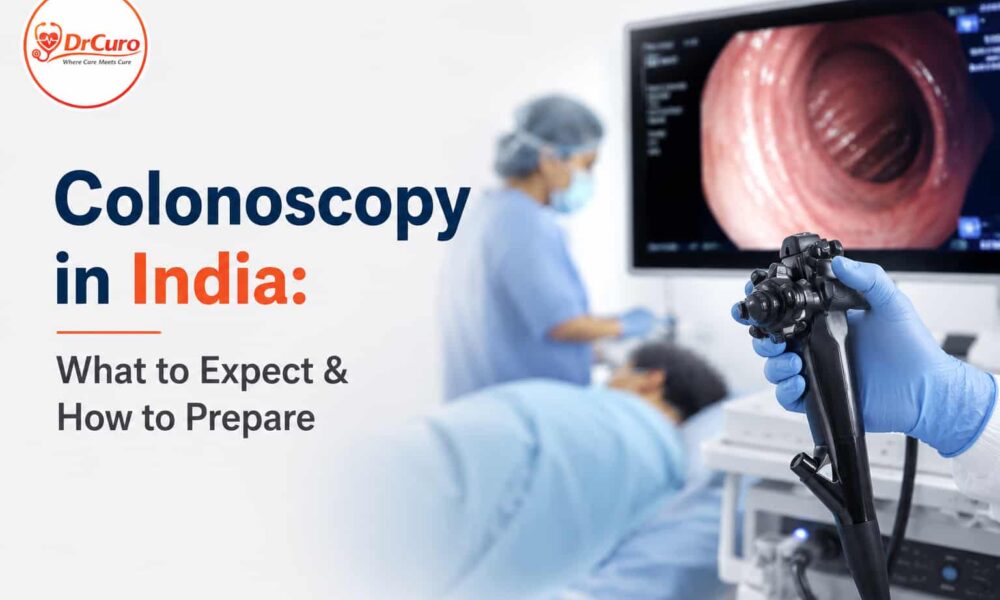
Most people, when they hear the word “colonoscopy,” feel nervous. Some delay it for months. Some avoid it altogether.
Table Of Content
- What Is a Colonoscopy?
- Why Is a Colonoscopy Done?
- Who Should Get a Colonoscopy in India?
- Types of Colonoscopy Available in India
- 1. Diagnostic Colonoscopy
- 2. Screening Colonoscopy
- 3. Therapeutic Colonoscopy
- 4. Virtual Colonoscopy (CT Colonography)
- How to Prepare for a Colonoscopy in India
- Step 1: Talk to Your Doctor in Advance (3 to 7 Days Before)
- Step 2: Low-Fibre Diet (2 Days Before)
- Step 3: Clear Liquid Diet (Day Before the Procedure)
- Step 4: Bowel Preparation (Laxative / Purgative)
- Step 5: Nothing to Eat or Drink Before the Procedure
- Step 6: Arrange Transport
- What Happens on the Day of the Colonoscopy?
- Arrival and Check-In
- Getting Ready
- Sedation
- The Procedure Itself
- What Happens After the Colonoscopy?
- In the Recovery Room
- Going Home
- Eating After the Procedure
- Normal Side Effects
- When to Call Your Doctor Immediately
- Colonoscopy Results — What Do They Mean?
- Normal Result
- Polyps Found and Removed
- Biopsy Taken
- Signs of Colitis or Crohn’s Disease
- Cancer Detected
- Colonoscopy Cost in India
- Risks of Colonoscopy — How Safe Is It?
- Colonoscopy vs Other Bowel Tests — Which Is Best?
- Common Questions People Ask About Colonoscopy in India
- A Note on Mental Preparation
- How Dr Curo Supports You Through the Process
- Note :
But here is the reality a colonoscopy is one of the most valuable tests you can undergo for your long-term health, especially after the age of 40. It helps detect colon cancer at an early and more treatable stage, identifies polyps before they become harmful, and often provides complete reassurance about your digestive health. For many people seeking reliable gastroenterology treatment India services, this test plays a critical role in early diagnosis and prevention.
At Dr Curo, we believe that fear, confusion, or lack of awareness should never prevent anyone from getting the right medical care. That is why this guide explains everything you need to know what a colonoscopy is, why doctors recommend it, how to prepare for the procedure in India,
Read this once, and you will walk into your colonoscopy with full confidence.
What Is a Colonoscopy?
A colonoscopy is a medical procedure in which a doctor examines the inside of your large intestine (colon) and rectum.
The doctor uses a thin, flexible tube called a colonoscope. This tube is about the thickness of your finger and has a tiny camera and light at its tip. It is gently inserted through the rectum and slowly moved through the entire length of the colon.
The camera sends live images to a monitor. The doctor looks for anything unusual inflammation, polyps, ulcers, bleeding, or signs of cancer.
The whole procedure usually takes 30 to 60 minutes.
Why Is a Colonoscopy Done?
Your doctor may recommend a colonoscopy for several reasons:
1. Colon Cancer Screening Colon cancer is one of the most common cancers in India. A colonoscopy can detect it at an early stage or even prevent it by removing polyps before they become cancerous.
2. Persistent Stomach or Digestive Problems If you have ongoing issues like stomach pain, diarrhoea, constipation, or bloating that do not go away, a colonoscopy helps find the cause.
3. Blood in Stool Seeing blood in your stool is always a reason to investigate. A colonoscopy can identify where the bleeding is coming from.
4. Unexplained Weight Loss If you are losing weight without trying, and no clear reason is found, a colonoscopy may be recommended to rule out intestinal disease or cancer.
5. Monitoring Known Conditions If you already have conditions like Crohn’s disease, ulcerative colitis, or a history of polyps, regular colonoscopies help monitor your condition.
6. Family History of Colon Cancer If a parent, sibling, or close family member has had colon cancer, your doctor may recommend starting colonoscopies earlier sometimes from age 40 or even younger.
Who Should Get a Colonoscopy in India?
In India, colon cancer cases are rising, largely due to changing diets, sedentary lifestyles, and increasing stress. Yet awareness remains low.
You should consider a colonoscopy if:
- You are 45 years or older (routine screening)
- You have a family history of colorectal cancer
- You have been experiencing rectal bleeding
- You have chronic digestive issues (IBS, colitis, Crohn’s disease)
- You have had polyps found in a previous scope
- You have unexplained anaemia (low haemoglobin)
- Your doctor has recommended it after a stool test or other investigation
Do not wait for symptoms to become severe. Many serious conditions of the colon show no symptoms in the early stages and that is exactly when they are easiest to treat.
Types of Colonoscopy Available in India
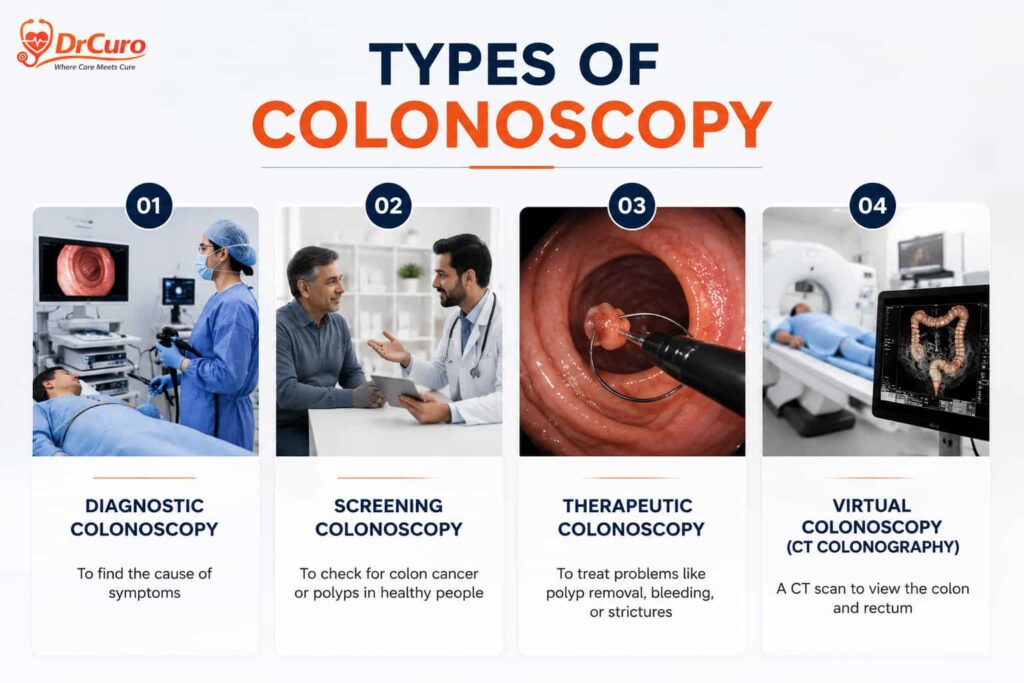
1. Diagnostic Colonoscopy
Done to investigate symptoms or confirm a diagnosis. The doctor looks at the inside of the colon and may take small tissue samples (biopsy) for testing.
2. Screening Colonoscopy
Done in people who have no symptoms but are at risk due to age or family history. The goal is early detection before any problem develops.
3. Therapeutic Colonoscopy
Done not just to look but also to treat. The doctor may remove polyps (polypectomy), stop bleeding, or dilate a narrowed section of the bowel all during the same procedure.
4. Virtual Colonoscopy (CT Colonography)
This is a newer option where a CT scan creates detailed images of the colon. It does not involve inserting the colonoscope. However, if anything abnormal is found, a regular colonoscopy is still needed. It is less commonly used in India and is not available at all hospitals.
How to Prepare for a Colonoscopy in India
This is the part that worries most people and honestly, the preparation is more uncomfortable than the procedure itself. But it is critical. If your colon is not clean, the doctor cannot see clearly, and the procedure may need to be repeated.
Here is a complete, step-by-step guide to preparing for a colonoscopy in India.
Step 1: Talk to Your Doctor in Advance (3 to 7 Days Before)
Tell your doctor about all medicines you take. Some need to be paused before the procedure:
- Blood thinners (like warfarin, clopidogrel, aspirin) — usually stopped 5 to 7 days before
- Diabetes medicines (especially insulin) — dose may need adjustment
- Iron supplements — usually stopped 5 days before, as iron makes stool dark and hard to see
- NSAIDs like ibuprofen — may need to be paused
Never stop medicines on your own. Always follow your doctor’s specific instructions.
Step 2: Low-Fibre Diet (2 Days Before)
Two days before the procedure, switch to a low-fibre diet. This means:
Eat:
- White rice (not brown)
- Plain white bread
- Eggs
- Boiled chicken or fish (no spices)
- Clear soups
- Curd (plain, no fruit)
- Peeled potatoes (boiled, no skin)
Avoid:
- Vegetables (especially leafy ones)
- Fruits (especially those with seeds or skin)
- Whole wheat, dalia, oats
- Dal and legumes
- Nuts and seeds
- Red meat
- Anything fried or heavily spiced
Step 3: Clear Liquid Diet (Day Before the Procedure)
The day before your colonoscopy, you must eat nothing solid. You can only have clear liquids:
Allowed:
- Water
- Clear coconut water (no pulp)
- Clear fruit juice (apple or white grape — no pulp, no orange, no mango)
- Plain nimbu pani (no pulp)
- Clear soup or broth (strained, no solid pieces)
- Black tea or black coffee (no milk)
- Plain glucose water
Not allowed:
- Milk or dairy
- Juices with pulp
- Solid food of any kind
- Alcohol
Staying hydrated is very important during this day. Drink plenty of clear fluids throughout the day.
Step 4: Bowel Preparation (Laxative / Purgative)
This is the most important step. Your doctor will prescribe a bowel prep solution a strong laxative that completely clears the colon.
In India, commonly used bowel prep solutions include:
- Polyethylene Glycol (PEG) solution (most commonly prescribed)
- Sodium Picosulfate + Magnesium Citrate (Picolax or similar)
- Fleet Phospho-soda (less common now)
Your doctor will give you exact instructions on how and when to take it. A common schedule looks like this:
Split-dose method (most effective):
- First dose: Evening before the procedure (around 6 PM to 8 PM)
- Second dose: Early morning of the procedure (4 to 5 hours before)
After taking the prep, you will experience frequent, watery bowel movements. This is completely normal and expected. Stay close to a toilet.
Tips for making bowel prep easier:
- Drink the solution chilled it is easier to swallow
- Use a straw to avoid tasting it fully
- Drink it slowly if you feel nauseous do not rush
- Apply a thin layer of petroleum jelly (Vaseline) around the anus if it becomes sore from frequent wiping
- Keep yourself hydrated with clear fluids between doses
- Wear comfortable clothes and plan to stay home
You will know the prep has worked when your stool comes out as clear or light yellow liquid with no solid bits. If it is still dark or has solid matter, inform your doctor.
Step 5: Nothing to Eat or Drink Before the Procedure
After the second dose of bowel prep, you should stop eating or drinking anything (including water) for at least 2 to 4 hours before the procedure or as your doctor advises.
Step 6: Arrange Transport
You will be given sedation during the procedure. This means you cannot drive yourself home. Please arrange for a family member or friend to take you home after the procedure.
What Happens on the Day of the Colonoscopy?
Arrival and Check-In
Arrive at the hospital or clinic at least 30 to 60 minutes before your scheduled time. You will complete paperwork and sign a consent form. The nurse will check your blood pressure, pulse, and oxygen levels.
Getting Ready
You will be asked to change into a hospital gown. An IV line (cannula) will be placed in your arm this is used to give you sedation and any other medicines during the procedure.
Sedation
In India, most colonoscopies are done with conscious sedation or moderate sedation. This means you are not completely unconscious, but you are deeply relaxed and drowsy. Most patients do not feel pain. Some do not even remember the procedure.
In some cases, especially for anxious patients or lengthy procedures, general anaesthesia may be used. This is less common but available at larger hospitals.
The Procedure Itself
You will be asked to lie on your left side, with your knees brought towards your chest. The doctor will gently insert the colonoscope through the rectum and slowly advance it through the colon.
Air or carbon dioxide is pumped into the colon to open it up so the doctor can see clearly. This can cause a feeling of fullness or mild pressure it is normal.
The doctor carefully examines the lining of the entire colon as the scope is slowly withdrawn. This is when most of the looking happens on the way out, not the way in.
If the doctor sees a polyp, it can be removed immediately using a small wire loop or forceps passed through the colonoscope. If there is an area that looks unusual, a small biopsy (tissue sample) is taken and sent to the lab.
The entire procedure usually takes 30 to 60 minutes, depending on what is found.
What Happens After the Colonoscopy?
In the Recovery Room
After the procedure, you will be taken to a recovery area. You will stay here for 30 to 60 minutes while the sedation wears off.
During this time:
- Nurses will monitor your vital signs
- You may feel bloated or have gas this is normal, as air was pumped into the colon
- You may feel groggy from the sedation
- Passing gas is encouraged it relieves the bloating
Going Home
Once you are fully awake and stable, you can go home. Remember, you cannot drive for at least 24 hours after sedation.
Eating After the Procedure
Most patients can start eating light foods within a few hours. Start with:
- Plain khichdi or white rice
- Toast or plain bread
- Banana
- Curd
- Soup
Avoid spicy, oily, or heavy food for the rest of the day.
Normal Side Effects
The following are normal and usually go away within 24 hours:
- Bloating and gas
- Mild stomach cramps
- Feeling tired or sleepy from sedation
- Small amount of blood in stool (especially if a polyp was removed)
When to Call Your Doctor Immediately
Contact your doctor if you experience:
- Heavy or continuous rectal bleeding
- Severe stomach pain
- Fever above 38.5°C
- Vomiting
- No bowel movement for more than 2 days after the procedure
These are uncommon but need medical attention.
Colonoscopy Results — What Do They Mean?
Normal Result
The colon looks healthy. No polyps, no ulcers, no signs of cancer. If this is a routine screening and no risk factors are present, your next colonoscopy may be recommended after 10 years.
Polyps Found and Removed
Polyps are small growths on the lining of the colon. Most are harmless (benign), but some types (called adenomas) can slowly turn cancerous if not removed. The removed polyp is sent for biopsy. If it was a simple benign polyp, follow-up may be needed in 3 to 5 years. If it was an adenoma, earlier follow-up is recommended.
Biopsy Taken
If the doctor saw inflamed or unusual tissue, a small sample was taken and sent to the lab. Biopsy results usually come in 5 to 10 working days. Your doctor will discuss the findings with you.
Signs of Colitis or Crohn’s Disease
The lining may show signs of inflammation, redness, or ulcers. This helps confirm a diagnosis of inflammatory bowel disease and guides treatment.
Cancer Detected
If the doctor suspects cancer, a biopsy is taken during the procedure. This does not mean cancer is confirmed only the lab result will confirm. If cancer is found, your doctor will discuss the next steps, which may include staging scans and surgery or other treatment.
Colonoscopy Cost in India
The cost of a colonoscopy in India varies depending on the city, hospital type, and whether sedation or polyp removal is involved.
| Type of Facility | Approximate Cost |
| Government / Public Hospital | Rs. 500 to Rs. 2,000 |
| Mid-range Private Hospital | Rs. 3,000 to Rs. 8,000 |
| Premium / Corporate Hospital | Rs. 8,000 to Rs. 20,000 |
| With Polyp Removal (Polypectomy) | Add Rs. 3,000 to Rs. 8,000 |
Most health insurance policies in India cover colonoscopy when done for a medical reason (not routine screening). Check your policy details or ask your insurer before the procedure.
At Dr Curo, we help you find the right facility at the right price so getting this important test done does not become a financial burden.
Risks of Colonoscopy — How Safe Is It?
A colonoscopy is a very safe procedure. Serious complications are rare. But like any medical procedure, there are some risks:
1. Perforation (Tear in the Colon Wall) Very rare occurs in about 1 in 1,000 procedures. More common if a polyp is removed or if the bowel wall is very inflamed. Requires immediate surgery if it occurs.
2. Bleeding Mild bleeding after polyp removal is common and usually stops on its own. Heavy bleeding is rare.
3. Reaction to Sedation Rare but possible. That is why vital signs are monitored throughout the procedure.
4. Infection Very rare, as the colonoscope is sterilised before use.
5. Missed Lesions No test is 100% perfect. A small number of polyps or flat lesions may be missed, especially if the bowel was not completely clean.
The benefits of colonoscopy far outweigh these small risks. Discuss any concerns with your doctor before the procedure.
Colonoscopy vs Other Bowel Tests — Which Is Best?
Many patients ask are there other options? Here is a comparison:
| Test | What It Does | Can Treat? | Accuracy |
| Colonoscopy | Views entire colon with camera | Yes (removes polyps) | Highest |
| Sigmoidoscopy | Views only lower colon | Partial | Moderate |
| Stool Occult Blood Test (FOBT) | Checks for blood in stool | No | Lower |
| CT Colonography | CT scan of colon | No | Good |
| Capsule Endoscopy | Swallowed camera pill | No | Moderate |
For most people, colonoscopy remains the gold standard because it can both find and fix problems in the same sitting.
Common Questions People Ask About Colonoscopy in India
Q1. Is a colonoscopy painful? Most patients feel little to no pain because of sedation. You may feel mild pressure or cramping, but it is usually very manageable.
Q2. How long does the preparation take? The prep (bowel clearing) takes about 6 to 12 hours total. The procedure itself takes 30 to 60 minutes.
Q3. Can I eat before a colonoscopy? No. You must follow a clear liquid diet the day before and stop eating/drinking a few hours before the procedure.
Q4. Will I be awake during the colonoscopy? With conscious sedation, you are awake but deeply relaxed and usually have little memory of the procedure. You can also request general anaesthesia at many hospitals.
Q5. How soon can I return to work after a colonoscopy? Most people can return to work the next day. If you had a polyp removed, your doctor may advise you to rest for 1 to 2 days.
Q6. Is colonoscopy covered by insurance in India? Yes, most health insurance plans in India cover colonoscopy when it is done for a diagnosed medical condition. Coverage for routine screening varies by policy.
Q7. Can I drink water during bowel prep? Yes. You should drink plenty of clear fluids during the prep water, clear nimbu pani, apple juice (no pulp), and coconut water are all fine.
Q8. What if I cannot finish the bowel prep solution? Tell your doctor or nurse. They may adjust the dose or suggest an alternative. Never skip the prep an incomplete prep means the procedure cannot be done properly.
A Note on Mental Preparation
Many people delay a colonoscopy because of embarrassment or fear. It is completely understandable.
But consider this: the doctors and nurses who perform colonoscopies do this every single day. For them, it is completely routine. There is nothing to feel embarrassed about.
The preparation is the hardest part and even that is just one uncomfortable day. The procedure itself, with sedation, is often described by patients as far easier than they expected.
Catching a problem early is always better than treating it late. A single colonoscopy can quite literally save your life.
How Dr Curo Supports You Through the Process
At Dr Curo, we understand that navigating the Indian healthcare system can feel overwhelming especially for a procedure like a colonoscopy.
Here is how we help:
- Help you find trusted gastroenterologists and hospitals near you
- Guide you on which tests you need and when
- Explain your reports in simple, clear language
- Help you manage follow-up care after the procedure
- Support you with diet and lifestyle guidance for a healthy gut
Your health deserves expert guidance at every step. Dr Curo is here to make that easier.
Note :
A colonoscopy is not something to fear. It is something to respect because it is one of the most powerful tools available for protecting your gut health and catching serious disease early.
If your doctor has recommended a colonoscopy, do not delay. If you are above 45 and have never had one, talk to your doctor about whether it is time.
Prepare well, stay informed, and trust the process. And if you need help at any point Dr Curo is just one click away.







No Comment! Be the first one.