





Fatty Liver Disease: Stages, Treatment & Diet
Fatty liver disease is quietly becoming one of the most common liver conditions worldwide, and most people who have it don’t know it yet. It develops when fat builds up inside liver cells...
Fatty liver disease is quietly becoming one of the most common liver conditions worldwide, and most people who have it don’t know it yet. It develops when fat builds up inside liver cells faster than the liver can clear it and unlike most conditions that announce themselves with pain or discomfort, fatty liver disease usually stays silent until it’s already progressed. Many people find out only after a routine blood test or an ultrasound done for something unrelated.
Table Of Content
- What Fatty Liver Disease Actually Is
- How Fatty Liver Disease Progresses
- What Causes It and Who’s at Higher Risk
- How Doctors Diagnose It
- Treatment: What Actually Works
- Eating for Liver Health
- Does Losing Weight Actually Help?
- Is Exercise Really That Important?
- What Happens If It’s Left Untreated
- When to See a Doctor
- Common Misunderstandings Worth Clearing Up
- Frequently Asked Questions
- Conclusion
That silence is exactly why understanding fatty liver disease matters, even if you feel completely fine right now. Caught early, it’s one of the more manageable liver conditions. Left alone, it can progress to something far harder to reverse.
What Fatty Liver Disease Actually Is
The liver normally holds a small amount of fat as part of its regular metabolic function. Fatty liver disease is diagnosed when fat makes up more than roughly 5–10% of the liver’s total weight. At that point, the liver has to work harder to do its usual jobs filtering toxins from the blood, processing nutrients, producing proteins, and regulating metabolism and if the fat load keeps building, those functions start to slip.
There are two distinct types, and the distinction matters for treatment:
| Type | What Drives It |
| Non-Alcoholic Fatty Liver Disease (NAFLD) | Linked to obesity, type 2 diabetes, high cholesterol, and metabolic syndrome — occurs in people who drink little or no alcohol |
| Alcohol-Related Fatty Liver Disease (AFLD) | Caused by the liver’s difficulty processing excessive alcohol intake over time |
NAFLD is now the more common of the two globally, tracking closely with rising obesity and diabetes rates which is part of why fatty liver disease has moved from a relatively obscure diagnosis to a mainstream health concern in the last two decades.
How Fatty Liver Disease Progresses
Doctors stage fatty liver disease based on how much damage has accumulated, and where you fall on this scale determines both the urgency and the treatment approach.
| Stage | What’s Happening in the Liver | Reversible? |
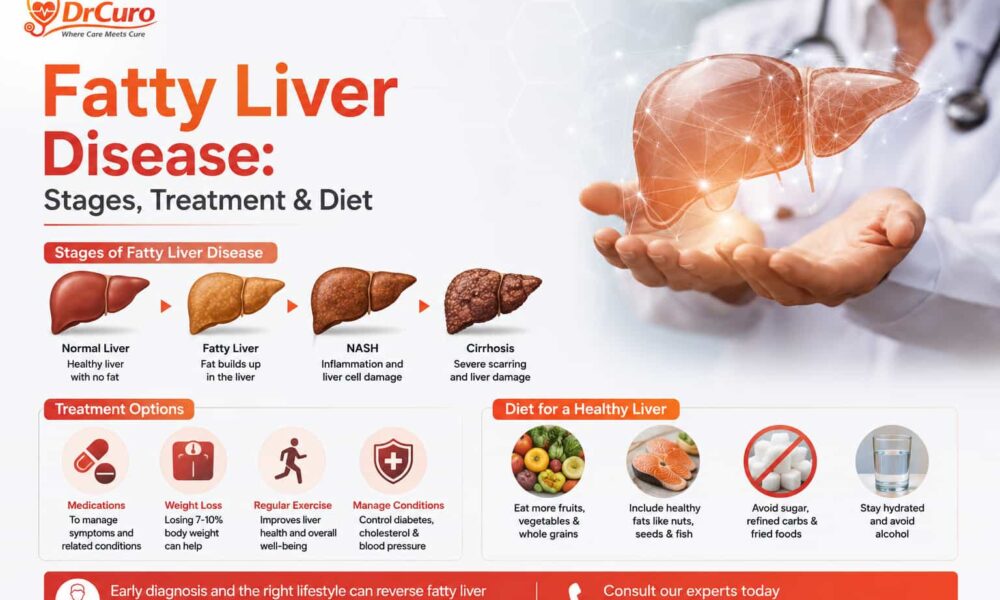
| 1 — Simple fatty liver (steatosis) | Fat accumulates in liver cells; little to no inflammation | Usually yes, with lifestyle change |
| 2 — Steatohepatitis | Inflammation develops around the fat deposits | Often reversible with treatment |
| 3 — Fibrosis | Persistent inflammation causes scar tissue to form | Partially reversible if caught early |
| 4 — Cirrhosis | Widespread, permanent scarring impairs liver function | No — damage is permanent; treatment shifts to preventing further decline |
Stage 1 rarely causes any noticeable symptoms. By stage 2, some people start to notice dull discomfort under the right ribs, fatigue, or a general sense of feeling unwell though plenty of people still feel nothing at all. It’s really stage 3 and especially stage 4 where symptoms become harder to miss: swelling in the legs or abdomen, yellowing skin or eyes, easy bruising, confusion, and noticeable weight loss. Anyone experiencing those later-stage symptoms needs medical attention without delay at that point the liver’s ability to compensate is already significantly reduced.
What Causes It and Who’s at Higher Risk
Fatty liver disease rarely comes from a single cause it’s usually the result of several overlapping factors:
- Obesity or being significantly overweight
- Type 2 diabetes or insulin resistance
- High cholesterol or high triglycerides
- Excessive alcohol consumption
- Poor diet, particularly one high in processed food and added sugar
- Physical inactivity
- Certain medications and hormonal disorders
- Genetic predisposition
- Rapid, extreme weight loss (yes, this can also trigger it)
Risk climbs further with metabolic syndrome, PCOS, sleep apnea, a family history of liver disease, or simply being over 40. None of these guarantee you’ll develop fatty liver disease, but they’re reasons to get checked rather than assume you’re fine because you feel fine.
How Doctors Diagnose It
Because fatty liver disease so often produces no symptoms, diagnosis usually starts with a conversation — your medical history, alcohol use, medications, and family history — followed by targeted testing.
| Test | What It Tells the Doctor |
| Liver function tests (blood) | Whether liver enzymes indicate inflammation or damage |
| Metabolic blood panel | Diabetes, cholesterol, and related metabolic markers |
| Ultrasound | Whether fat has accumulated in liver tissue |
| FibroScan | How much stiffness/scarring (fibrosis) is present |
| CT or MRI | Detailed imaging when more precision is needed |
| Liver biopsy | Confirms inflammation severity in select, more advanced cases |
Not everyone needs every test on this list your doctor selects based on what your symptoms and initial results suggest.
Treatment: What Actually Works
There’s no single pill that cures fatty liver disease. Treatment instead focuses on removing the conditions that let fat accumulate in the first place, and on catching complications before they progress. A gastroenterologist typically leads this since fatty liver disease sits within the broader field of gastro treatment, your doctor will usually coordinate liver-specific care alongside management of diabetes, cholesterol, or blood pressure if those are contributing factors.
The core treatment approach generally includes:
- Gradual, sustained weight loss rather than crash dieting
- Better control of blood sugar if diabetes or insulin resistance is present
- Managing cholesterol and triglyceride levels
- Regular physical activity
- Complete alcohol avoidance, particularly for alcohol-related fatty liver disease
- Medication where appropriate, prescribed based on your specific case
- Ongoing monitoring through repeat liver function tests
The earlier this starts, the more effective it tends to be stage 1 and stage 2 fatty liver disease respond well to lifestyle-driven treatment in most people. Once fibrosis sets in, treatment can slow or stall further damage, but it can’t fully undo what’s already scarred.
Eating for Liver Health
Diet is one of the few levers a person has direct daily control over, and it genuinely moves the needle for fatty liver disease. The general principle is simple even if sticking to it isn’t: reduce processed fat and sugar, increase whole foods, and support the liver’s natural ability to process what it takes in.
Foods that generally help:
- Leafy greens, broccoli, tomatoes, and other vegetables
- Whole grains brown rice, oats, whole wheat
- Lentils and beans
- Fish rich in omega-3s
- Nuts, particularly almonds and walnuts
- Olive oil and avocados
- Fresh fruit, especially berries and citrus
- Green tea
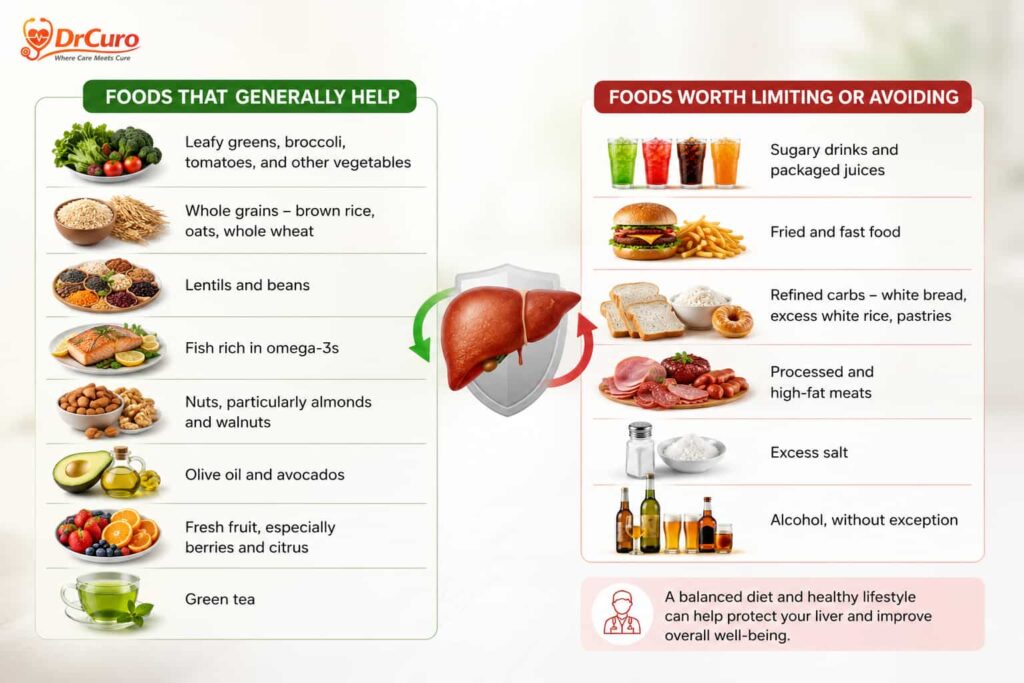
Foods worth limiting or avoiding:
- Sugary drinks and packaged juices
- Fried and fast food
- Refined carbs white bread, excess white rice, pastries
- Processed and high-fat meats
- Excess salt
- Alcohol, without exception
A simple sample day might look like oats or vegetable poha for breakfast, dal with brown rice and grilled fish or chicken for lunch, roasted chickpeas or fruit as a snack, and a lighter dinner of grilled paneer or fish with vegetables. This isn’t a prescription individual needs vary enough that a dietitian’s input is worth getting rather than following a generic plan blindly.
Does Losing Weight Actually Help?
Yes, and often more than people expect. Even a modest reduction in body weight the kind of change that feels unremarkable on a scale can meaningfully reduce liver fat and inflammation. The caveat doctors emphasize is pace: losing weight too fast, through extreme dieting, can actually stress the liver further rather than help it. Gradual weight loss through consistent diet and activity changes is the approach that holds up.
Is Exercise Really That Important?
It’s one of the most effective non-medication interventions available. Physical activity helps burn liver fat directly, improves how the body responds to insulin, and reduces inflammation independent of weight loss. Brisk walking, cycling, swimming, and light strength training all count the goal most doctors recommend is around 150 minutes of moderate activity a week, adjusted for your overall health.
What Happens If It’s Left Untreated
Ignoring fatty liver disease doesn’t mean nothing happens it means the progression continues quietly. Left unmanaged, especially alongside uncontrolled diabetes or continued alcohol use, it can advance toward:
- Fibrosis and eventually cirrhosis
- Portal hypertension and internal bleeding from enlarged veins
- Fluid buildup in the abdomen (ascites)
- Liver failure
- Increased risk of liver cancer
- Higher long-term risk of heart disease and stroke
This is the practical argument for early gastro treatment rather than a wait-and-see approach the further the disease progresses, the fewer reversible options remain.
When to See a Doctor
Get checked promptly if you notice persistent fatigue, discomfort under the right ribs, unexplained weight loss, yellowing skin or eyes, swelling in the legs or abdomen, dark urine, or ongoing nausea. If you carry risk factors obesity, diabetes, high cholesterol, or a family history of liver disease don’t wait for symptoms at all. Routine liver function testing can catch fatty liver disease well before it becomes noticeable, which is exactly the window where treatment works best.
Common Misunderstandings Worth Clearing Up
A few assumptions about fatty liver disease persist despite being inaccurate. It isn’t exclusive to people who drink NAFLD develops in people who never touch alcohol. It doesn’t always cause symptoms, particularly early on, so feeling fine isn’t proof of a healthy liver. It isn’t exclusive to overweight people either — normal-weight individuals can and do develop it. And a diagnosis isn’t a dead end: caught early, it’s genuinely one of the more reversible chronic conditions a person can face.
Frequently Asked Questions
Can fatty liver disease be reversed?
Early stages, yes through weight management, diet, exercise, and consistent medical follow-up. Once cirrhosis develops, the scarring itself is permanent, though further progression can still be slowed.
Is it dangerous?
It can become serious if left unmanaged, potentially progressing to fibrosis, cirrhosis, or liver cancer. Caught early, the risk of reaching that point drops significantly.
How long does recovery take?
Highly individual. Some people see measurable improvement in liver enzyme levels within a few months of consistent lifestyle change; others take longer depending on how advanced the condition was at diagnosis.
Does fatty liver disease affect anything beyond the liver?
Yes it’s associated with higher risk of heart disease, stroke, and type 2 diabetes, which is part of why doctors treat it as part of overall metabolic health rather than an isolated liver issue.
Conclusion
Fatty liver disease is common, mostly silent, and for a large share of people diagnosed early genuinely manageable. The condition rewards early attention: the earlier fatty liver disease is caught, the more of the lifestyle-driven treatment options remain fully effective, and the less likely it is to progress into something permanent. If you have risk factors or haven’t had your liver checked recently, that’s reason enough to get tested rather than wait for symptoms to force the issue.
Drcuro works with patients on exactly this early diagnosis, practical gastro treatment planning, and diet and lifestyle guidance suited to the stage of fatty liver disease involved, so decisions are based on where your liver actually stands rather than guesswork.


No Comment! Be the first one.