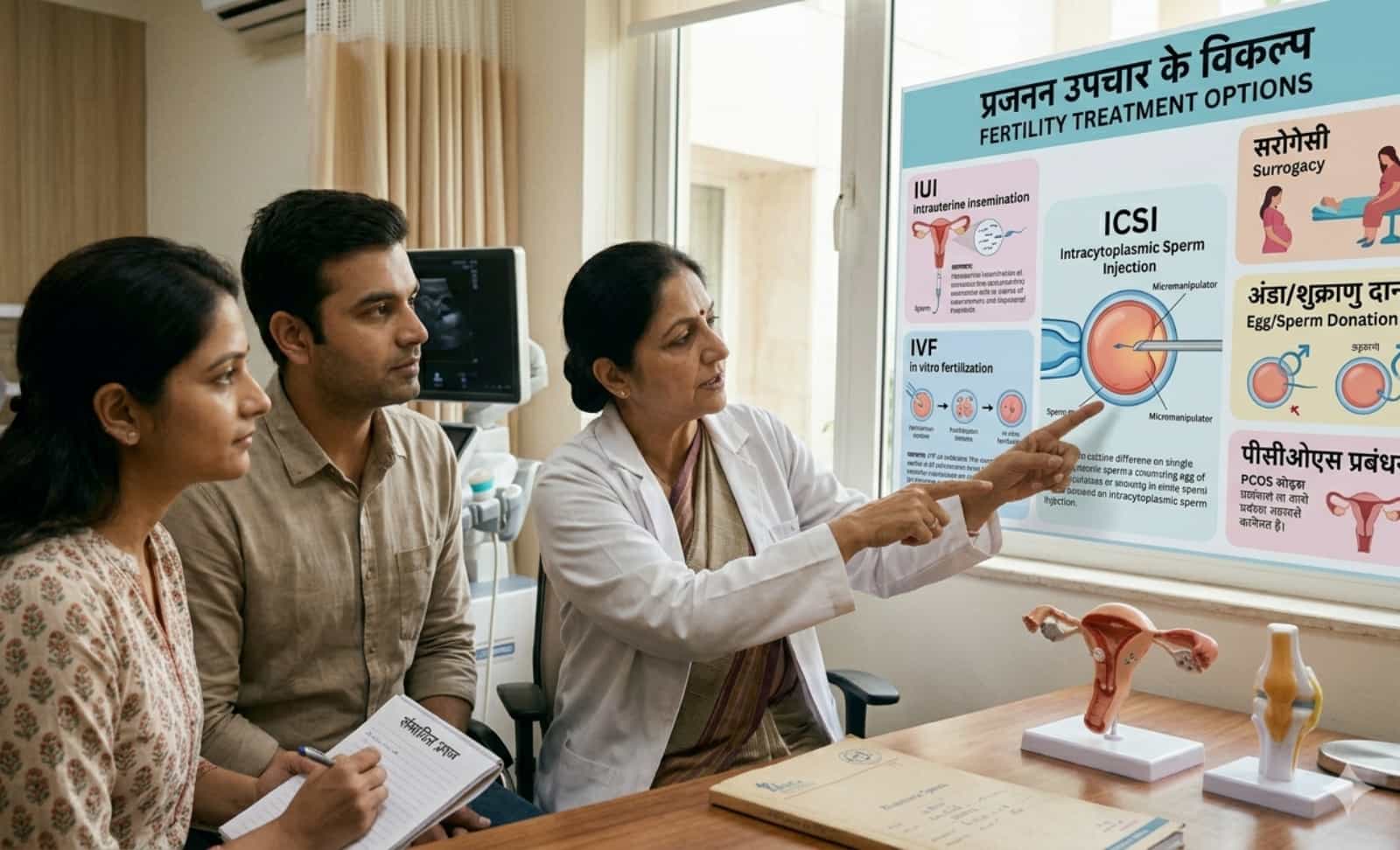
Infertility touches more lives than most people realise. In India alone, one in six couples struggles to conceive at some point in their reproductive years. Yet for many, the journey from diagnosis to treatment remains confusing, emotionally draining, and financially uncertain.
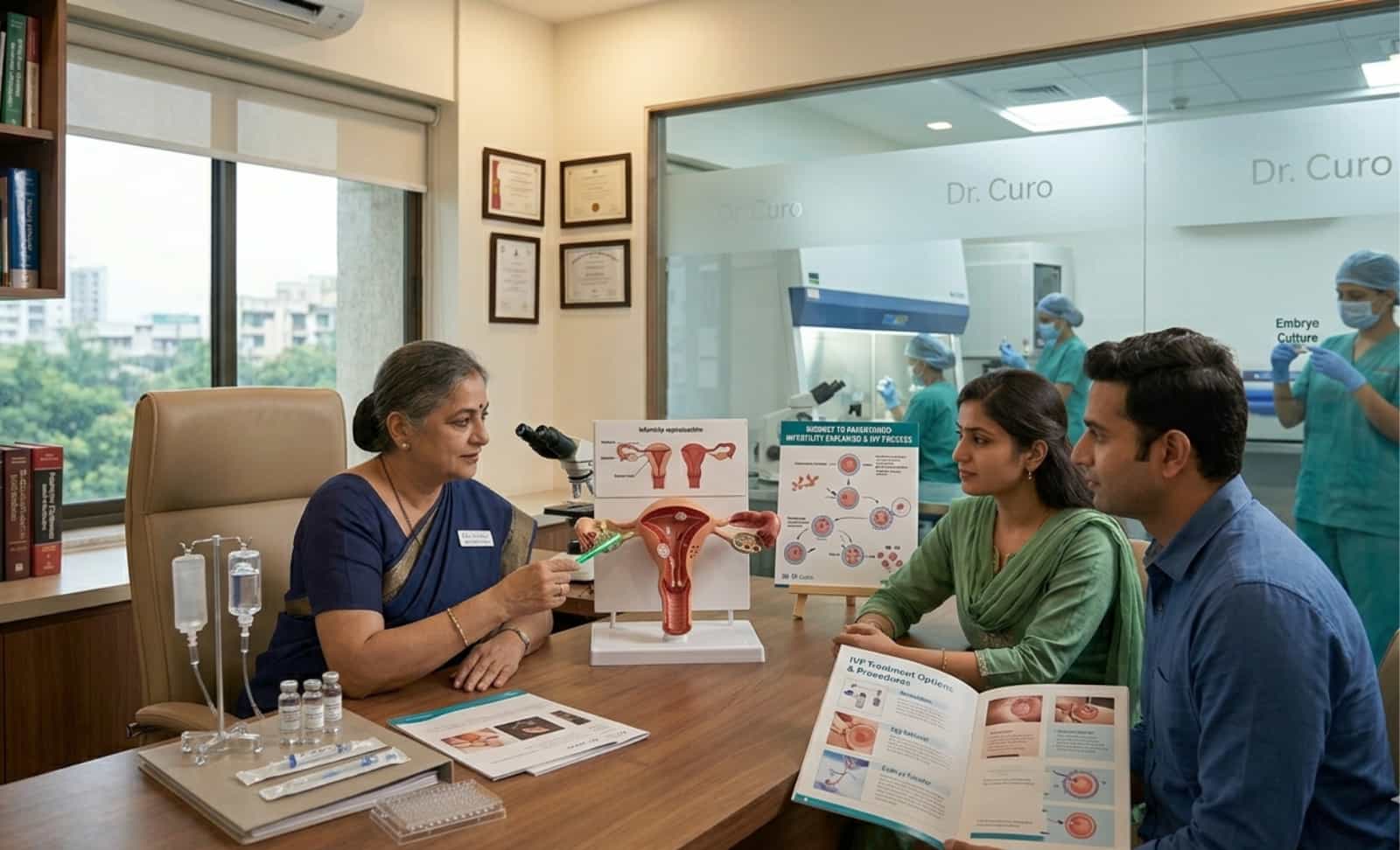
At Dr Curo, we believe that every couple deserves clarity – about what is causing the problem, what options exist, what success realistically looks like, and what it will cost. This page is your starting point for everything related to infertility treatment in India.
Infertility is defined as the inability to achieve a natural pregnancy after 12 months of regular unprotected intercourse – or 6 months if the woman is above 35. It is not a reflection of who you are. It is a medical condition, and like most medical conditions, it can be diagnosed and treated.
Infertility can originate from the woman, the man, or both. In approximately 30% of cases, factors from both partners are involved. In another 10–15% of cases, no clear cause is found even after thorough investigation – this is known as unexplained infertility.
Read: Unexplained Infertility Treatment Options – When Tests Show Nothing Wrong
Female infertility accounts for roughly 40–50% of all infertility cases. Common causes include:
Read in detail: Infertility Causes in Women – A Complete Medical Overview
Also read: Signs of Infertility in Women – Early Symptoms You Should Not Ignore
Male factor infertility is equally common but far less discussed. It contributes to nearly 40-50% of all infertility cases. Common male causes include:
Read: Infertility Causes in Men – Diagnosis, Testing and Treatment
Also read: Signs of Infertility in Men – What Symptoms to Watch For
Many couples wait too long before seeking medical advice. The right time to consult a fertility specialist is:
Read: When to See a Fertility Doctor – Timing Your First Consultation Right
Also read: Fertility Specialist Near Me – How to Choose the Right Doctor | Book Fertility Appointment Online – How to Get Started at Dr Curo
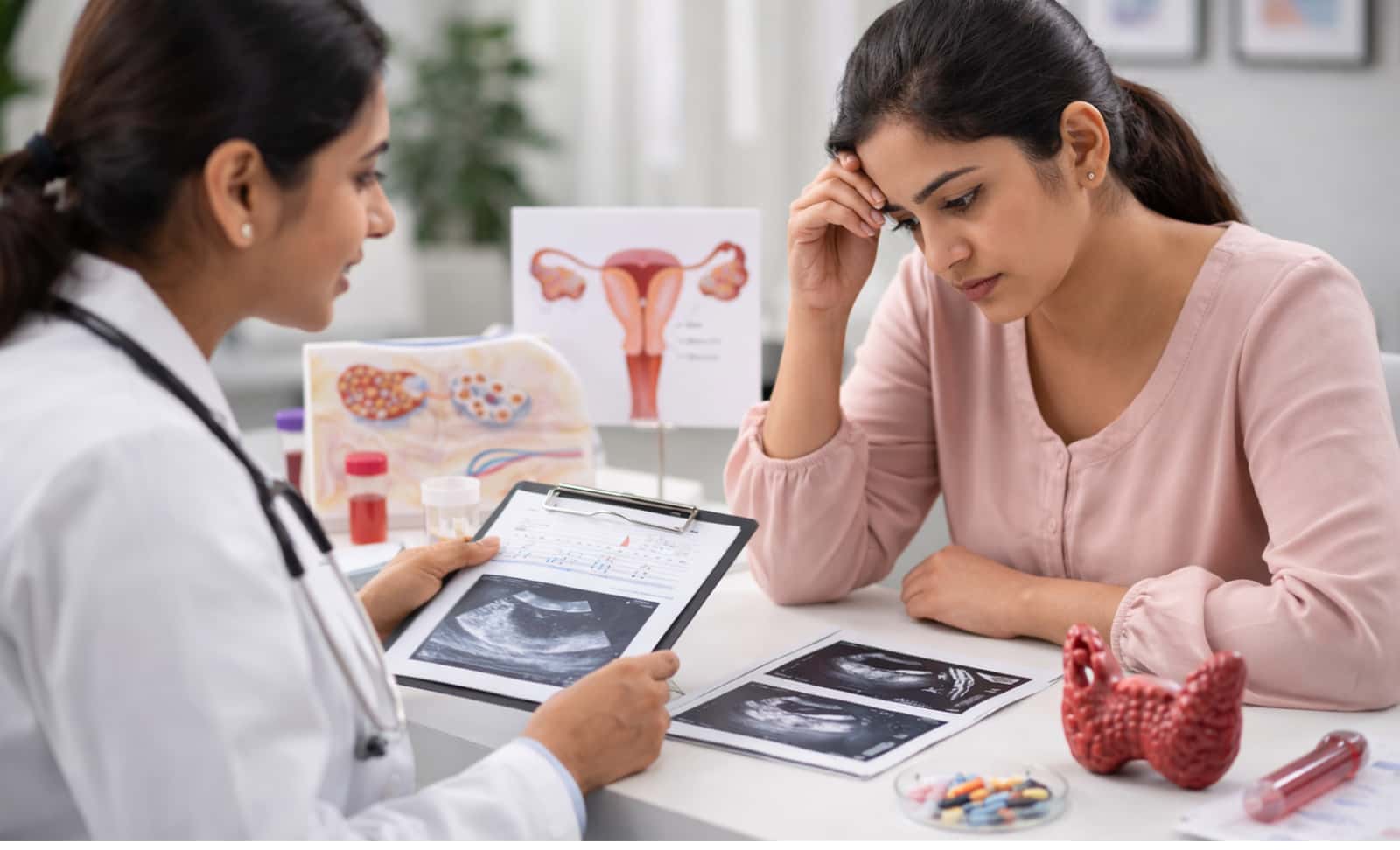
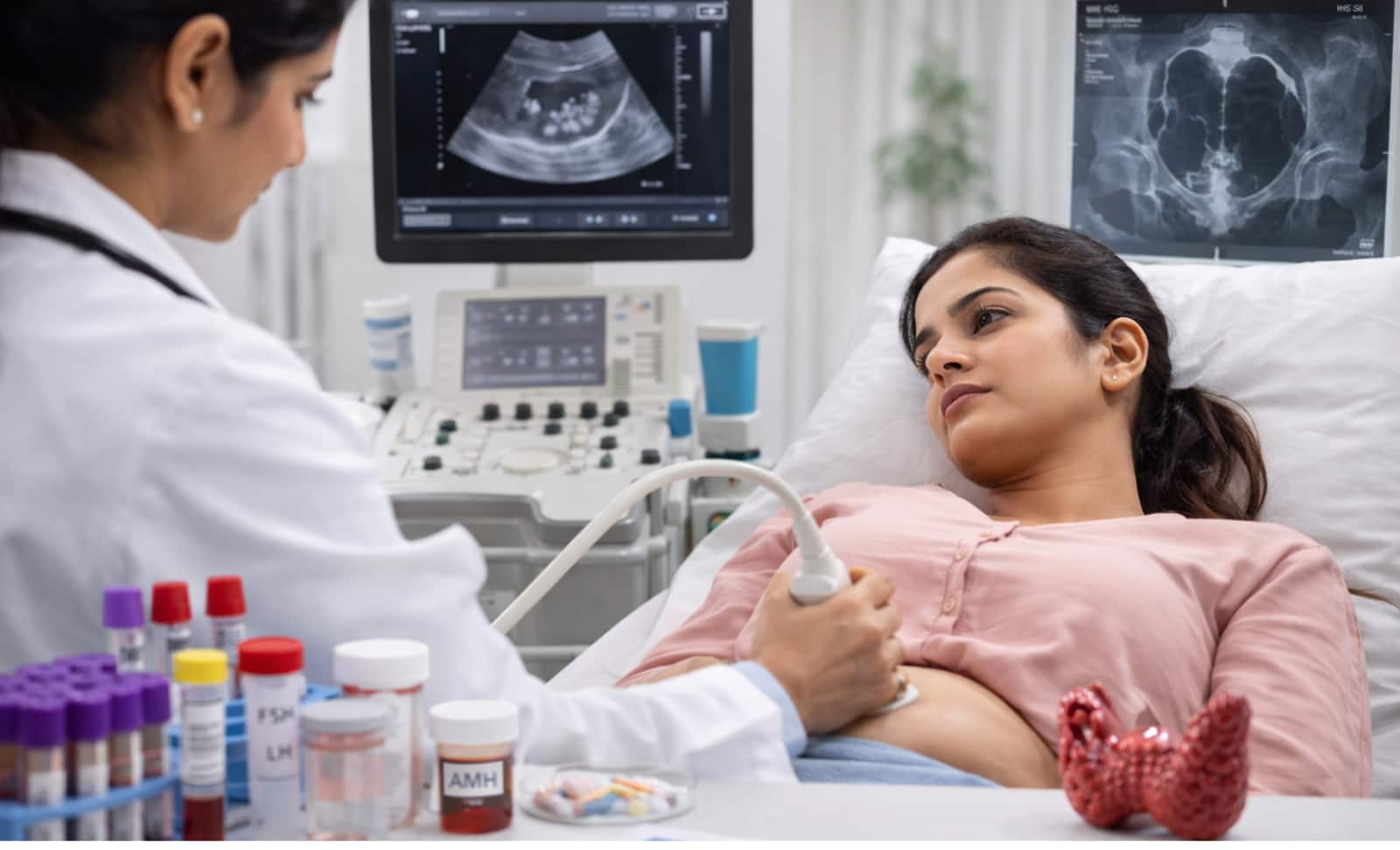
Before any treatment begins, a thorough investigation is essential. Treating infertility without proper diagnosis is like navigating without a map.
For Women:
Read: Fertility Tests for Women – What Each Test Tells Your Doctor
Read: AMH Test Infertility – What Your Score Means for Treatment
Read: Ovarian Reserve Test – Why It Is the Foundation of Fertility Planning
Read: HSG Test for Infertility – What Happens and What It Reveals
For Men:
A semen analysis is the cornerstone of male fertility evaluation. It measures sperm count, motility, morphology, and volume.
Read: Semen Analysis Report Normal Range – How to Read Your Results
Read: Sperm DNA Fragmentation Test – Why It Matters Beyond Basic Semen Analysis
1. PCOS and Infertility Polycystic Ovary Syndrome is one of the leading causes of ovulation-related infertility in India. It is highly treatable with the right protocol.
Read: PCOS and Infertility Link — How One Condition Affects the Other | Polycystic Ovary Treatment Fertility – Options That Actually Work
2. Thyroid and Infertility An underactive or overactive thyroid directly disrupts ovulation and implantation. This is one of the most commonly missed causes of female infertility.
Read: Thyroid and Infertility in Women – The Connection Explained
3. Endometriosis Endometriosis affects approximately 10% of women of reproductive age and is a significant cause of infertility, particularly in women who have struggled for years without a diagnosis.
Read: Endometriosis Infertility Treatment – Surgical and Medical Options
4. Blocked Fallopian Tubes If one or both fallopian tubes are blocked, sperm and egg cannot meet naturally. Depending on the cause and extent, surgical or IVF-based options may be recommended.
Read: Blocked Fallopian Tubes Treatment – What Are Your Options?
5. Uterine Fibroids Fibroids can interfere with embryo implantation depending on their size and location. Not all fibroids require treatment, but some must be addressed before fertility treatment begins.
Read: Uterine Fibroids and Fertility – When Do They Need to Be Treated?
6. Varicocele An enlarged vein in the scrotum that raises testicular temperature and reduces sperm quality. Varicocele repair is one of the most effective male infertility treatments.
Read: Varicocele Infertility Treatment – Surgery, Success and Recovery
7. Ovulation Problems Irregular or absent ovulation is a direct barrier to natural conception. Treatment depends entirely on the underlying cause.
Read: Ovulation Problems and Treatment – From Diagnosis to Conception
8. Hormonal Imbalance Hormones regulate every step of the reproductive process. Even a small imbalance can disrupt ovulation, implantation, or sperm production.
Read: Hormonal Imbalance and Infertility – Which Hormones Matter Most
9.Anti-Sperm Antibodies In some couples, the immune system attacks sperm, reducing fertilisation chances significantly.
Read: Anti-Sperm Antibodies Treatment – Causes, Testing and Solutions
10. Immunological Infertility Beyond anti-sperm antibodies, the immune system can interfere with implantation in other ways.
Read: Immunological Infertility Treatment – An Often Overlooked Cause
11. Recurrent Miscarriage Losing a pregnancy repeatedly is both medically and emotionally devastating. It is a form of infertility that deserves thorough investigation.
Read: Recurrent Miscarriage Causes – What Investigations Should Be Done
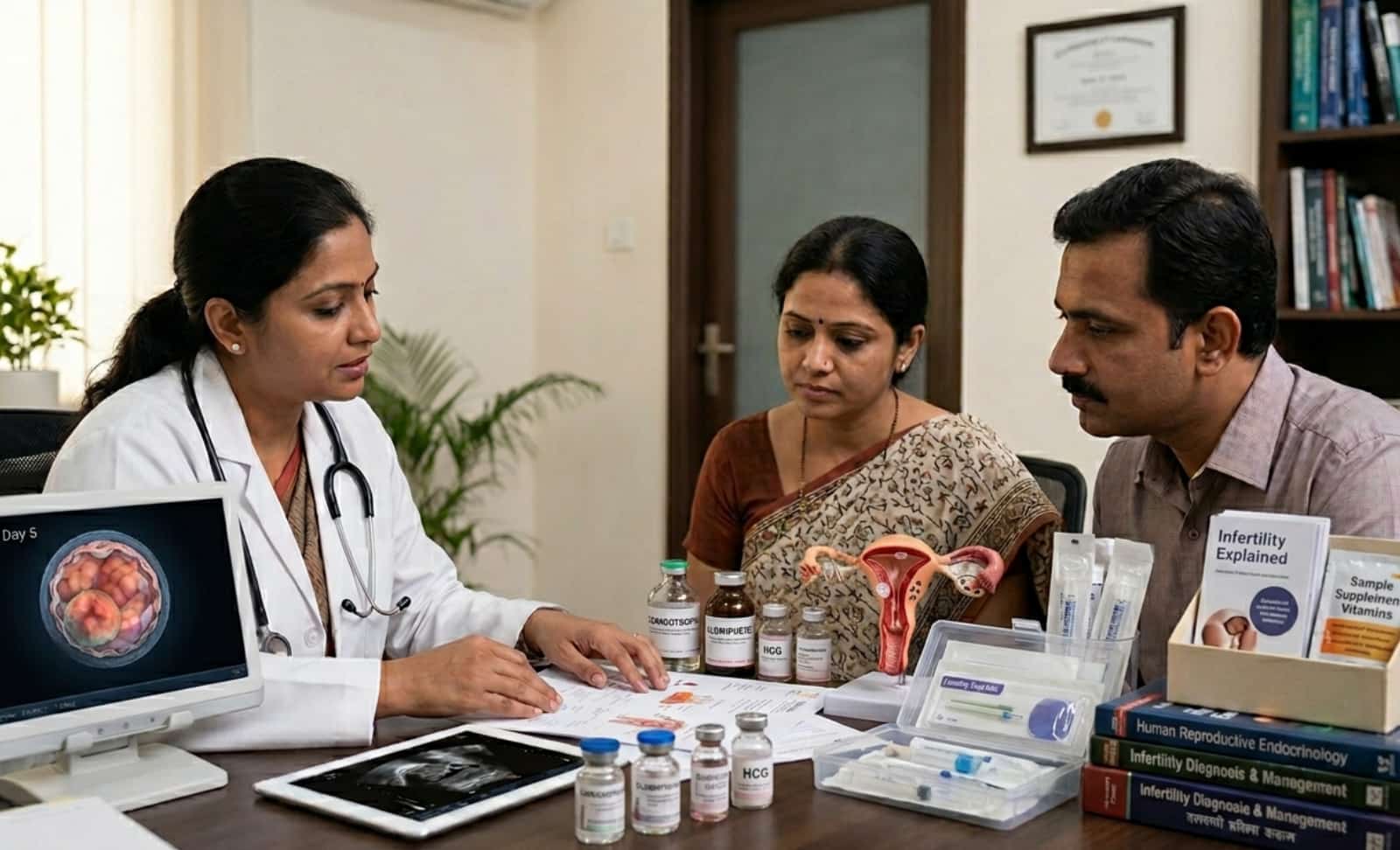
Once a diagnosis is established, Dr Curo creates a personalised treatment plan. Treatment options range from simple lifestyle corrections to advanced assisted reproduction.
For mild cases or as a foundation for medical treatment, lifestyle optimisation plays a meaningful role.
Read: How to Treat Infertility Naturally – Evidence-Based Lifestyle Changes
Read: Fertility Diet Foods to Eat – A Science-Backed Nutrition Guide
Read: Natural Fertility Supplements Women – What Works and What Doesn’t
Read: Male Fertility Supplements India – Evidence-Based Options for Men
Read: Stress and Infertility Relationship – How Mental Load Affects Conception
Read: Weight and Fertility Connection – How BMI Affects Both Men and Women
Read: Intercourse Timing for Conception – Ovulation Windows Explained
Depending on diagnosis, treatment may include ovulation induction, hormonal therapy, surgical correction of anatomical issues, or laparoscopy.
Read: Laparoscopy for Infertility – When Surgery Is the Answer
Read: Low Sperm Count Treatment at Home – What Actually Has Evidence
For cases that do not respond to simpler treatments, IUI, IVF, or ICSI may be recommended. Dr Curo provides a full range of ART services under one roof.
Read: Infertility Treatment for Couples – Finding the Right Path Together
Infertility treatment cost in India varies significantly depending on what treatment is required. A diagnosis-first approach ensures you are not paying for procedures you do not need.
Treatment Type | Approximate Cost (INR) |
Initial fertility consultation | ₹500 – ₹1,500 |
Basic fertility workup (both partners) | ₹5,000 – ₹12,000 |
Ovulation induction + monitoring | ₹8,000 – ₹20,000 |
IUI cycle | ₹8,000 – ₹30,000 |
IVF cycle | ₹90,000 – ₹1,80,000 |
Laparoscopy | ₹40,000 – ₹90,000 |
Varicocele repair | ₹35,000 – ₹70,000 |
Read: Infertility Treatment Cost India – Full Breakdown by Procedure | Affordable Infertility Treatment Options – How to Plan Without Stress
Age is the single most important biological factor in female fertility. Egg quantity and quality both decline with age, particularly after 35. For men, age also affects sperm DNA quality, though the decline is more gradual.
Read: Age and Female Fertility Chart – What the Numbers Actually Mean
Read: Infertility After 30 Treatment – What Changes and What Your Options Are
Read: Fertility Treatment for Older Couples – Realistic Options After 40
Not everyone seeking fertility care is trying to conceive right now. Some patients want to preserve their options for the future – whether due to age, a medical diagnosis, or personal circumstances.
Read: Egg Freezing for Future Pregnancy – How It Works and Who Should Consider It
Read: Fertility Preservation Options – A Complete Guide for Men and Women
For couples with a family history of genetic disorders or recurrent miscarriage, genetic testing before starting treatment can prevent unnecessary cycles and heartbreak.
Read: Genetic Testing Before Pregnancy – What Tests Are Available and When to Do Them
Fertility Acupuncture Some studies suggest acupuncture may improve blood flow to reproductive organs and reduce stress during fertility treatment.
Read: Fertility Acupuncture Effectiveness – What the Research Says
Infertility is not just a physical experience. The emotional weight of monthly disappointment, medical investigations, and uncertain outcomes affects mental health profoundly. At Dr Curo, emotional support is built into our care model.
Read: Infertility Emotional Health – Managing the Psychological Impact
Read: Infertility Support Group India – Why Community Makes a Difference
If you have been through treatment elsewhere without success, or if a diagnosis does not feel right, a second opinion can change everything.
Read: Second Opinion Fertility Treatment – When and Why to Seek One
Also read: Best Infertility Hospital India – What to Look for Before Choosing
India’s top fertility centres now report IVF success rates comparable to global benchmarks. The key is choosing a clinic that is honest about its numbers and does not cherry-pick easy cases.
Read: Fertility Treatment Success Rates India – How to Compare Clinics Honestly
At Dr Curo, we approach every case of infertility with three commitments – accurate diagnosis, personalised treatment, and complete transparency.
Q: What is the most common cause of infertility in India?
A: PCOS-related ovulation disorders in women and low sperm count in men are among the most frequently diagnosed causes in India.
Q: At what age should I start worrying about fertility?
A: Women’s fertility begins declining gradually after 32 and more sharply after 37. If you are over 35 and have been trying for 6 months without success, see a specialist.
Q: Can infertility be treated without IVF?
A: Yes. Many cases are resolved through lifestyle changes, hormonal therapy, ovulation induction, IUI, or minor surgery. IVF is not always the first or only option.
Q: Is infertility treatment covered by insurance in India?
A: Coverage is limited but growing. Some group health insurance policies now include fertility diagnostics and treatment. Check your policy or speak to our team.
Q: How long does infertility treatment take?
A: This depends entirely on the diagnosis. Some couples conceive within 2–3 months of starting treatment. Others may need 6–12 months or longer.
Q: Can stress cause infertility?
A: Chronic stress can disrupt hormonal balance and ovulation. While stress alone rarely causes infertility, it can worsen existing hormonal issues and reduce treatment success.
Q: Is it possible to treat infertility naturally?
A: For certain conditions – mild hormonal imbalances, ovulatory irregularities linked to weight or lifestyle – natural approaches can be effective. For structural or severe hormonal causes, medical treatment is necessary.
Infertility treatment in India has never been more advanced, more accessible, or more compassionate than it is today. Whether you are at the very beginning of your diagnostic journey or looking for better answers after previous treatment, Dr Curo is here to help — with honesty, expertise, and genuine care.
Book your free consultation today.
Call us | Chat with us online | Book at drcuro.com/infertility-treatment
Our site uses cookies. By using this site, you agree to the Privacy Policy and Terms of Use.