








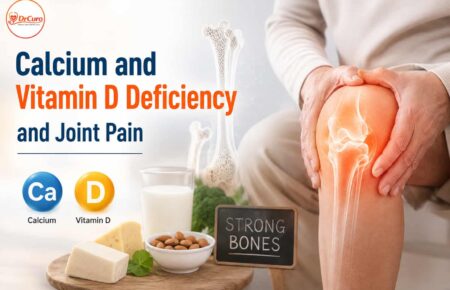
Calcium and Vitamin D Deficiency and Joint Pain
If you’ve been dealing with joint pain, aching muscles, or general body weakness, you may have wondered whether a lack of calcium or vitamin D is behind it. These two nutrients play a huge role...
If you’ve been dealing with joint pain, aching muscles, or general body weakness, you may have wondered whether a lack of calcium or vitamin D is behind it. These two nutrients play a huge role in keeping our bones, muscles, and joints strong and healthy. Calcium helps build and maintain strong bones, while vitamin D helps the body absorb that calcium properly. When you don’t get enough of either for a long time, your bones can weaken, your muscles can feel tired or achy, and you may even feel pain around your joints. But here’s the important part joint pain doesn’t always mean you’re deficient in calcium or vitamin D. Arthritis, old injuries, ageing, extra body weight, and several other conditions can cause similar pain. That’s why it’s important to understand the real cause instead of jumping straight to supplements. In this blog, we’ll break down everything you need to know about calcium and vitamin D deficiency, their connection to joint pain, and what you can do about it.
Table Of Content
- Understanding Calcium and Vitamin D
- Can Low Calcium and Vitamin D Really Cause Joint Pain?
- Signs of Vitamin D Deficiency
- Signs of Calcium Deficiency
- What Causes These Deficiencies?
- Foods That Help You Get Enough Calcium and Vitamin D
- Diagnosing a Deficiency
- Treating Calcium and Vitamin D Deficiency
- Is Joint Pain Always About Deficiency? Probably Not
- Simple Habits That Support Bone and Joint Health
- When Should You See a Doctor?
- Frequently Asked Questions
- Conclusion
Understanding Calcium and Vitamin D
Calcium is one of the most important minerals in your body. Most of it is stored in your bones and teeth, giving them strength and structure. It also plays a role in muscle movement, nerve function, and blood clotting. Since bones are constantly breaking down and rebuilding, your body needs a steady supply of calcium. If your diet doesn’t provide enough over time, your body starts pulling calcium from your bones instead which can weaken them.
Vitamin D works alongside calcium. Without enough vitamin D, your body simply cannot absorb calcium properly from food, no matter how much calcium you eat. Vitamin D also supports muscle function and your immune system. Your body makes vitamin D when your skin is exposed to sunlight, but it can also come from certain foods and supplements.
| Nutrient | Main role | What happens when levels are low |
| Calcium | Builds and maintains bones, supports muscles and nerves | Weak bones, muscle cramps |
| Vitamin D | Helps the body absorb calcium, supports muscles | Weak bones, muscle weakness, body aches |
| Both together | Work as a team for strong bones | Long-term deficiency raises risk of poor bone health |
Can Low Calcium and Vitamin D Really Cause Joint Pain?
Yes, deficiency can be linked to bone and muscle pain but it’s not that simple. Vitamin D deficiency, in particular, is associated with muscle weakness and general body aches. In severe cases, it can even affect bone health directly and cause bone pain. Calcium deficiency, especially when it goes on for a long time, can contribute to weaker bones too.
However, having joint pain doesn’t automatically mean your calcium or vitamin D is low. If you have ongoing pain in your knees, hips, shoulders, or wrists, a doctor will usually look at several possible causes arthritis, an old injury, inflammation, muscle issues, or a nutritional deficiency before deciding what’s really going on. This is exactly why testing matters more than guessing.
Signs of Vitamin D Deficiency
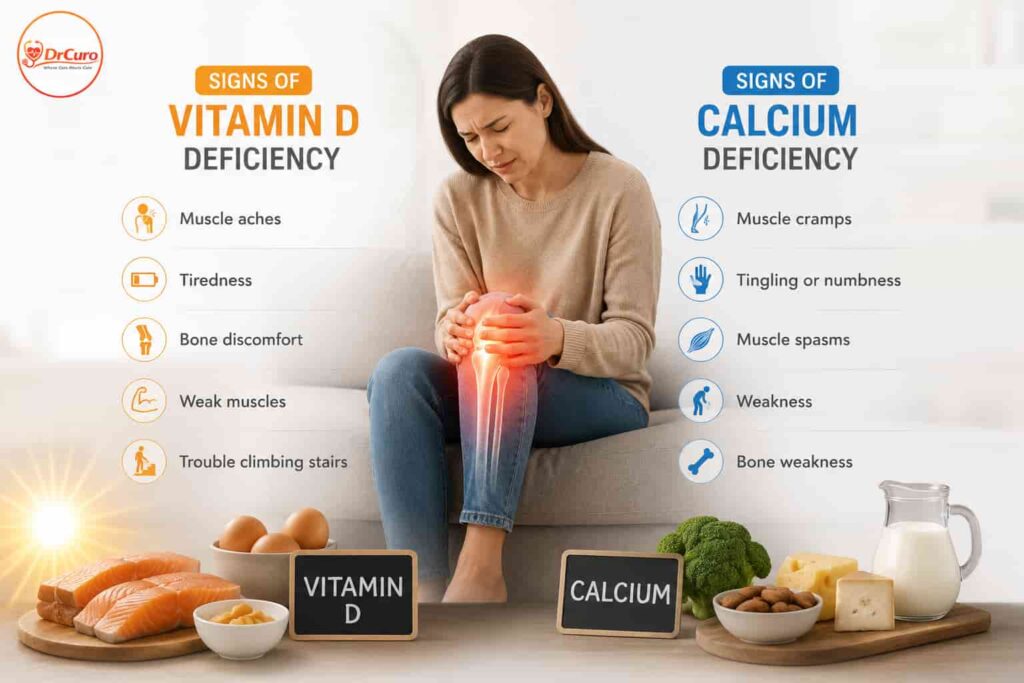
Some people with low vitamin D don’t notice any symptoms at all. When symptoms do show up, they’re often mild and easy to mistake for everyday tiredness. Watch out for:
- Muscle aches
- General muscle weakness
- Bone discomfort
- Constant tiredness
- Trouble climbing stairs or standing up from a chair
- Increased falls in older adults
- Unexplained aches that don’t go away
Signs of Calcium Deficiency
Calcium deficiency symptoms depend on how low your levels are and how quickly they dropped. Long-term low intake mostly affects bone health quietly, while a sudden drop in blood calcium can cause more noticeable symptoms:
- Muscle cramps
- Tingling around the mouth or in fingers
- Muscle spasms
- Unusual weakness
- Numbness
- Bone weakness over time
What Causes These Deficiencies?
Nutrient deficiencies don’t happen for just one reason. Sometimes it’s diet, sometimes it’s how your body absorbs nutrients, and sometimes it’s an underlying health condition. Common causes include:
- A poor or very restricted diet
- Very limited sun exposure
- Older age
- Being overweight
- Digestive conditions that affect absorption
- Kidney or liver issues
- Certain medicines
- Cutting out dairy without replacing it with other calcium sources
- Limited outdoor activity
- Certain eating disorders
Even people who spend time outdoors can still end up low on vitamin D. Office jobs, commuting by car, sunscreen use, clothing, and skin tone can all reduce how much vitamin D your skin actually produces — so deficiency is more common than people expect, even in sunny places.
Foods That Help You Get Enough Calcium and Vitamin D
You don’t always need supplements a well-planned diet can go a long way.
Calcium-rich foods:
| Food | Why it helps |
| Milk | Rich source of calcium |
| Curd/yoghurt | Calcium plus protein |
| Cheese | Calcium-rich (watch salt and fat content) |
| Ragi | Great plant-based option |
| Sesame seeds | Natural calcium boost |
| Tofu (calcium-set) | Good for plant-based diets |
| Leafy greens | Provides calcium, though absorption varies |
| Fish with edible bones | Significant calcium source |
Vitamin D sources:
- Fatty fish like salmon and sardines
- Egg yolks
- Fortified milk
- Fortified cereals
- Fortified plant-based drinks
- Sensible sun exposure
Diagnosing a Deficiency
You can’t tell from symptoms alone whether you’re actually deficient a blood test is needed. Vitamin D is checked using a test called 25-hydroxyvitamin D (25(OH)D). For calcium, doctors may check blood calcium along with related markers.
Common tests include:
- Blood calcium
- Albumin
- Vitamin D (25-OH)
- Kidney function tests
- Parathyroid hormone levels
- Phosphate levels
- Bone mineral density scan (when needed)
Not everyone with joint pain needs all these tests — your doctor decides based on your symptoms and history.
Treating Calcium and Vitamin D Deficiency
Treatment depends on how low your levels are and what caused the drop in the first place. For mild deficiency, improving your diet and getting a bit more sunlight may be enough. For more significant deficiency, supplements may be recommended but only under medical guidance.
Treatment usually includes:
- Eating more calcium and vitamin D-rich foods
- Safe, moderate sun exposure
- Supplements when a doctor recommends them
- Managing any digestive or medical condition affecting absorption
- Reviewing medicines that may be lowering your levels
- Regular follow-up blood tests
It’s worth repeating taking high doses of calcium or vitamin D on your own without medical advice can actually cause new health problems. More is not always better.
Is Joint Pain Always About Deficiency? Probably Not
This is the part most people miss. Joint pain has many possible causes, and calcium or vitamin D deficiency is just one of them.
| Possible cause | Common features |
| Vitamin D deficiency | Muscle weakness, aches, bone discomfort |
| Calcium deficiency | Muscle cramps, weak bones |
| Osteoarthritis | Pain, stiffness, reduced movement |
| Rheumatoid arthritis | Joint swelling and inflammation |
| Injury | Pain linked to a fall or overuse |
| Gout | Sudden, severe pain in one joint |
| Tendon problems | Pain around a joint during movement |
| Infection | Pain along with fever |
Because so many conditions can look similar, it’s always best to get a proper diagnosis instead of assuming it’s “just a deficiency.”
Simple Habits That Support Bone and Joint Health
Good bone health isn’t only about calcium and vitamin D your overall lifestyle matters too.
- Eat a balanced diet with regular calcium sources
- Get vitamin D through food, safe sunlight, or supplements if advised
- Stay physically active
- Include weight-bearing exercises like walking or light resistance training
- Maintain a healthy body weight
- Avoid smoking
- Limit alcohol
- Get enough sleep
- Take prescribed medicines and supplements as directed
- Go for regular health check-ups
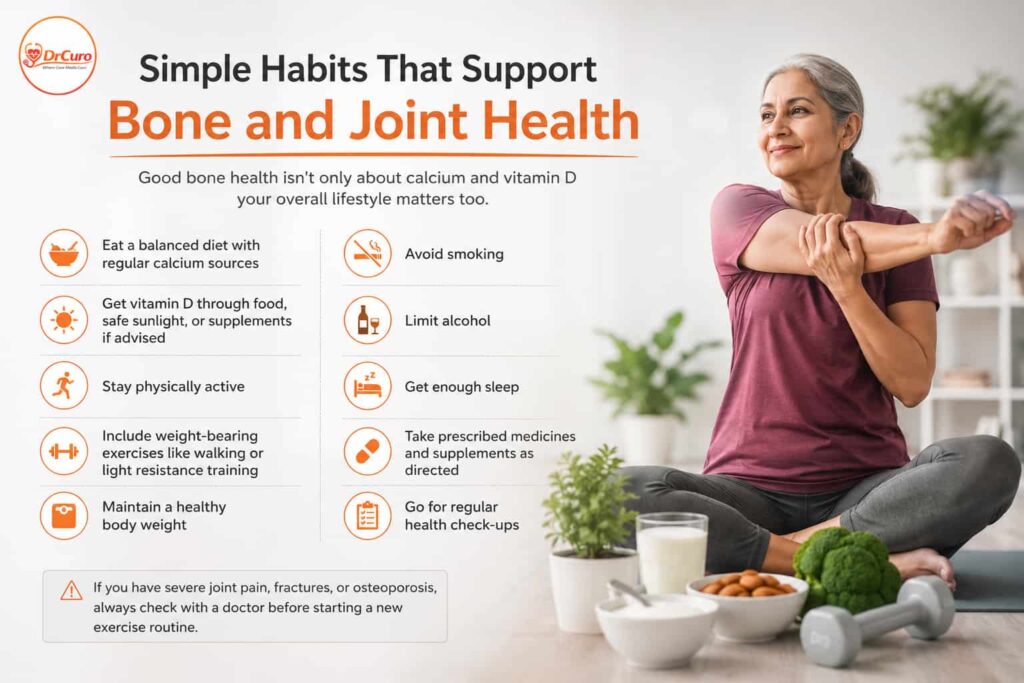
If you have severe joint pain, fractures, or osteoporosis, always check with a doctor before starting a new exercise routine.
When Should You See a Doctor?
Don’t ignore joint pain that keeps coming back or getting worse. See a doctor if you notice:
- Joint pain lasting several weeks
- Repeated muscle aches or weakness
- Trouble walking or climbing stairs
- Frequent falls
- Bone pain with no clear reason
- Joint swelling
- Severe stiffness
- Pain after an injury
- Unexplained weight loss
- A history of fractures or osteoporosis
Seek urgent medical care if you have severe pain after an injury, can’t use a limb, notice major swelling, or experience chest pain or breathing difficulty.
Frequently Asked Questions
1. Can vitamin D deficiency cause joint pain?
It can be linked to muscle aches and bone discomfort, but joint pain has many other causes too, so it shouldn’t be assumed automatically.
2. Can low calcium cause knee pain?
It’s possible in severe cases, but knee pain is more often linked to arthritis, injury, or other joint issues. A doctor can help find the real cause.
3. Should everyone with joint pain take vitamin D?
No. Supplements should only be taken if a deficiency is confirmed through testing and recommended by a doctor.
4. Can sunlight boost vitamin D naturally?
Yes, your skin produces vitamin D from sunlight, but the amount varies from person to person. Always avoid excessive, unprotected sun exposure.
5. Is it better to get calcium from food or supplements?
Food is usually the best first source for most people. Supplements are only needed if your diet alone isn’t enough — a doctor can guide you on this.
6. Can calcium and vitamin D supplements cure arthritis?
No. They may help correct a deficiency and support bone health, but arthritis needs its own specific treatment.
7. How do I know if my joint pain is from a deficiency?
You can’t know for sure just from symptoms. A doctor will consider your history, examination, and blood tests before confirming the cause.
Conclusion
Calcium and vitamin D are essential for strong bones, healthy muscles, and pain-free movement, but they aren’t the only piece of the puzzle when it comes to joint pain. A deficiency can definitely contribute to bone and muscle discomfort, but conditions like arthritis, injuries, and inflammation can cause very similar symptoms. The best approach is to eat a balanced diet, get safe sun exposure, stay active, and maintain a healthy weight and if your joint pain doesn’t go away, get it properly checked instead of guessing the cause. At DrCuro, we believe in helping you understand what’s really going on in your body, so you get the right diagnosis and the right care, instead of relying on assumptions or self-treatment.




No Comment! Be the first one.