






IVF vs Surrogacy: Which Option Is Right for You?
Starting a family is one of the biggest dreams in life, and it can feel very hard when pregnancy does not happen naturally. Many people hear the words “IVF” and “surrogacy”...

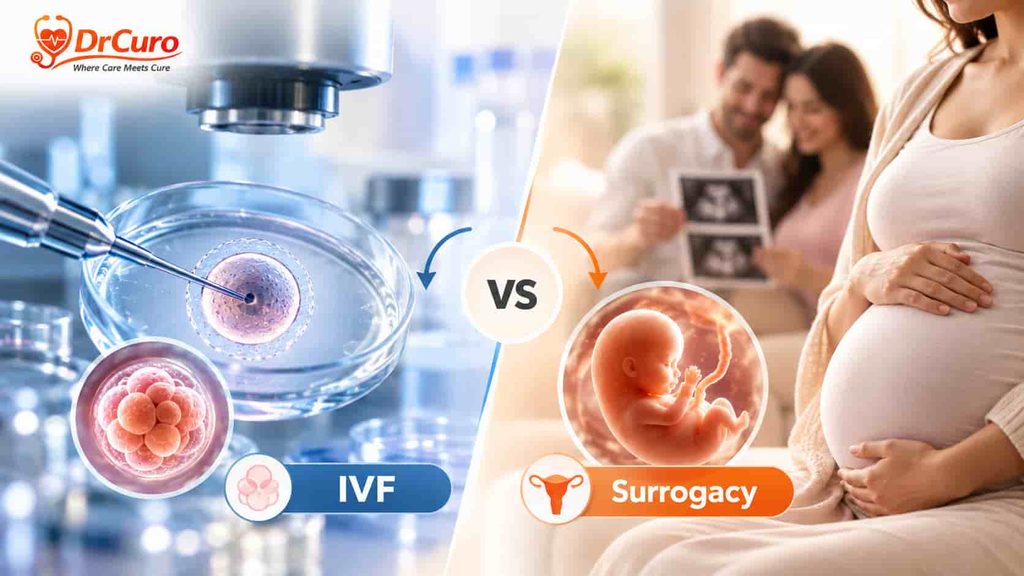
Starting a family is one of the biggest dreams in life, and it can feel very hard when pregnancy does not happen naturally. Many people hear the words “IVF” and “surrogacy” and think they are two choices to pick from. In truth, they are not the same kind of thing. IVF is a medical treatment that helps make an embryo in a lab. Surrogacy is an arrangement where another woman carries the pregnancy for the intended parents. Sometimes only IVF is needed, and sometimes both are used together. Knowing this difference can help you feel less confused and talk to your doctor with more confidence.
Table Of Content
- What Is IVF?
- What Is Surrogacy?
- IVF vs Surrogacy: The Main Differences
- Can IVF and Surrogacy Be Used Together?
- Which One Is Right for You?
- Is IVF Better Than Surrogacy?
- Risks and Limits You Should Know
- Legal Points to Understand First
- What About the Cost?
- Emotional Side of the Journey
- Questions to Ask Your Fertility Doctor
- Conclusion
What Is IVF?
IVF stands for in vitro fertilization. In this ivf treatment, a woman takes medicines that help her ovaries make more than one egg. The doctor then collects these eggs with a small procedure. In the lab, the eggs are mixed with sperm so that they can become embryos. After a few days, a healthy embryo is placed inside the uterus, and if all goes well, pregnancy begins. In most IVF cases, the intended mother carries the baby herself. IVF only helps with the step of creating the embryo. It does not mean another woman will carry the baby.
IVF may be suggested when there is:
- Blocked or damaged fallopian tubes
- Low sperm count or weak sperm movement
- Problems with ovulation
- Endometriosis
- Lower egg quality or quantity because of age
- Unexplained infertility
- Earlier treatments, such as medicines or IUI, that did not work

Simple steps of IVF treatment:
- Fertility tests and doctor consultation
- Medicines to help the ovaries make more eggs
- Scans and blood tests to track egg growth
- Egg collection
- Sperm collection
- Fertilization in the lab
- Embryo growth and checking
- Embryo transfer into the uterus
- Pregnancy test after about two weeks
What Is Surrogacy?
Surrogacy is when a woman, called a surrogate, carries and gives birth to a baby for another person or couple. This is usually done when the intended mother cannot carry a pregnancy safely or at all. In the most common type, called gestational surrogacy, the embryo is made in the lab using IVF from the eggs and sperm of the intended parents or donors. The embryo is then placed in the surrogate’s uterus. The surrogate is not the genetic mother of the baby. In the older type, called traditional surrogacy, the surrogate’s own egg is used, which makes it far more complicated emotionally and legally. This is why gestational surrogacy is what most clinics and laws talk about today.
Surrogacy may be considered when:
- The woman was born without a uterus or had it removed
- Pregnancy could be dangerous for her health because of a heart, kidney, or other serious condition
- She has had repeated pregnancy loss due to uterine problems
- She has had repeated IVF failures because of the uterus
- She had serious complications in an earlier pregnancy
- A man or a man couple wants a child and needs someone to carry the pregnancy, where the law allows
IVF vs Surrogacy: The Main Differences
The table below shows the difference in a simple way.
| Point | IVF | Surrogacy |
| What it is | A fertility treatment that creates an embryo in a lab | An arrangement where another woman carries the pregnancy |
| Who carries the baby | Usually the intended mother | A surrogate |
| Is IVF used? | IVF is the treatment itself | Usually yes, to create the embryo |
| Main reason to choose | Trouble getting pregnant | Pregnancy is unsafe or not possible for the intended mother |
| Legal rules | Fewer, mostly about consent and clinic rules | Many, including approvals and agreements |
| Cost | Lower | Higher, because it has extra steps and expenses |
| Emotional side | Stress from medicines, waiting, and results | Same stress, plus a relationship with the surrogate |
Can IVF and Surrogacy Be Used Together?
Yes, and this happens quite often. Think of it like this: IVF answers the question “how will the embryo be made?” and surrogacy answers the question “who will carry the pregnancy?” In gestational surrogacy, the eggs and sperm are combined in the lab through IVF. The embryo may be frozen or transferred fresh, and the doctor places it in the surrogate’s uterus. So when people say “IVF or surrogacy,” they are really comparing two different parts of the same journey. Some couples need only IVF. Some need both. A very small number need other options, such as donor eggs or donor sperm.
Which One Is Right for You?
There is no one answer that fits everyone. The right path depends on why you are not able to get pregnant and whether you can safely carry a baby. If your uterus is healthy and pregnancy is safe for you, then ivf treatment may be enough. If carrying a pregnancy is not safe or not possible, your doctor may talk to you about surrogacy, where the law allows it. Try not to choose a treatment only because a friend or relative had success with it. Every body is different, and what worked for one person may not work for another.
Things your doctor will look at:
- Your age and the age of your partner
- The cause of infertility
- Egg count and egg quality
- Sperm health
- Health of the uterus
- Past pregnancies or miscarriages
- Earlier fertility treatments and their results
- Your overall health and any long-term illness
- Whether you can safely carry a pregnancy
- Your emotional readiness
- Legal eligibility
Is IVF Better Than Surrogacy?
Neither is better than the other because they do different jobs. IVF helps create an embryo when natural conception is hard. Surrogacy helps when the woman cannot carry the pregnancy. If IVF can solve your problem, surrogacy is usually not needed. If pregnancy is not possible or not safe, IVF alone will not be enough, and surrogacy may be the way forward. So the best choice is the one your medical reports point to, not the one that sounds easier or more popular.
Risks and Limits You Should Know
Every fertility treatment has some risks, and it is good to know them early. IVF does not work every time. Success depends a lot on age, egg quality, and the cause of infertility, and some couples need more than one cycle. Fertility medicines can cause bloating, mood changes, and headaches. In some women, they can cause a condition called OHSS, where the ovaries become swollen and painful. Transferring more than one embryo can lead to twins or triplets, which carry higher risks for both mother and babies. With surrogacy, there are extra risks and worries, such as the health of the surrogate, the emotional bond, and legal problems if papers are not done correctly. Your doctor should explain all of this clearly before you begin.
Legal Points to Understand First
Laws on surrogacy are different in every country, and in many places they are strict. In India, for example, surrogacy is controlled by the Surrogacy (Regulation) Act, 2021, and IVF clinics come under the Assisted Reproductive Technology (Regulation) Act, 2021. Commercial surrogacy, where a surrogate is paid for carrying a baby, is not allowed. Only altruistic surrogacy is permitted, where the surrogate is not paid beyond medical costs and insurance. There are also rules about who can become intended parents, the age of the surrogate, and the certificates needed before starting. These rules can change, so always check the latest rules with your clinic or a legal expert before you take any step.
What About the Cost?
The cost of IVF changes from clinic to clinic and from person to person. It usually includes consultation, tests, medicines, egg collection, lab work, embryo care, and embryo transfer. Extra costs may come up if you need more cycles, frozen embryos, or special tests on the embryo. Surrogacy costs more because it adds the surrogate’s medical care, pregnancy monitoring, insurance, legal paperwork, and counselling on top of the IVF cost. Since no two cases are the same, ask your clinic for a written estimate and find out what is included and what is not, so there are no surprises later.
Emotional Side of the Journey
Fertility treatment is not only physical, and it can be very tiring for the mind as well. Many people feel stress, worry, guilt, or sadness during the waiting periods and after a failed cycle. Partners may feel differently, and that is normal. With surrogacy, there can be extra feelings, such as trust, worry about the surrogate’s health, or fear about the process. Talk openly with your partner, take breaks when needed, and think about speaking to a counsellor. Remember that no treatment can promise a baby, so hoping for the best while being ready for different outcomes can make the journey a little easier.
Questions to Ask Your Fertility Doctor
Before you decide, take a list of questions to your appointment.
- What is the most likely reason for our difficulty in getting pregnant?
- Is IVF suitable for us?
- Is it safe for me to carry a pregnancy?
- Why do you suggest surrogacy in my case?
- What are the steps, and how long will it take?
- What are the risks and side effects?
- How many cycles might we need?
- What is the total expected cost?
- What legal papers do we need?
- Are there other options we should know about?
Conclusion
IVF and surrogacy are not rivals. IVF is a treatment that helps create an embryo, while surrogacy is an arrangement in which another woman carries the pregnancy, and the two can work together when needed. The right choice depends on your health, your fertility history, your ability to carry a pregnancy, and the laws in your country. The best first step is to talk to a qualified fertility specialist, ask honest questions, and take the time you need to decide. At drcuro, our goal is to share simple, trustworthy health information so that you can understand your options and make calm, informed decisions about your family.








No Comment! Be the first one.