






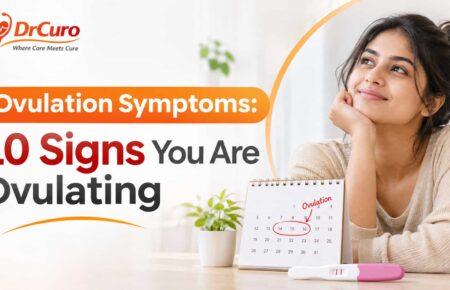
Ovulation Symptoms: 10 Signs You Are Ovulating
If you are trying to get pregnant, few things matter as much as knowing when you ovulate. Yet for many women, ovulation feels like a mystery. The egg is released silently, and the body gives only...
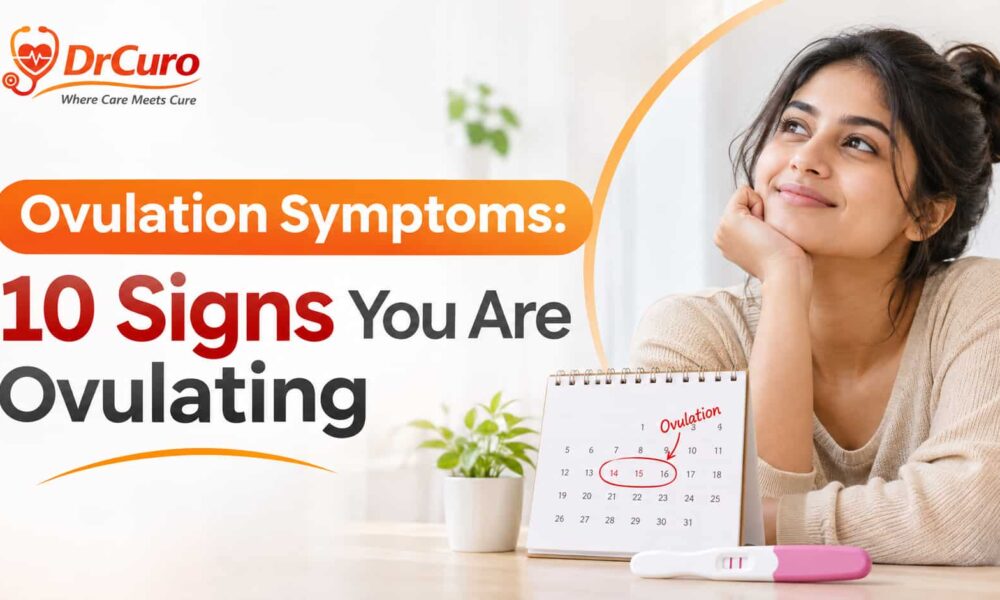
If you are trying to get pregnant, few things matter as much as knowing when you ovulate. Yet for many women, ovulation feels like a mystery. The egg is released silently, and the body gives only small hints that it has happened. The good news is that your body does send signals, and once you learn to read them, you can time intercourse far more accurately and understand your cycle better.
Table Of Content
- What Is Ovulation and Why Does It Matter?
- Your Fertile Window: When Do You Actually Ovulate?
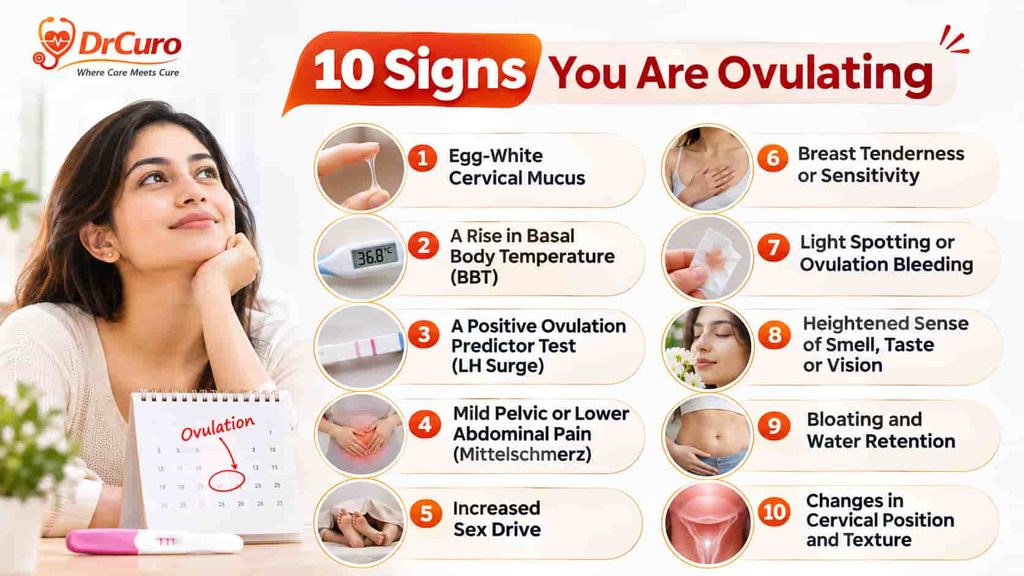
- 10 Signs You Are Ovulating
- 1. Egg-White Cervical Mucus
- 2. A Rise in Basal Body Temperature (BBT)
- 3. A Positive Ovulation Predictor Test (LH Surge)
- 4. Mild Pelvic or Lower Abdominal Pain (Mittelschmerz)
- 5. Increased Sex Drive
- 6. Breast Tenderness or Sensitivity
- 7. Light Spotting or Ovulation Bleeding
- 8. Heightened Sense of Smell, Taste or Vision
- 9. Bloating and Water Retention
- 10. Changes in Cervical Position and Texture
- How to Confirm That You Have Ovulated
- Ovulation Symptoms vs PMS vs Early Pregnancy
- Signs You May Not Be Ovulating
- What Affects Ovulation?
- Practical Tips to Support Healthy Ovulation
- When to See a Doctor
- Frequently Asked Questions About Ovulation Symptoms
- What are the first signs of ovulation?
- How long do ovulation symptoms last?
- Can you ovulate without any symptoms?
- When is the best time to have sex to get pregnant?
- Can you get pregnant right after ovulation symptoms appear?
- Is ovulation pain normal?
- Why do I have ovulation symptoms but my ovulation test is negative?
- Do irregular periods mean I am not ovulating?
- Sumarry
This guide explains the most common ovulation symptoms in detail: what causes each one, how reliable it is, and what it feels like in real life. You will also learn how to confirm ovulation, how it differs from PMS and early pregnancy signs, what it means if you are not ovulating, and when it is time to speak to a fertility specialist.
| Quick answerThe 10 main signs of ovulation are: (1) egg-white cervical mucus, (2) a rise in basal body temperature, (3) a positive LH test, (4) mild one-sided pelvic pain, (5) higher sex drive, (6) breast tenderness, (7) light spotting, (8) a sharper sense of smell, taste or vision, (9) bloating, and (10) changes in the position and feel of the cervix. Most women notice three or four of these, not all ten. |
What Is Ovulation and Why Does It Matter?
Ovulation is the release of a mature egg from one of your ovaries into the fallopian tube, where it can be fertilised by sperm. It is the central event of the menstrual cycle, and without it, natural pregnancy cannot happen.
Each month, a group of follicles in the ovaries begins to grow under the influence of follicle-stimulating hormone (FSH). Usually one follicle becomes dominant and produces rising levels of oestrogen. When oestrogen reaches a peak, the brain responds with a sudden burst of luteinising hormone (LH). This LH surge triggers the follicle to rupture and release the egg, typically 24 to 36 hours later.
After ovulation, the empty follicle turns into the corpus luteum, which produces progesterone. Progesterone prepares the lining of the womb for a possible pregnancy and is also responsible for several of the symptoms women notice after ovulation, such as a higher body temperature and breast tenderness. If the egg is not fertilised, the corpus luteum fades, hormone levels fall and a period begins about 12 to 14 days later.
Understanding this hormonal sequence makes every ovulation symptom easier to interpret. Nearly every sign in this article is the visible result of oestrogen rising, LH surging or progesterone taking over.
Your Fertile Window: When Do You Actually Ovulate?
A common myth is that every woman ovulates on day 14. In reality, that is true only for a textbook 28-day cycle. Normal cycles range from 21 to 35 days, and ovulation usually happens about 12 to 16 days before your next period starts, not a fixed number of days after the last one. A woman with a 32-day cycle may ovulate around day 17 or 18, while someone with a 26-day cycle may ovulate around day 12.
The egg survives only 12 to 24 hours after release. Sperm, however, can live for up to five days in fertile cervical mucus. This creates a fertile window of about six days: the five days before ovulation plus the day of ovulation itself. The two days before ovulation and the day of ovulation are the most fertile of all.
| Cycle phase | Typical timing (28-day cycle) | What is happening |
| Menstrual phase | Days 1 to 5 | Womb lining sheds; hormone levels are low |
| Follicular phase | Days 1 to 13 | Follicles grow; oestrogen rises; cervical mucus increases |
| Ovulation | Around day 14 | LH surge; egg released; peak fertility |
| Luteal phase | Days 15 to 28 | Progesterone rises; temperature stays high; period follows if no pregnancy |
Because cycle length differs from woman to woman (and from month to month), relying on the calendar alone is not accurate enough. Combining the physical signs below is far more reliable.
10 Signs You Are Ovulating
The following ovulation symptoms are listed roughly in order of how reliable and commonly noticed they are. Remember that no single sign is perfect. The strongest approach is to look for a pattern across two or three signs.
1. Egg-White Cervical Mucus
This is the single most useful physical sign. As oestrogen climbs before ovulation, the cervix produces more mucus, and its texture changes from dry or sticky to creamy, then to clear, slippery and stretchy, much like raw egg white. You can often stretch it between two fingers for an inch or more without it breaking.
This fertile-quality mucus protects and nourishes sperm and helps them swim towards the egg. When you notice it, ovulation is usually within one to three days. After ovulation, progesterone makes the mucus thick, tacky or dry again, so the change back is also a useful clue.
2. A Rise in Basal Body Temperature (BBT)
Your basal body temperature is your lowest resting temperature, measured first thing in the morning before getting out of bed. After ovulation, progesterone raises it by roughly 0.3 to 0.6 degrees Celsius (about 0.5 to 1 degree Fahrenheit), and it stays higher until your next period.
The catch is that BBT confirms ovulation only after it has happened, so it is best for understanding your pattern over three or more cycles rather than timing the current one. Illness, alcohol, poor sleep and travel can disturb readings.
3. A Positive Ovulation Predictor Test (LH Surge)
Ovulation predictor kits (OPKs) detect the LH surge in urine. A positive result means ovulation is likely within the next 24 to 36 hours, which makes OPKs one of the best tools for timing intercourse in advance.
For best results, start testing a few days before your expected fertile window, test in the afternoon (when LH is easiest to detect) and avoid drinking large amounts of fluid beforehand. Women with PCOS can have persistently high LH, which may cause confusing or repeated positive results. If this sounds familiar, read more about PCOS and infertility.
4. Mild Pelvic or Lower Abdominal Pain (Mittelschmerz)
Some women feel a brief twinge, cramp or dull ache on one side of the lower abdomen around mid-cycle. This is called mittelschmerz, a German word meaning “middle pain”, and it affects roughly one in five women. It may be caused by the follicle stretching the surface of the ovary just before it releases the egg, or by a small amount of fluid or blood released at rupture.
The pain usually lasts from a few minutes to a day or two, and it may switch sides from month to month. It should be mild. Severe, sharp or lasting pain, or pain with fever, vomiting or heavy bleeding, is not a normal ovulation symptom and needs prompt medical attention.
5. Increased Sex Drive
Many women notice a stronger libido in the days around ovulation. Rising oestrogen and a small surge in testosterone are thought to be responsible. From a biological point of view, this makes sense, since desire peaks when conception is most likely.
A higher sex drive is easy to dismiss because it varies with stress, mood and relationship factors. It is most helpful when it matches other signs, such as fertile mucus or a positive LH test.
6. Breast Tenderness or Sensitivity
Breast soreness is better known as a PMS symptom, but some women feel tenderness, heaviness or nipple sensitivity at ovulation as well. The hormonal shifts of the LH surge and the early rise in progesterone are the likely causes.
A useful clue: breast tenderness that begins around ovulation and then fades is more typical of ovulation, while tenderness that builds and peaks just before the period is more typical of PMS.
7. Light Spotting or Ovulation Bleeding
A small number of women notice a few drops of pink or light brown blood around mid-cycle. It occurs when oestrogen drops briefly right after its peak, which can cause a small amount of the womb lining to shed. The spotting is light, lasts one to two days and is not enough to fill a pad or tampon.
Occasional ovulation spotting is harmless. However, regular heavy or prolonged mid-cycle bleeding should be checked by a doctor, as it can be linked to hormonal imbalance, polyps or infection.
8. Heightened Sense of Smell, Taste or Vision
Studies suggest that some women have a sharper sense of smell around ovulation, when oestrogen is at its highest. Taste and even visual sensitivity may also feel more acute. Women often say they notice scents more strongly, or are suddenly bothered by smells that normally do not affect them.
This sign is subjective and varies a lot between women, so it works best as a supporting clue rather than a stand-alone indicator.
9. Bloating and Water Retention
Hormonal changes around ovulation can make your body hold on to fluid, leaving you feeling puffy or bloated for a day or two. Some women also notice slight weight changes on the scale. Mild bloating can occur in many phases of the cycle, so treat it as a minor sign only.
10. Changes in Cervical Position and Texture
The cervix itself changes through the cycle. Around ovulation it tends to become higher, softer, wetter and slightly more open, often described as feeling like “SHOW”: soft, high, open and wet. Outside the fertile window, it is lower, firmer and more closed, a bit like the tip of your nose.
Checking the cervix needs practice and clean hands, and it is not for everyone. If you are not comfortable with it, you can rely on the other nine signs instead.
| Do you need all 10 signs?No. Most women notice only a few ovulation symptoms in a given month, and some notice none at all. Silent ovulation is common and perfectly normal. What matters is that ovulation actually occurs, which can be confirmed with the methods below. |
How to Confirm That You Have Ovulated
Symptoms are helpful clues, but they are not proof. If you want certainty, several methods can confirm or predict ovulation. Each has strengths and limits.
| Method | Predicts or confirms? | Accuracy and notes |
| Cervical mucus tracking | Predicts | Free and useful; needs a few cycles of practice |
| Basal body temperature chart | Confirms after the event | Good for pattern recognition; affected by sleep, alcohol and illness |
| LH ovulation test strips | Predicts (24 to 36 hours ahead) | Very helpful; may mislead in PCOS |
| Follicle tracking ultrasound | Predicts and confirms | Most accurate; shows follicle size and rupture; done at a clinic |
| Mid-luteal progesterone blood test | Confirms | Done about 7 days before the expected period; a result above about 3 ng/mL suggests ovulation occurred |
For most women who are trying to conceive, a practical routine is to watch cervical mucus, use LH strips during the expected fertile window and chart BBT in the background. If pregnancy does not happen within a reasonable time, an ultrasound follicle study and hormone tests give a clear answer.
Ovulation Symptoms vs PMS vs Early Pregnancy
Many ovulation symptoms overlap with PMS and early pregnancy, which can cause confusion. Here is how to tell them apart.
| Symptom | Ovulation | PMS | Early pregnancy |
| Timing | Mid-cycle | 1 to 2 weeks before period | After a missed period (some signs earlier) |
| Cervical mucus | Clear, stretchy | Thick, dry or creamy | Creamy, may increase |
| Breast changes | Mild, short-lived | Builds before period | Persistent, often more marked |
| Pain | One-sided twinge | Period-type cramps | Mild cramping or none |
| Temperature | Rises after ovulation | Stays high, drops before period | Stays high beyond 18 days |
A BBT that remains elevated for more than 18 days after ovulation is a strong hint of pregnancy, and a home pregnancy test after a missed period will confirm it.
Signs You May Not Be Ovulating
Failure to ovulate, called anovulation, is one of the most common and most treatable causes of female infertility. Since ovulation symptoms can be subtle, the signs of its absence are worth knowing too. Possible warning signs include:
• Irregular or absent periods: cycles shorter than 21 days, longer than 35 days, or periods that skip for months
• No cervical mucus change: no egg-white mucus at any point in the month
• Flat BBT chart: no clear temperature shift after mid-cycle
• Negative LH tests across several consecutive cycles
• Excess hair growth, persistent acne or scalp hair thinning, which may point to raised androgens
• Unexplained weight gain or difficulty losing weight, which can accompany insulin resistance
The most common cause of anovulation is polycystic ovary syndrome (PCOS), which affects roughly one in ten women of reproductive age. Other causes include thyroid disease, raised prolactin, very low body weight or excessive exercise, high stress, perimenopause and premature ovarian insufficiency. To understand how these signs fit into the bigger picture, read our guide on signs of infertility in women and the detailed article on PCOS and infertility.
Importantly, an irregular cycle does not mean pregnancy is impossible. Ovulation can usually be restored with lifestyle changes, medication or a combination of both.
What Affects Ovulation?
Ovulation depends on a delicate conversation between the brain, ovaries and thyroid. Anything that disturbs this system can delay or prevent ovulation. The main factors are:
• Stress: chronic stress raises cortisol, which can suppress the hormones that drive ovulation
• Body weight: both significant underweight and overweight can disrupt cycles
• Exercise: very intense training without enough calories may switch ovulation off
• Thyroid function: underactive and overactive thyroid both cause irregular cycles
• Age: egg quantity and quality decline gradually from the mid-30s, and ovulation becomes less regular approaching menopause
• Medical conditions: PCOS, endometriosis, high prolactin and premature ovarian insufficiency
• Medicines and contraception: cycles may take a few weeks or months to settle after stopping hormonal contraception
• Sleep and shift work: disturbed body clocks affect hormone rhythm
Practical Tips to Support Healthy Ovulation
While no lifestyle change can guarantee ovulation, these evidence-based habits support a regular cycle:
• Aim for a healthy, stable body weight, since even a modest loss of 5 to 10 percent can restore ovulation in women with PCOS who are overweight
• Eat balanced meals with enough protein, fibre, healthy fats and iron; avoid crash diets
• Exercise moderately; around 150 minutes a week is a sensible goal
• Manage stress through sleep, walking, yoga, breathing exercises or counselling
• Limit alcohol, avoid smoking and keep caffeine moderate
• Take folic acid (usually 400 micrograms daily) at least one month before trying to conceive, as advised by your doctor
• Track your cycle for at least three months with a simple app or diary
You can find more articles on cycle health, hormones and conception in our Fertility & Women Health section.
When to See a Doctor
Do not wait too long if something seems wrong. Medical guidelines generally recommend a fertility evaluation in these situations:
• You are under 35 and have been trying to conceive for 12 months without success
• You are 35 or older and have been trying for 6 months
• You are 40 or older, or already know you have a fertility-related condition (seek help straight away)
• Your periods are very irregular, absent or extremely painful
• You never see any ovulation signs and your LH tests stay negative
• You have a history of pelvic infection, endometriosis, thyroid disease, or a previous pelvic surgery
• You have severe one-sided pain, heavy bleeding, fever or fainting at any time
A fertility doctor will typically do a hormone panel, a pelvic ultrasound and, where needed, a follicle tracking scan to confirm ovulation. If a problem is found, effective options are available, from simple ovulation-inducing medicines to assisted treatments. You can read an overview of the choices on our infertility treatment page.
Frequently Asked Questions About Ovulation Symptoms
What are the first signs of ovulation?
The earliest signs are usually a change in cervical mucus (it becomes wetter, slipperier and more stretchy) and a rising sense of energy and libido. A positive LH test follows about 24 to 36 hours before the egg is released.
How long do ovulation symptoms last?
Most ovulation symptoms last one to three days. Egg-white cervical mucus can appear for three to five days in the run-up to ovulation, while mid-cycle pelvic pain generally lasts from a few minutes to about 48 hours.
Can you ovulate without any symptoms?
Yes. Many women ovulate every month without noticing any physical signs. The absence of symptoms does not mean you are not ovulating, which is why tracking tools such as LH strips and basal body temperature charts are useful.
When is the best time to have sex to get pregnant?
The fertile window is about six days long, ending on the day of ovulation. Having intercourse every one to two days during this window, especially the two days before ovulation, gives the best chance of conception.
Can you get pregnant right after ovulation symptoms appear?
The egg survives only 12 to 24 hours after release, but sperm can live up to five days in fertile cervical mucus. So the days before and on the day of ovulation are the most fertile, and the chance falls sharply once ovulation has passed.
Is ovulation pain normal?
Mild, one-sided pelvic twinges (mittelschmerz) are normal and affect roughly one in five women. Severe pain, pain lasting several days, fever or heavy bleeding is not normal and needs medical evaluation.
Why do I have ovulation symptoms but my ovulation test is negative?
You may be testing at the wrong time of day, your urine may be diluted, or the LH surge may be brief and was missed. Testing twice daily during your fertile window helps. If tests stay negative for several cycles, speak to a doctor.
Do irregular periods mean I am not ovulating?
Not always, but cycles shorter than 21 days or longer than 35 days often signal irregular or absent ovulation. Conditions such as PCOS, thyroid disorders and high stress are common causes, and a doctor can confirm with blood tests and an ultrasound.
Sumarry
Ovulation symptoms are your body’s way of telling you that your fertile window has opened. Egg-white cervical mucus, a positive LH test, a mild mid-cycle twinge and a later rise in temperature are the clearest clues, and when two or three of them line up, you can be fairly confident that ovulation is near. Remember that every woman is different, and silent ovulation is common.
If you have tracked your cycle for several months and see no signs of ovulation, or if you have been trying to conceive for longer than the recommended time, speak to a specialist early. Many causes of anovulation are very treatable, and early guidance can save months of worry. Learn more about signs of infertility in women, explore the link between PCOS and infertility, or read about modern infertility treatment options to plan your next step.
| Medical disclaimerThis article is for general education only and is not a substitute for personal medical advice, diagnosis or treatment. Always consult a qualified doctor about your symptoms, cycle concerns or fertility plans. |



No Comment! Be the first one.