








How to Reduce Stomach Bloating Naturally: 10 Practical Ways That Actually Help
You sit down to a normal meal, and an hour later your waistband feels tight, your stomach feels heavy, and you’re quietly wishing you’d skipped that second helping. If that sounds...
You sit down to a normal meal, and an hour later your waistband feels tight, your stomach feels heavy, and you’re quietly wishing you’d skipped that second helping. If that sounds familiar, you’re in good company. Bloating is one of the most common digestive complaints, and most of the time it’s more annoying than dangerous.
Table Of Content
- What Is Bloating, Exactly?
- Why Does Bloating Happen?
- Quick Relief: How to Reduce Bloating Immediately
- 10 Natural Ways to Reduce Stomach Bloating
- 1. Slow down when you eat
- 2. Walk after meals
- 3. Figure out your personal triggers
- 4. Know about FODMAPs
- 5. Eat moderate portions
- 6. Add fiber slowly
- 7. Cut back on fizzy drinks
- 8. Drink enough water
- 9. Give ginger or peppermint a try
- 10. Manage stress and sleep
- Foods That Are Usually Easier on a Bloated Stomach
- When Bloating Isn’t Just About Food
- Final Thoughts
- Frequently Asked Questions
The most effective way to reduce stomach bloating naturally is to fix the everyday habits that trap gas in your gut. Eat slowly and chew well so you swallow less air, keep portions moderate, cut back on fizzy drinks and chewing gum, and take a gentle 10 to 15 minute walk after meals. Light movement helps your gut clear gas, and small clinical studies have found that it eases bloating symptoms. Drinking enough water and adding fiber gradually can also help if constipation is part of the problem.
If bloating keeps coming back, look at your personal triggers. A simple food diary can show whether foods like onions, beans, dairy, or sugar-free sweets are the culprit, and managing stress and sleep helps too, since your gut and brain are closely linked. Occasional bloating is normal, but see a doctor if it is persistent or comes with weight loss, blood in the stool, ongoing pain, or vomiting.
Below, we’ll go through why bloating happens, what to try when you need relief fast, and each of the 10 methods in detail.
What Is Bloating, Exactly?
Bloating is that tight, full, swollen feeling in your abdomen. Sometimes your belly actually looks bigger (doctors call this distension), and sometimes it only feels that way. Either way, it usually comes from trapped gas, slow digestion, or a gut that’s extra sensitive to certain foods.
One quick way to tell bloating from belly fat: bloating comes and goes. You might wake up flat and look six months pregnant by evening. Fat doesn’t change over a few hours.
Why Does Bloating Happen?
Most bloating comes down to a handful of causes:
- Swallowed air. Eating fast, chewing gum, sipping through straws, and drinking fizzy drinks all send extra air into your gut.
- Gas-producing foods. Some carbs aren’t fully digested in the small intestine. Gut bacteria ferment them in the large intestine, and gas is the by-product.
- Constipation. When stool moves slowly, gas gets trapped behind it.
- Food intolerances. Lactose intolerance is the classic example, and it’s very common in adults.
- Irritable bowel syndrome (IBS). Many people with IBS have a gut that reacts strongly to normal amounts of gas.
- Stress. Your gut and brain are in constant conversation, so a stressful week often means a bloated one.
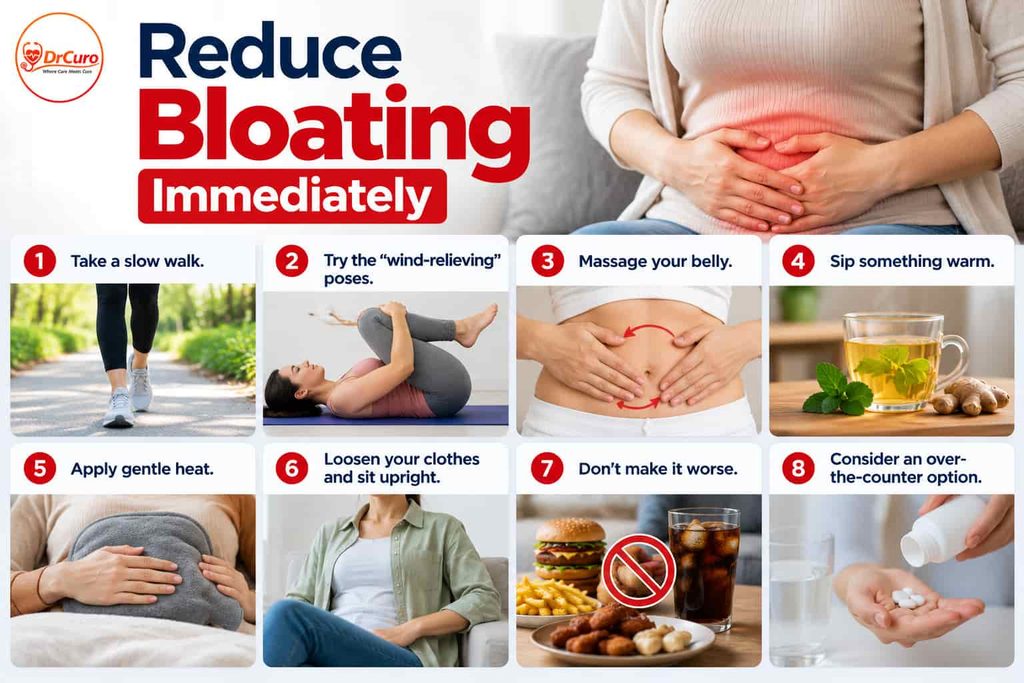
Quick Relief: How to Reduce Bloating Immediately
There’s no instant cure, but these steps can help you feel more comfortable within 20 to 30 minutes. Start with the first two, since they have the best evidence.
- 1. Take a slow walk. Even 10 minutes helps. Light movement helps your gut move gas along, and small clinical studies have found it eases bloating. Skip intense exercise, which can make you feel worse.
- 2. Try the “wind-relieving” poses. Lie on your back and hug your knees to your chest for 30 to 60 seconds, or rest in child’s pose. Both gently compress the abdomen and can help trapped gas pass.
- 3. Massage your belly. Use light pressure and move in slow clockwise circles, starting at the lower right side of your abdomen, going up, across, and down the left side. This follows the direction your colon moves things.
- 4. Sip something warm. Plain warm water or a mild ginger, fennel, or peppermint tea can be soothing. Sip slowly, because gulping adds more air. If you have heartburn, go easy on peppermint, which can make it worse.
- 5. Apply gentle heat. A warm (not hot) water bottle on your stomach can relax tight abdominal muscles and ease cramping.
- 6. Loosen your clothes and sit upright. A tight waistband squeezes your abdomen, and slouching can make the feeling worse.
- 7. Don’t make it worse. For the next few hours, avoid fizzy drinks, chewing gum, straws, and large or greasy meals. Eat slowly if you need to eat.
- 8. Consider an over-the-counter option. Some people find simethicone helpful for gas, and lactase enzymes can help if dairy is the trigger. Evidence varies from person to person, so check with a pharmacist or doctor first, especially if you take other medicines.
What doesn’t work: detox drinks, fasting, or drinking litres of water at once. These won’t remove gas and can leave you feeling worse.
When “immediate relief” isn’t enough: if bloating comes with severe or sudden abdominal pain, repeated vomiting, blood in your stool, or you can’t pass gas or stool, get medical help right away. If it keeps coming back, see a doctor to find the cause.
10 Natural Ways to Reduce Stomach Bloating
1. Slow down when you eat
If you tend to finish dinner in ten minutes flat, this is probably your biggest win. Fast eaters swallow more air and often eat more than they need before their brain registers fullness.
Take smaller bites, chew properly, and put your phone down. Talking while chewing also adds air, so save the long stories for after the meal.
2. Walk after meals
This is the habit with the best evidence behind it, so it gets a bit more space.
In a small 2006 study from Barcelona, researchers gave eight people with bloating a gas load directly into the gut. When the volunteers sat at rest, they held on to much more gas. When they did light exercise, they cleared it far more efficiently and had less discomfort.[1] It’s a small study, so it shouldn’t be treated as the final word.
A more recent trial from Iran looked at 94 people with functional bloating. Those who walked after meals saw improvements in bloating, belching, gas, and abdominal discomfort, and in that study walking did better than prokinetic medication.[2]
You don’t need to power-walk. A relaxed 10 to 15 minute stroll after your biggest meal is a sensible place to start.
3. Figure out your personal triggers
Here’s the thing about food and bloating: there’s no universal “bad food list.” Beans make one person miserable and don’t bother the next.
Keep a simple food diary for two weeks. Write down what you ate, when the bloating hit, and how long it lasted. Patterns tend to show up quickly. Try to resist cutting out half your diet based on guesswork, because that often creates new problems.
4. Know about FODMAPs
If your bloating keeps coming back, it’s worth learning this word. FODMAPs are a group of fermentable carbohydrates found in many everyday foods, and they’re a common reason for gas in sensitive guts.
Typically higher in FODMAPs: onions, garlic, wheat, beans and lentils, apples, pears, mangoes, milk, and sugar-free sweets containing sorbitol or xylitol.
Typically lower in FODMAPs: rice, oats, carrots, cucumber, bananas (firm ones), potatoes, eggs, and lactose-free dairy.
A low-FODMAP diet is meant to be a short, structured trial, ideally with a dietitian, and not a forever diet. Note that apples and pears sometimes get recommended as “high-fiber foods,” but they are also classic FODMAP triggers. If they bloat you, skip them without guilt.
5. Eat moderate portions
Very large or very greasy meals stay in the stomach longer and can leave you feeling stuffed and puffy. You don’t need a rigid six-small-meals plan. Just stop when you’re comfortably full instead of pushing to “finished.”
6. Add fiber slowly
Fiber helps with constipation, which is a major bloating driver. But if you jump from very little fiber to a big bowl of bran, expect more gas, not less.
Add one new fiber-rich food at a time over a couple of weeks, and drink enough water alongside it. Oats, carrots, chia seeds, and cooked vegetables are usually gentler starting points. If you have IBS, some high-fiber foods may make things worse, so go by how you respond.
7. Cut back on fizzy drinks
Fizzy water, soda, and energy drinks all contain dissolved gas that ends up in your digestive tract. If you drink them daily and feel bloated daily, try swapping for plain water for a week and see what happens. Chewing gum and sugar-free candies can add to the problem too.
8. Drink enough water
Staying hydrated keeps stools softer and easier to pass, which helps if constipation is part of your bloating. That said, chugging litres of water won’t flush gas out. Sip steadily through the day and let thirst and urine colour guide you.
9. Give ginger or peppermint a try
Ginger is widely used for digestive discomfort and nausea, and many people find a cup of ginger tea settling. The evidence for bloating specifically is limited, so think of it as a comfort measure, not a cure. Peppermint can relax the gut muscles, though it can aggravate heartburn in some people. If you take regular medication, check with your doctor before using supplements.
10. Manage stress and sleep
This one gets rolled eyes, but it’s real. Many people notice their gut acting up during exams, deadlines, or family drama. Regular movement, enough sleep, and a few minutes of slow breathing each day all help calm the gut-brain connection. If stress is taking over your life, talking to a professional is a good move.
A small bonus tip: try not to lie down right after eating. It won’t cause bloating on its own, but it can make reflux and heaviness worse.
Foods That Are Usually Easier on a Bloated Stomach
| Food | Why it tends to help |
| Oats | Gentle soluble fiber that supports regular bowel movements |
| Firm bananas | Easy to digest and low in FODMAPs |
| Rice | Simple, easy-to-tolerate carbohydrate |
| Carrots (cooked) | Fiber without being heavy on the gut |
| Ginger | May settle an upset stomach |
| Lactose-free yogurt | Offers probiotics without the lactose |
| Water | Keeps things moving |
Tolerance varies, so treat this as a starting point, not a rulebook.
When Bloating Isn’t Just About Food
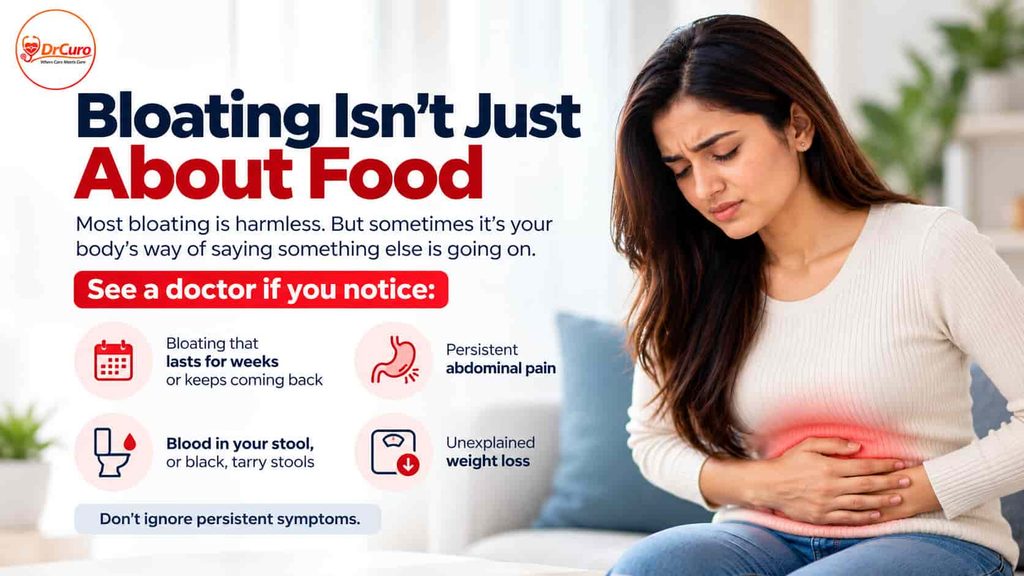
Most bloating is harmless. But sometimes it’s your body’s way of saying something else is going on. See a doctor if you notice:
- Bloating that lasts for weeks or keeps coming back
- Unexplained weight loss
- Blood in your stool, or black, tarry stools
- Ongoing diarrhea or constipation, or a clear change in your usual bowel habits
- Persistent abdominal pain
- Feeling full after only a few bites
- Repeated vomiting
- Swelling in your legs, yellowing of the skin or eyes, or fever
Women should pay particular attention. Persistent bloating that doesn’t settle, especially with pelvic pain or feeling full quickly, should be checked. In rare cases it can be an early sign of ovarian conditions, and getting it looked at early matters.
Go to emergency care straight away if you have severe, sudden abdominal pain, you’re vomiting blood, or your belly is swollen and you can’t pass stool or gas.
Conditions like IBS, celiac disease, lactose intolerance, and small intestinal bacterial overgrowth (SIBO) can all cause long-term bloating, and each has its own treatment. Guessing won’t get you there. A proper evaluation will.
Final Thoughts
Bloating is usually a sign that something in your routine needs a tweak, whether that’s how fast you eat, what’s on your plate, or how much you’re moving. Start with the basics: slow down, walk after meals, and pay attention to your triggers. Give each change a couple of weeks before judging it. And if your symptoms are stubborn or come with any red flags above, don’t tough it out. Book a visit with your doctor.
Frequently Asked Questions
What is the fastest way to reduce stomach bloating?
A gentle walk is the best first step, since light movement helps trapped gas move through the gut. Warm tea, a few relaxing stretches, and avoiding fizzy drinks can add to the relief. If bloating is frequent, it’s worth finding the underlying cause.
Does walking after eating really help with bloating?
Evidence suggests it can. Small clinical studies have found that light activity helps the gut clear gas and eases symptoms in people with bloating.[1][2] A relaxed walk of 10 to 15 minutes is a practical starting point.
Why do I get bloated after every meal?
Common reasons include eating too fast, large portions, swallowing air, FODMAP-rich foods, constipation, or lactose intolerance. If it happens at nearly every meal, a food diary and a conversation with your doctor can help narrow it down.
Is bloating the same as belly fat?
No. Bloating fluctuates through the day and is linked to gas and digestion. Belly fat is stored body fat and doesn’t change within hours.
Can stress cause bloating?
Yes. The gut and brain communicate constantly, and stress can change gut movement and sensitivity. Stress is rarely the only cause, though, so persistent symptoms should still be checked.
When should I see a doctor about bloating?
See a doctor if bloating is persistent, keeps returning, or comes with weight loss, blood in the stool, ongoing pain, vomiting, or changes in bowel habits.





No Comment! Be the first one.