








Gout Treatment and Diet: Managing Uric Acid Naturally
Gout is one of the most painful forms of arthritis, and it often catches people off guard. One day your joint feels fine, and the next morning you can barely stand because of a burning pain in your...

Gout is one of the most painful forms of arthritis, and it often catches people off guard. One day your joint feels fine, and the next morning you can barely stand because of a burning pain in your big toe. This sudden, intense pain is caused by tiny uric acid crystals that build up inside a joint over time. Once these crystals form, even something as light as a bedsheet touching the joint can feel unbearable. While gout is extremely uncomfortable, it is also one of the more manageable types of arthritis when you understand what causes it and how to control it through diet, hydration, and the right medical care. This blog explains gout in simple terms, covers effective joint pain treatment options, and walks through the everyday food choices that can help keep uric acid levels under control.
Table Of Content
- What Is Gout and Why Does It Happen?
- Common Causes of High Uric Acid
- Recognising the Symptoms
- Who Is Most at Risk?
- How Doctors Diagnose Gout
- Treatment Options for Gout
- Foods That Can Help Lower Uric Acid
- Foods to Limit or Avoid
- Hydration Matters More Than You’d Think
- Daily Habits That Support Long-Term Management
- Is Exercise Safe During Gout?
- When Should You See a Doctor?
- What Happens If Gout Goes Untreated?
- Can Gout Be Fully Cured?
- Final Thoughts
What Is Gout and Why Does It Happen?
Gout develops when there is too much uric acid circulating in the blood, a condition doctors call hyperuricemia. Uric acid is a waste product that your body naturally creates when it breaks down purines, which are substances found in your own cells and in many common foods. Normally, this uric acid dissolves in the blood, travels to the kidneys, and leaves the body through urine. The problem starts when the body produces more uric acid than the kidneys can remove, or when the kidneys themselves aren’t filtering it out efficiently enough. When uric acid has nowhere to go, it slowly forms sharp, needle-like crystals inside the joints. These crystals trigger a sudden and intense inflammatory response, which is what causes the swelling, redness, heat, and severe pain associated with a gout attack.
Gout attacks tend to strike without much warning, often waking people up in the middle of the night with throbbing pain in a single joint. The big toe is the most commonly affected area, but gout can also appear in the ankles, knees, wrists, fingers, and elbows. A first attack might last only a few days, but without proper management, attacks tend to become more frequent and can eventually affect multiple joints at once.
Common Causes of High Uric Acid
Not everyone with high uric acid develops gout, but certain factors make it far more likely. Understanding these causes is the first step toward prevention, because many of them are within your control.
| Cause | How It Increases Uric Acid |
| Eating too many purine-rich foods | Produces excess uric acid during digestion |
| Poor kidney function | Reduces the body’s ability to remove uric acid |
| Obesity | Increases uric acid production and slows removal |
| Diabetes and metabolic syndrome | Raises overall gout risk |
| Drinking alcohol | Slows down uric acid excretion |
| Sugary beverages | Increase uric acid formation, especially drinks with fructose |
| Family history | Genetic tendency toward higher uric acid levels |
| Certain medicines | Some drugs can reduce kidney function or raise uric acid |
Recognising the Symptoms
Gout symptoms usually appear suddenly, often overnight, and the pain typically peaks within the first 12 to 24 hours before gradually easing over the following days. Because the symptoms come on so fast and so intensely, many people initially mistake a gout attack for an injury or infection.
- Severe, sudden pain in a single joint
- Visible swelling around the affected area
- Redness and warmth over the joint
- Difficulty walking or bearing weight
- Joint stiffness that lingers after the pain fades
- Tenderness so severe that even light touch is painful
- Pain that tends to start at night
- Noticeably reduced movement in the joint
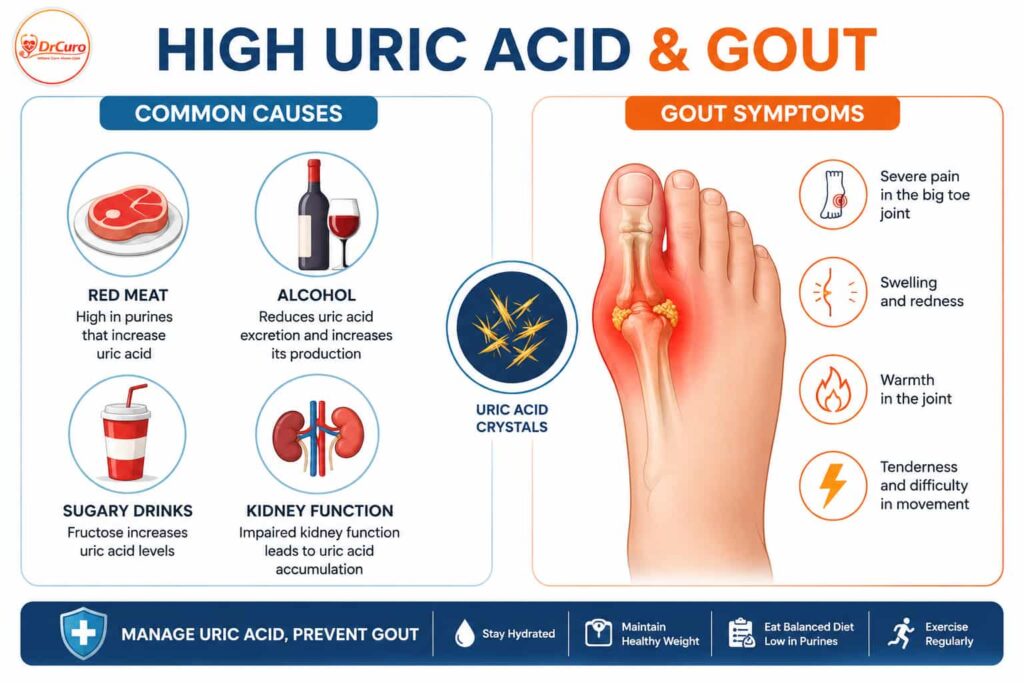
If these symptoms sound familiar, it’s worth seeking proper joint pain treatment early rather than waiting for the attack to pass on its own, since repeated untreated attacks can gradually damage the joint.
Who Is Most at Risk?
Gout can technically affect anyone, but certain groups face a much higher likelihood of developing it. Men over 40 are traditionally considered high-risk, largely because uric acid levels tend to rise with age and are naturally higher in men than in women for most of adult life. Women become more susceptible after menopause, when hormonal changes reduce the protective effect estrogen has on uric acid levels. Beyond age and gender, lifestyle and health conditions play a major role too.
- Overweight or obese individuals
- People with high blood pressure
- Diabetic patients
- Individuals with existing kidney disease
- Regular or heavy alcohol drinkers
- People who eat large amounts of red meat or organ meat
- Those with a family history of gout
- People who frequently drink sugary soft drinks
How Doctors Diagnose Gout
A doctor typically diagnoses gout through a combination of your symptoms, a physical examination, and specific tests that confirm uric acid buildup. Getting an accurate diagnosis matters because gout can sometimes be confused with other joint conditions, and the wrong treatment path can delay real relief.
| Test | Purpose |
| Blood Test | Measures the amount of uric acid in the blood |
| Joint Fluid Test | Checks for uric acid crystals inside the joint |
| X-ray | Assesses whether joint damage has occurred |
| Ultrasound | Detects crystal deposits around the joint |
| Dual-Energy CT Scan | Identifies uric acid crystal accumulation in detail |
Catching gout early, before it causes lasting joint damage, makes a real difference in how manageable the condition becomes over time.
Treatment Options for Gout
The goal of any gout treatment plan is fourfold: relieve pain during an attack, lower uric acid levels over time, prevent future flare-ups, and protect the joints from long-term damage. Most doctors combine medication with lifestyle changes rather than relying on either one alone, since diet and medicine each address different parts of the problem.
During an active gout attack, the priority is reducing inflammation and pain quickly. Doctors commonly prescribe anti-inflammatory medicines, colchicine, or corticosteroids depending on the severity of the attack and the patient’s overall health. These medications work fast and are usually only needed for a short period until the flare-up settles.
For people who experience repeated gout attacks, doctors often move toward long-term treatment aimed at lowering uric acid levels permanently rather than just managing individual flare-ups. These medicines typically work by reducing how much uric acid the body produces or by helping the kidneys clear it out more effectively. It’s worth being clear about one thing here: diet and lifestyle changes genuinely help, but for many people with recurrent gout, they aren’t a full substitute for this kind of long-term medical treatment. The two work best together, and medicines should always be taken under a doctor’s guidance rather than adjusted on your own.
Foods That Can Help Lower Uric Acid
Diet plays a real role in managing gout, even if it isn’t the whole solution on its own. Certain foods can support the body’s natural ability to process and remove uric acid, while also reducing inflammation in the joints.
| Food | Benefit |
| Low-fat milk | Helps the body remove uric acid |
| Yogurt | Good source of low-purine protein |
| Cherries | May help reduce inflammation |
| Citrus fruits | Rich in Vitamin C, which supports uric acid clearance |
| Apples | High in fibre, supports digestion |
| Oats | A healthy, low-purine whole grain |
| Brown rice | A better grain choice than refined alternatives |
| Lentils | Provides plant-based protein without excess purines |
| Cucumbers | Supports hydration |
| Tomatoes | Rich in antioxidants |
| Leafy vegetables | Packed with vitamins and fibre |
| Water | Helps flush uric acid out through urine |
Foods to Limit or Avoid
Just as some foods help, others actively raise uric acid levels and can trigger a painful flare-up. These foods tend to be high in purines or contribute to inflammation in other ways, so cutting back on them is one of the most direct dietary changes you can make.
| Food to Limit | Why It’s a Problem |
| Red meat (beef, lamb, pork) | High in purines |
| Organ meats (liver, kidney) | Very high in purines |
| Shellfish | Can raise uric acid levels |
| Sardines and anchovies | Rich in purines |
| Sugary soft drinks | Increase uric acid production |
| Packaged fruit juices | High sugar content contributes to the same effect |
| Alcohol, especially beer | Slows down uric acid removal |
| Processed foods | Tend to increase overall inflammation |
| Fast food | High in unhealthy fats |
| Excess sweets | Can worsen metabolic health over time |
None of this means these foods are permanently off-limits. The idea is moderation, not total elimination. Someone who eats red meat occasionally as part of an otherwise balanced diet is in a very different position than someone eating it daily alongside sugary drinks and alcohol.
Hydration Matters More Than You’d Think
One of the simplest and most effective habits for anyone managing gout is drinking enough water throughout the day. Proper hydration helps the kidneys do their job more efficiently, flushing excess uric acid out through urine instead of letting it linger in the bloodstream. Most experts suggest aiming for around 2 to 3 litres of water daily, though the right amount can vary depending on your body size, activity level, and the climate you live in. It’s a small habit, but consistently staying hydrated can genuinely reduce how often gout attacks occur.
Daily Habits That Support Long-Term Management
Managing gout isn’t just about avoiding a short list of foods during an attack it’s about building habits that keep uric acid levels stable day after day. The following habits, done consistently, form the backbone of natural gout management alongside any medication your doctor prescribes:
- Drink 2–3 litres of water every day.
- Maintain a healthy body weight, but avoid crash diets or extreme fasting, which can actually raise uric acid temporarily.
- Exercise for at least 30 minutes on most days, using low-impact activities like walking, swimming, or cycling.
- Eat more fresh fruits, vegetables, and whole grains while cutting back on processed foods.
- Limit alcohol, especially beer, and avoid sugary drinks.
- Sleep 7–8 hours a night, since poor sleep is linked to higher inflammation.
- Manage stress through simple practices like meditation or yoga.
- Take prescribed medication consistently and never stop it without your doctor’s advice.
- Go for regular blood tests if you have a history of high uric acid or recurring gout attacks.

Weight loss deserves a special mention here, because excess body fat both increases uric acid production and adds extra mechanical stress on weight-bearing joints like the knees and ankles. Gradual, sustainable weight loss through diet and regular movement can lower uric acid levels, reduce inflammation, and ease pressure on the joints but rapid or extreme weight loss methods often backfire by temporarily spiking uric acid instead.
Is Exercise Safe During Gout?
Regular physical activity is generally good for people managing gout, but timing matters. During an active flare-up, the joint needs rest, not exercise pushing through the pain can make inflammation worse and delay recovery. Once the acute attack has settled, gentle, low-impact activities like walking, swimming, and stretching can help restore joint flexibility, support a healthy weight, and improve overall well-being. If you’re dealing with ongoing joint discomfort even between attacks, it’s best to check with your doctor before starting a new exercise routine, since they can guide you on what’s safe for your specific situation.
When Should You See a Doctor?
A lot of people try to tough out joint pain, assuming it will pass on its own. With gout, this can be a costly mistake, since repeated untreated attacks gradually damage the joint and can lead to complications that are harder to reverse. It’s worth being clear about the specific warning signs that call for prompt medical attention rather than a wait-and-see approach:
- Sudden, severe pain in a joint
- Swelling that isn’t improving after a few days
- Redness and warmth that spreads or worsens
- Repeated gout attacks over a short period
- Difficulty walking because of the pain
- Fever occurring alongside joint swelling
- Pain that continues for several days without relief
- High uric acid levels showing up on a blood test
- Symptoms suggesting kidney stones
- Ongoing joint stiffness that doesn’t resolve between attacks
If any of this sounds familiar, don’t wait it out getting proper joint pain treatment early gives you a much better chance of avoiding long-term joint damage.
What Happens If Gout Goes Untreated?
Ignoring gout for a long stretch of time isn’t just uncomfortable it can lead to real, lasting damage. Left unmanaged, the same crystals that cause the initial pain can accumulate further and start affecting the joint’s structure permanently.
| Complication | Description |
| Permanent joint damage | Ongoing inflammation slowly wears down cartilage and bone |
| Tophi | Hard uric acid deposits that form visibly under the skin |
| Frequent gout attacks | Flare-ups become more common and more severe over time |
| Kidney stones | Uric acid crystals can form stones inside the kidneys |
| Reduced mobility | Joint damage makes daily movement harder |
| Chronic arthritis | Long-term inflammation permanently affects joint function |
| Poor quality of life | Ongoing pain interferes with work, sleep, and daily routines |
Can Gout Be Fully Cured?
Gout is generally considered a long-term, chronic condition rather than something that gets “cured” once and for all. That said, it can be managed extremely well. With the right combination of medication, consistent healthy habits, and regular check-ins with your doctor, most people are able to keep their uric acid levels stable and prevent painful flare-ups from happening often, if at all. The key word here is consistency — gout tends to come back when treatment or healthy habits are dropped too early, even if symptoms have disappeared for a while.
Final Thoughts
Gout can feel overwhelming during a flare-up, but it’s also one of the more predictable and manageable forms of arthritis once you understand what’s driving it. High uric acid levels build up gradually, and the same factors that cause the problem diet, hydration, weight, alcohol, and in some cases genetics are largely within your ability to influence. Diet and lifestyle changes matter and can meaningfully reduce how often attacks happen, but for people with recurring gout, they usually work best alongside proper medical treatment rather than as a replacement for it.
If you’re dealing with recurring joint pain, swelling, or consistently high uric acid levels, it’s worth acting sooner rather than later. At DrCuro, we believe that lasting relief comes from combining the right medical guidance with everyday habits that actually fit into your life not quick fixes, but a plan you can stick with. Whether you need help understanding your symptoms, exploring treatment options, or simply building a diet that works for you, getting the right support early can make all the difference in living comfortably with gout.








No Comment! Be the first one.