








How to Protect Yourself from Seasonal Viral Infections During Monsoon
Every year, monsoon brings the same trade-off: relief from the heat, and a spike in viral fevers, colds, stomach infections, and mosquito-borne diseases. This isn’t bad luck it’s biology....
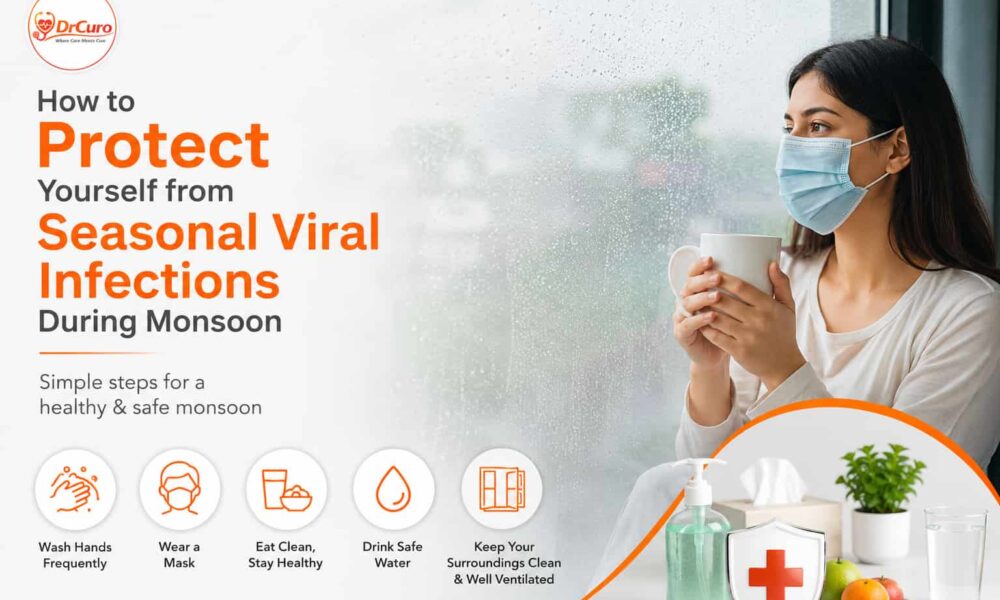
Every year, monsoon brings the same trade-off: relief from the heat, and a spike in viral fevers, colds, stomach infections, and mosquito-borne diseases. This isn’t bad luck it’s biology. Humid air keeps viruses alive longer, stagnant water breeds mosquitoes, and contaminated water supplies quietly cause more stomach illness than people realize. None of this is inevitable, though. Most monsoon infections are preventable with a small set of consistent habits, not expensive interventions.
Table Of Content
Why Monsoon Increases Infection Risk
Four separate mechanisms are at work simultaneously, which is why illness rates jump so sharply once the rains start:
- Humidity extends virus survival. Damp air keeps viral particles active on surfaces and in the air longer than dry conditions do.
- Standing water breeds mosquitoes. Waterlogged streets, drains, and even small containers become breeding sites within days, driving up dengue and chikungunya cases.
- Water supplies get contaminated. Rainwater mixing with sewage or waste is a common route for stomach infections.
- Indoor crowding increases transmission. People spend more time indoors during rain, so coughs, sneezes, and shared surfaces spread illness faster within households and offices.
- Reduced sunlight lowers Vitamin D. Less sun exposure on cloudy days can mildly weaken immune function over the season.
Common Monsoon Infections at a Glance
| Infection | Key Symptoms | How It Spreads |
|---|---|---|
| Common Cold | Runny nose, sneezing, mild sore throat | Airborne droplets, contaminated surfaces |
| Influenza (Flu) | High fever, body pain, cough, fatigue | Airborne droplets |
| Viral Fever | Fever, weakness, headache, body ache | Various viruses, close contact |
| Viral Gastroenteritis | Vomiting, diarrhoea, stomach pain | Contaminated food and water |
| Conjunctivitis (Eye Flu) | Red eyes, itching, watery discharge | Direct contact, shared items |
| Dengue | High fever, severe body pain, skin rash | Mosquito bite |
| Chikungunya | Fever, severe joint pain | Mosquito bite |
Dengue and chikungunya stand apart from the rest of this list they’re not passed person-to-person, so no amount of hand-washing helps against them. Mosquito control is the only lever that matters there.
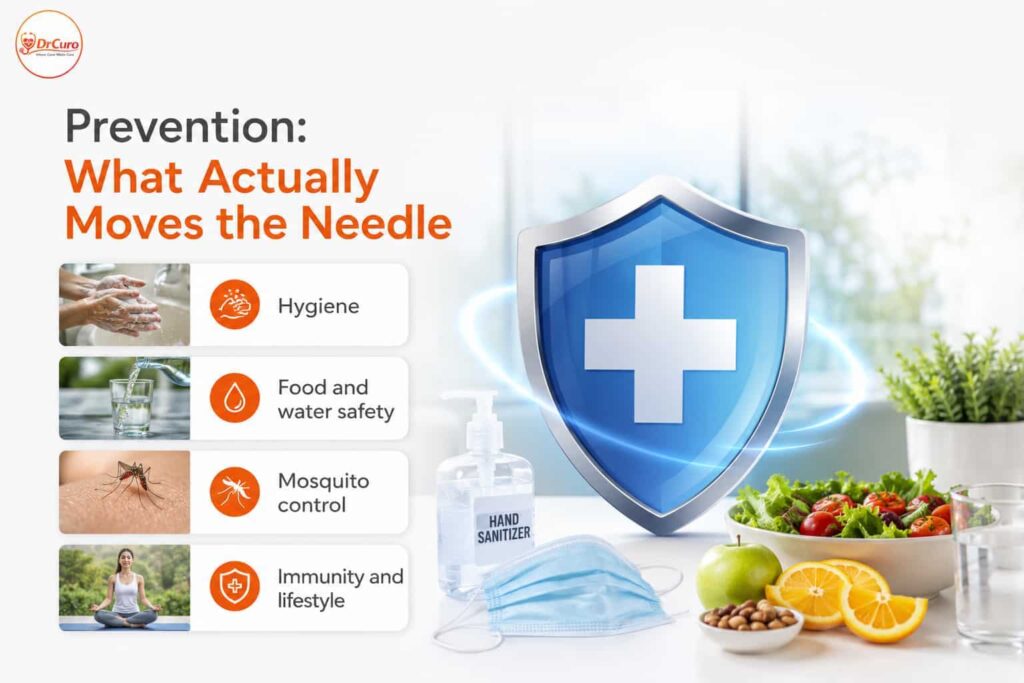
Prevention: What Actually Moves the Needle
Prevention breaks into four practical categories. Not everything on this list matters equally hand hygiene and water safety do more heavy lifting than most of the “wellness” advice that usually gets attached to these lists.
Hygiene
- Wash hands with soap for at least 20 seconds before eating, after the washroom, after coming home, after coughing/sneezing.
- Cover coughs and sneezes with a tissue or elbow, not your hand.
- Avoid touching your face with unwashed hands (main entry point for many viruses).
- Keep nails trimmed, clothes fully dry, and avoid sharing towels or utensils.
Food and water safety
- Drink only boiled or properly filtered water; store it covered.
- Avoid street-vendor water-based drinks and cut fruit hygiene standards can’t be verified.
- Prefer freshly cooked, hot meals over raw salads or leftovers sitting out; bacteria multiply faster in humid weather.
Mosquito control
- Check for stagnant water weekly in flowerpots, buckets, tyres, and cooler trays even small amounts breed mosquitoes within days.
- Use repellents and wear full-sleeved clothing during early morning and evening (peak mosquito activity).
- Keep window screens or nets in use where possible.
Immunity and lifestyle
- Eat Vitamin C and zinc-rich foods: citrus fruits, amla, guava, papaya, spinach, lentils, eggs, nuts.
- Get 7–9 hours of sleep; sleep deprivation measurably weakens immune response.
- Aim for 30 minutes of moderate activity most days.
- Manage chronic stress it suppresses immunity over time, though its effect is slower and less direct than the other three categories.
Who Should Be More Cautious
Some groups face a materially higher risk of complications, not just higher risk of catching something:
| Group | Why They’re More Vulnerable |
|---|---|
| Young children | Immature immune systems |
| Older adults | Declining immune function, slower recovery |
| Pregnant women | Immune and physiological changes increase risk |
| People with diabetes, asthma, or heart disease | Underlying conditions complicate recovery |
| Immunocompromised individuals (cancer treatment, etc.) | Reduced ability to fight infection |
If you fall into one of these categories, the threshold for calling a doctor should be lower than for a generally healthy adult.
When to Stop Waiting and See a Doctor
Most viral infections resolve with rest and fluids. Seek medical attention if you notice any of the following:
- Fever lasting more than 3 days
- Difficulty breathing or chest pain
- Signs of severe dehydration
- Persistent vomiting or blood in stools
- Confusion or very low blood pressure
- High fever combined with a rash (possible dengue warning sign)

Early diagnosis matters more for dengue than for most other illnesses on this list delay is the main factor that turns a manageable case into a serious one.
Myths Worth Retiring
| Myth | Reality |
|---|---|
| Viral fever needs antibiotics | Antibiotics only work on bacteria. They do nothing for viral infections unless a doctor identifies a secondary bacterial infection. |
| Getting wet in the rain causes illness | Rain itself doesn’t cause infection. Prolonged cold, wet exposure can lower resistance, but it’s not a direct cause. |
| Herbal drinks prevent viral infections | They may support general wellness but don’t replace hygiene, diet, or medical care. |
| Recovering from one virus protects you for the season | Different viruses circulate throughout monsoon — recovering from one doesn’t grant immunity to the others. |
The Bottom Line
Monsoon illness isn’t random it follows predictable mechanisms (humidity, water contamination, mosquito breeding, indoor crowding), and the prevention list follows those same mechanisms directly. Hand hygiene and water safety address the biggest share of cases; mosquito control is non-negotiable for dengue and chikungunya specifically, since no amount of personal hygiene protects against a mosquito bite. The rest sleep, diet, stress management helps at the margins but shouldn’t be mistaken for the primary defense.
At DRCURO, our view is that prevention beats treatment every time most monsoon infections never need to become a clinic visit if these basics are followed consistently. But when symptoms cross the line described above (persistent fever, dehydration, breathing trouble), don’t wait it out reach out to a doctor early rather than late.







No Comment! Be the first one.