







H. Pylori Infection: Diagnosis and Antibiotic Treatment
Stomach pain, bloating, acidity, and constant indigestion are problems many people simply live with, often blaming spicy food, stress, or a busy lifestyle. But sometimes these everyday symptoms are...

Stomach pain, bloating, acidity, and constant indigestion are problems many people simply live with, often blaming spicy food, stress, or a busy lifestyle. But sometimes these everyday symptoms are actually caused by a tiny bacteria called H. pylori. This infection lives quietly in the stomach, and if it is not found and treated, it can lead to ulcers and, in rare cases, raise the risk of stomach cancer. The good part is that H. pylori infection is easy to detect through simple tests, and it responds well to treatment when antibiotics and acid-reducing medicines are combined with proper digestive care. This blog explains what H. pylori infection is, why it happens, how doctors diagnose it, and how antibiotic treatment works, all in plain and simple language.
Table Of Content
- What Is H. Pylori Infection?
- How Common Is H. Pylori Infection, and How Does It Spread?
- Symptoms of H. Pylori Infection
- Serious symptoms that need urgent medical attention
- What Causes H. Pylori Infection?
- Who Is More Likely to Get Infected?
- How Does H. Pylori Damage the Stomach?
- Why Early Diagnosis Matters
- How Is H. Pylori Infection Diagnosed?
- Tests Used to Diagnose H. Pylori
- Which Test Is Most Accurate?
- Antibiotic Treatment for H. Pylori Infection
- Medicines Commonly Used
- Why Acid-Reducing Medicines Matter Too
- Possible Side Effects of Treatment
- Why You Should Never Skip the Full Antibiotic Course
- Lifestyle Tips to Support Treatment
- Diet During H. Pylori Treatment
- Foods to Eat and Foods to Avoid
- Can H. Pylori Infection Be Fully Cured?
- How Do Doctors Confirm the Infection Is Gone?
- What Happens If H. Pylori Is Left Untreated?
- How Can You Prevent H. Pylori Infection?
- Common Myths About H. Pylori Infection
- Frequently Asked Questions
- Conclusion
What Is H. Pylori Infection?
Helicobacter pylori, known to most people as H. pylori, is a type of bacteria that infects the inner lining of the stomach. What makes it unusual is that it can survive in an environment as harsh as stomach acid, by producing a chemical that neutralizes the acid around it and lets it burrow into the protective mucus layer of the stomach wall.
Once it settles there, the bacteria slowly wear down this protective layer, and stomach acid begins to irritate the stomach wall directly, which can eventually lead to inflammation and ulcers. What is tricky about this infection is that many people carry it for years without any symptoms at all, and it is often only when the damage builds up that stomach pain, bloating, or acidity start to appear.
How Common Is H. Pylori Infection, and How Does It Spread?
H. pylori is one of the most widespread bacterial infections in the world, especially in regions where clean water and good sanitation are harder to access. It is believed to spread mainly through saliva, contaminated food, and unclean water, with poor hand hygiene playing a big role in how easily it moves between family members.
People are more likely to get infected if they:
- Live in crowded households or drink water that is not properly treated
- Eat food prepared with unwashed hands or in unhygienic conditions
- Share spoons, glasses, or other eating utensils with an infected person
- Have limited access to soap and clean sanitation
- Live with a family member who already has the infection
Most infections actually begin in childhood, and the bacteria can sit quietly for years before symptoms appear in adulthood. Something as simple as washing your hands before meals can make a real difference here, and it is one of the easiest forms of digestive care anyone can practice.
Symptoms of H. Pylori Infection
A large number of people with H. pylori never feel a thing. The bacteria can sit in the stomach lining without causing any noticeable trouble for years. However, once inflammation or an ulcer develops, symptoms usually start to show up.
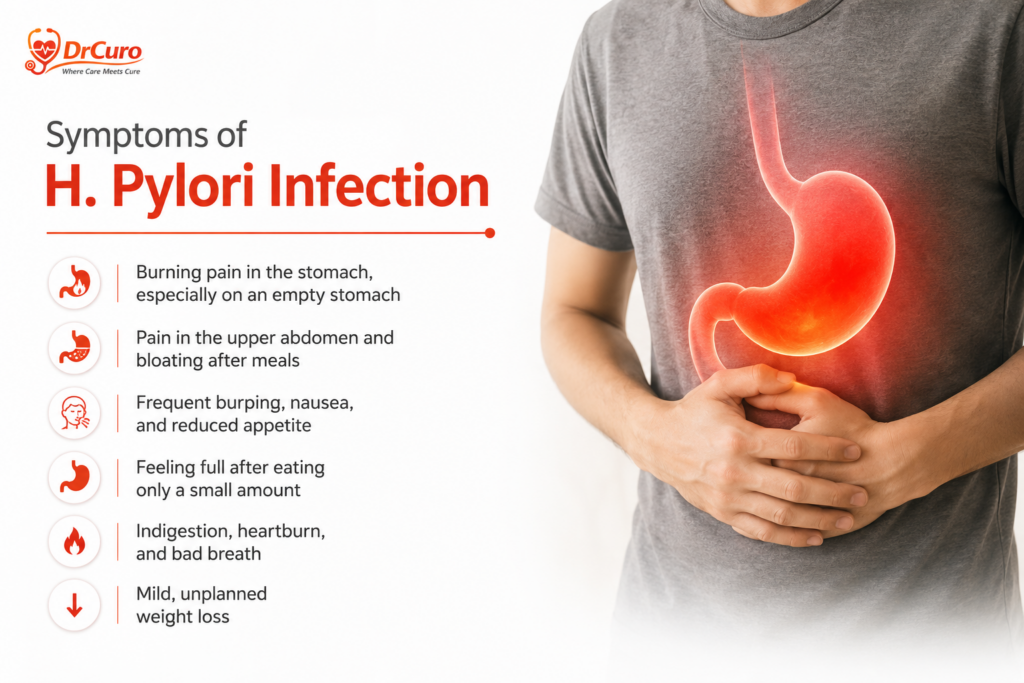
Common symptoms include:
- A burning pain in the stomach, especially on an empty stomach
- Pain in the upper abdomen and bloating after meals
- Frequent burping, nausea, and reduced appetite
- Feeling full after eating only a small amount
- Indigestion, heartburn, and bad breath
- Mild, unplanned weight loss
Many people notice that the pain gets worse when the stomach is empty, such as at night or first thing in the morning, and improves a little after eating something.
Serious symptoms that need urgent medical attention:
If the infection has caused a bleeding ulcer, the symptoms are much more serious and should never be ignored. Seek medical help right away if you notice vomiting blood or something that looks like coffee grounds, black or tar-like stools, sudden severe stomach pain, unexplained rapid weight loss, trouble swallowing, ongoing vomiting, or extreme weakness. These are warning signs of complications and should be treated as a medical emergency, not something to wait out.
What Causes H. Pylori Infection?
| Risk Factor | How It Increases Risk |
| Poor hygiene | Makes it easier for bacteria to spread from person to person |
| Contaminated food | Directly introduces bacteria into the stomach |
| Unsafe drinking water | One of the most common sources of infection |
| Crowded living conditions | Increases the chances of close contact spread |
| Sharing utensils | Can pass bacteria from an infected person to others |
| Poor sanitation | Creates an environment where bacteria multiply and spread easily |
Who Is More Likely to Get Infected?
While anyone can get H. pylori, some groups face a higher risk: children growing up in crowded households, people living with poor sanitation, those who regularly drink untreated water, close family members of someone already infected, older adults, and people who have had stomach ulcers before. Knowing these risk factors can help you take small preventive steps and stay more mindful of your digestive care.
How Does H. Pylori Damage the Stomach?
The bacteria gradually wear away at the mucus layer that protects the stomach wall from its own acid. Once this layer thins out, acid begins to irritate the stomach lining directly, and over time this can lead to gastritis, peptic and duodenal ulcers, bleeding ulcers, long-term indigestion, and a higher risk of stomach cancer in a small percentage of untreated cases. This is exactly why catching the infection early matters so much.
Why Early Diagnosis Matters
It is common for people to brush off acidity or stomach discomfort for months, assuming it is just part of daily life. But an untreated H. pylori infection keeps working quietly in the background the whole time.
Diagnosing it early can prevent ulcers from forming, reduce inflammation, improve digestion, relieve long-standing symptoms, lower the chance of complications, and support long-term digestive care. If your symptoms are not improving despite dietary changes or over-the-counter acidity medicine, that is usually a sign to get tested.
How Is H. Pylori Infection Diagnosed?
The diagnosis process is usually straightforward. Your doctor will ask about your symptoms, general health, eating habits, and any past stomach ulcers before recommending one or more tests. The right test depends on your age, symptoms, and whether you have recently taken antibiotics or acid-reducing medicine, since these can affect results.
Tests Used to Diagnose H. Pylori
| Test | Purpose | Advantages | Limitations |
| Urea Breath Test | Detects an active infection | Very accurate and completely non-invasive | Certain medicines must be paused before the test |
| Stool Antigen Test | Detects H. pylori proteins in stool | Reliable, and useful for confirming the infection is gone after treatment | Recent antibiotic use can affect accuracy |
| Blood Test | Detects antibodies against the bacteria | Simple and widely available | Cannot always tell a past infection from a current one |
| Endoscopy with Biopsy | Directly examines the stomach lining and takes a tissue sample | Very accurate, and can spot ulcers at the same time | More invasive, needs medical supervision |
Urea Breath Test: The patient drinks a liquid or swallows a capsule containing a harmless substance. If H. pylori is present, it breaks the substance down and releases carbon dioxide, which shows up in the breath. It takes only 20 to 30 minutes and needs no hospital stay, though certain medicines must be stopped beforehand.
Stool Antigen Test: This checks for proteins released by the bacteria in a stool sample. It is affordable, non-invasive, and commonly used both to diagnose the infection and to confirm afterward that treatment has worked.
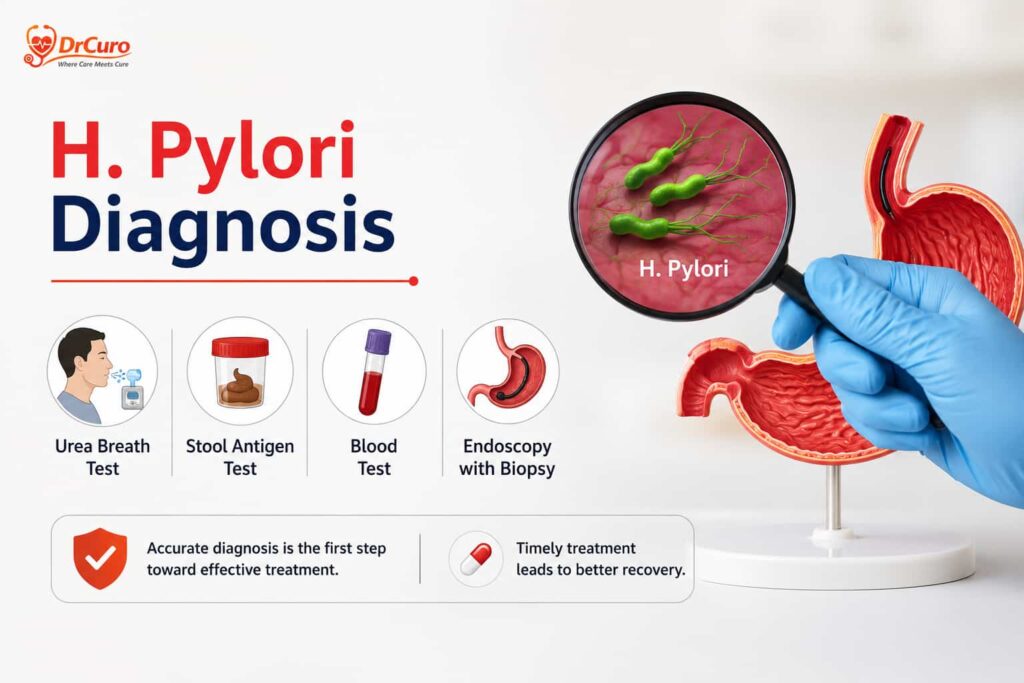
Blood Test: This checks for antibodies your body has made against the bacteria. Its drawback is that antibodies can stay in your system long after the infection is gone, so a positive result does not always mean an active infection.
Endoscopy and Biopsy: A thin, flexible tube with a camera is passed through the mouth to examine the stomach directly, and a small tissue sample may be taken for testing. It is more invasive but gives very detailed results.
Which Test Is Most Accurate?
| Test | Accuracy | Common Use |
| Urea Breath Test | Very high | Often the first choice for adults |
| Stool Antigen Test | Very high | Diagnosis and confirming treatment success |
| Blood Test | Moderate | Used less often today |
| Endoscopy with Biopsy | Very high | Recommended for severe symptoms or suspected ulcers |
Antibiotic Treatment for H. Pylori Infection
Once H. pylori is confirmed, treatment usually begins right away. Unlike infections that clear up with a single antibiotic, H. pylori generally needs a combination of medicines to lower the chances of the bacteria surviving and becoming resistant. Treatment typically lasts 10 to 14 days, and your doctor chooses the combination based on your medical history, drug allergies, and how common resistance is in your area.
Triple therapy has been a standard treatment for many years and is still used for some patients where antibiotic resistance is low. It usually combines a Proton Pump Inhibitor (PPI) to lower stomach acid, amoxicillin (or an alternative if you are allergic), and clarithromycin. Lowering the acid helps antibiotics work more effectively while giving the stomach lining time to heal.
Quadruple therapy is now preferred by many doctors because resistance to clarithromycin has become more common worldwide, especially for patients who have taken antibiotics before. It usually combines a PPI, a bismuth compound, tetracycline, and metronidazole, and tends to have higher success rates.
Medicines Commonly Used
| Medicine Type | Purpose |
| Proton Pump Inhibitors (PPIs) | Reduce stomach acid and support ulcer healing |
| Amoxicillin | Kills the H. pylori bacteria |
| Clarithromycin | Stops the bacteria from multiplying |
| Metronidazole | Eliminates the bacteria |
| Tetracycline | Helps deal with resistant strains |
| Bismuth Compounds | Protects the stomach lining and boosts treatment success |
Why Acid-Reducing Medicines Matter Too
It is a common mistake to think antibiotics alone will cure H. pylori. Acid-reducing medicines are just as important: they lower stomach acidity, help antibiotics work more effectively, speed up ulcer healing, reduce irritation in the stomach lining, and ease burning pain. Together with antibiotics and consistent digestive care, they give your stomach the best chance to heal fully.
Possible Side Effects of Treatment
Most people finish their treatment without major issues, though some mild side effects are fairly common: a metallic taste in the mouth, mild nausea, diarrhea, stomach discomfort or bloating, headache, reduced appetite, and temporarily darker stools if you are taking bismuth-based medicine. These usually settle down once treatment is finished. That said, if you experience a severe allergic reaction, non-stop vomiting, heavy diarrhea, or trouble breathing, get medical help immediately.
Why You Should Never Skip the Full Antibiotic Course
A common reason treatment fails is that people stop taking their medicine the moment they start feeling better. This is a mistake with real consequences: it can leave some bacteria alive, allow the infection to come back, increase antibiotic resistance, and make future treatment harder. Even if your symptoms disappear within a few days, it is important to complete the exact course your doctor prescribed.
Lifestyle Tips to Support Treatment
Medicines work best when paired with a few sensible daily habits: eat smaller, balanced meals instead of large, heavy ones; drink plenty of clean water; avoid alcohol and smoking, as both slow down healing; cut back on spicy, oily, or heavily processed food if it worsens your symptoms; get enough sleep; wash your hands before eating and after using the washroom; and avoid painkillers like NSAIDs unless your doctor has approved them. Sticking to good digestive care habits even after treatment ends helps protect your stomach for the long run.
Diet During H. Pylori Treatment
Diet alone cannot kill H. pylori bacteria, but it makes a real difference in how comfortable you feel while your body heals. Eating the right foods reduces irritation and supports digestion, while the wrong foods can make symptoms worse. Everyone reacts differently to certain foods, so it helps to notice which ones worsen your symptoms and avoid them until your stomach has fully recovered.
Foods to Eat and Foods to Avoid
| Foods to Eat | Foods to Avoid |
| Bananas, apples, papaya, pears | Deep-fried and oily foods |
| Cooked vegetables like carrots and spinach | Very spicy curries and excess chilli |
| Oats, brown rice, whole wheat bread | Carbonated soft drinks |
| Low-fat curd or yogurt with probiotics | Alcohol |
| Lean protein like fish, chicken, eggs, lentils | Highly processed and packaged foods |
| Homemade soups and vegetable broths | Excess tea or coffee |
| Coconut water in moderation | Tobacco products |
| Plenty of clean drinking water | Very sour or acidic foods, if they trigger discomfort |
Can H. Pylori Infection Be Fully Cured?
Yes, in most cases. When patients follow the full treatment plan exactly as prescribed, H. pylori infection is usually cured completely, with no long-term issues. Success generally depends on taking every dose on time, completing the entire antibiotic course, following your doctor’s full instructions, eating a balanced diet, and maintaining consistent digestive care habits. In some cases, the first round of treatment does not fully clear the bacteria, often due to antibiotic resistance. If this happens, your doctor will usually prescribe a different combination of medicines.
How Do Doctors Confirm the Infection Is Gone?
Finishing your medicine course does not automatically confirm the bacteria are gone. Doctors typically recommend a follow-up test, usually the urea breath test or stool antigen test, done at least four weeks after finishing antibiotics. Certain medicines may need to be paused before this follow-up test too, to make sure the results are accurate.
What Happens If H. Pylori Is Left Untreated?
Ignoring the infection for a long period can lead to real complications, even though not everyone will experience the worst outcomes. These include chronic gastritis, peptic and duodenal ulcers, bleeding ulcers, iron deficiency anemia, vitamin B12 deficiency, long-term damage to the stomach lining, a higher risk of stomach cancer in a small percentage of cases, and a lower overall quality of life due to constant digestive discomfort. Early diagnosis and proper treatment significantly lower the chances of any of these developing.
How Can You Prevent H. Pylori Infection?
There is currently no vaccine for H. pylori, so prevention mostly comes down to good hygiene: wash your hands with soap before meals and after using the washroom, drink water that is clean and properly treated, eat freshly cooked food, wash fruits and vegetables properly, avoid sharing utensils with someone who has a stomach infection, keep your kitchen clean, and see a doctor if stomach symptoms last more than a few weeks. Small, consistent habits like these go a long way in protecting your digestive care in the long term.
Common Myths About H. Pylori Infection
| Myth | Fact |
| Only older adults get H. pylori infection | People of any age, including children, can be infected |
| Acidity medicine alone can cure the infection | Acid-reducing medicine only relieves symptoms; antibiotics are needed to remove the bacteria |
| Everyone with H. pylori has symptoms | Many infected people never have any symptoms at all |
| The infection always leads to stomach cancer | Most people never develop cancer, though the risk is slightly higher if left untreated for a long time |
| Once treated, the infection always comes back | Most people are cured completely; reinfection is possible but not common |
Frequently Asked Questions
Is H. pylori infection contagious?
Yes, it can spread through contaminated food, water, saliva, or poor hygiene.
How long does treatment usually take?
Most antibiotic plans run for 10 to 14 days, depending on what your doctor prescribes.
Can I keep working during treatment?
Yes, unless you have severe symptoms.
Will I need surgery?
Rarely. Almost all cases are treated successfully with medicine alone.
Can H. pylori return after treatment?
It is possible, though not common, with good hygiene lowering the risk.
Can children get infected too?
Yes, especially in crowded or low-sanitation conditions.
Should I stop my antibiotics once I start feeling better?
No. Always finish the full course exactly as prescribed, since stopping early is one of the most common reasons treatment fails.
Conclusion
H. pylori infection is far more common than most people realize, and it often hides behind everyday symptoms like bloating, acidity, and indigestion. Left untreated, it can lead to gastritis, ulcers, and in some cases more serious complications. The reassuring part is that it can be diagnosed accurately through simple tests and treated effectively with the right combination of antibiotics and acid-reducing medicines. Completing the full treatment course, eating sensibly, and practicing good hygiene all play a role in a full recovery.
If you have been dealing with ongoing stomach pain, bloating, or acidity, it is worth getting checked rather than waiting it out. At drcuro, we believe that timely diagnosis, the right treatment, and consistent digestive care are the foundation of good stomach health, and we encourage anyone with persistent symptoms to seek proper medical guidance instead of ignoring the warning signs.





No Comment! Be the first one.