







Hip Replacement Surgery in India: Cost and Recovery
Hip pain can make simple things like walking, climbing stairs, or even sleeping difficult. Many people first try medicines, physiotherapy, and lifestyle changes to manage the pain, and these often...

Hip pain can make simple things like walking, climbing stairs, or even sleeping difficult. Many people first try medicines, physiotherapy, and lifestyle changes to manage the pain, and these often help for a while. But if the hip joint is badly damaged, these treatments may not be enough, and doctors may recommend hip replacement surgery a procedure where the damaged parts of the hip joint are replaced with an artificial implant.
Table Of Content
- What Is Hip Replacement Surgery?
- How Does the Hip Joint Work?
- Why Is Hip Replacement Surgery Needed?
- Signs You May Need Hip Replacement Surgery
- Types of Hip Replacement Surgery
- What Causes Hip Joint Damage?
- Hip Replacement Surgery Cost in India
- Step-by-Step Hip Replacement Procedure
- Benefits of Hip Replacement Surgery
- Recovery Timeline After Surgery
- Physiotherapy After Surgery
- Possible Risks and Complications
- Who Is a Good Candidate for Surgery?
- Best Diet for Recovery
- Do’s and Don’ts After Surgery
- Frequently Asked Questions
- Key Takeaways
- Conclusion
Hip replacement surgery has become one of the safest and most successful orthopedic procedures available today, thanks to major advances in medical technology. India has also become a popular destination for this surgery, offering experienced orthopedic surgeons, modern hospitals, and quality treatment at a cost that is generally lower than in many other countries. Understanding the procedure, its cost, recovery process, and possible risks can help patients and their families make a more informed decision.
This guide explains hip replacement surgery in India in simple, easy-to-understand language, covering everything from what the surgery involves to expected recovery time and cost.
What Is Hip Replacement Surgery?
Hip replacement surgery, also known as hip arthroplasty, is a procedure in which a damaged or worn-out hip joint is replaced with an artificial joint, called an implant or prosthesis. This new joint is designed to move like a natural hip, helping reduce pain and restore mobility.
The hip is a ball-and-socket joint, where the rounded top of the thigh bone fits into a socket in the pelvic bone. Healthy cartilage covers these bones and allows smooth, pain-free movement. Over time, due to aging, arthritis, or injury, this cartilage can wear down, causing pain and stiffness. During surgery, the damaged bone and cartilage are removed and replaced with implants made of metal, ceramic, or durable plastic, which are built to last for many years.
The main goal of this surgery is to relieve chronic hip pain, improve joint movement, help patients return to their daily activities, and reduce their dependence on pain medication. In most cases, patients notice a major improvement in their overall quality of life once they recover.
How Does the Hip Joint Work?
The hip is a ball-and-socket joint that supports your body’s weight while standing, walking, running, or climbing stairs. Smooth cartilage covers the ball and socket to reduce friction, while muscles, ligaments, and tendons around the joint provide stability and strength.
When cartilage wears down due to arthritis or injury, the bones start rubbing against each other. This causes pain, swelling, stiffness, and difficulty moving. Over time, even simple daily tasks like getting out of bed or standing up from a chair can become a real struggle.
Why Is Hip Replacement Surgery Needed?
Surgery is usually recommended only after non-surgical treatments such as medicines, physiotherapy, and weight management stop providing enough relief. If these methods fail and daily life is significantly affected, surgery becomes the more practical option.
Several conditions can lead to this stage, including osteoarthritis, rheumatoid arthritis, hip fractures, avascular necrosis, severe hip injury, congenital hip deformities, and in rare cases, bone tumors affecting the joint. In most patients, though, it’s simply the slow build-up of chronic pain that no longer responds to other treatments.
Signs You May Need Hip Replacement Surgery
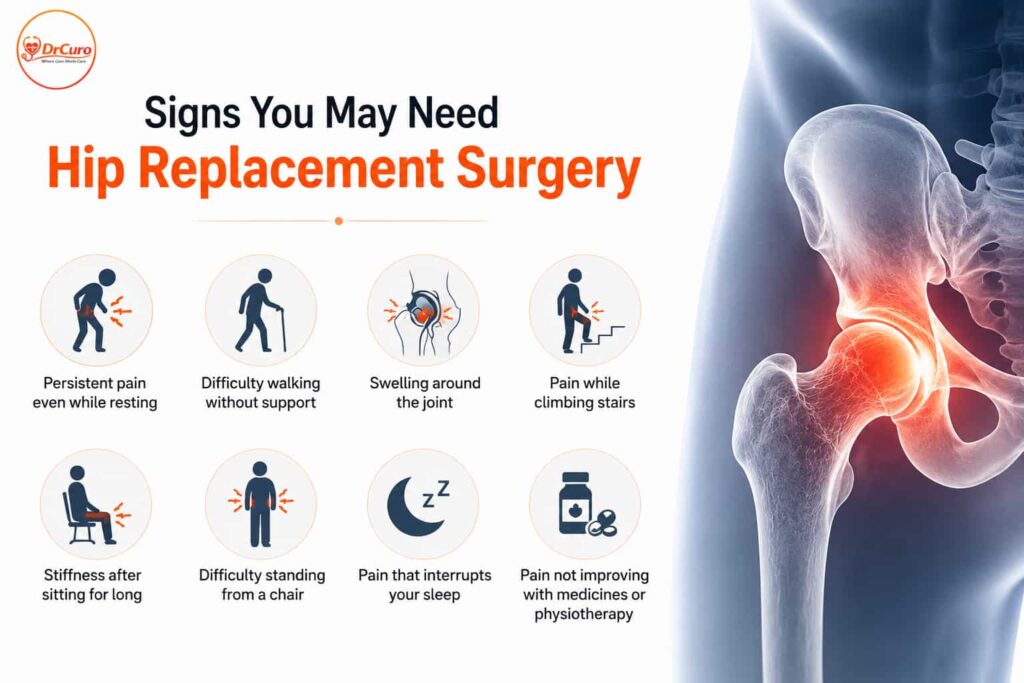
Not every hip pain needs surgery, but certain symptoms are worth getting checked by an orthopedic specialist. Persistent pain even while resting, difficulty walking without support, pain while climbing stairs, stiffness after sitting for long periods, and pain that interrupts your sleep are all signs that shouldn’t be ignored. Swelling around the joint, difficulty standing up from a chair, and pain that simply doesn’t improve with medicines or physiotherapy are also strong indicators. Ignoring these signs for too long can allow the underlying joint damage to get worse.
Types of Hip Replacement Surgery
Different types of hip replacement are recommended depending on the patient’s condition and overall health.
| Type of Surgery | Description | Best Suitable For |
|---|---|---|
| Total Hip Replacement (THR) | Both the ball and socket are replaced | Most patients with severe arthritis |
| Partial Hip Replacement | Only the damaged ball portion is replaced | Certain hip fractures |
| Hip Resurfacing | Damaged surfaces are reshaped rather than fully replaced | Younger, active patients |
| Revision Hip Replacement | Replaces an old or failed implant | Patients needing implant replacement |
Your orthopedic surgeon will recommend the most suitable option after reviewing X-rays, MRI scans, your overall health, age, and activity level.
What Causes Hip Joint Damage?
| Cause | How It Affects the Hip |
|---|---|
| Osteoarthritis | Wears away cartilage over time |
| Rheumatoid Arthritis | Causes inflammation that damages the joint |
| Hip Fracture | Can permanently damage the joint if severe |
| Avascular Necrosis | Reduced blood supply causes bone damage |
| Obesity | Increases pressure on the hip joint |
| Sports Injuries | May damage cartilage or bone |
| Congenital Hip Disorders | Abnormal hip development causes early wear |
| Aging | Natural wear and tear weakens cartilage |
Hip Replacement Surgery Cost in India
The cost of hip replacement surgery depends on several factors, including the type of surgery, the hospital, the surgeon’s experience, the implant used, and the patient’s overall health. India is considered one of the more affordable countries for this surgery while still maintaining high medical standards, which is a major reason many international patients travel here for treatment.
It’s worth remembering that the total cost isn’t just the surgery itself. It usually includes consultations, diagnostic tests, hospital stay, anesthesia, medicines, physiotherapy, and follow-up visits, so the final bill is almost always higher than the surgery cost alone. It’s always a good idea to ask your hospital for a complete, written cost estimate before going ahead with treatment.
| Treatment Component | Estimated Cost Range (INR) |
|---|---|
| Orthopedic Consultation | ₹500 – ₹2,000 |
| Blood Tests & X-rays | ₹3,000 – ₹10,000 |
| MRI (if required) | ₹5,000 – ₹12,000 |
| Total Hip Replacement Surgery | ₹2,00,000 – ₹5,50,000 |
| Partial Hip Replacement | ₹1,50,000 – ₹3,50,000 |
| Physiotherapy | ₹500 – ₹2,000 per session |
| Follow-up Visits | ₹500 – ₹1,500 per visit |
These figures are approximate and can vary significantly depending on the hospital, city, implant brand, and individual medical condition. This is not a fixed quote — always get a personalized estimate directly from your treating hospital before making any financial decisions.
Factors that influence the final cost include the type of surgery being performed, the type of implant chosen (ceramic and advanced implants cost more than standard ones), and the category of hospital, since premium hospitals generally charge higher fees. The surgeon’s experience, the city of treatment, the length of hospital stay, the diagnostic tests required, and the amount of physiotherapy needed for rehabilitation also add to the total. Insurance coverage can significantly reduce how much you pay out of pocket, so it’s worth checking your policy details before surgery.
Step-by-Step Hip Replacement Procedure
The surgery is performed by an orthopedic surgeon under sterile conditions and usually takes one to two hours, depending on the complexity of the case.
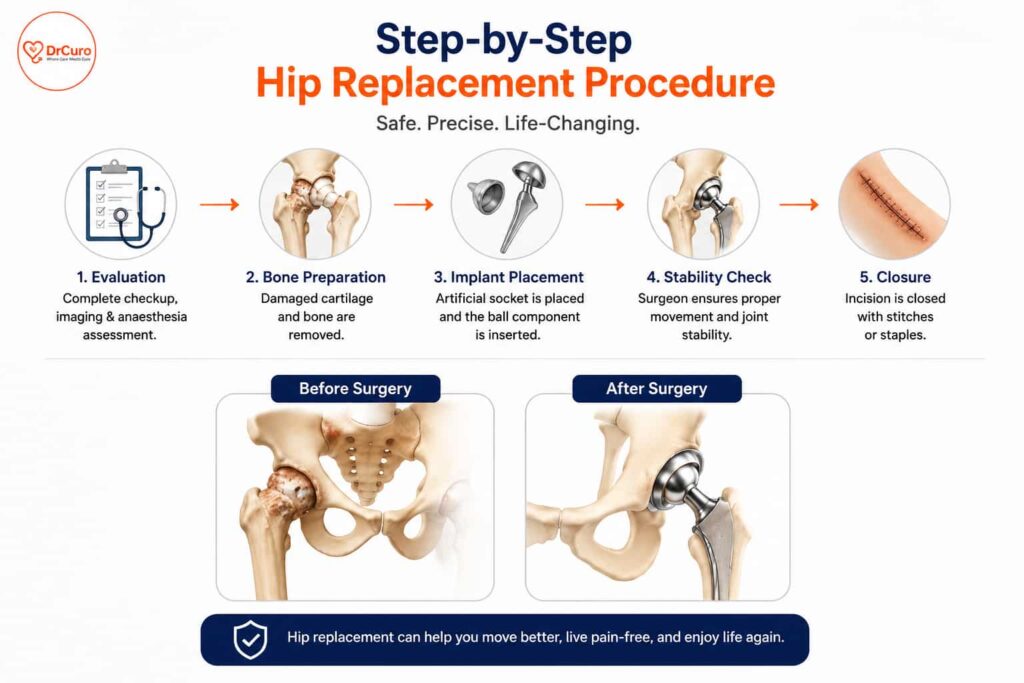
Before the surgery, the medical team carries out a detailed evaluation to make sure the patient is fit for the procedure. This typically involves a physical examination, blood tests, X-rays, an MRI or CT scan if needed, and a heart evaluation. The team also reviews current medications, discusses the anesthesia plan, and gives fasting instructions ahead of the operation.
During the surgery itself, the patient is given spinal or general anesthesia, after which the surgeon makes an incision over the hip and removes the damaged cartilage and bone. The hip socket is then prepared, the artificial socket is placed, and the artificial ball component is inserted into the thigh bone. Once the surgeon checks the joint’s stability and range of movement, the incision is closed with stitches or staples.
After surgery, patients are moved to a recovery room where their condition is closely monitored. They’re usually given pain-relief medication, antibiotics to prevent infection, and blood-thinning medicines to lower the risk of clots. Physiotherapy often begins soon after, along with walking support such as a walker or crutches. Most patients are able to stand or take a few assisted steps within 24 to 48 hours of the surgery.
Benefits of Hip Replacement Surgery
The main benefit is a significant reduction in hip pain, but the effects go well beyond that. Most patients experience improved walking ability, better joint flexibility, and an easier time climbing stairs. Sleep often improves simply because there’s less pain at night, and many people regain a level of independence in daily activities that they hadn’t had in years. Better posture, better balance, and a reduced need for painkillers are also common outcomes, and for many patients, these results last for a very long time.
Recovery Timeline After Surgery
Recovery is different for everyone, but this table gives a general idea of what most patients can expect.
| Recovery Period | What Usually Happens |
|---|---|
| Day 1 | Standing and walking with assistance |
| Days 2–3 | Walking short distances with a walker |
| Week 2 | Stitches removed, pain gradually reduces |
| Weeks 3–6 | Improved mobility, longer walking distance |
| 6–12 Weeks | Return to many normal daily activities |
| 3–6 Months | Strength and flexibility keep improving |
| 6–12 Months | Complete recovery for most patients |
Recovery speed depends on the patient’s age, general health, fitness level, and, most importantly, how consistently they follow their physiotherapy plan.
Physiotherapy After Surgery
Physiotherapy is one of the most important parts of recovery. Surgery replaces the damaged joint, but it’s rehabilitation that strengthens the muscles around it and restores proper movement. Skipping physiotherapy sessions can slow down recovery considerably and reduce the long-term success of the surgery. Over time, a good physiotherapy routine improves hip flexibility, strengthens the surrounding muscles, restores balance, reduces stiffness, and lowers the overall risk of complications. Patients should always follow the exercise program recommended by their physiotherapist rather than stopping once the pain eases.
Possible Risks and Complications
Hip replacement surgery is generally very safe and has a high success rate, but like any major surgery, it does carry some risk. Infection, blood clots, bleeding, and implant loosening over time are among the possible complications, along with hip dislocation, nerve injury, and a slight leg length difference in some cases. Joint stiffness and, rarely, the need for revision surgery in the future are also possibilities. Following your surgeon’s advice, attending all follow-up appointments, and completing your rehabilitation program significantly lowers these risks.
Who Is a Good Candidate for Surgery?
Surgery is recommended based on the severity of symptoms and joint damage, not on age alone. A person is generally considered a good candidate if they have severe hip pain that limits daily activities, pain that continues even while resting, and significant joint damage visible on X-rays. Poor response to medicines and physiotherapy, along with good overall health to safely undergo the procedure, are also important factors your surgeon will consider before recommending surgery.
Best Diet for Recovery
Good nutrition plays a big role in how well and how quickly you recover, since your body needs extra protein and nutrients to repair tissue and rebuild strength after surgery.
| Food Group | Examples | Benefit |
|---|---|---|
| Protein | Eggs, fish, chicken, paneer, tofu, lentils | Repairs muscles and tissues |
| Dairy | Milk, yogurt, cheese | Calcium for bone health |
| Fruits | Oranges, berries, apples, papaya | Vitamins and antioxidants |
| Vegetables | Spinach, broccoli, carrots, beans | Supports healing and immunity |
| Whole Grains | Brown rice, oats, whole wheat | Long-lasting energy |
| Healthy Fats | Almonds, walnuts, olive oil | Helps reduce inflammation |
| Fluids | Water, coconut water, soups | Prevents dehydration |
It’s best to limit fried foods, sugary drinks, processed snacks, excess salt, alcohol, and tobacco during recovery, since these can slow down healing and increase inflammation.
Do’s and Don’ts After Surgery
| Do’s | Don’ts |
|---|---|
| Follow your physiotherapy routine | Don’t skip prescribed exercises |
| Walk regularly as advised | Avoid running or jumping too early |
| Keep the wound clean | Don’t ignore signs of infection |
| Eat a healthy, balanced diet | Avoid excessive junk food |
| Stay hydrated | Don’t smoke |
| Take medicines on time | Don’t stop medicines without medical advice |
| Use walking aids if needed | Avoid lifting heavy weights |
| Attend follow-up visits | Don’t miss scheduled check-ups |
Frequently Asked Questions
1. How long does hip replacement surgery take?
The surgery usually takes one to two hours, depending on the complexity of the case.
2. How long will I stay in the hospital?
Most patients stay for two to five days, though this varies based on individual recovery.
3. When can I start walking after hip replacement surgery?
Many patients begin walking with assistance within 24 to 48 hours after the operation.
5. Is hip replacement surgery painful?
Some pain after surgery is normal, but it’s managed with medication, and most patients feel far better than they did before the surgery.
6. How long does a hip implant last?
Modern implants often last fifteen to twenty years, depending on the implant type, activity level, body weight, and overall health.
7. Is hip replacement surgery safe?
Yes, it’s considered one of the most successful orthopedic procedures, with a high success rate when performed by an experienced surgeon and followed by proper rehabilitation.
Key Takeaways
Hip replacement surgery is an effective solution for severe hip joint damage that no longer responds to medicines or physiotherapy. It helps reduce pain, restore movement, and give patients back a level of independence they may not have had in years. India offers quality treatment at comparatively affordable costs, though the final price depends heavily on the hospital, city, and implant chosen. Recovery is just as important as the surgery itself, and it depends largely on consistent physiotherapy and healthy lifestyle habits in the months that follow. Anyone dealing with persistent hip pain should consider consulting a specialist early, since delaying treatment often allows the underlying joint damage to worsen.

Conclusion
Hip replacement surgery has helped millions of people regain mobility, reduce chronic pain, and return to everyday life with far more confidence. While the decision to undergo surgery can feel overwhelming at first, understanding the procedure, expected costs, recovery process, and long-term outlook can make the journey much easier to navigate. With experienced surgeons, modern hospitals, and relatively affordable treatment options, India remains a strong choice for patients considering this surgery.
Recovery doesn’t end the moment the operation is over. Physiotherapy, a healthy diet, and consistent follow-up care matter just as much as the surgery itself when it comes to long-term results. If hip pain continues despite medication and physiotherapy, speaking with an orthopedic specialist sooner rather than later can help prevent further damage and protect your overall quality of life.
At drcuro, we’re committed to providing reliable, evidence-based health information that helps you make informed decisions about your well-being. Whether you’re researching treatment options or trying to understand what recovery actually looks like, drcuro aims to support you with trustworthy, practical content for a healthier, more active life.








No Comment! Be the first one.