







Benefits of Intermittent Fasting: Facts vs Myths
Intermittent fasting is everywhere right now on social media, in gym conversations, and in celebrity interviews. Some people call it a miracle for weight loss. Others say it’s risky or...
Intermittent fasting is everywhere right now on social media, in gym conversations, and in celebrity interviews. Some people call it a miracle for weight loss. Others say it’s risky or unnecessary. With so many mixed opinions, it’s easy to feel confused about whether intermittent fasting is actually good for you. The truth sits somewhere in the middle. Intermittent fasting is not magic, but when done correctly, it can offer real health benefits. At the same time, several myths about fasting continue to spread online, making it harder to know what’s actually true.
Table Of Content
- What Is Intermittent Fasting?
- How Does Intermittent Fasting Work?
- Popular Types of Intermittent Fasting
- Benefits of Intermittent Fasting
- Facts vs Myths About Intermittent Fasting
- Possible Side Effects
- Who Should Avoid Intermittent Fasting?
- Tips for Beginners
- Best Foods to Eat During Intermittent Fasting
- Frequently Asked Questions
- Key Takeaways
- Conclusion
This guide breaks it all down in simple language how intermittent fasting works, its most popular methods, its proven benefits, common myths, possible side effects, and practical tips to get started safely.
What Is Intermittent Fasting?
Intermittent fasting is an eating pattern based on when you eat, not what you eat. Unlike traditional diets that restrict specific foods, intermittent fasting simply sets a schedule of eating and fasting windows. During the fasting period, you eat little to nothing. During the eating window, you eat normal, balanced meals.
When you eat, your body uses glucose (from carbs) as fuel. After several hours without food, glucose stores start to drop, and the body shifts to burning stored fat instead. This shift is a big part of why intermittent fasting has become popular for weight management.
Importantly, intermittent fasting is not starvation. It’s planned and controlled. Water, black coffee, and plain tea are generally fine during fasting hours what you eat during your eating window still matters just as much as when you eat.
How Does Intermittent Fasting Work?
Right after a meal, insulin rises as your body digests food and uses glucose for energy. As time passes without eating, insulin gradually drops. Lower insulin makes it easier for the body to access stored fat for fuel. After several hours of fasting, the body starts switching from burning glucose to burning fat a process often called “metabolic switching.” Some natural repair processes inside the body also become more active during longer fasting windows, and researchers believe this may explain some of fasting’s benefits, though more studies are still needed.
Popular Types of Intermittent Fasting
| Method | How It Works | Best For |
| 16:8 | Fast 16 hours, eat within 8 hours | Beginners, working professionals |
| 14:10 | Fast 14 hours, eat within 10 hours | People new to fasting |
| 12:12 | Fast 12 hours, eat within 12 hours | Easiest starting point |
| 5:2 | Eat normally 5 days, reduce calories on 2 days | People who prefer weekly fasting |
| Alternate-Day Fasting | Fast every other day | Experienced fasters |
| Eat-Stop-Eat | One or two 24-hour fasts weekly | Advanced practitioners |
Beginners usually find 12:12 or 14:10 easiest, since much of the fasting window overlaps with sleep. Many people gradually move to 16:8 once their body adjusts.
Benefits of Intermittent Fasting
1. May Help with Weight Loss
A smaller eating window naturally reduces unnecessary snacking and late-night eating for many people. Over time, this can lead to a lower calorie intake and support fat loss but eating large amounts of unhealthy food during the eating window can cancel these benefits out.
- Reduced daily calorie intake
- Better hunger control
- Less late-night snacking
- Increased fat burning
- Improved eating discipline
2. May Improve Insulin Sensitivity
Some studies suggest fasting may help the body use insulin more efficiently, supporting healthier blood sugar levels. This isn’t a diabetes treatment anyone with diabetes should talk to a doctor before fasting.
3. Supports Fat Burning
As insulin drops during fasting, the body increasingly relies on stored fat for energy. Combined with exercise, protein intake, hydration, and sleep, this can support long-term fat loss.
4. May Improve Heart Health
Fasting may positively affect cholesterol, blood pressure, and body weight all key markers of heart health. It’s not a replacement for medical treatment, but it can be a supportive habit.
5. May Reduce Inflammation
Chronic inflammation is linked to several long-term health issues. Some research suggests fasting may lower certain inflammation markers, though long-term human studies are still ongoing.
6. May Improve Brain Health
During fasting, the body produces ketones, which the brain can use as fuel. Some people report better focus and mental clarity once their body adjusts though the first few days can bring temporary tiredness instead.
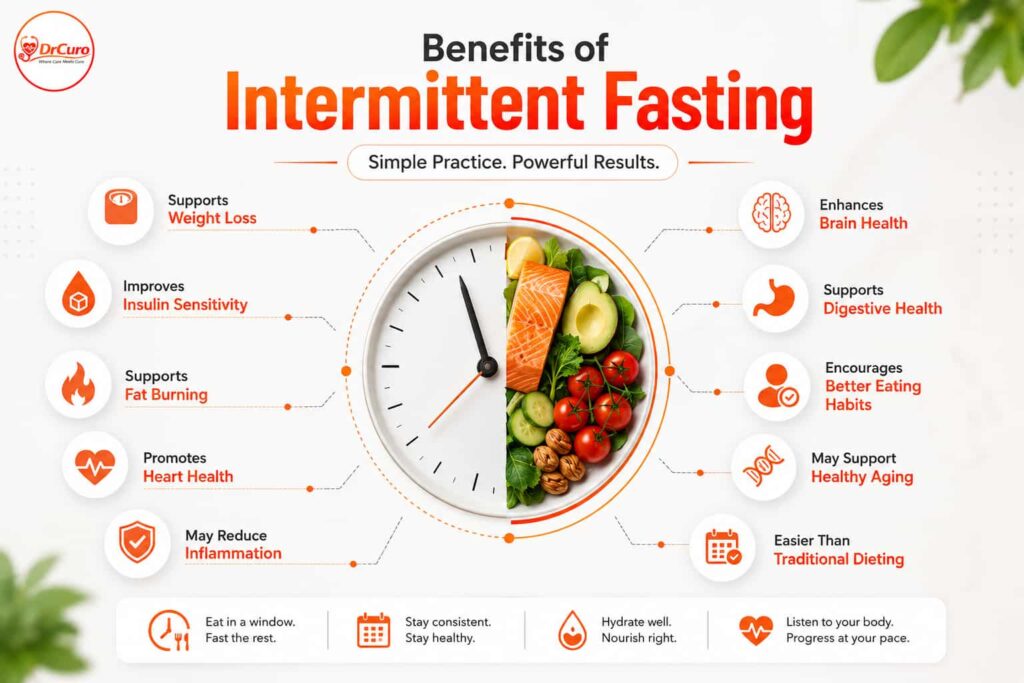
7. May Improve Digestive Health
Longer gaps between meals give the digestive system time to rest, which some people find reduces bloating. This only works well if you’re also eating enough fiber and drinking enough water.
8. May Support Better Eating Habits
A structured schedule can reduce mindless snacking and emotional eating by making people more aware of true hunger versus boredom eating.
9. May Support Healthy Aging
Researchers are studying whether fasting activates natural cell-repair processes. Most evidence so far comes from animal studies, so more human research is needed before drawing firm conclusions.
10. May Be Easier Than Traditional Dieting
Instead of counting every calorie, fasting focuses mainly on timing which some people find simpler to stick to long-term.
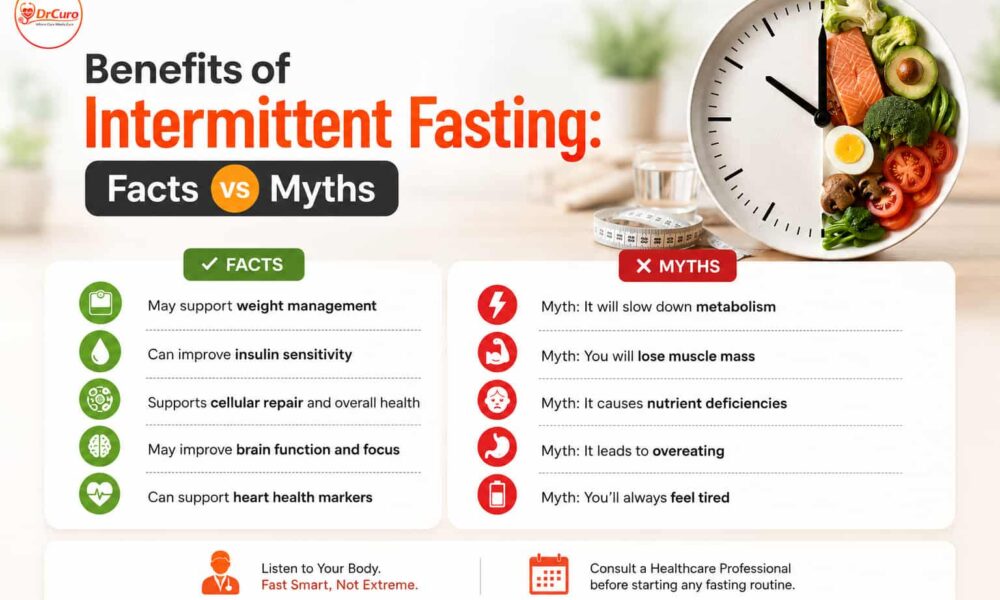
Facts vs Myths About Intermittent Fasting
| Myth | Fact |
| Fasting means starving yourself | It follows a planned schedule, not starvation |
| You can eat anything during your window | Healthy food choices still matter |
| Everyone should try it | It’s not suitable for everyone |
| Fasting causes immediate muscle loss | Protein and strength training help preserve muscle |
| It gives instant weight loss | Real results take time and consistency |
| Skipping breakfast is always unhealthy | It depends on your lifestyle and needs |
| Water breaks your fast | Plain water does not break a fast |
| Fasting cures diabetes | It may help blood sugar in some people, but isn’t a cure |
| Longer fasts are always better | Very long fasts can be harmful without supervision |
| Fasting works the same for everyone | Results vary by age, health, and activity level |
Possible Side Effects
Especially in the first few days, you may notice:
- Hunger, particularly in week one
- Headaches
- Low energy or tiredness
- Trouble concentrating at first
- Irritability or mood changes
- Mild dizziness
- Constipation (if fiber/water intake is low)
- Dehydration
- Temporary weakness during workouts
Most of these ease up with proper hydration, balanced meals, and starting with a shorter fasting window. If symptoms are severe or don’t improve, stop fasting and speak with a doctor.
Who Should Avoid Intermittent Fasting?
- Pregnant or breastfeeding women
- Children and teenagers
- People with a history of eating disorders
- Individuals who are underweight
- People with uncontrolled diabetes (unless doctor-approved)
- Those on medication requiring regular meals
- People recovering from surgery or serious illness
Tips for Beginners
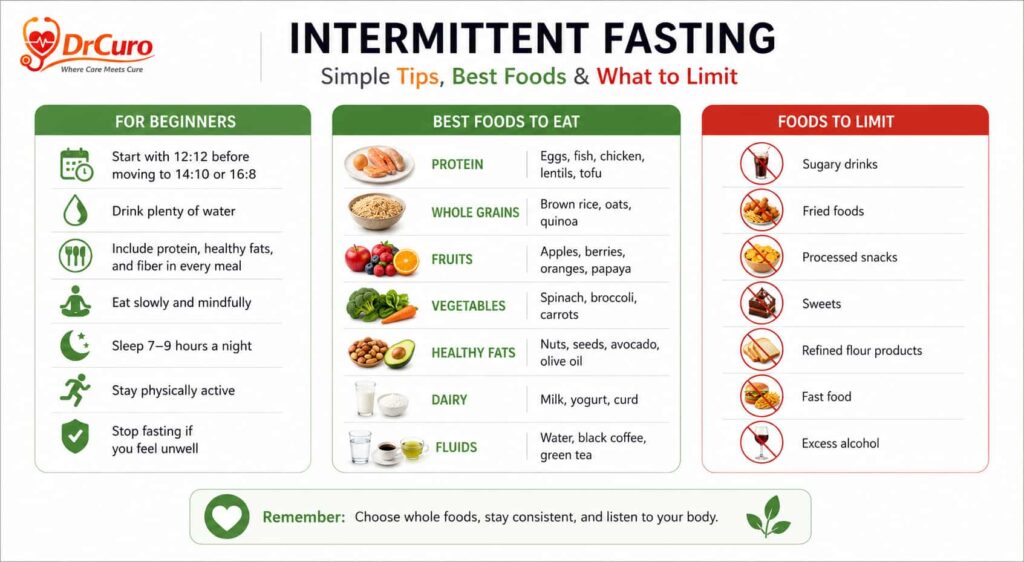
- Start with 12:12 before moving to 14:10 or 16:8
- Drink plenty of water
- Include protein, healthy fats, and fiber in every meal
- Don’t overeat once your window opens
- Eat slowly and mindfully
- Plan meals ahead of time
- Sleep 7–9 hours a night
- Stay physically active
- Choose whole foods over processed ones
- Stop fasting if you feel unwell
Best Foods to Eat During Intermittent Fasting
| Food Group | Healthy Choices | Benefit |
| Protein | Eggs, fish, chicken, lentils, tofu | Supports muscle, keeps you full |
| Whole Grains | Brown rice, oats, quinoa | Long-lasting energy |
| Fruits | Apples, berries, oranges, papaya | Vitamins and fiber |
| Vegetables | Spinach, broccoli, carrots | Nutrient-dense, low calorie |
| Healthy Fats | Nuts, seeds, avocado, olive oil | Heart health, satiety |
| Dairy | Milk, yogurt, curd | Calcium and protein |
| Fluids | Water, black coffee, green tea | Hydration |
Foods to limit: sugary drinks, fried foods, processed snacks, sweets, refined flour products, fast food, and excess alcohol these can cancel out fasting’s benefits.
Frequently Asked Questions
1. What’s the biggest benefit of intermittent fasting?
It may support healthy weight management and better metabolic health when paired with a balanced diet.
2. Can I drink water while fasting?
Yes plain water doesn’t break a fast and helps prevent dehydration.
3. Can I drink tea or coffee while fasting?
Black coffee and plain tea are generally fine. Avoid sugar, milk, or cream.
4. Is intermittent fasting safe every day?
For many healthy adults, yes. But it depends on your health, medications, and lifestyle check with a doctor if you have a medical condition.
5. Does it burn belly fat specifically?
It may reduce overall body fat, but you can’t target fat loss in one specific area.
6. Can I exercise while intermittent fasting?
Yes, many people work out during their fasting window or shortly after eating. Stay hydrated and eat enough protein.
Key Takeaways
- Intermittent fasting is about meal timing, not food restriction
- It may support weight management, fat burning, and metabolic health
- What you eat during your window still matters
- It’s backed by research, but many online claims are exaggerated
- It isn’t right for everyone
- Hydration, balanced meals, and exercise improve results
- Long-term consistency beats short-term extremes
Conclusion
Intermittent fasting has become popular because it’s simple to follow and may offer real health benefits but it isn’t a miracle cure. The actual benefits come from combining a sensible fasting schedule with nutritious food, regular exercise, good sleep, and consistency over time. If you’re considering trying it, start gradually, listen to your body, and check with a doctor if you have any underlying health conditions.
At drcuro, we believe good health comes from evidence-based information and practical daily habits not trends or shortcuts. Our goal is to help you make informed choices about nutrition, fitness, and overall well-being, so you can build a healthier life naturally.






No Comment! Be the first one.