






Can Heat Waves Affect Your Baby? Pregnancy Care Tips in Summer
A Complete Summer Pregnancy Guide for Expecting Mothers | By DrCuro The summer sun is blazing outside. The temperature is climbing higher than it has in years. And you carrying a new life inside you...

A Complete Summer Pregnancy Guide for Expecting Mothers | By DrCuro
Table Of Content
- First – What Is Actually Happening in Your Body During Pregnancy
- Can Heat Waves Directly Harm Your Baby?
- Why Indian Summers Are Particularly Challenging for Pregnant Women
- The Major Risks of Heat Waves During Pregnancy – Explained Clearly
- Risk 1 – Dehydration
- Risk 2 – Overheating and Heat Exhaustion
- Risk 3 – Worsening Swelling
- Risk 4 – Increased Fatigue and Reduced Appetite
- Risk 5 – Increased Risk of Preterm Labour
- Warning Signs You Should Never Ignore
- Pregnancy Care Tips in Summer – What Actually Works
- Tip 1 – Make Hydration Your Highest Daily Priority
- Tip 2 – Manage Your Time Outdoors Carefully
- Tip 3 – Dress for the Heat With Intention
- Tip 4 – Keep Your Body Temperature Actively Managed
- Tip 5 – Eat Smart for Summer Pregnancy
- Tip 6 – Rest More Than You Think You Need To
- Tip 7 – Monitor Your Baby’s Movements Consistently
- Tip 8 – Know Your Trimester-Specific Risks
- Myths and Facts About Pregnancy Care in Summer
- Special Considerations for Working Pregnant Women in Summer
- How DrCuro Supports Pregnancy Care in Summer
- When to Seek Medical Help Immediately
- Quick Reference Summer Pregnancy Do’s and Don’ts
- Frequently Asked Questions
- The Bottom Line
The summer sun is blazing outside. The temperature is climbing higher than it has in years. And you carrying a new life inside you are wondering whether the heat you feel on your skin, the heaviness in your legs, and the exhaustion that hits you by mid-morning is something to worry about.
You are not being dramatic. You are being a mother.
Heat waves are becoming more intense, more frequent, and longer-lasting across India every single year. And pregnancy, beautiful and demanding as it is, makes your body significantly more sensitive to extreme temperatures than it would otherwise be.
The question most expecting mothers type into their phones on a hot afternoon is this: Can heat waves actually affect my baby?
The honest answer is yes but not in the way most people fear. And understanding exactly how, and exactly what to do about it, is what this guide is for.
At DrCuro, pregnancy care tips in summer are among the most searched topics we receive from expecting mothers across India particularly between the months of April and July when temperatures in most Indian cities regularly cross 40 degrees Celsius. This guide brings together everything you need to know, written in clear and simple language, so you can enjoy this season safely and confidently.
First – What Is Actually Happening in Your Body During Pregnancy
Before we talk about heat, it helps to understand what pregnancy does to your body’s relationship with temperature because the two are deeply connected.
During pregnancy your body undergoes a series of remarkable physiological changes. Your blood volume increases by up to 50 percent to support the growing baby and placenta. Your metabolism rises significantly your body is essentially running an additional biological programme around the clock. Your core body temperature is already slightly higher than normal as a result of all this internal activity.
What this means in practical terms is straightforward: your body is already working harder than usual just to maintain a healthy pregnancy. It has less spare capacity to deal with external stressors and extreme heat is one of the most significant external stressors the human body faces.
When a non-pregnant person stands in 42 degree heat, their body activates its cooling systems sweating, redirecting blood flow toward the skin, reducing internal activity slightly. It manages.
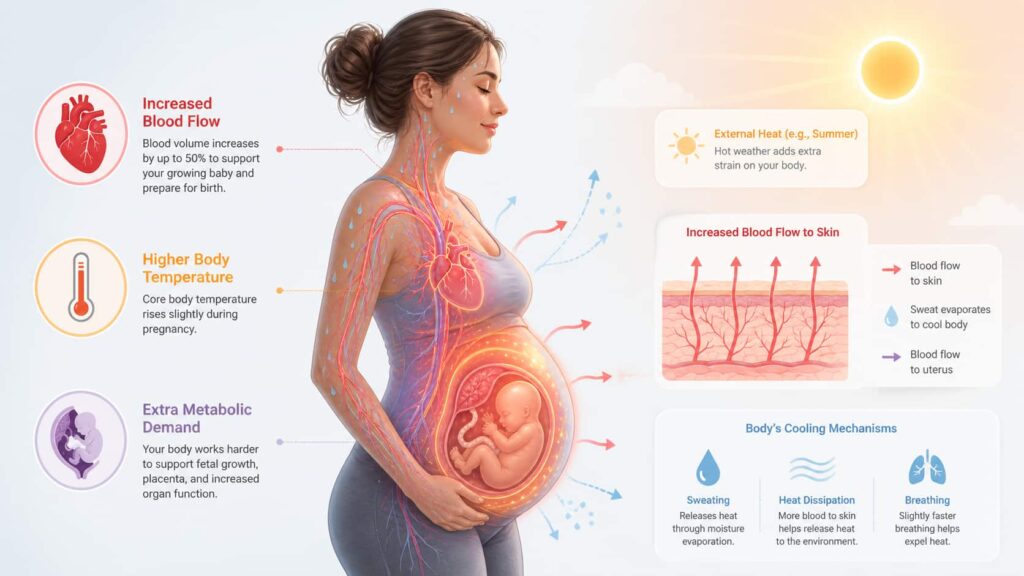
When a pregnant woman stands in the same heat, her body faces a much harder problem. It needs to cool itself down while simultaneously maintaining adequate blood flow to the uterus and placenta, maintaining the internal temperature environment the baby needs, and managing an already elevated metabolic demand.
This is why pregnancy care tips in summer are not just useful advice. For many women, particularly in the second and third trimesters, they are genuinely important for the safety of both mother and baby.
At DrCuro, we believe that an informed mother is a safer mother. Understanding your body’s relationship with summer heat is the first and most important step.
Can Heat Waves Directly Harm Your Baby?
Let us address the fear that sits behind every search for pregnancy care tips in summer directly and clearly.
Heat waves do not directly harm the baby inside the womb in most circumstances. Your baby is protected by the amniotic fluid that surrounds them, by the uterine wall, and by your body itself acting as a buffer against the external environment.
The baby does not feel the sun. The baby does not sweat. The baby is, in many ways, more insulated from the external heat than you are.
The risk and it is a real risk that deserves honest attention comes not from the heat reaching the baby directly, but from what extreme heat does to the mother’s body. Specifically:
Dehydration reduces the volume of blood circulating to the placenta, which is how your baby receives oxygen and nutrients. Prolonged or severe dehydration can reduce amniotic fluid levels and in serious cases affect fetal growth.
Overheating – where the mother’s core body temperature rises significantly creates an internal environment that is less optimal for the baby. Sustained elevation of core body temperature above safe limits is associated with increased risk of neural tube issues in very early pregnancy and with stress to the fetus in later pregnancy.
Heat exhaustion and heat stroke are genuine medical emergencies in any person. In a pregnant woman, the additional demand on the cardiovascular system makes recovery harder and the consequences for the pregnancy more serious.
Preterm labour — some research suggests that sustained exposure to extreme heat, particularly in the third trimester, may be associated with an increased risk of early contractions. This is not inevitable but it is a risk that increases when precautions are not taken.
The key message for every expecting mother reading this: the heat itself is not attacking your baby. But your body’s response to extreme heat if it is not managed well can create conditions that are not ideal for your pregnancy. And those conditions are almost entirely preventable with the right pregnancy care tips in summer.
Why Indian Summers Are Particularly Challenging for Pregnant Women
India’s summer is not like summer elsewhere. Between March and July, large parts of the country particularly North India, Central India, and the Deccan Plateau experience temperatures that regularly exceed 40 to 45 degrees Celsius. Humidity in coastal regions adds to the heat stress significantly.
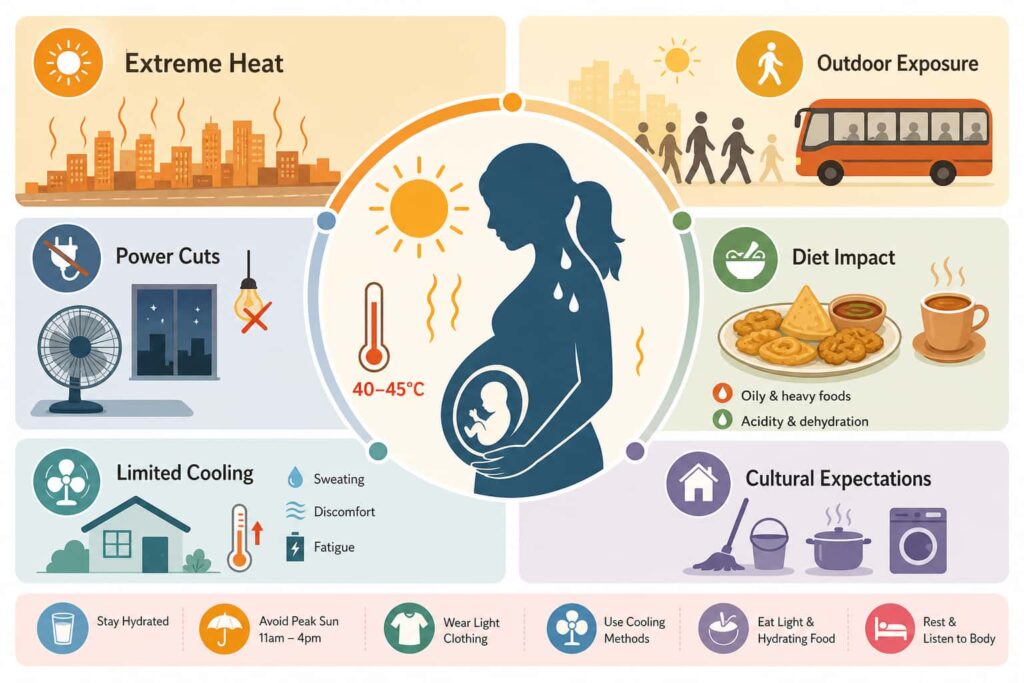
This matters for pregnancy care because:
- Indian urban infrastructure often means significant time spent outdoors commuting, walking, running errands during peak heat hours
- Power cuts in many areas mean that indoor spaces are not always reliably cool
- Indian dietary culture during summer including heavy meals, oily preparations, and strong chai consumption can worsen the physiological stress of heat on a pregnant body
- Cultural expectations sometimes lead pregnant women to continue physical and domestic activity at levels that are genuinely unsafe in extreme heat
- Access to air conditioning varies enormously many pregnant women in India spend significant time in hot, poorly ventilated spaces
At DrCuro, pregnancy care tips in summer are always contextualised for the Indian environment because generic international advice about “staying cool” does not account for the reality of summer in Lucknow, Nagpur, Hyderabad, or Ahmedabad.
The Major Risks of Heat Waves During Pregnancy – Explained Clearly
Risk 1 – Dehydration
Dehydration is the most common, most significant, and most preventable risk associated with heat waves during pregnancy.
Here is why it happens so easily: when you are hot, you sweat more. Sweating is your body’s primary cooling mechanism – and it is highly effective. But every drop of sweat represents water and electrolytes leaving your body. During pregnancy, your baseline fluid requirement is already higher than usual. Add intense summer heat, and the fluid deficit can build up surprisingly quickly even if you feel like you have been drinking reasonably well.
What dehydration does to a pregnant body goes beyond thirst. It reduces blood volume, which reduces circulation to the placenta. It can lower amniotic fluid levels over time. It causes the uterus to become more irritable which in later pregnancy can trigger contractions. It affects your blood pressure, your energy levels, your concentration, and your ability to regulate temperature effectively.
The warning signs of dehydration to watch for:
- Dark yellow or orange coloured urine this is one of the clearest and earliest signs
- Passing urine less frequently than usual
- Persistent headache that does not respond to rest
- Dry mouth and excessive thirst
- Dizziness or lightheadedness, particularly when standing
- Muscle cramps, particularly in the legs
- Feeling unusually tired even after rest
At DrCuro, hydration is the absolute foundation of all our pregnancy care tips in summer. No other single intervention produces more benefit for more pregnant women than consistent, adequate fluid intake throughout the day.
Risk 2 – Overheating and Heat Exhaustion
When your body cannot cool itself down effectively because the external temperature is too high, humidity is preventing sweat from evaporating, or you have been physically active in the heat your core body temperature begins to rise.
The first stage is heat exhaustion. You feel weak, dizzy, and nauseated. You may sweat heavily or, paradoxically, stop sweating altogether. Your heart rate rises. You feel confused or anxious. Your skin may feel cool and clammy.
Left unaddressed, heat exhaustion progresses to heat stroke a genuine medical emergency characterised by a very high body temperature, confusion, loss of consciousness, and potentially seizures. Heat stroke in a pregnant woman is a serious emergency requiring immediate hospitalisation.
The good news is that heat exhaustion and heat stroke are preventable. They develop when warnings are ignored and the warnings are usually clear if you are paying attention to your body.
Risk 3 – Worsening Swelling
Swelling in the feet, ankles, and hands called oedema is an extremely common and usually harmless feature of pregnancy. The body retains more fluid during pregnancy, and gravity causes much of it to pool in the lower limbs.
Heat makes this significantly worse. Hot weather causes blood vessels to dilate, fluid shifts toward the periphery, and the already-challenged circulation of a pregnant body struggles to return fluid effectively from the legs and feet.
While swelling itself is not dangerous in most cases, severe worsening of oedema particularly if it is sudden, affects the face, or is accompanied by high blood pressure and headache can be a sign of preeclampsia, which requires immediate medical attention.
Risk 4 – Increased Fatigue and Reduced Appetite
Pregnancy is tiring under any circumstances. Summer heat adds a significant additional load. The physiological effort of thermoregulation keeping your body at a safe temperature draws on energy reserves that your body is already sharing with the growing baby.
The result is a level of fatigue that can be genuinely overwhelming and that is not simply a matter of willpower or fitness. It is your body communicating clearly that it is under stress.
Reduced appetite frequently accompanies heat-related fatigue in pregnancy and this creates its own concern, since both you and your baby need consistent, adequate nutrition throughout the summer months.
Risk 5 – Increased Risk of Preterm Labour
Research over the past decade has increasingly identified a link between sustained extreme heat exposure and increased risk of preterm labour particularly in the third trimester. The mechanism is not entirely understood, but is thought to involve heat-induced dehydration causing uterine irritability, changes in hormone levels triggered by heat stress, and reduced blood flow to the uterus.
This does not mean that every hot day brings a risk of preterm birth. It does mean that the cumulative effect of sustained heat exposure without adequate precautions, particularly in late pregnancy, deserves to be taken seriously.
Warning Signs You Should Never Ignore
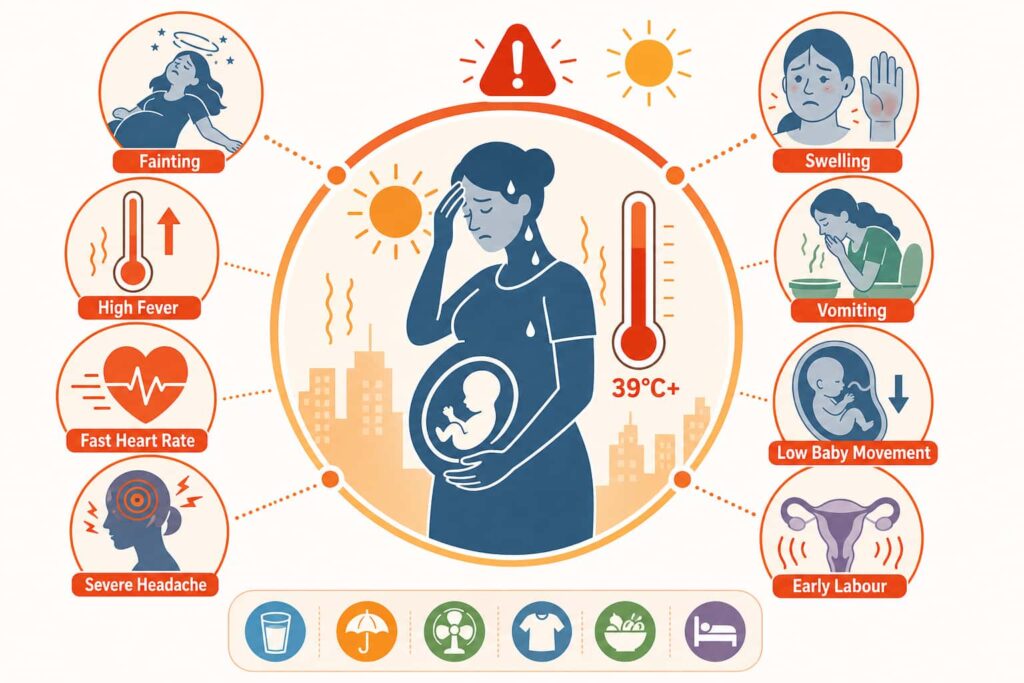
Many pregnant women dismiss early warning signs of heat-related illness as normal pregnancy discomfort. Some of these symptoms are genuinely normal but some are signals that require immediate attention.
Seek medical help immediately if you experience:
- Fainting or loss of consciousness
- Body temperature above 39 degrees Celsius that does not come down with cooling
- Rapid heart rate that does not settle with rest and hydration
- Severe headache particularly at the back of the head or behind the eyes
- Sudden significant swelling particularly in the face and hands
- Persistent vomiting that prevents you from keeping fluids down
- Significantly reduced baby movements compared to your normal pattern
- Signs of early labour regular cramping, lower back pain, pressure in the pelvis before 37 weeks.
At DrCuro, we always emphasise that it is far better to seek assessment and be reassured than to wait and hope symptoms resolve. Early intervention prevents complications in the vast majority of cases.
Pregnancy Care Tips in Summer – What Actually Works
Here is the practical section that most expecting mothers are looking for. These are not vague suggestions. These are specific, actionable pregnancy care tips in summer that make a genuine and measurable difference built around the realities of Indian life.
Tip 1 – Make Hydration Your Highest Daily Priority
No pregnancy care tip in summer matters more than this one. Hydration is the single most powerful tool you have against every heat-related risk described above.
What to drink:
- Plain water the best and most reliable source of hydration. Aim for at least 2.5 to 3 litres across the day more if you are sweating significantly or feel thirsty
- Coconut water one of the best natural rehydration drinks available. Rich in electrolytes, gentle on the stomach, and widely available across India. One to two glasses a day is excellent
- Buttermilk a traditional Indian summer drink that is genuinely effective for hydration and also supports digestion. Light, cooling, and easy to prepare
- Lemon water with a small pinch of salt and sugar a simple homemade ORS that replaces both fluids and electrolytes lost through sweating
- Fresh fruit juices without added sugar particularly from hydrating fruits like watermelon, muskmelon, and oranges
What to limit:
- Sugary packaged drinks and sodas these actually worsen dehydration due to their high sugar content and the diuretic effect of their ingredients
- Excess chai and coffee caffeine is a mild diuretic and also stimulates acid production. Two cups a day maximum is reasonable. Switching some chai for herbal alternatives is a sensible summer adjustment
- Cold drinks from unreliable sources food safety is a particular concern in summer, and contaminated cold drinks or juices from street vendors carry a real risk of gastrointestinal illness that worsens dehydration dramatically
Practical tip: Keep a large water bottle visible at all times on your desk, beside your bed, in your bag. Research consistently shows that visible water leads to more frequent drinking. Set a gentle phone reminder every 45 minutes if you find yourself forgetting.
Tip 2 – Manage Your Time Outdoors Carefully
The sun in India between 11 AM and 4 PM during summer months is genuinely dangerous for pregnant women. The combination of direct radiation, reflected heat from roads and buildings, and the urban heat island effect in Indian cities makes this window the highest-risk period of the day.
Practical strategies:
- Schedule all essential outdoor activity shopping, appointments, commuting either before 10 AM or after 5 PM whenever possible
- If you must go out during peak hours, carry cold water, wear a hat or use an umbrella, choose shaded routes, and plan rest points where you can cool down
- Avoid standing still in direct sunlight for extended periods movement at least circulates blood, while standing still in heat concentrates the thermal stress
- Keep car journeys as short as possible and ensure the vehicle is adequately cooled before you get in sitting in a hot parked car even briefly is one of the fastest ways for a pregnant woman’s core temperature to rise dangerously
Tip 3 – Dress for the Heat With Intention
What you wear in summer pregnancy matters more than most people realise. Clothing affects how effectively your body can cool itself, how comfortable you feel, and how much additional heat stress you experience throughout the day.
Best choices:
- Light-coloured cotton or linen clothing these fabrics breathe, wick moisture away from the skin, and do not trap heat the way synthetic fabrics do
- Loose-fitting silhouettes tight clothing restricts circulation and prevents air movement across the skin, both of which worsen heat stress
- Comfortable, supportive footwear that accommodates swelling feet that swell into tight shoes experience additional discomfort and circulatory restriction
- A light cotton dupatta or scarf for head and neck coverage when outdoors these areas lose and gain heat rapidly and protecting them makes a meaningful difference
What to avoid:
- Synthetic fabrics polyester, nylon, and similar materials trap heat and prevent effective evaporative cooling
- Tight waistbands or fitted clothing around the abdomen these are uncomfortable at any temperature during pregnancy and genuinely problematic in heat
- Dark-coloured clothing in direct sunlight dark colours absorb significantly more solar radiation than light ones
Tip 4 – Keep Your Body Temperature Actively Managed
Passive cooling simply avoiding hot environments is not always enough during intense heat waves. Active cooling strategies make a meaningful difference.
Effective strategies:
- Cool showers twice a day morning and evening. Not ice cold, but pleasantly cool. This lowers skin temperature, reduces the burden on your internal cooling system, and provides significant comfort relief
- Wet cloth on the wrists, back of the neck, and forehead the wrists and neck have major blood vessels close to the surface. Cooling these areas cools the blood passing through them, which cools the whole body more efficiently than cooling the torso alone
- Fans combined with a spray bottle of cool water far more effective than fans alone, since the evaporation of the water from the skin creates real cooling
- Air conditioning used wisely if you have access to air conditioning, use it during the hottest part of the day. Set it to a comfortable rather than very cold temperature large sudden temperature changes between indoor and outdoor environments can cause their own problems
Tip 5 – Eat Smart for Summer Pregnancy
What you eat in summer directly affects how your body handles heat. Heavy, rich, oily meals increase internal heat production significantly your body generates heat as a byproduct of digesting complex, fatty foods. Lighter eating reduces this metabolic heat burden.
Best foods for summer pregnancy:
- Water-rich fruits watermelon, muskmelon, cucumber, oranges, pears, and grapes are all excellent sources of both fluid and nutrition. Watermelon in particular is extraordinarily hydrating and safe throughout pregnancy
- Curd and yogurt-based dishes cooling, probiotic-rich, and easy to digest. Raita, lassi, and plain curd are excellent summer pregnancy foods
- Lightly cooked dals and khichdi easy to digest, nutritionally complete, and gentle on the stomach
- Fresh vegetables particularly those with high water content like bottle gourd, ridge gourd, and pointed gourd all traditional Indian summer vegetables for good reason
- Small, frequent meals rather than large meals eating five or six smaller meals across the day rather than two or three large ones reduces the metabolic heat generated by digestion at any one time
Foods to limit in summer pregnancy:
- Heavy, oily, and very spicy preparations these increase internal heat generation and can worsen nausea and digestive discomfort that heat already exacerbates
- Foods left out for extended periods food safety risks increase dramatically in summer heat. Never eat food that has been sitting at room temperature for more than two hours
- Excess salt while some salt is necessary for electrolyte balance, excess dietary salt worsens fluid retention and swelling
- Street food and cut fruits from vendors contamination risk is highest in summer, and gastrointestinal illness in pregnancy causes dehydration that is harder to recover from
Tip 6 – Rest More Than You Think You Need To
The instinct to push through fatigue and maintain normal activity levels is understandable but in summer pregnancy, it needs to be consciously overridden.
Your body is doing extraordinary work. The heat adds significantly to that load. Rest is not laziness. It is an active, deliberate pregnancy care strategy that protects both you and your baby.
Practical rest strategies:
- Identify the hottest part of the day typically 12 PM to 3 PM and treat it as mandatory rest time. A short nap or simply lying down with your feet elevated during this window makes a significant difference to how you feel for the remainder of the day
- Elevate your feet when resting this helps reduce swelling by encouraging fluid to drain back from the lower limbs
- Sleep in the coolest room in your home with good ventilation or air conditioning if available. If not, a ceiling fan combined with a wet sheet over a window creates meaningful cooling through evaporation
- Reduce physical activity during heat waves this is not the time to maintain a vigorous exercise routine. Gentle walking in cooler parts of the day is excellent. Vigorous exercise in heat is not
Tip 7 – Monitor Your Baby’s Movements Consistently
In the second and third trimesters, your baby’s movement patterns become an important indicator of their wellbeing. Heat-related dehydration and physiological stress can sometimes be reflected in changes to fetal movement.
What to do:
- Know your baby’s normal movement pattern most babies have fairly predictable periods of activity and rest throughout the day
- If you notice a significant reduction in movement fewer kicks, rolls, or responses to stimulation than usual do not wait to see if it improves. Contact your doctor or visit a facility for assessment
- Do not confuse sleeping periods with absence of movement but equally, do not dismiss genuine reductions in activity as the baby simply sleeping
- Drink a cold glass of water, lie on your left side, and pay deliberate attention for 30 to 60 minutes if you are concerned about movement. If there is no reassuring activity in that time, seek assessment
At DrCuro, monitoring baby movements is one of the most important pregnancy care tips in summer we share with patients in the third trimester. It is simple, requires no equipment, and can provide early warning of a baby under stress.
Tip 8 – Know Your Trimester-Specific Risks
Summer pregnancy care is not identical in every trimester. The risks shift, and so should your focus.
First Trimester:
The first trimester coincides with the period of highest risk from elevated core body temperature the neural tube and other critical structures are forming, and sustained overheating has been associated in research with increased risk of neural tube defects. Avoiding hot tubs, saunas, and situations where your core temperature rises significantly is particularly important in weeks 4 to 12. Hydration and avoiding peak heat are the primary priorities.
Second Trimester:
The second trimester brings the relief of reduced early pregnancy symptoms for most women but the growing uterus now exerts increasing pressure on the circulation, making swelling and varicose veins more common and heat-related worsening of these more significant. Managing swelling, maintaining nutrition through reduced appetite, and staying well hydrated are the key priorities.
Third Trimester:
The third trimester is when the risks of heat-related preterm labour are highest and when the baby’s movement monitoring becomes most important. The combination of significant abdominal size, reduced mobility, increased weight, and summer heat creates the most challenging conditions. Strict adherence to all the pregnancy care tips in summer described in this guide is most important in this final stretch.
Myths and Facts About Pregnancy Care in Summer
Myth: The heat directly harms the baby inside the womb. Fact: The baby is well-insulated by amniotic fluid and the uterine wall. The risk comes from what heat does to the mother primarily dehydration and overheating not from heat reaching the baby directly.
Myth: You should stop all exercise in summer pregnancy. Fact: Gentle, appropriate exercise remains beneficial throughout pregnancy including summer. What changes is the timing, intensity, and location. Early morning walks in cool conditions, gentle swimming, and light indoor movement are all fine. Vigorous outdoor exercise in peak heat is not.
Myth: Drinking cold water is bad during pregnancy. Fact: Cold or cool water is perfectly safe during pregnancy and is actually more effective at helping lower core body temperature than warm water. There is no evidence that cold water is harmful. It is one of the simplest and most effective pregnancy care tools in summer.
Myth: Swelling in summer is always a serious sign. Fact: Mild to moderate swelling of the feet and ankles in summer pregnancy is extremely common and usually harmless. It deserves attention when it is sudden, severe, affects the face and hands, or is accompanied by high blood pressure and headache these combinations can indicate preeclampsia, which requires immediate assessment.
Myth: Staying indoors means you are completely safe from heat-related risks. Fact: Poorly ventilated indoor spaces, particularly in homes and offices without adequate cooling, can reach temperatures as dangerous as outdoor environments. Indoor safety in summer depends on ventilation and cooling not simply being inside.
Myth: You only need to worry about hydration when you feel thirsty. Fact: Thirst is a late indicator of dehydration by the time you feel significantly thirsty, your fluid deficit is already meaningful. During summer pregnancy, drinking consistently throughout the day regardless of thirst level is essential.
Special Considerations for Working Pregnant Women in Summer
Many expecting mothers in India continue working through significant portions of their pregnancy. Summer creates additional challenges for this group that deserve specific attention.
- If you commute by public transport, plan your journey to avoid peak heat hours wherever possible. Carry adequate water for the entire journey plus extra
- If your workplace is not adequately cooled, speak to your employer about reasonable adjustments this is not a luxury request but a genuine health need during pregnancy
- Take short breaks every 45 to 60 minutes to walk, drink water, and check in with how your body is feeling prolonged sitting in heat without movement worsens swelling and circulation
- Keep healthy, hydrating snacks at your desk fruits, curd, nuts to maintain nutrition and fluid intake through the working day
- If field work or outdoor professional activity is part of your role, discuss modified duties during summer months with your employer and your doctor
How DrCuro Supports Pregnancy Care in Summer
At DrCuro, we understand that pregnancy in an Indian summer is a specific challenge that requires specific guidance not generic international advice that bears little relationship to the reality of daily life in an Indian city in May.
Our approach to pregnancy care tips in summer is built around three principles:
Prevention first. The vast majority of heat-related pregnancy complications are preventable with the right knowledge and the right habits. Helping expecting mothers understand what to do and why it works before problems develop is always better than treating complications after they occur.
Personalised guidance. Every pregnancy is different. The right summer care advice for a woman in her first trimester in a coastal city is not identical to the advice for a woman in her third trimester in a North Indian city experiencing extreme dry heat. At DrCuro, guidance is tailored to your specific situation your trimester, your health history, your location, and your lifestyle.
Accessible, honest information. Expecting mothers deserve clear, honest information about what the real risks are not information designed to frighten them unnecessarily, and not information so cautious and vague that it provides no practical guidance. At DrCuro, we give you the real picture and the real tools.
When to Seek Medical Help Immediately
Do not hesitate to seek medical help if you experience:
- Fainting or near-fainting episodes
- Fever above 38.5 degrees Celsius that does not respond to cooling
- Severe, persistent headache
- Sudden significant increase in swelling particularly face and hands
- Persistent vomiting preventing adequate fluid intake
- Significantly reduced or absent baby movement
- Regular cramping or tightening before 37 weeks of pregnancy
- Any symptom that feels wrong or significantly different from your normal trust your instincts
Early assessment and early intervention prevent the vast majority of serious complications. At DrCuro, we always tell patients: it is far better to come in and be reassured that everything is fine than to wait at home wondering and worrying.
Quick Reference Summer Pregnancy Do’s and Don’ts
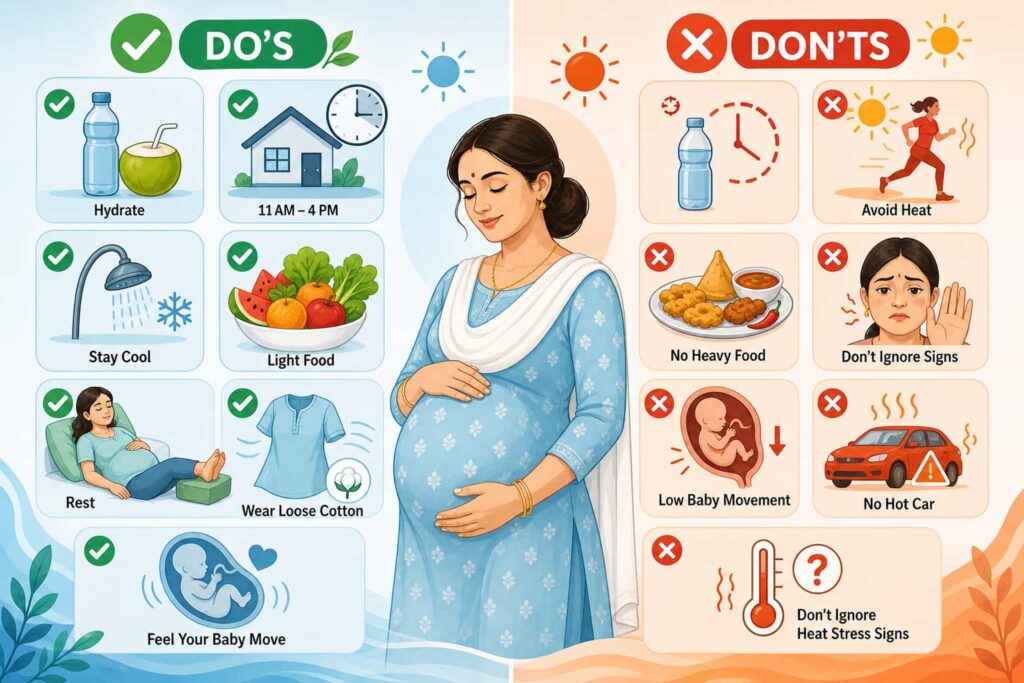
Do:
- Drink 2.5 to 3 litres of fluid daily water, coconut water, buttermilk, fresh juices
- Stay indoors between 11 AM and 4 PM whenever possible
- Take cool showers morning and evening
- Eat small, frequent, light meals with plenty of fresh fruit and vegetables
- Rest during the hottest part of the day with feet elevated
- Wear loose, light-coloured cotton clothing
- Monitor baby movements daily in the second and third trimester
- Seek medical help immediately if anything feels wrong
Do Not:
- Wait until you are very thirsty to drink drink consistently throughout the day
- Exercise vigorously outdoors during peak heat hours
- Eat heavy, oily, or very spicy food in hot weather
- Ignore swelling that is sudden, severe, or affects the face
- Dismiss reduced baby movement as normal
- Sit in a hot parked car even briefly
- Rely on feeling hot as your only indicator learn to notice the subtler signs of heat stress
Frequently Asked Questions
Q1. Can a heat wave cause miscarriage?
There is no direct evidence that heat waves cause miscarriage in healthy pregnancies. However, severe dehydration and sustained significant overheating particularly in the first trimester when critical development is occurring can increase pregnancy risks. The risk is preventable with proper hydration and heat management. If you have concerns about a specific heat exposure episode during early pregnancy, speak to your doctor.
Q2. How much water should I drink during summer pregnancy?
Aim for 2.5 to 3 litres of fluid daily as a baseline more on very hot days or if you have been physically active. Include a variety of hydrating drinks water, coconut water, buttermilk, fresh juices rather than relying on water alone. Your urine colour is your most reliable guide: pale yellow means well-hydrated, dark yellow means you need to drink more.
Q3. Is it safe to use air conditioning throughout pregnancy?
Yes, air conditioning is safe and beneficial during pregnancy in summer. The key points are to avoid very cold settings that create large temperature differences with the outdoor environment, to ensure the air conditioning unit is clean and well-maintained to prevent respiratory irritation, and to stay adequately hydrated since air-conditioned environments can be dry and subtly dehydrating.
Q4. Can I eat ice cream and cold foods during summer pregnancy?
Yes, in moderation. Cold foods and drinks are safe during pregnancy and can be genuinely helpful for cooling down. The considerations are sugar content, hygiene of the source, and quantity a small amount of good quality ice cream on a hot day is perfectly fine. Street-sold or hygienically uncertain frozen foods carry a food safety risk that is worth avoiding.
Q5. My feet are swelling badly in the heat what should I do?
Mild to moderate ankle and foot swelling is common in summer pregnancy. Elevating your feet whenever you rest, staying well hydrated, reducing salt intake, wearing comfortable footwear, and taking gentle walks to stimulate circulation all help. If the swelling is sudden, severe, affecting your face and hands, or accompanied by headache and visual changes seek medical assessment immediately as these can be signs of preeclampsia.
Q6. Is it safe to travel by train or bus during summer pregnancy?
Travel is generally safe with appropriate precautions. Plan journeys during cooler parts of the day, carry adequate water and snacks, wear comfortable clothing, take regular breaks to walk and stretch, and avoid prolonged journeys in poorly ventilated vehicles. Long journeys in intense heat without adequate water and rest should be avoided in the third trimester.
Q7. Can swimming help during summer pregnancy?
Yes, swimming is one of the best forms of exercise during summer pregnancy. The water provides natural cooling, supports the weight of the pregnancy reducing joint strain, and provides gentle cardiovascular activity. Ensure the pool is clean, the water is at a comfortable temperature, and you have medical clearance for exercise from your doctor.
The Bottom Line
Summer in India is intense. Pregnancy makes your body more sensitive to that intensity. And the combination deserves genuine respect not panic, but not dismissal either.
The most important thing to take away from this guide is simple: the heat itself is not your enemy. Your body’s response to unmanaged heat is what creates risk and that response is largely within your control.
With consistent hydration, sensible heat avoidance, smart eating, adequate rest, appropriate clothing, and careful attention to your body’s signals the vast majority of pregnant women in India navigate summer safely and deliver healthy babies.
Pregnancy care tips in summer are not about fear. They are about giving yourself and your baby the best possible conditions to thrive even when the thermometer is doing its worst.
At DrCuro, we are here to support you through every season of your pregnancy with honest guidance, personalised care, and genuine commitment to the health of both you and your baby.
Stay cool. Stay hydrated. Stay informed. And enjoy this extraordinary season of your life safely, confidently, and with DrCuro beside you.





No Comment! Be the first one.