






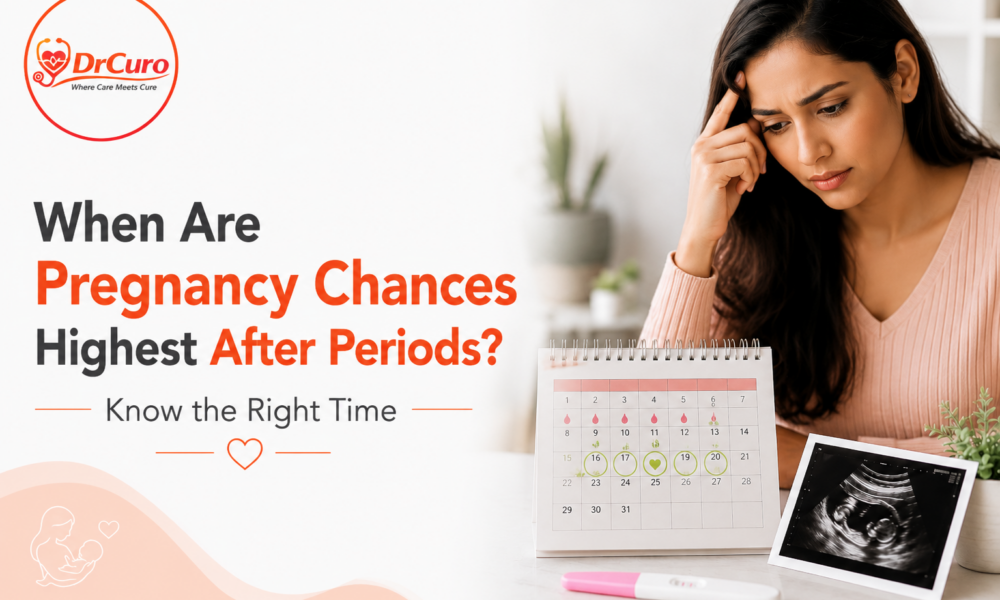
When Are Pregnancy Chances Highest After Periods? Know the Right Time
The Question Every Couple Asks — And the Answer Most Get Wrong One of the most common questions among couples trying to start a family is when are pregnancy chances highest after periods? It sounds...
The Question Every Couple Asks — And the Answer Most Get Wrong
One of the most common questions among couples trying to start a family is when are pregnancy chances highest after periods? It sounds like a simple question, but the answer is actually more layered than most people expect. Every woman’s body is different, every cycle is unique, and fertility does not follow a one-size-fits-all calendar. Some women believe they are completely safe from pregnancy right after their period ends. Others think that only one specific day in the entire month matters for conception. Both of these ideas are incomplete, and relying on them can either cause unintended pregnancies or lead to months of failed attempts when a couple is actively trying to conceive.
Table Of Content
- The Question Every Couple Asks — And the Answer Most Get Wrong
- Understanding the Menstrual Cycle First
- What Exactly Is Ovulation and Why Does It Matter?
- When Are Pregnancy Chances Highest After Periods?
- Can Pregnancy Happen Right After Periods?
- How to Identify Your Fertile Window
- Physical Signs That Ovulation May Be Occurring
- Lifestyle Factors That Directly Impact Fertility
- Nutrients That Support Reproductive Health
- Does Age Affect When Pregnancy Chances Are Highest?
- Common Mistakes Couples Make When Trying to Conceive
- When Should You See a Fertility Specialist?
- The Emotional Side of the Fertility Journey
- Final Thoughts
At drcuro, we believe that understanding your own body is the first and most powerful step toward a healthy reproductive journey. Fertility awareness is not just about counting days on a calendar it is about truly understanding how your hormones, cycle phases, and ovulation patterns work together. Just like heart health depends on consistent habits, awareness, and timely action, reproductive health also demands the same kind of informed and proactive approach. When couples understand the science behind their fertile window, they make smarter decisions, reduce unnecessary anxiety, and improve their natural chances of conception significantly.
In this blog, we will walk you through everything you need to know from how the menstrual cycle works, to when ovulation happens, to which days offer the highest fertility, and what lifestyle factors can either support or hinder your chances of getting pregnant naturally.
Understanding the Menstrual Cycle First
Before diving into the question of when pregnancy chances are highest after periods, it is important to understand how the menstrual cycle actually works. Many people grow up learning that a normal cycle is exactly 28 days, but this is just an average not a rule. Women can have cycles as short as 21 days or as long as 35 days or even longer, and all of these can be perfectly normal depending on the individual.
A menstrual cycle starts on the first day of bleeding and ends the day before the next period begins. It is controlled by a series of hormonal changes that prepare the body for a potential pregnancy every single month. The cycle is generally divided into four main phases:
| Phase | What Happens |
| Menstrual Phase | Period bleeding occurs, uterine lining sheds |
| Follicular Phase | Eggs begin developing inside the ovaries |
| Ovulation Phase | A mature egg is released from the ovary |
| Luteal Phase | Body prepares for pregnancy or the next period |
Among all these phases, the ovulation phase is the most critical when it comes to conception. This is the window during which pregnancy is actually possible, and understanding when it falls in your cycle is the key to timing intercourse correctly.
What Exactly Is Ovulation and Why Does It Matter?
Ovulation is the process by which a mature egg is released from one of the ovaries. Once released, this egg travels down the fallopian tube, where it can be fertilized by sperm if intercourse has occurred recently. The egg itself has a very short survival window roughly 12 to 24 hours after it is released. After that, if fertilization has not occurred, the egg breaks down and the body begins preparing for the next cycle.
This is where sperm plays a crucial role. Sperm can survive inside the female reproductive tract for up to 5 days under favorable conditions. This means that even if intercourse happens a few days before ovulation, there is still a real possibility of pregnancy because live sperm may still be present when the egg is released. This biological reality is what defines the concept of the fertile window a span of several days, not just one single moment, during which conception is possible.
Understanding this changes the entire approach to pregnancy planning. Instead of trying to pinpoint one exact day, the goal becomes covering the broader fertile window with well-timed intercourse. This is a key insight that drcuro specialists always emphasize when guiding couples through their natural conception journey.
When Are Pregnancy Chances Highest After Periods?
Now let us answer the main question directly — when are pregnancy chances highest after periods?
For women with a regular 28-day cycle, ovulation typically occurs around Day 14. If periods last approximately 5 days, this means the highly fertile phase begins roughly around Day 10 and extends to Day 15. The days immediately after periods end are considered low fertility days, but fertility begins rising steadily as the body approaches ovulation.
Here is a simple breakdown for a standard 28-day cycle:
| Cycle Day | Fertility Status |
| Day 1–5 | Period — very low fertility |
| Day 6–9 | Low but slightly increasing fertility |
| Day 10–12 | Fertility rising noticeably |
| Day 13–15 | Highest fertility — peak conception window |
| Day 16–28 | Fertility drops progressively |
The days just 1 to 2 days before ovulation are often cited as the absolute best time for intercourse if the goal is conception. This is because sperm needs some time to travel and reach the egg, and having sperm already present when the egg arrives increases the chances of successful fertilization significantly.
However, it is important to remember that not all women have a 28-day cycle. The table below shows how ovulation timing shifts with different cycle lengths:
| Cycle Length | Expected Ovulation Day |
| 21 days | Around Day 7 |
| 28 days | Around Day 14 |
| 30 days | Around Day 16 |
| 32 days | Around Day 18 |
| 35 days | Around Day 21 |
This is why couples must always calculate their fertile window based on their own cycle length, not a generic 28-day assumption.
Can Pregnancy Happen Right After Periods?
Many people are surprised to learn that yes, pregnancy can actually occur very soon after periods, in certain situations. This is especially true for women with shorter cycles. A woman with a 21-day cycle may ovulate as early as Day 7. If her period lasts 5 days and she has intercourse on Day 5 or 6, and ovulation occurs on Day 7, conception is possible because sperm can survive for several days inside the reproductive tract.
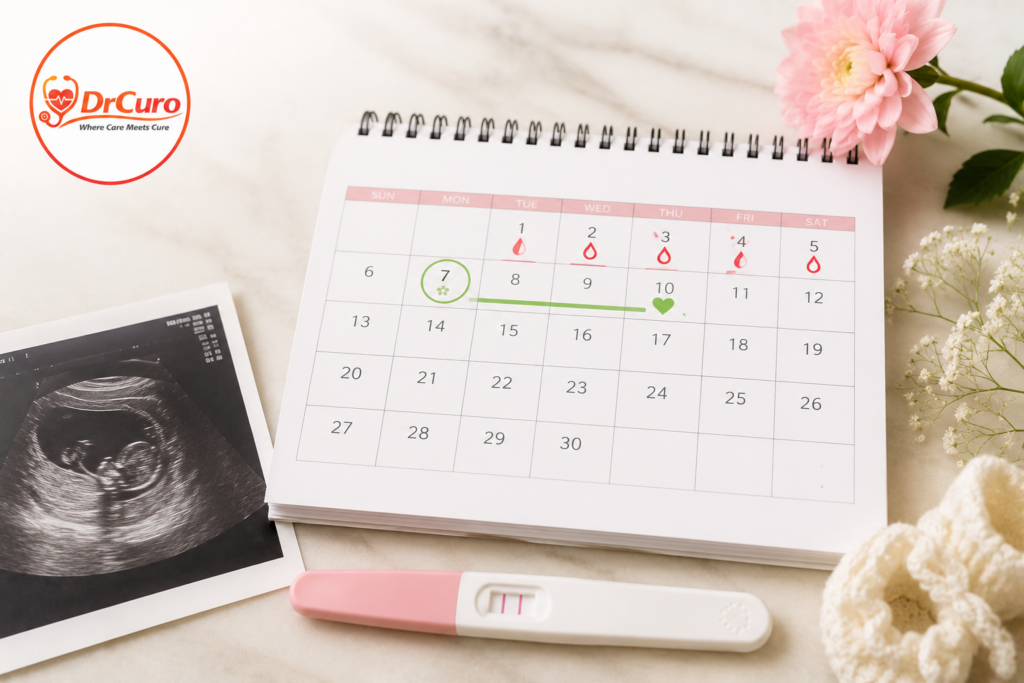
This is exactly why the concept of “safe days” is considered unreliable by medical professionals. No day immediately before, during, or after periods is guaranteed to be completely safe from pregnancy, particularly for women who have shorter or irregular cycles. At drcuro, patients are always counseled to avoid assuming that any specific day is entirely risk-free without a clear understanding of their own personal ovulation pattern.
How to Identify Your Fertile Window
Identifying your fertile window involves a combination of tracking, observation, and in some cases, medical tools. Here are the most commonly used and effective methods:
- Cycle tracking apps — These apps ask you to log your period start and end dates and then calculate your estimated fertile window based on your average cycle length. They are helpful but only accurate for women with fairly regular cycles.
- Ovulation predictor kits (OPKs) — These are urine-based test strips that detect the surge in Luteinizing Hormone (LH) that occurs 24 to 36 hours before ovulation. They are widely available and offer better accuracy than simple calendar counting.
- Basal Body Temperature (BBT) tracking — Resting body temperature rises slightly after ovulation. Tracking this daily with a sensitive thermometer over several months can help women identify patterns in their cycle.
- Cervical mucus observation — In the days leading up to ovulation, cervical mucus becomes clear, slippery, and stretchy — often compared to raw egg whites. This change is a strong natural signal that ovulation is approaching.
- Follicular monitoring by ultrasound — This is the most medically accurate method, where a fertility specialist tracks the development of follicles in the ovary through serial ultrasounds and can predict ovulation with high precision.
For women with irregular cycles or conditions like PCOS, drcuro specialists often recommend combining multiple methods or opting for follicular monitoring to get accurate ovulation timing.
Physical Signs That Ovulation May Be Occurring
Many women experience physical symptoms around ovulation that can serve as natural indicators. While these are not 100% reliable on their own, they are worth paying attention to, especially when used alongside other tracking methods:
- Clear, stretchy cervical mucus (egg-white consistency)
- Mild cramping or twinges on one side of the lower abdomen (called mittelschmerz)
- Slight bloating
- Increased libido or sex drive
- Breast tenderness
- A small rise in basal body temperature
- Heightened sense of smell or taste in some women
If you notice these signs consistently around the same point in your cycle each month, they can help you build a clearer picture of when your fertile window falls.
Lifestyle Factors That Directly Impact Fertility
Fertility is not purely about timing the overall health of your body plays a significant role in how well your reproductive system functions. Just as heart care involves managing diet, stress, sleep, and physical activity to keep the cardiovascular system healthy, fertility care also depends on a whole-body approach. Here are the lifestyle factors that matter most:
Factors that support fertility:
- Eating a balanced, nutrient-rich diet with plenty of fruits, vegetables, whole grains, and healthy fats
- Maintaining a healthy body weight both underweight and overweight conditions can disrupt hormone levels and ovulation
- Getting 7 to 8 hours of quality sleep every night
- Managing stress through mindfulness, yoga, or therapy
- Staying well hydrated throughout the day
- Engaging in moderate regular exercise — excessive intense exercise can actually suppress ovulation
Factors that harm fertility:
- Smoking — strongly linked to reduced egg quality and fertility
- Excessive alcohol consumption
- High levels of chronic stress
- Obesity or extreme weight loss
- Unmanaged health conditions like PCOS, thyroid disorders, or diabetes
- Overuse of lubricants during intercourse, as many commercial lubricants can impair sperm motility
Nutrients That Support Reproductive Health
While no single food can guarantee pregnancy, certain nutrients are known to support hormonal health, egg quality, and the overall reproductive environment. Including these in your daily diet is a simple and natural way to support your fertility:
| Nutrient | Food Sources | Possible Benefit |
| Folic Acid | Leafy greens, lentils, fortified cereals | Supports early fetal development |
| Iron | Spinach, red meat, beans | Supports hormonal balance |
| Omega-3 Fatty Acids | Walnuts, flaxseeds, fatty fish | Hormone production support |
| Zinc | Pumpkin seeds, chickpeas, eggs | Supports egg health and reproductive function |
| Vitamin D | Sunlight, dairy, eggs | Linked to improved fertility outcomes |
| Antioxidants | Berries, tomatoes, green tea | Protect eggs from oxidative damage |
A fertility-friendly diet does not have to be complicated. At drcuro, the guidance is simple eat real, whole food, minimize processed items, and ensure you are not deficient in key vitamins and minerals.
Does Age Affect When Pregnancy Chances Are Highest?
Age is one of the most significant factors in female fertility. A woman is born with all the eggs she will ever have, and both the quantity and quality of those eggs naturally decline over time. This does not mean pregnancy is impossible after a certain age, but it does mean that timing, awareness, and proactive health management become increasingly important.
| Age Group | Fertility Level |
| 20–30 years | Highest natural fertility |
| 30–35 years | Mild, gradual decline begins |
| 35–40 years | Faster decline, conception may take longer |
| 40+ years | Significant decline, medical support often helpful |
Women above the age of 35 who have been trying to conceive for more than 6 months are generally advised to seek a fertility evaluation earlier rather than waiting the standard 12 months. Early evaluation can identify any treatable issues before they become more complex.
Common Mistakes Couples Make When Trying to Conceive
Despite having all the right intentions, many couples unknowingly reduce their pregnancy chances through common avoidable mistakes:
- Timing intercourse only on ovulation day — Missing the days just before ovulation, which are often even more effective
- Calculating fertile days based on a generic 28-day cycle — Without knowing their actual cycle length
- Giving up too soon — Natural conception can take several months even for completely healthy couples
- Ignoring male fertility — Sperm health is equally important; male fertility issues contribute to nearly half of all conception difficulties
- Excessive stress and pressure — High stress levels can disrupt ovulation and reduce libido
- Using incompatible lubricants — Some standard lubricants are harmful to sperm
At drcuro, couples are often reassured that not conceiving within the first few months does not automatically indicate a serious problem. Patience, proper timing, and healthy habits go a long way.
When Should You See a Fertility Specialist?
If you have been trying to conceive naturally with proper timing and a healthy lifestyle but have not succeeded, it may be time to seek professional guidance. Here are the general guidelines:
| Situation | When to Seek Help |
| Under 35 years, no known issues | After 12 months of trying |
| Above 35 years | After 6 months of trying |
| Irregular or absent periods | Consult earlier |
| Known conditions like PCOS, thyroid issues | Consult early |
| History of miscarriages | Consult as soon as possible |
| Male fertility concerns | Consult together early |
Warning signs that warrant earlier consultation include very irregular periods, no periods at all, severe menstrual pain, a history of pelvic infections, recurrent miscarriages, or known conditions like PCOS or endometriosis. drcuro specialists recommend not waiting unnecessarily if something feels persistently wrong early evaluation saves time, reduces emotional strain, and opens the door to effective treatment sooner.
The Emotional Side of the Fertility Journey
One aspect of trying to conceive that rarely gets enough attention is the emotional and psychological toll it can take on couples. Month after month of negative pregnancy tests, combined with social pressure and family expectations, can create significant stress, anxiety, and even relationship strain. This emotional burden is real and valid, and it deserves as much attention as the physical and medical aspects of fertility.
Just as we talk about heart health not just in terms of cholesterol and blood pressure but also emotional wellbeing and stress management, fertility health must also include mental and emotional wellness. High levels of chronic stress are known to affect hormonal balance, delay ovulation, and reduce overall conception rates. Couples are encouraged to support each other, communicate openly, set realistic expectations, and seek counseling if the emotional weight becomes too heavy.
At drcuro, a compassionate and patient-centered approach to fertility care means that emotional health is always part of the conversation — not an afterthought.
Final Thoughts
Understanding when pregnancy chances are highest after periods is truly one of the most empowering pieces of knowledge a couple trying to conceive can have. For most women, fertility peaks around ovulation, which typically falls in the middle of the cycle but the exact timing varies from person to person based on cycle length, hormonal health, age, and overall lifestyle. Rather than chasing one perfect day, the wiser approach is to understand your full fertile window, track your cycle consistently, adopt fertility-supporting habits, and approach the journey with patience and positivity.
Proper timing, nutritional support, stress management, and a clear understanding of your body’s signals can make a significant difference in natural conception outcomes. At drcuro, the mission goes beyond treatment it is about educating and empowering every individual and couple with the knowledge they need to take informed, confident steps toward building their family. If natural conception feels delayed despite your best efforts, do not hesitate to reach out for professional guidance. Timely help from a qualified fertility specialist can identify underlying issues, provide personalized solutions, and bring you closer to your goal.
This blog is for informational and educational purposes only. Please consult a qualified medical professional for personalized fertility advice.





No Comment! Be the first one.