








Chronic Back Pain Treatment: Medical and Natural Options
Introduction Back pain is something most people experience at least once in their lives, but when it refuses to go away even after weeks of rest and basic care, it crosses into a different and more...

Introduction
Back pain is something most people experience at least once in their lives, but when it refuses to go away even after weeks of rest and basic care, it crosses into a different and more serious category. Chronic back pain is defined as pain that persists for 12 weeks or longer, and unlike a short-term strain that fades with time, it can embed itself into your daily life in ways that affect how you sleep, work, move, and feel emotionally. It is one of the most common reasons people visit a doctor, miss days of work, and gradually withdraw from physical activity which, ironically, tends to make the condition worse over time. The lower back bears most of the burden because it carries the weight of the upper body through every movement, which is why lumbar pain dominates the statistics. However, chronic back pain is not a single condition. It is an umbrella term that can describe anything from disc-related nerve compression to postural strain, from arthritis to osteoporosis-related fractures. Understanding the real cause is what separates effective treatment from temporary relief. In this guide, we will walk through the causes, symptoms, diagnostic approaches, and both medical and natural treatment options available today so you can make informed decisions rather than guessing your way through recovery.
Table Of Content
What Causes Chronic Back Pain?
Most cases of chronic back pain do not appear overnight. They develop gradually, often from a combination of structural problems, lifestyle habits, and age-related changes in the spine. The most common underlying cause is poor posture, particularly among people who spend long hours sitting at a desk, hunching over a phone, or working in positions that place uneven load on the spine. Over months and years, this imbalance strains the muscles and ligaments that hold the spine in alignment, eventually causing persistent discomfort that rest alone cannot fix.
Herniated or slipped discs are another frequent culprit. The discs between your vertebrae act as shock absorbers, and when one bulges or ruptures due to age, injury, or repeated strain it can press on nearby nerves and cause radiating pain that travels from the lower back down through the legs. This pattern is commonly known as sciatica, and it can range from a dull ache to a sharp, electric-like shooting pain. Arthritis, particularly osteoarthritis, gradually breaks down the cartilage in spinal joints and causes stiffness, inflammation, and reduced mobility. Degenerative disc disease, which is a natural part of aging where the discs lose moisture and become thinner, reduces the spine’s ability to absorb daily mechanical stress and makes pain increasingly common with movement.
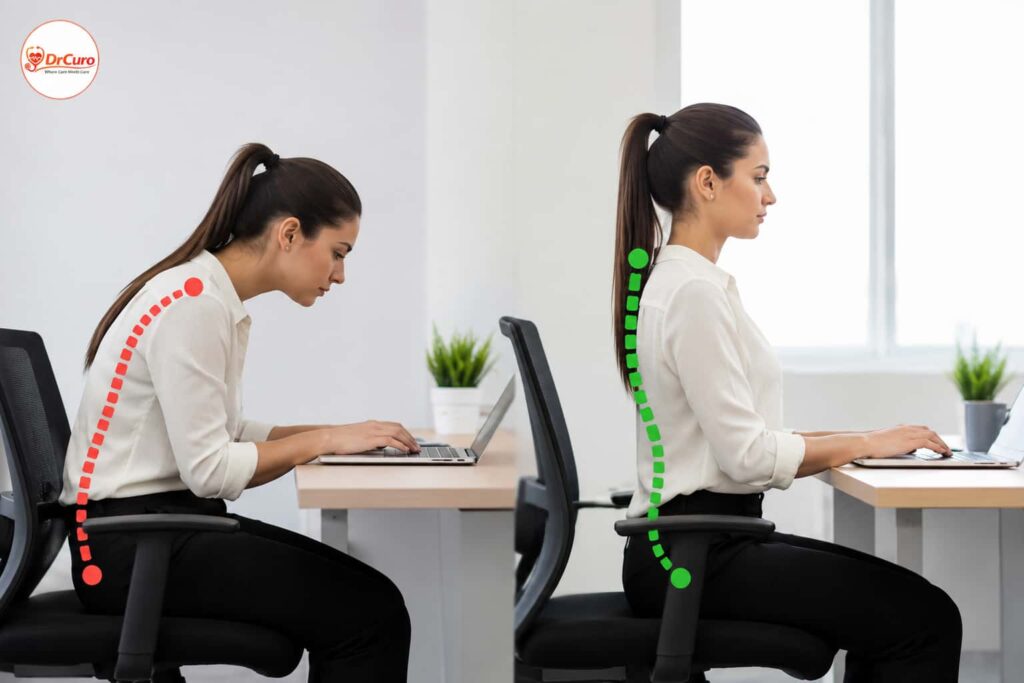
Less obvious but equally important contributors include excess body weight, which places added pressure on the lumbar spine; weak core muscles, which force the back to compensate for insufficient abdominal support; vitamin D deficiency, which weakens bones over time; and psychological stress, which increases muscle tension and amplifies pain perception. The relationship between mental health and chronic pain is well-documented anxiety and depression do not cause back pain, but they significantly intensify it and make recovery slower.
Recognising the Symptoms
Chronic back pain presents differently from person to person, but there are recognisable patterns worth noting:
- Persistent dull ache or sharp stabbing pain lasting beyond 12 weeks
- Stiffness upon waking that may ease slightly with movement
- Pain that worsens after prolonged sitting, bending, or lifting
- Radiating pain into the hips, buttocks, or legs
- Tingling, numbness, or weakness in the legs (suggests nerve involvement)
- Disturbed sleep due to discomfort
- Muscle fatigue and reduced ability to stand or walk for extended periods
- Limited range of motion in the lower or upper back
Not all back pain is equal. While most chronic cases are musculoskeletal, certain symptoms demand immediate medical attention specifically, loss of bladder or bowel control, severe weakness in the legs, numbness in the groin area, unexplained weight loss alongside pain, or back pain following a fall or accident. These are red flag signs that should never be managed at home or delayed.
How Is It Diagnosed?
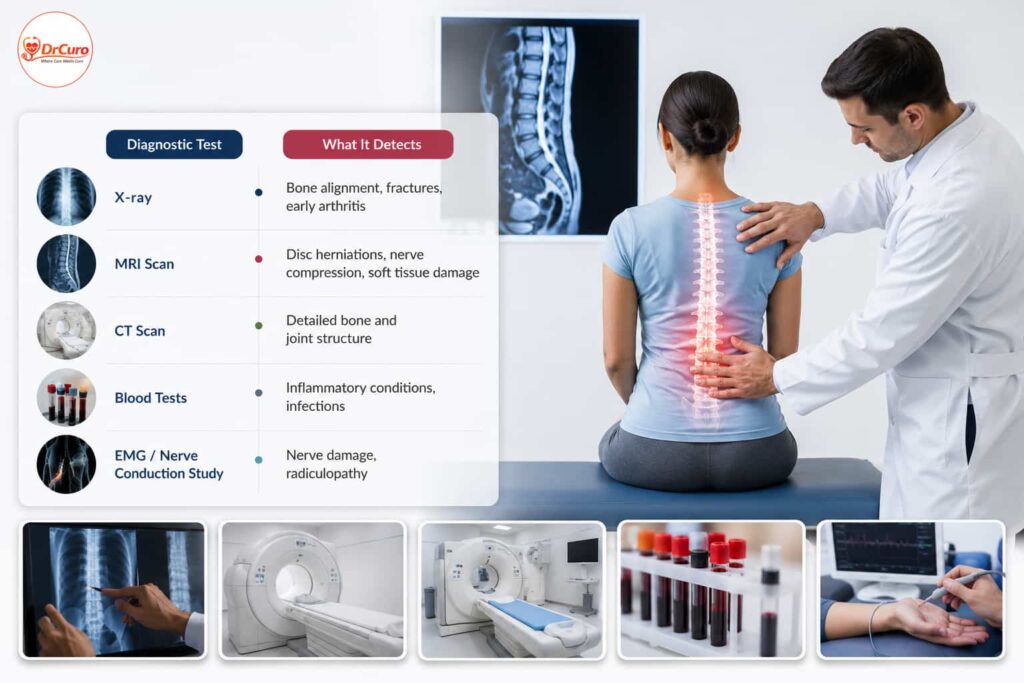
A proper diagnosis begins with a thorough clinical history and physical examination. The doctor will assess your posture, flexibility, muscle strength, and reflexes, then ask targeted questions about the location, onset, and behaviour of the pain. Based on this, imaging and other tests may follow:
| Diagnostic Test | What It Detects |
| X-ray | Bone alignment, fractures, early arthritis |
| MRI Scan | Disc herniations, nerve compression, soft tissue damage |
| CT Scan | Detailed bone and joint structure |
| Blood Tests | Inflammatory conditions, infections |
| EMG / Nerve Conduction Study | Nerve damage, radiculopathy |
No single test tells the complete story. Diagnosis is most accurate when imaging is interpreted alongside clinical findings, not in isolation.
Medical Treatment Options
Medical treatment for chronic back pain is not one-size-fits-all. The appropriate approach depends on the severity of symptoms, the underlying diagnosis, age, and how the patient has responded to earlier interventions.
Medications are typically the first line of response. Non-steroidal anti-inflammatory drugs (NSAIDs) reduce inflammation and provide pain relief in the short term. Muscle relaxants help when muscle spasm is a significant component. Topical analgesic gels and creams can offer localised relief without systemic side effects. For nerve-related pain, specific prescription medications targeting neuropathic pathways may be recommended. It is worth noting that long-term reliance on painkillers without addressing the structural cause is counterproductive it masks the symptom without resolving the problem and introduces its own risks.
Physical therapy is arguably the most consistently effective non-surgical treatment for chronic back pain. A qualified physiotherapist designs a programme that strengthens the muscles supporting the spine, corrects movement patterns that are feeding the injury, and progressively restores flexibility and function. Unlike pain medication, physiotherapy addresses the root mechanical issue. It also reduces dependence on drugs, improves posture, and lowers the risk of recurrence significantly.
Steroid injections are used in cases where nerve inflammation is a major driver of pain — such as with a herniated disc or spinal stenosis. Corticosteroids injected into the epidural space can reduce inflammation around the affected nerve and provide a window of relief, during which physiotherapy becomes more manageable. However, injections are not a long-term solution and are typically recommended only in selected cases after conservative treatments have been attempted.
Surgery is considered a last resort and is appropriate for a minority of patients. It becomes relevant when structural damage is severe, when conservative treatment has failed over an extended period, or when there is progressive neurological compromise such as worsening leg weakness or loss of function.
| Surgical Procedure | Purpose |
| Discectomy | Removes herniated disc material pressing on a nerve |
| Laminectomy | Relieves pressure on the spinal cord by removing bone material |
| Spinal Fusion | Stabilises two or more vertebrae |
| Artificial Disc Replacement | Replaces a damaged disc while preserving movement |
Surgery can be effective when indicated correctly, but it is not a guarantee of complete pain resolution, and post-surgical rehabilitation is essential.
Natural Treatment Options
Natural approaches to chronic back pain are not alternative medicine for mild to moderate cases, they are often the primary treatment. They work by improving the body’s structural and functional capacity rather than simply suppressing pain signals.
Exercise is the single most evidence-backed natural treatment for chronic back pain, yet it is the one most people resist when they are in pain. The instinct to rest makes physiological sense, but prolonged rest weakens the very muscles that protect the spine. Walking, swimming, cycling on a stationary bike, and low-impact aerobics all improve circulation and gradually restore muscle endurance. Core strengthening exercises pelvic tilts, bird-dog, bridge build the foundational support the spine needs to function without strain. The key is starting slowly, maintaining consistency, and progressing gradually rather than pushing through severe pain.
Yoga has accumulated a reasonable body of clinical evidence supporting its role in reducing chronic lower back pain. It works through a combination of mechanisms stretching tight muscles, strengthening supporting structures, improving proprioception (body awareness), and reducing stress. Beginner poses like Cat-Cow, Child’s Pose, Cobra, and Bridge Pose are generally safe and effective starting points. Those with diagnosed spinal conditions like herniation or stenosis should get medical clearance before beginning.
Heat and cold therapy are often underestimated. Cold packs applied during a flare-up reduce acute inflammation and numb localised pain. Heat through a heating pad, warm bath, or hot water bottle relaxes muscle spasms and improves blood flow to stiff tissues. Using both strategically (cold during flare-ups, heat for chronic stiffness) gives you a simple, cost-free tool that genuinely helps.

Diet and hydration matter more than most patients realise. Spinal discs are largely made of water chronic dehydration reduces their shock-absorbing capacity. Foods rich in omega-3 fatty acids (fatty fish, flaxseeds) have anti-inflammatory effects. Calcium and vitamin D support bone density and reduce the risk of osteoporotic fractures. Processed food, sugar, and excess alcohol promote systemic inflammation, which amplifies pain. Managing body weight through diet also directly reduces mechanical load on the lumbar spine even a modest reduction in weight can produce measurable improvement in symptoms.
Stress management is often overlooked in discussions about back pain, but the connection between psychological stress and pain intensity is physiological, not imaginary. Cortisol and adrenaline released during chronic stress tighten muscles, increase inflammatory markers, and reduce pain tolerance. Techniques like mindfulness meditation, deep breathing, and simply building time for recovery into your week are not soft recommendations they are part of clinical pain management programmes worldwide.
Medical vs Natural: A Practical Comparison
| Factor | Medical Treatment | Natural Treatment |
| Speed of relief | Faster | Gradual |
| Long-term outcomes | Variable (depends on cause) | Strong when practiced consistently |
| Side effects | Possible with medications | Minimal |
| Suitability | Moderate to severe cases | Mild to moderate and prevention |
| Cost | Higher | Generally low |
| Role of professional | Required | Guided self-management |
| Risk of recurrence | Higher if lifestyle unchanged | Lower with consistent habits |
The most effective treatment plans use both. Medical intervention manages acute symptoms and identifies serious pathology; natural treatment rebuilds the body’s resilience and reduces dependence on ongoing medical care.
Lifestyle Changes That Make a Measurable Difference
Long-term management of chronic back pain depends heavily on daily habits:
- Sit with your lower back supported; avoid slouching for extended periods
- Stand and stretch every 30–45 minutes if you work at a desk
- Lift heavy objects using your legs, not your back — bend at the knees, not the waist
- Sleep on a medium-firm mattress; place a pillow between your knees if sleeping on your side
- Wear supportive footwear, especially if you stand for long hours
- Avoid smoking — it impairs disc nutrition and slows healing
- Aim for 7–8 hours of uninterrupted sleep; poor sleep lowers pain threshold
- Build core strength as a preventive habit, not just a rehabilitation exercise
These changes require no prescription and no specialist visit. They are also the habits most commonly skipped, which is why chronic back pain recurs so frequently despite successful treatment episodes.
When Should You Seek Immediate Medical Help?
Most chronic back pain can be managed systematically without emergency care, but the following warrant immediate evaluation:
- Sudden severe pain following a fall or trauma
- Loss of bladder or bowel control
- Progressive leg weakness or inability to walk
- Numbness in the groin or inner thighs (saddle anaesthesia)
- High fever accompanying back pain
- Unexplained significant weight loss
- Pain that is worse at night and does not respond to any position change
These symptoms suggest serious pathology spinal cord compression, fracture, infection, or malignancy and must not be treated with home remedies or delayed.
Conclusion
Chronic back pain is genuinely complex, but it is also genuinely manageable. The most important shift in thinking is recognising that pain relief alone is not the goal restoring function, rebuilding strength, and preventing recurrence are. Medical treatment, whether through physiotherapy, medications, or in selected cases surgery, addresses the structural and neurological drivers of pain. Natural approaches exercise, yoga, diet, stress management, and daily postural habits build the physical and metabolic environment in which the spine can heal and remain healthy. The same principles that apply to back pain management also overlap significantly with broader joint pain treatment addressing inflammation, mobility, and mechanical load is foundational regardless of which joint is affected.
At drcuro, the approach to chronic back pain is built on accurate diagnosis first, followed by a personalised treatment plan that integrates medical expertise with sustainable lifestyle guidance. Because the only treatment that truly works long-term is the one built around your specific condition, your daily reality, and your willingness to stay consistent.
If you have been managing back pain on your own for more than a few weeks, it is time to get a proper evaluation and a plan that actually addresses what is driving it.
Q: Chronic back pain mein bed rest karna sahi hai ya galat?
Yeh ek bahut common misconception hai. Bahut log sochte hain ki zyada rest lene se pain theek ho jaayega, lekin reality mein prolonged bed rest aapki back ko aur kamzor bana deta hai. Muscles weak ho jaati hain, circulation slow ho jaata hai, aur stiffness badhti hai. Light walking, stretching, aur guided exercises zyada effective hain. Complete rest sirf acute injury ke pehle 1-2 din ke liye samajh mein aata hai uske baad movement hi treatment hai.
Q: Kya yoga se chronic back pain mein genuinely farak padta hai, ya yeh sirf relaxation ke liye hai?
Yoga sirf relaxation nahi hai iske clinical benefits hain. Cat-Cow, Child’s Pose, aur Bridge Pose jaise asanas spine ke aas paas ki muscles ko strengthen karte hain, flexibility improve karte hain, aur nerve compression ko gradually reduce kar sakte hain. Lekin ek important warning agar aapko herniated disc ya spinal stenosis diagnosed hai, toh bina doctor ki permission ke yoga start mat karein. Wrong poses pain ko aur badha sakte hain.
Q: Painkiller khane se pain theek ho jaata hai toh kya doctor ke paas jaana zaroori hai?
Nahi yeh sochna dangerous hai. Painkiller pain ka signal temporarily block karta hai, underlying cause ko treat nahi karta. Agar aap regularly painkillers le rahe hain back pain ke liye, toh yeh ek sign hai ki kuch serious address nahi ho raha. Long-term painkiller use se kidney, stomach, aur liver pe side effects ho sakte hain. Proper diagnosis ke baad jo treatment plan banta hai physiotherapy, exercise, ya injections woh actually problem ko target karta hai, sirf symptom ko nahi.
Q: Back pain aur joint pain mein kya connection hai dono ek saath kyun hote hain?
Aksar hota hai ki log back pain aur joint pain ko alag alag conditions samajhte hain, lekin dono ka root cause same ho sakta hai inflammation, weak muscles, ya degenerative changes in the body. Jab spine ka alignment off hota hai, toh uska pressure hips, knees, aur shoulders pe bhi padta hai. Isliye effective joint pain treatment mein sirf affected joint nahi, balki poora musculoskeletal system dekhna zaroori hota hai. drcuro mein yahi integrated approach follow ki jaati hai.








No Comment! Be the first one.