








ORS vs Nariyal Pani: What Actually Works Better in Dehydration?
Every summer, the same conversation happens in households across India. Someone is feeling weak, dizzy, and drained after a hot afternoon. Someone else immediately reaches for a fresh coconut. A...
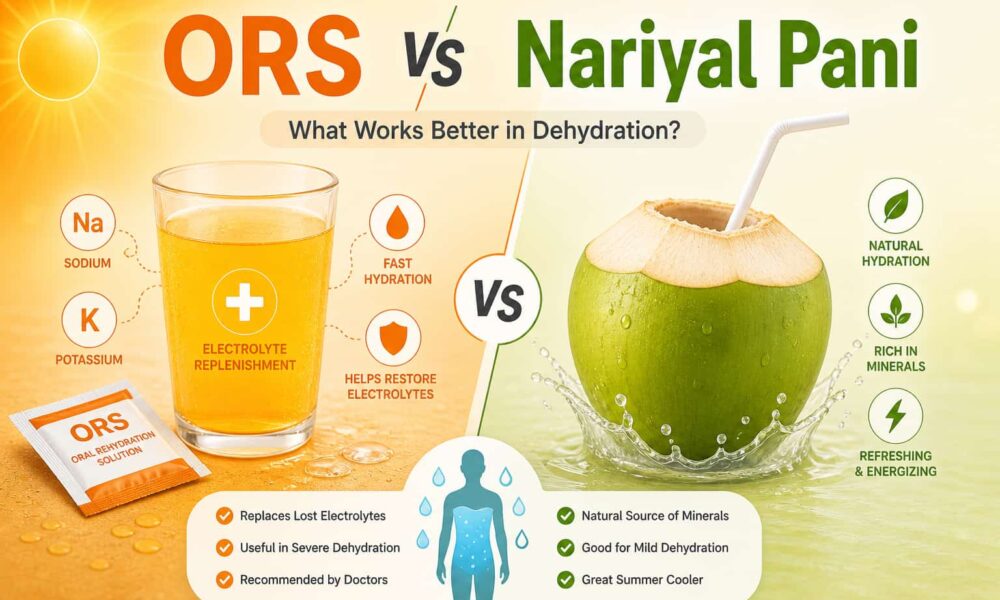
Every summer, the same conversation happens in households across India.
Table Of Content
- What Is Dehydration And Why Is It More Than Just Feeling Thirsty?
- Understanding ORS – What It Is and Why It Was Designed
- Understanding Nariyal Pani – What It Is and What It Actually Does
- ORS vs Nariyal Pani – The Key Differences Explained
- Difference 1 – Sodium Content
- Difference 2 – The Absorption Mechanism
- Difference 3 – Purpose and Application
- Difference 4 – Sugar Content and Its Implications
- Difference 5 – Standardisation
- Myth vs Fact – The Most Common Misconceptions in the ORS vs Nariyal Pani Debate
- When Should You Use ORS – Specific Situations
- When Is Nariyal Pani the Right Choice – Specific Situations
- Real Life Situations Where the Wrong Choice Gets Made
- Situation 1 – Child Has Loose Motions, Family Gives Only Coconut Water
- Situation 2 – Adult Has Heat Exhaustion, Refuses ORS Because It Tastes Bad
- Situation 3 – Elderly Person Has Vomiting, Family Thinks ORS Will Worsen It
- Situation 4 – Healthy Person Drinks ORS Every Day in Summer as a Precaution
- How to Use ORS Correctly
- How to Use Coconut Water Correctly
- Special Considerations for Different Groups
- Children
- Elderly Individuals
- Pregnant Women
- People With Diabetes
- People With Kidney Disease
- Can You Use Both ORS and Nariyal Pani Together?
- How DrCuro Helps You Make the Right Decision
- The Final Verdict
- Conclusion
- Frequently Asked Questions
Someone is feeling weak, dizzy, and drained after a hot afternoon. Someone else immediately reaches for a fresh coconut. A third person insists on ORS. An argument follows. Nobody is entirely sure who is right.
And in the meantime the person who is dehydrated is not getting the right treatment.
This is not a minor disagreement. In the context of serious dehydration particularly dehydration caused by diarrhoea, vomiting, or prolonged heat exposure choosing the wrong option does not just slow recovery. It can allow the situation to deteriorate into a medical emergency.
ORS vs nariyal pani is one of the most common health debates in India every summer. And the reason it keeps happening year after year, household after household is that both sides of the debate have a partial truth that sounds completely convincing.
Coconut water does contain electrolytes. ORS is not only for hospitals. Both of these things are true. But partial truths in health decisions lead to incomplete and sometimes dangerous outcomes.
At DrCuro, we believe that the most important health decisions are the ones made in the ordinary moments not in a hospital, but at home, when someone is unwell and the family is deciding what to give them. Getting those moments right requires complete information, not partial answers.
This guide gives you the complete picture on ORS vs nariyal pani what each one actually contains, how each one works in the body, when each one is appropriate, when one is clearly superior to the other, and what happens when the wrong choice is made. By the end, the debate should be settled not because one is always better, but because you will know exactly which one is right for which situation.
What Is Dehydration And Why Is It More Than Just Feeling Thirsty?
Before comparing ORS and coconut water, it is essential to understand what dehydration actually is — because most people underestimate it.
Dehydration is not simply a water shortage. It is a physiological imbalance a disruption in the precise balance of fluids and minerals that the body maintains in every cell, every tissue, and every organ system.
When you lose fluid through sweat, diarrhoea, vomiting, or inadequate intake you are not losing pure water. You are losing a complex solution that contains sodium, potassium, chloride, magnesium, and other electrolytes that the body uses for virtually every function it performs.
What electrolytes actually do in the body:
Sodium regulates the amount of fluid inside and outside cells. It is the primary driver of fluid retention without adequate sodium, the body cannot hold on to the water it is receiving. It is also essential for nerve impulse transmission and muscle contraction.
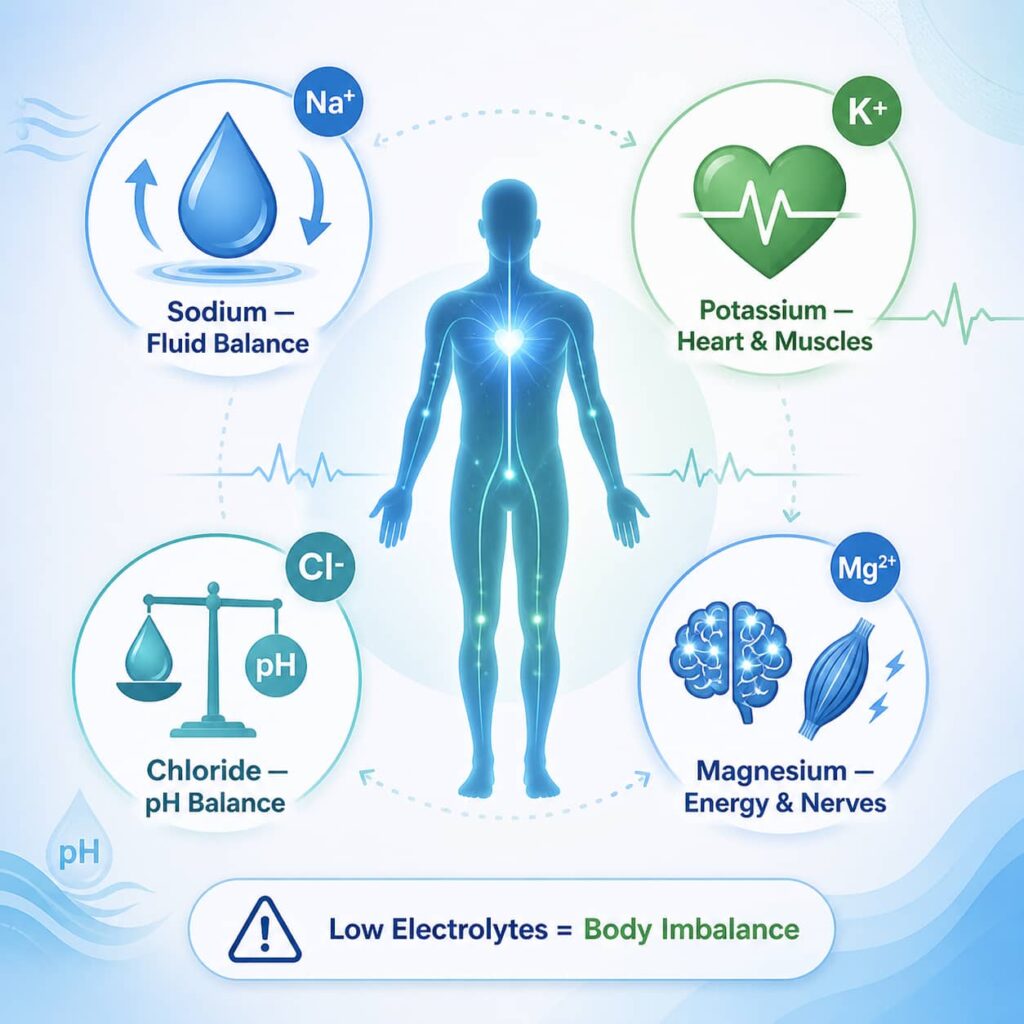
Potassium works in partnership with sodium to maintain cellular fluid balance. It regulates heartbeat, supports muscle function, and is critical for kidney health.
Chloride works with sodium to maintain blood pressure and the body’s acid-base balance.
Magnesium supports over 300 enzymatic reactions in the body including energy production, protein synthesis, and muscle and nerve function.
When these electrolytes fall below critical levels not just water, but electrolytes specifically the body begins to malfunction in ways that go far beyond thirst.
What happens when dehydration is not corrected properly:
- Muscles cramp because sodium and potassium regulation of muscle contraction is disrupted
- Blood pressure drops because sodium is essential for maintaining blood volume
- Heart rate increases the heart compensates for reduced blood volume by beating faster
- The brain slows cognitive function, concentration, and mood all deteriorate with even mild dehydration
- Kidney function is compromised the kidneys require adequate fluid to filter waste
- In severe cases confusion, loss of consciousness, organ failure
This is why what you use to treat dehydration matters enormously. It is not about which drink tastes better or feels more natural. It is about which one actually corrects the physiological imbalance that dehydration creates.
And that question when answered with precision is where the ORS vs nariyal pani debate gets resolved.
Understanding ORS – What It Is and Why It Was Designed
ORS – Oral Rehydration Solution is one of the most important medical discoveries of the 20th century. This is not an exaggeration. The WHO and UNICEF have described it as one of the most significant advances in global health because it made the effective treatment of dehydration from diarrhoea accessible outside hospitals, to every family, in every part of the world.
Before ORS was developed and distributed, diarrhoeal dehydration killed millions of children globally every year including enormous numbers in India. ORS changed that. Not because it is complicated — but because it is precisely calibrated.
What ORS contains:
Sodium chloride the primary electrolyte component. Replaces the sodium and chloride lost through sweat, diarrhoea, and vomiting. Sodium is the most critical electrolyte in dehydration management.
Glucose not for energy in the conventional sense. Glucose in ORS serves a specific physiological purpose it activates the sodium-glucose co-transport mechanism in the intestinal wall, which dramatically accelerates the absorption of both sodium and water into the bloodstream. Without glucose in the correct proportion, sodium and water are absorbed far more slowly.
Potassium chloride replaces the potassium lost through diarrhoea and vomiting.
Trisodium citrate helps correct the acidosis the shift in blood pH that accompanies severe dehydration.
Clean water the base that carries all of the above.
The proportions matter as much as the ingredients:
ORS is not just a collection of electrolytes thrown together. The specific ratio of sodium to glucose to water is what activates the co-transport mechanism that makes ORS so effective. Too much glucose disrupts the mechanism. Too much sodium overwhelms the kidneys. The WHO ORS formula has been refined over decades of clinical research to find the precise balance that maximises absorption under the worst conditions including active diarrhoea, when the intestinal lining is compromised and absorption is at its lowest efficiency.
What ORS does in the body:
When ORS is sipped consistently, the glucose-sodium co-transport mechanism in the intestinal wall actively pulls sodium and with it, water from the gut into the bloodstream, even when the gut lining is inflamed and absorption is otherwise poor. This is why ORS works during diarrhoea when plain water and other drinks do not the co-transport mechanism bypasses the impaired passive absorption and creates an active pathway for fluid to enter the body.
This is the scientific basis for why ORS is recommended by the WHO, UNICEF, and every major health organisation globally as the first-line treatment for dehydration from diarrhoea. It is not a preference or a tradition. It is evidence-based medicine.
Understanding Nariyal Pani – What It Is and What It Actually Does
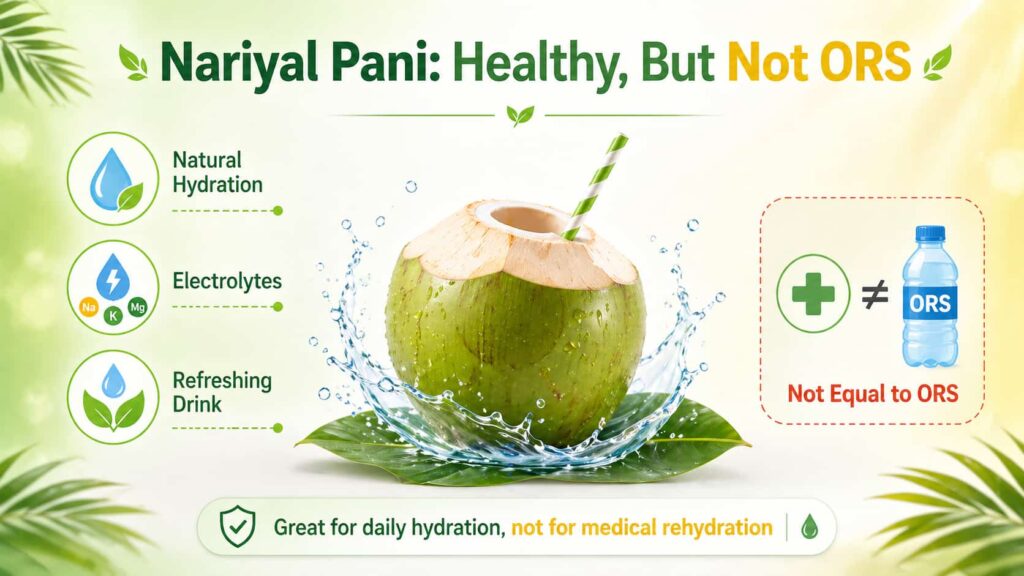
Coconut water nariyal pani is one of India’s most beloved natural drinks. And it genuinely deserves its reputation as a healthy, refreshing, and hydrating beverage. The issue is not whether coconut water is good. It clearly is. The issue is whether it can do what ORS does and the answer to that question requires understanding what coconut water actually contains.
What coconut water contains:
Potassium coconut water is exceptionally rich in potassium. One medium coconut provides more potassium than a banana approximately 400 to 600 mg, depending on size and maturity.
Sodium – this is the critical number. Coconut water contains approximately 25 to 30 mg of sodium per 100 ml. For comparison, the WHO ORS formula contains approximately 90 mg of sodium per 100 ml more than three times as much.
Magnesium – present in meaningful amounts, supporting muscle function and energy production.
Natural sugars – primarily glucose and fructose, providing quick natural energy.
Water – coconut water is approximately 95 percent water, making it an effective fluid source.
Calcium, phosphorus, and trace minerals present in small amounts.
What coconut water does in the body:
Coconut water hydrates effectively under normal conditions. It replaces potassium and magnesium well. It provides natural energy through its sugar content. It is gentle on the stomach, easily tolerated, and widely available across India.
For everyday summer hydration drinking it consistently through a hot day to maintain fluid and electrolyte balance it is genuinely excellent.
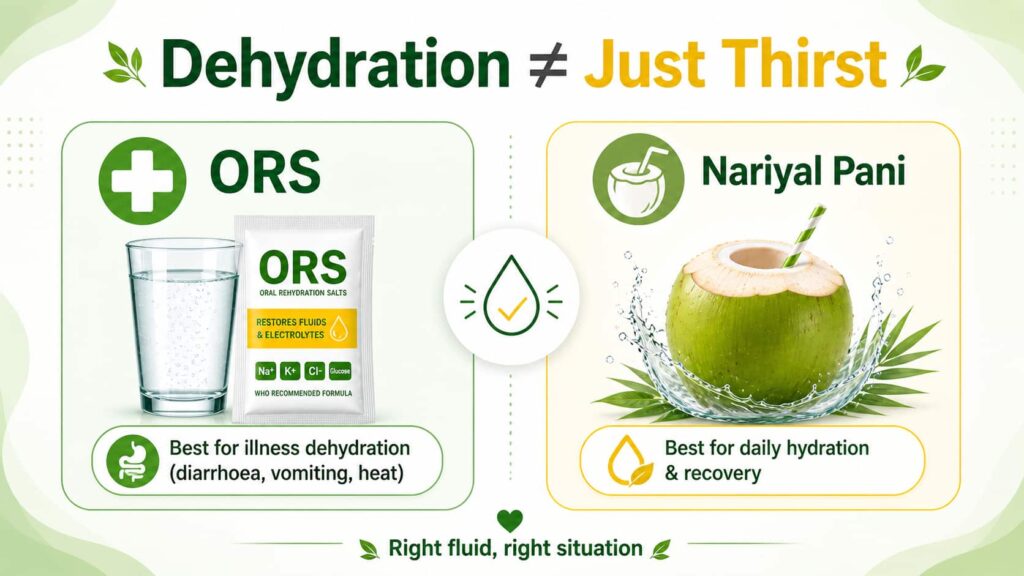
The limitation that matters in the ORS vs nariyal pani comparison coconut water does not contain enough sodium to effectively treat dehydration caused by illness, and it does not have the glucose-sodium co-transport mechanism that makes ORS so effective during active diarrhoea.
This is the core of the debate. Not whether coconut water is good it is. But whether it can replace ORS in the specific conditions where ORS is needed. And in those conditions, the answer is clearly no.
ORS vs Nariyal Pani – The Key Differences Explained
Difference 1 – Sodium Content
This is the most important difference and the one that determines which option is appropriate in any given situation.
During dehydration from diarrhoea, vomiting, or heavy sweating, sodium is the electrolyte lost in the greatest quantity. The body’s ability to retain fluid depends primarily on sodium. Without adequate sodium replacement, the body continues to lose fluid even as it is being consumed because there is not enough sodium to drive fluid retention.
ORS provides sodium in the precise concentration required to restore fluid balance effectively 90 mg per 100 ml in the WHO formula.
Coconut water provides approximately 25 to 30 mg of sodium per 100 ml less than one third of what ORS delivers.
In mild everyday dehydration, this difference matters relatively little. In illness-related dehydration particularly diarrhoea, which causes rapid and significant sodium loss this difference is clinically critical.
Difference 2 – The Absorption Mechanism
ORS uses the glucose-sodium co-transport mechanism a physiological pathway in the intestinal wall that actively pulls sodium and water into the bloodstream even when passive absorption is impaired by illness. This mechanism is why ORS works during active diarrhoea when plain water and other drinks provide inadequate rehydration.
Coconut water relies on passive absorption the normal process by which fluids move across the intestinal wall. Under normal conditions, passive absorption works well. During illness particularly diarrhoea, when the intestinal lining is inflamed passive absorption is significantly impaired. ORS bypasses this impairment. Coconut water cannot.
Difference 3 – Purpose and Application
ORS is a medical treatment. It is designed specifically to correct the physiological imbalance of dehydration, particularly in the context of illness. It is not a beverage it is a therapeutic solution with a clinical purpose and clinically validated effectiveness.
Coconut water is a natural hydration drink. It is excellent for maintaining hydration, supporting electrolyte balance during everyday summer heat, and providing gentle recovery support after mild physical exertion or mild heat exposure. It is a beverage a very good one but not a medical treatment.
Treating one as though it is the other leads to the most common and most consequential mistake in the ORS vs nariyal pani debate.
Difference 4 – Sugar Content and Its Implications
Coconut water contains natural sugars approximately 5 to 6 grams per 100 ml. This is beneficial for energy replacement in mild dehydration and general summer hydration. However, during active diarrhoea, the additional sugar load of coconut water can potentially worsen diarrhoea in some individuals by increasing the osmotic load in the gut drawing more water into the intestinal space rather than absorbing it into the bloodstream.
ORS contains glucose in a precisely controlled concentration approximately 2 grams per 100 ml in the WHO formula. This amount is calibrated to activate the co-transport mechanism without creating an osmotic burden that worsens diarrhoea. The difference in sugar concentration between ORS and coconut water is intentional and clinically significant.
Difference 5 – Standardisation
Every sachet of WHO-formulated ORS contains precisely the same concentrations of sodium, glucose, potassium, and chloride regardless of brand, regardless of season, regardless of geographic variation. This standardisation is what makes ORS reliably effective in clinical settings.
Coconut water varies significantly in composition depending on the maturity of the coconut, the variety, the region of production, and how long it has been stored. A young green coconut may have significantly different electrolyte concentrations than a mature brown one. This natural variability means that coconut water cannot be depended upon to deliver consistent electrolyte replacement in the same way that ORS can.
Myth vs Fact – The Most Common Misconceptions in the ORS vs Nariyal Pani Debate
Myth 1: Coconut water is a natural ORS they are essentially the same thing
Fact: This is the most widespread and most consequential misconception. Coconut water and ORS both contain electrolytes but the type, concentration, and balance of those electrolytes are entirely different. ORS is specifically formulated to correct the sodium deficit that drives illness-related dehydration and to use the glucose-sodium co-transport mechanism for maximum absorption. Coconut water does neither of these things adequately. They are not the same thing, and treating them as equivalent in an illness context is a mistake that can allow dehydration to worsen.
Myth 2: ORS is only for hospitals or severe illness – it is not needed at home
Fact: ORS is most effective and most valuable when used early before dehydration becomes severe. The entire purpose of making ORS available as a home remedy was to prevent mild and moderate dehydration from progressing to the severe stage that requires hospitalisation. Using ORS only when someone is severely ill means using it too late after the most preventable part of the deterioration has already occurred.
Myth 3: Coconut water is always the healthier and more natural choice
Fact: Coconut water is an excellent natural drink for general hydration and mild dehydration prevention. For medical rehydration during illness diarrhoea, vomiting, heat exhaustion with significant sweating — ORS is the more appropriate and more effective choice. The concept of “healthier” depends entirely on context. Using the wrong option in the wrong context is not healthy regardless of how natural it is.
Myth 4: ORS tastes bad so it cannot be as effective as something natural like coconut water
Fact: The taste of ORS particularly the salty, slightly sweet flavour is a direct consequence of its clinical formulation. The sodium concentration that makes ORS effective is also what makes it taste the way it does. The taste is a feature of the medicine, not a flaw. Flavoured ORS variants are available if plain ORS is refused particularly useful for children but diluting ORS or modifying it to improve taste reduces its effectiveness.
Myth 5: Drinking more coconut water compensates for its lower sodium content
Fact: Drinking larger quantities of coconut water does increase sodium intake marginally but it also dramatically increases potassium and sugar intake, and may worsen diarrhoea by increasing osmotic load. More coconut water is not equivalent to ORS. The issue is not just the amount of sodium it is the precise ratio of sodium to glucose that activates the co-transport mechanism. That ratio cannot be replicated by drinking more coconut water.
Myth 6: Both ORS and coconut water can be used interchangeably depending on preference
Fact: They can be used together in appropriate contexts ORS for treatment, coconut water for supportive hydration during recovery. They cannot be used interchangeably. In illness, ORS is the treatment. Coconut water is the support. Reversing those roles using coconut water as the treatment and ORS as optional is the specific mistake that allows dehydration to worsen when it was entirely preventable.
When Should You Use ORS – Specific Situations
ORS is the appropriate choice in the following situations. In these contexts, it is not optional it is necessary.
Active diarrhoea any frequency The moment diarrhoea begins, ORS should begin. Do not wait to see how bad it gets. Do not start with coconut water and switch to ORS if it does not improve. Start with ORS immediately. Every episode of diarrhoea causes significant sodium and fluid loss that coconut water cannot adequately replace.
Vomiting – particularly repeated vomiting Vomiting causes rapid fluid and electrolyte loss. ORS should be sipped in small amounts one to two teaspoons every few minutes even if larger amounts trigger further vomiting. The small, frequent sipping strategy allows the gut to absorb ORS even during active vomiting better than any other approach.
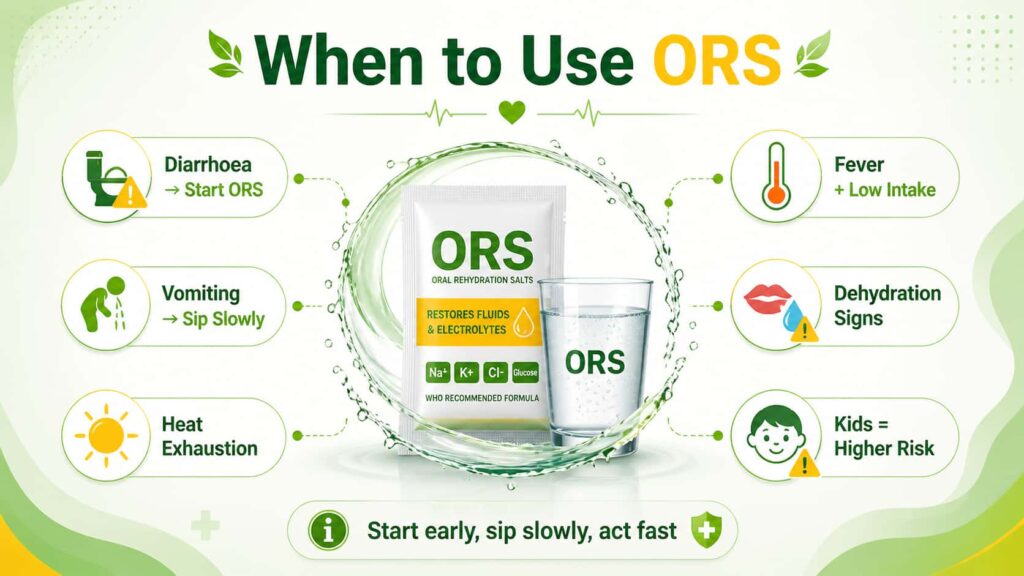
Heat exhaustion – after prolonged outdoor exposure When someone has been in extreme heat for an extended period and is showing signs of weakness, dizziness, heavy sweating, and rapid heartbeat — ORS is the appropriate rehydration choice. The sodium in ORS helps the body retain the fluid it is receiving and correct the electrolyte imbalance that heat exhaustion creates.
Fever with reduced fluid intake Fever increases fluid loss through increased respiratory rate and sweating. When someone with fever is eating and drinking less than normal common in illness ORS helps maintain electrolyte balance during a period when the body is both losing more and taking in less.
Any visible signs of dehydration Dry mouth, reduced or no urination for 4 to 6 hours, dark yellow or orange urine, dizziness when standing, unusual weakness any of these signs indicate dehydration that requires ORS, not just additional water or coconut water.
Children with diarrhoea or vomiting always Children dehydrate faster than adults. The window between mild and severe dehydration is shorter in children. ORS should be started at the first episode of diarrhoea or vomiting in any child, without waiting to assess severity.
When Is Nariyal Pani the Right Choice – Specific Situations
Coconut water is genuinely excellent in the right context. These are the situations where it is appropriate and effective.
General summer hydration daily maintenance Coconut water consumed regularly through a hot summer day maintains electrolyte balance effectivel particularly potassium and magnesium. As a daily hydration drink in summer when no illness is present, it is one of the best natural options available.
Mild dehydration from everyday activity Someone who has been moderately active outdoors, is slightly sweaty and tired, but is otherwise well coconut water is appropriate and effective. This is mild dehydration that does not involve illness, and coconut water’s electrolyte profile is sufficient for this context.
Post-exercise recovery mild to moderate intensity After exercise of moderate intensity that produces significant sweating, coconut water provides potassium and magnesium replacement alongside fluid. For routine exercise, it is a genuinely good recovery drink.
Preventing dehydration during peak summer hours Drinking coconut water proactively before going out in the heat — helps maintain the electrolyte reserve that makes mild heat exposure easier to manage. This is prevention, not treatment.
Recovery support after ORS has corrected active dehydration Once diarrhoea or vomiting has settled and ORS has corrected the acute electrolyte deficit, coconut water is an excellent supportive drink during the recovery phase. It provides potassium and magnesium that support energy recovery and is gentle and appealing to drink when the appetite is returning.
For diabetics managing blood sugar in summer Coconut water has a lower glycaemic impact than most fruit juices and provides hydration with modest natural sugar. For diabetics managing fluid intake in summer without illness, it is a better choice than many alternatives.
Real Life Situations Where the Wrong Choice Gets Made
Situation 1 – Child Has Loose Motions, Family Gives Only Coconut Water
This is the most common and most dangerous scenario. The parents believe they are giving a natural, gentle, effective remedy. The child continues to lose sodium with every episode of diarrhoea. The coconut water replaces potassium but does not replace the sodium that is being lost. The dehydration worsens gradually. By the time the family recognises the situation has not improved or has got worse the child is significantly more dehydrated than when the episode began.
The correct approach ORS from the first episode. Coconut water can be offered alongside for palatability and support. But ORS is the treatment.
Situation 2 – Adult Has Heat Exhaustion, Refuses ORS Because It Tastes Bad
The adult has been outside in 45°C heat for several hours. They are weak, dizzy, and have stopped sweating. The family offers ORS. The adult refuses it tastes salty and unpleasant. The family gives coconut water instead. The coconut water provides fluid and some potassium but does not provide enough sodium to allow the body to retain the fluid effectively. Recovery is slower. The dizziness persists.
The correct approach ORS is necessary here. If plain ORS is refused, flavoured ORS variants are available. If neither is tolerated, small sips of ORS mixed with a small amount of lemon juice to modify the taste is better than switching to coconut water entirely.
Situation 3 – Elderly Person Has Vomiting, Family Thinks ORS Will Worsen It
The elderly person vomits after the first sip of anything. The family stops giving ORS, believing it is making things worse. They switch to coconut water, which the person tolerates slightly better. But the vomiting continues and the dehydration worsens because the electrolyte replacement is inadequate.
The correct approach ORS during vomiting should be given in very small amounts. One to two teaspoons every 2 to 3 minutes. Not large sips that trigger vomiting. This approach is far more effective than switching to a drink that does not provide adequate sodium. Medical attention should be sought if vomiting prevents any fluid retention at all.
Situation 4 – Healthy Person Drinks ORS Every Day in Summer as a Precaution
Someone reads that ORS is good for summer dehydration and starts drinking a sachet every morning as a preventive measure. They are not unwell. They are not significantly dehydrated. The excess sodium intake over weeks adds unnecessary load to the kidneys and cardiovascular system.
The correct approach ORS is a treatment, not a daily supplement. For healthy individuals in summer without illness, coconut water, nimbu pani with rock salt, and consistent water intake are the appropriate daily hydration strategy. ORS is used when dehydration is present or imminent not as a permanent dietary addition.
How to Use ORS Correctly
Using ORS incorrectly reduces its effectiveness. These are the specific steps that matter.
Prepare exactly as instructed One ORS sachet dissolved in exactly one litre of clean water not 500 ml, not 750 ml. Underdiluted ORS has a higher sodium concentration than intended and places additional burden on the kidneys. Overdiluted ORS has a lower electrolyte concentration and is less effective.
Use clean, filtered, or boiled water Preparing ORS with contaminated water introduces the very organisms that may be causing the illness. Always use filtered or boiled water that has cooled to room temperature.
Sip consistently – do not drink in large amounts at once Small, consistent sips allow the gut to absorb ORS continuously. Drinking a large amount at once overwhelms the absorption capacity and may trigger vomiting. One to two teaspoons every few minutes is the correct approach during active vomiting. Larger sips — half a glass every 15 to 20 minutes are appropriate when nausea is present but vomiting has stopped.
Continue until dehydration signs resolve Do not stop ORS as soon as the person feels slightly better. Continue until urine is light yellow and normal volume, dizziness has resolved, and the person is able to eat and drink normally.
Use within 24 hours Prepared ORS should be consumed within 24 hours and stored covered at room temperature or in the refrigerator. Discard any unused solution after 24 hours and prepare fresh.
Do not add sugar, salt, flavouring, or juice to ORS The formulation is precise. Adding anything to it alters the sodium-glucose ratio and reduces its effectiveness. If the taste is the problem, choose a flavoured ORS product do not modify plain ORS.
How to Use Coconut Water Correctly
Choose fresh over packaged always Fresh coconut water contains a higher concentration of electrolytes and no preservatives or added sugar. Packaged coconut water has typically been pasteurised reducing electrolyte content and frequently contains added sugar that reduces its hydration value.
Drink at room temperature or slightly cool Very cold coconut water causes temporary constriction of blood vessels in the stomach, slowing absorption. Room temperature or slightly chilled not ice cold maximises its benefit.
Do not drink in excess Coconut water is high in potassium. For most healthy individuals, one to two coconuts per day is appropriate in summer. People with kidney disease or conditions requiring potassium restriction should consult a doctor before consuming coconut water regularly.
Do not store fresh coconut water Fresh coconut water begins to lose its electrolyte content and nutritional value rapidly after the coconut is opened. Drink fresh coconut water immediately after opening. Do not store it for more than a few hours even in the refrigerator.
Do not use as the sole treatment during illness As detailed throughout this guide coconut water during active diarrhoea or vomiting is supportive, not curative. Use alongside ORS, not instead of it.
Special Considerations for Different Groups
Children
ORS is the definitive recommendation for children with diarrhoea or vomiting regardless of age. For infants under 6 months, ORS should be administered under medical guidance. For older children, flavoured ORS is available and may improve compliance. Coconut water can be offered between ORS doses as a supplement — not as a substitute.
Children dehydrate faster than adults. A child who has had three or four episodes of diarrhoea or vomiting in a short period should be assessed medically do not attempt home management alone beyond ORS for initial stabilisation.
Elderly Individuals
The thirst response weakens significantly with age. Elderly individuals are frequently mildly to moderately dehydrated before any symptom appears. During illness diarrhoea, vomiting, fever ORS should be started early and continued consistently. Medical assessment should be sought earlier in elderly individuals than in healthy younger adults.
Coconut water is an excellent daily hydration support for elderly individuals in summer gentle, palatable, and nutritionally supportive. It should supplement rather than replace medical rehydration when illness is present.
Pregnant Women
Dehydration during pregnancy carries risk both for the mother and for the developing baby. Reduced blood volume affects placental blood flow. Electrolyte imbalance can trigger uterine contractions.
ORS is safe during pregnancy and should be used without hesitation when illness-related dehydration is present. Coconut water is safe and beneficial as a daily hydration drink during pregnancy in summer. Any persistent vomiting or diarrhoea during pregnancy requires medical assessment do not manage at home beyond initial ORS administration.
People With Diabetes
ORS contains glucose which raises blood sugar. People with diabetes managing dehydration from illness should use ORS because the electrolyte replacement is necessary but should monitor blood sugar more closely during ORS use and inform their doctor. Coconut water has a lower glycaemic impact than ORS and is suitable for daily hydration in diabetics without illness. During illness, ORS remains necessary despite the glucose content.
People With Kidney Disease
Both ORS and coconut water require consideration in kidney disease. ORS provides significant sodium — which may be restricted in some kidney conditions. Coconut water provides significant potassium — which is restricted in chronic kidney disease and for people on dialysis. Both should be used only under medical guidance in people with established kidney disease.
Can You Use Both ORS and Nariyal Pani Together?
Yes, and in many situations, using both together is the most sensible approach. The key is understanding which one is doing which job.
ORS is the treatment. It corrects the physiological imbalance of dehydration, particularly in illness. It provides the sodium, glucose, and precise electrolyte balance that the body needs to restore fluid balance effectively.
Coconut water is the support. It provides additional fluid, potassium, magnesium, and natural energy. It is palatable, refreshing, and gentle on the stomach. It makes the overall hydration experience more sustainable, particularly during recovery.
Using both means ORS consistently throughout the acute phase of illness, coconut water between ORS doses or during recovery for palatability and additional nutritional support.
What it does not mean alternating between them equally and treating them as equivalent options. ORS is not optional during illness. Coconut water is not a substitute for it.
How DrCuro Helps You Make the Right Decision
At DrCuro, we see the consequences of this specific confusion every summer patients who used coconut water when ORS was needed, who waited too long before seeking help, who did not know the difference between supportive hydration and medical rehydration.
The ORS vs nariyal pani debate is not academic. It plays out in real households, with real people, during real illness and the outcome of that debate affects how quickly and how completely people recover.
Our approach at DrCuro is built on one conviction that clear, precise, and practical health information is itself a form of medical care. When families understand the difference between a treatment and a support drink, they make better decisions in the moments that matter. When they know exactly when to reach for ORS and when coconut water is sufficient, they avoid the delays and mistakes that allow preventable deterioration to occur.
This guide is part of that commitment. Not to make coconut water seem bad it is genuinely excellent. Not to make ORS seem complicated it is genuinely simple. But to give every Indian family the complete picture, so that the ORS vs nariyal pani debate ends with the right answer for the right situation.
The Final Verdict
This is not a competition between two products. It is a question of fitness for purpose.
ORS is a medically formulated rehydration solution with precisely calibrated electrolyte concentrations and a clinically validated absorption mechanism. It is the right choice when dehydration is caused or worsened by illness diarrhoea, vomiting, fever, or significant heat exhaustion.
Coconut water is an outstanding natural hydration drink with genuine nutritional benefits. It is the right choice for daily summer hydration, mild dehydration prevention, and recovery support after ORS has corrected acute dehydration.
The mistake in both directions is treating one as though it can do the other’s job.
Do not use coconut water when ORS is needed. Do not drink ORS daily when coconut water is sufficient. Know the difference. Make the right choice for the right situation.
That knowledge simple, clear, and precise is what the ORS vs nariyal pani debate should end with.
Conclusion
Dehydration is not just thirst. It is a physiological imbalance that requires the right correction not just any fluid, but the right fluid in the right context.
ORS and nariyal pani are both valuable. Neither is universally superior. Each is superior in its specific context ORS for illness-related dehydration, coconut water for everyday summer hydration and gentle recovery support.
The families that get this right every summer are not the ones with the most medical knowledge. They are the ones with clear, simple, complete information about which option serves which purpose and the conviction to act on that information when it matters.
At DrCuro, we are committed to giving you that clarity not just in complex medical situations, but in the everyday health decisions that determine whether summer is a season of health or a season of avoidable illness. Stay hydrated, stay informed, and stay ahead of the heat.
DrCuro
Frequently Asked Questions
Q1. Can coconut water replace ORS during diarrhoea or vomiting?
No, and this is the most important answer in this entire guide. Coconut water does not contain enough sodium to correct the electrolyte imbalance caused by diarrhoea or vomiting, and it does not have the glucose-sodium co-transport mechanism that makes ORS effective during active illness. During diarrhoea or vomiting, ORS is the treatment. Coconut water can be offered alongside for support not instead of ORS.
Q2. Is ORS safe to drink every day in summer as a preventive measure?
ORS is safe but it is not designed for daily use in healthy individuals. It provides a sodium concentration appropriate for treating dehydration, not for daily supplementation in someone who is not unwell. Daily ORS use places unnecessary sodium load on the kidneys. For healthy summer hydration, coconut water, nimbu pani with rock salt, and consistent water intake are the appropriate daily strategy.
Q3. Which is better for children ORS or coconut water?
ORS is the definitive recommendation for children during any illness involving diarrhoea or vomiting. Children dehydrate faster than adults and the consequences of inadequate rehydration are more severe. Flavoured ORS variants improve compliance in children who refuse plain ORS. Coconut water is an excellent supplement between doses during recovery but should not replace ORS during the acute phase.
Q4. Can I use ORS and coconut water together?
Yes, and this combination is often the most practical approach. Use ORS as the primary treatment during active illness or significant dehydration. Use coconut water between ORS doses or during recovery for additional hydration, potassium, and palatability. The rule ORS does the medical work. Coconut water provides the support.
Q5. How do I know if my dehydration needs ORS or if coconut water is sufficient?
Coconut water is sufficient for mild everyday dehydration feeling slightly tired and warm after a hot afternoon, light sweating during normal activity, general summer fatigue without illness. ORS is necessary when dehydration is caused by diarrhoea, vomiting, fever, or significant heat exhaustion or when signs of dehydration are present such as dark urine, dizziness, dry mouth, or reduced urination. When in doubt particularly in children, elderly individuals, or pregnant women start ORS and consult a doctor.






No Comment! Be the first one.