







Warning Signs of Heart Disease Indians Often Miss: Complete Guide
Have you experienced chest pressure after climbing stairs or sudden heart palpitations and assumed it was just fatigue or stress? At Dr Curo, queries related to heart disease symptoms are among the...

Have you experienced chest pressure after climbing stairs or sudden heart palpitations and assumed it was just fatigue or stress?
Table Of Content
- What is Heart Disease?
- How Common is Heart Disease in India?
- Heart Attack vs Cardiac Arrest — Simple Comparison
- Warning Signs of Heart Disease Indians Often Miss — Explained in Detail
- Warning Sign 1 — Chest Discomfort That Comes and Goes
- Warning Sign 2 — Unexplained Fatigue and Breathlessness
- Warning Sign 3 — Pain in the Jaw, Neck, Back, or Left Arm
- Warning Sign 4 — Swollen Feet and Ankles
- Warning Sign 5 — Heart Palpitations and Irregular Heartbeat
- Warning Sign 6 — Dizziness, Lightheadedness, and Fainting
- Warning Sign 7 — Persistent Indigestion or Nausea
- Heart Disease Symptoms India — Risk Factors Unique to Indians
- Types of Heart Disease Care Plans at Dr Curo
- Cost of Heart Disease Diagnosis and Treatment in India
- How Quickly Should You Act on Heart Disease Symptoms?
- Tips to Protect Your Heart Health Naturally
- Frequently Asked Questions
- Dr Curo is With You Every Step
At Dr Curo, queries related to heart disease symptoms are among the most urgent concerns we receive across India. Despite being the leading cause of death, heart disease often goes undetected because early signs are mistaken for acidity, tiredness, or aging. Delayed diagnosis can lead to serious complications, including unexpected heart attacks.
This guide highlights commonly overlooked warning signs, explains when they become serious, and outlines when to seek expert care at a trusted heart care hospital India, presented in a clear and clinically reliable format by Dr Curo specialists.
What is Heart Disease?
Heart disease is not a single condition it is an umbrella term for a range of conditions that affect the structure and function of the heart. The most common form is coronary artery disease (CAD), in which the arteries that supply blood to the heart muscle become narrowed or blocked by a build-up of fatty deposits called plaque a process known as atherosclerosis.
When the arteries narrow, the heart muscle receives less oxygen-rich blood than it needs particularly during physical exertion or stress. This oxygen shortage is what produces many of the warning signs described in this guide. If a plaque ruptures and a blood clot forms, it can completely block blood flow to part of the heart muscle causing a heart attack.
Other forms of heart disease include heart failure (where the heart cannot pump blood efficiently), arrhythmias (abnormal heart rhythms), valvular heart disease (where heart valves do not open or close properly), and cardiomyopathy (disease of the heart muscle itself).
At Dr Curo, we treat heart disease as a condition that in most cases develops slowly over years giving a genuine window of opportunity for early detection, intervention, and prevention of the catastrophic events that occur when it is left unrecognised.
How Common is Heart Disease in India?
The scale of heart disease in India is both alarming and deeply underappreciated by the general public:
- Heart disease is the leading cause of death in India, responsible for approximately 28% of all deaths more than any other single condition
- India accounts for nearly 60% of the global heart disease burden despite having only 18% of the world’s population
- Indians develop heart disease 10–15 years earlier than people in Western countries heart attacks in Indians in their 30s and 40s are not rare
- Over 50 million Indians are estimated to currently live with some form of heart disease
- The risk of a fatal heart attack is 3–4 times higher in Indians of South Asian origin compared to Europeans even at similar cholesterol levels and blood pressure readings
- A significant proportion of first heart attacks in India occur without any prior diagnosis of heart disease the attack is the first warning
- Urban Indians have significantly higher rates of heart disease than rural populations, driven by sedentary lifestyles, processed food consumption, work stress, and sleep deprivation
At Dr Curo, recognising symptoms early and acting on them is the single most powerful tool we have. A heart attack that is prevented is always better than one that is treated no matter how good the treatment.
Heart Attack vs Cardiac Arrest — Simple Comparison
| Feature | Heart Attack | Cardiac Arrest |
| What happens | Blood supply to part of the heart is blocked | Heart suddenly stops beating entirely |
| Consciousness | Person is usually conscious and aware | Person collapses and becomes unresponsive |
| Warning signs | Usually present often for days or weeks before | Often sudden with little or no warning |
| Breathing | Normal or laboured | Absent or gasping |
| Cause | Blocked coronary artery | Electrical malfunction of the heart often triggered by a heart attack |
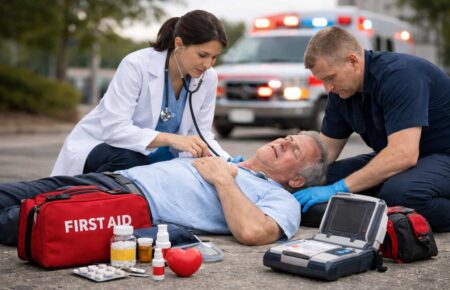
| Immediate action needed | Emergency hospital care | CPR and defibrillation immediately |
| Survivable? | Yes – with prompt treatment | Yes – but survival drops by 10% every minute without CPR |
| Common in India | Yes – increasing rapidly | Yes – accounts for a large proportion of sudden deaths |
| Treatment at Dr Curo | Diagnosis, medication, angioplasty, bypass, rehabilitation | Emergency referral, post-event cardiac care and monitoring |
Understanding the difference matters because heart attacks often announce themselves with warning signs that are ignored and recognising those signs in time is what gives you the chance to reach a hospital before a heart attack becomes cardiac arrest.

Warning Signs of Heart Disease Indians Often Miss — Explained in Detail
Warning Sign 1 — Chest Discomfort That Comes and Goes
This is the warning sign that most people associate with heart problems and yet it is also the one most consistently dismissed in India, attributed instead to acidity, gas, or indigestion.
What it feels like: Cardiac chest discomfort is often not the sharp, stabbing pain that people expect from films and television. More often it is a dull pressure, a squeezing sensation, a heaviness, or a tight feeling in the centre or left side of the chest as though something heavy is sitting on it. It may last a few minutes, ease off, and return. It may come on with exertion climbing stairs, walking briskly, or carrying something heavy and then subside with rest.
Why Indians miss it: The most common reason is misattribution. Chest discomfort after meals is almost universally assumed to be acidity or gas in India and in many cases it genuinely is. But when the same discomfort occurs with physical activity, radiates to the arm or jaw, comes with sweating or breathlessness, or happens in a person with known risk factors such as diabetes, hypertension, or a family history of heart disease it must be investigated immediately.
What to do: Any chest discomfort that occurs during or after physical activity, lasts more than a few minutes, is associated with other symptoms, or happens in a person with cardiovascular risk factors must be assessed by a cardiologist. At Dr Curo, we never dismiss chest discomfort we investigate it properly.
Warning Sign 2 — Unexplained Fatigue and Breathlessness
Feeling unusually tired not the tiredness that follows a long day but a deep, unexplained exhaustion that does not improve with rest is one of the most frequently overlooked heart disease symptoms India has to offer. It is particularly common in women, who often present with fatigue as their primary or only symptom before a heart event.
What it feels like: Patients describe it as feeling worn out by activities that never used to cause any difficulty walking to the kitchen, climbing one flight of stairs, bathing, or getting dressed. There may be an associated breathlessness that is out of proportion to the level of exertion. In heart failure specifically, breathlessness may worsen when lying flat and improve when sitting upright a pattern known as orthopnoea.
Why Indians miss it: Fatigue is so universal an experience in the context of busy Indian lives long work hours, poor sleep, stress, anaemia, thyroid problems that it is rarely connected to the heart. Women in particular are likely to attribute their fatigue to household demands, hormonal changes, or simply age. This leads to dangerous delays in diagnosis.
What to do: If you are experiencing fatigue that is unexplained, progressive, or accompanied by breathlessness particularly if it has worsened over weeks or months a cardiac evaluation is warranted. At Dr Curo, we include a comprehensive cardiac screening as part of the workup for unexplained fatigue in any patient with risk factors.
Warning Sign 3 — Pain in the Jaw, Neck, Back, or Left Arm
One of the most dangerous misconceptions about heart disease symptoms India is the belief that heart pain always occurs in the chest. In reality, cardiac pain frequently radiates to other parts of the body and these referred pain patterns are among the most commonly missed warning signs in Indian patients.
What it feels like: The pain or discomfort may travel from the chest into the left arm, causing an aching or heavy sensation. It may radiate up into the jaw often mistaken for a dental problem or jaw joint issue. It can spread into the neck or throat, producing a feeling of tightness or pressure. In some patients particularly women back pain between the shoulder blades is the predominant symptom of a cardiac event with little or no chest pain at all.
Why Indians miss it: Jaw pain sends people to the dentist. Neck pain is attributed to cervical spondylosis an extremely common diagnosis in India. Back pain is attributed to posture or muscle strain. Left arm pain is dismissed as a shoulder problem or sleeping position. These are all plausible and frequently correct explanations which is exactly what makes them so dangerous when the true cause is cardiac.
What to do: The critical red flag is when any of these symptoms occurs alongside other warning signs exertion, sweating, chest discomfort, breathlessness, or nausea or in a person with known cardiovascular risk factors. In that context, these symptoms must be evaluated urgently. At Dr Curo, patients presenting with jaw, arm, or back pain of unclear origin always receive a cardiac assessment as part of the workup.
Warning Sign 4 — Swollen Feet and Ankles
Swelling of the feet, ankles, and lower legs known medically as peripheral oedema is a classic symptom of heart failure that is routinely missed or attributed to standing too long, heat, or kidney problems in Indian patients.
What it feels like: The swelling is typically present in both feet and ankles, is worse at the end of the day, and may reduce overnight when the legs are elevated. Pressing a finger into the swollen area leaves a temporary indentation this is called pitting oedema. The swelling may be accompanied by a feeling of heaviness or tightness in the legs, and in more advanced cases, may extend up to the knees or thighs.
Why Indians miss it: Swollen feet are extremely common in India and have many non-cardiac causes prolonged standing, heat, pregnancy, varicose veins, and kidney disease among them. This makes it easy to dismiss. The specific feature that points toward a cardiac cause is when the swelling is accompanied by breathlessness, fatigue, or reduced exercise tolerance the combination suggesting that the heart is struggling to pump blood efficiently and fluid is accumulating in the body as a result.
What to do: Any new or worsening ankle or leg swelling particularly when combined with breathlessness, fatigue, or a history of high blood pressure or heart disease must be assessed promptly. At Dr Curo, we evaluate the cardiac cause of peripheral oedema as a priority when the clinical picture warrants it.
Warning Sign 5 — Heart Palpitations and Irregular Heartbeat
Feeling your heart beating rapidly, forcefully, or irregularly skipping beats, racing unexpectedly, or fluttering in the chest is a warning sign that is almost always attributed to stress, anxiety, or too much tea or coffee in India. While these are indeed common and benign causes, palpitations can also be the first presentation of a serious and treatable heart rhythm disorder.
What it feels like: Palpitations may feel like a fluttering or pounding in the chest, a sudden awareness of the heartbeat, a feeling that the heart has skipped a beat, or episodes of rapid heartbeat that start and stop suddenly. They may last seconds, minutes, or longer. Some patients experience them at rest; others notice them during exertion.
Why Indians miss it: Caffeine from the high volumes of tea and coffee consumed in India is a real and common palpitation trigger making it easy to attribute every episode to the morning chai. Anxiety and stress also extremely prevalent in the Indian context produce the same sensation. The problem is that atrial fibrillation (AF) the most common serious heart rhythm disorder, which significantly increases stroke risk produces exactly the same feeling and is frequently dismissed for years before diagnosis.
What to do: Palpitations that are frequent, prolonged, associated with dizziness or breathlessness, or that occur in a person with any cardiac risk factor must be evaluated with an ECG and, if needed, a 24-hour Holter monitor. At Dr Curo, we take palpitations seriously because finding and treating an arrhythmia early is far better than finding it after it has caused a stroke.
Warning Sign 6 — Dizziness, Lightheadedness, and Fainting
Episodes of dizziness, feeling faint, or actually losing consciousness are among the most alarming symptoms a person can experience and yet in India they are frequently attributed to dehydration, heat, low blood pressure, or skipping a meal. While these explanations are often correct, dizziness and fainting can also be the first sign of a serious heart rhythm problem or structural heart disease.
What it feels like: Cardiac dizziness may present as a sudden feeling of lightheadedness or near-fainting, particularly during or just after physical activity. Fainting known medically as syncope that occurs without warning and recovers quickly is particularly concerning when a cardiac cause is possible. Some patients describe a greying out of vision, a sudden cold sweat, or a feeling that they are about to collapse.
Why Indians miss it: Fainting in heat or dehydration is so common in India particularly in summer that it has become almost normalised. Young people who faint are often told to eat more, drink more water, and rest. What is missed is the possibility of hypertrophic cardiomyopathy a hereditary condition in which the heart muscle is abnormally thick which is one of the leading causes of sudden cardiac death in young athletes and is often first signalled by exertional dizziness or fainting.
What to do: Any fainting episode in a person of any age particularly one that occurs during or after exercise, or that happens without an obvious trigger must be medically assessed immediately. At Dr Curo, unexplained syncope in any patient triggers a structured cardiac evaluation including ECG, echocardiogram, and if needed, specialist referral.
Warning Sign 7 — Persistent Indigestion or Nausea
This is perhaps the most consistently missed of all heart disease symptoms India presents with because it mimics one of the most common digestive complaints in the country so perfectly that even medically aware patients dismiss it.
What it feels like: Cardiac indigestion is not the bloating and discomfort after a heavy meal. It is a persistent, nagging sensation in the upper abdomen or lower chest sometimes accompanied by nausea, belching, or a general sense of unease in the stomach that does not resolve with antacids. It may occur during exertion. It may be accompanied by sweating, fatigue, or a vague feeling that something is wrong that the patient struggles to put into words.
Why Indians miss it: India has among the highest rates of acid reflux and peptic ulcer disease in the world making gastrointestinal symptoms the default explanation for any upper abdominal or chest discomfort. Patients treat themselves with antacids for months before seeking medical help. The critical distinguishing feature is that cardiac nausea and indigestion tend to be associated with exertion or emotional stress not purely with eating and they do not respond to antacids the way true digestive symptoms do.
What to do: Upper abdominal discomfort or nausea that occurs with physical activity, does not respond to antacids, or is accompanied by other cardiac warning signs in a person with risk factors must be assessed for a cardiac cause. At Dr Curo, we never assume indigestion without ruling out the heart first in any patient who presents with the appropriate clinical picture.
Heart Disease Symptoms India — Risk Factors Unique to Indians
Understanding why Indians are at particularly high risk and at a younger age helps explain why these symptoms must be taken more seriously in the Indian population than the global average might suggest:
| Risk Factor | Why It Matters in Indians |
| South Asian genetic predisposition | Indians have higher rates of small, dense LDL cholesterol particles that penetrate arterial walls more easily increasing atherosclerosis risk even with normal cholesterol readings |
| Insulin resistance and diabetes | India has the highest number of diabetic patients in the world and diabetes doubles or triples heart disease risk |
| Abdominal obesity | Indians carry more visceral fat around internal organs at lower BMI levels than Western populations increasing cardiac risk even in people who appear to be a healthy weight |
| Younger age of onset | Heart attacks in Indians occur 10–15 years earlier than in Western patients making vigilance important from the 30s onwards |
| High stress and sleep deprivation | Chronic stress raises cortisol, increases blood pressure, and promotes inflammation all direct drivers of heart disease |
| Dietary patterns | High refined carbohydrate, high sodium, high saturated fat diets are prevalent in Indian eating patterns and directly contribute to cardiovascular risk |
| Low physical activity | Sedentary urban lifestyles combined with high mental stress create a particularly dangerous combination for cardiac health |
| Late presentation | Indians are significantly more likely to delay seeking care when cardiac symptoms appear often waiting until a heart attack occurs |
At Dr Curo, cardiac risk assessment is not based on Western population thresholds alone. We apply India-specific risk criteria that account for the unique biological and lifestyle profile of our patients.
Types of Heart Disease Care Plans at Dr Curo
There is no single approach to heart disease care that works for everyone. At Dr Curo, every patient receives a care plan built specifically around their situation:
Cardiac risk assessment plan — for patients with risk factors but no current symptoms. Comprehensive screening including lipid profile, blood sugar, blood pressure, ECG, and echocardiogram with a personalised risk reduction strategy.
Symptom investigation plan — for patients presenting with one or more of the warning signs described in this guide. Structured diagnostic workup to confirm or rule out cardiac pathology quickly and clearly.
Established heart disease management plan — for patients already diagnosed with coronary artery disease, heart failure, or arrhythmia. Optimised medication management, lifestyle support, and regular monitoring to prevent progression and complications.
Post-cardiac event rehabilitation plan — for patients who have experienced a heart attack, angioplasty, or bypass surgery. Structured cardiac rehabilitation to restore fitness, optimise medications, and reduce the risk of a second event.
Preventive cardiac care plan — for younger patients with a strong family history of early heart disease. Early intervention to modify risk factors before atherosclerosis becomes established.

Cost of Heart Disease Diagnosis and Treatment in India
| Type of Assessment or Treatment | Approximate Cost (India) |
| Initial cardiac consultation | ₹800 – ₹2,500 |
| ECG | ₹200 – ₹600 |
| Echocardiogram | ₹1,500 – ₹4,000 |
| Lipid profile and cardiac blood tests | ₹800 – ₹2,500 |
| Treadmill stress test (TMT) | ₹1,500 – ₹4,000 |
| 24-hour Holter monitor | ₹2,000 – ₹5,000 |
| CT coronary angiography | ₹8,000 – ₹20,000 |
| Conventional coronary angiography | ₹15,000 – ₹35,000 |
| Angioplasty with stent | ₹1,50,000 – ₹4,00,000 |
| Bypass surgery (CABG) | ₹2,50,000 – ₹6,00,000 |
| Cardiac medications (monthly) | ₹500 – ₹3,000 |
Investigating and treating heart disease early when symptoms are first noticed is dramatically less expensive than treating a heart attack and its complications, which includes ICU admission, extended hospitalisation, loss of income, and the lifelong burden of post-attack care.
At Dr Curo, pricing is always transparent. You will never receive a bill that surprises you.
Contact Dr Curo directly for a personalised assessment cost estimate based on your specific symptoms, risk profile, and diagnostic requirements.
How Quickly Should You Act on Heart Disease Symptoms?
This is the most important practical question in this entire guide because timing determines outcomes in heart disease more than almost any other factor.
Act immediately call emergency services or go to the nearest hospital without delay if you experience: Chest pain or pressure lasting more than 5 minutes, chest discomfort accompanied by breathlessness, sweating, nausea, or pain radiating to the arm or jaw, sudden severe breathlessness at rest, fainting or loss of consciousness, sudden onset palpitations with dizziness or chest discomfort, or any symptom that feels like something is seriously wrong even if you cannot describe it precisely.
Act urgently seek medical assessment within 24 hours if you experience: New or worsening breathlessness on exertion, new ankle or leg swelling, frequent or prolonged palpitations, unexplained fatigue that has been progressing over weeks, or any of the warning signs described in this guide in a person with known cardiovascular risk factors.
Act proactively schedule a cardiac assessment at Dr Curo if you have: A family history of early heart disease, diabetes or prediabetes, hypertension, high cholesterol, are overweight or obese, smoke, live a sedentary lifestyle, are under chronic stress, or are a man over 35 or woman over 45 in India with any additional risk factors even if you currently feel completely well.
At Dr Curo, we would always rather see you and find nothing to worry about than have you delay until a symptom becomes a crisis.
Tips to Protect Your Heart Health Naturally
Alongside your medical care at Dr Curo, these daily habits make a genuine and measurable difference to your long-term cardiac risk:
Walk every day — 30 minutes of brisk walking five days a week reduces cardiovascular risk by up to 35%. You do not need a gym membership. You need consistency.
Reduce salt significantly — India has among the highest dietary sodium intakes in the world. Reducing salt intake lowers blood pressure, reduces the burden on the heart, and is one of the cheapest and most effective cardiac protective measures available.
Stop smoking immediately — smoking doubles the risk of heart attack and is the single most modifiable cardiovascular risk factor. No amount is safe. At Dr Curo, we support patients through the process of quitting.
Control your blood pressure — hypertension is the single largest contributor to cardiovascular disease burden in India. Know your numbers. If your blood pressure is above 130/80, take it seriously and address it with your Dr Curo doctor.
Manage your blood sugar — diabetes and prediabetes dramatically accelerate atherosclerosis. Regular blood sugar monitoring and early intervention are among the most powerful cardiac protective measures available.
Sleep 7–8 hours every night — chronic sleep deprivation raises blood pressure, increases inflammation, and directly worsens cardiovascular risk. Good sleep is not a luxury it is a cardiac protection measure.
Manage stress actively — chronic psychological stress raises cortisol, promotes inflammation, increases blood pressure, and drives unhealthy behaviours. Yoga, pranayama, meditation, and structured downtime are all evidence-based cardiac protective strategies.
Know your family history — a first-degree relative with heart disease before the age of 55 in men or 65 in women places you in a significantly higher risk category. Share this information with your Dr Curo doctor so that screening and preventive care can begin at the right time.

Frequently Asked Questions
Q1. Can heart disease be prevented in Indians who have a family history? A family history increases risk it does not make heart disease inevitable. At Dr Curo, patients with a strong family history of early heart disease benefit enormously from early, structured preventive care including lipid management, blood pressure control, blood sugar monitoring, and lifestyle optimisation often preventing or significantly delaying the onset of the condition that affected their parents or siblings.
Q2. Why do young Indians get heart attacks? Indians are genetically predisposed to develop atherosclerosis at a younger age and at lower cholesterol levels than Western populations. When this genetic predisposition is combined with the dietary patterns, stress levels, sedentary lifestyle, and rising rates of diabetes and obesity seen in urban India, heart attacks in patients in their 30s and early 40s are an increasingly common outcome. At Dr Curo, cardiac risk assessment from the age of 30 is recommended for any Indian with additional risk factors.
Q3. Are heart disease symptoms different in women? Yes significantly. Women are less likely to experience classic chest pain and more likely to present with fatigue, breathlessness, nausea, jaw pain, and back pain as their primary symptoms. These atypical presentations mean that heart disease in Indian women is diagnosed later and treated less aggressively than in men — with worse outcomes as a result. At Dr Curo, we apply female-specific cardiac assessment criteria to ensure that women receive the same quality of diagnosis and care as male patients.
Q4. Is it safe to exercise if I have heart disease? For most patients with known heart disease, appropriate, supervised exercise is not just safe it is one of the most powerful treatments available. Cardiac rehabilitation programs that progressively increase exercise capacity under medical supervision significantly reduce the risk of a second cardiac event and dramatically improve quality of life. At Dr Curo, we guide every patient with heart disease through a personalised and safe return to physical activity.
Q5. What is the most important thing I can do today if I think I might have heart disease? Come in. Do not wait for symptoms to worsen, do not self-medicate, and do not assume that feeling reasonably well means nothing is wrong. Heart disease is frequently silent until it is not. A structured cardiac assessment at Dr Curo including a full history, examination, ECG, and targeted blood tests can either provide the reassurance you need or catch something early enough to make a real difference to your outcome.
Dr Curo is With You Every Step
Understanding heart disease symptoms India most commonly overlooks is not just information it is potentially lifesaving. Heart disease does not always arrive with dramatic, unmistakable warning. More often it whispers through fatigue, through a moment of breathlessness, through a pressure in the chest that passes and is forgotten. It is in these whispered warnings that the greatest opportunity for prevention and early treatment lies.
At Dr Curo, we do not wait for a crisis to start caring about your heart. We build a complete, personalised cardiac care plan covering your risk assessment, your diagnostic workup, your medication and lifestyle management, your emotional wellbeing, and your long-term goals. Every patient who comes to us deserves that level of attention, and every patient gets it.





No Comment! Be the first one.