







IUI Success Rate on First Try: Facts & Figures
One of the first questions patients ask at Dr Curo is “What are my chances of getting pregnant on the first IUI attempt?” It’s a completely valid concern. Before investing emotionally, physically,...
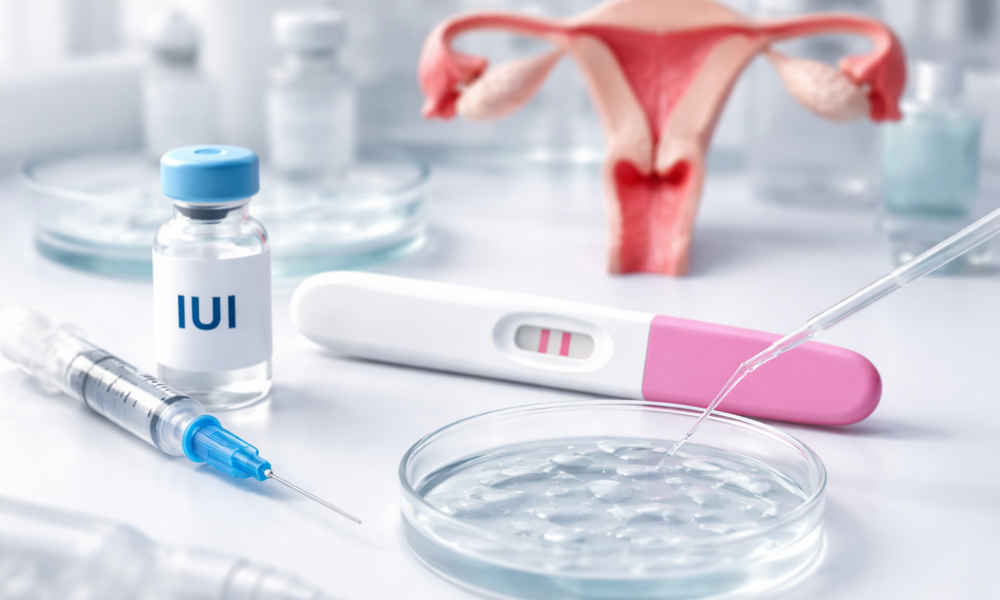
One of the first questions patients ask at Dr Curo is “What are my chances of getting pregnant on the first IUI attempt?” It’s a completely valid concern. Before investing emotionally, physically, and financially in treatment including understanding the IUI treatment cost India you deserve clear, honest, and medically accurate information, not false hope or unnecessary fear.
Table Of Content
- 1. What Does “Success on the First Try” Actually Mean?
- 2. IUI Success Rate First Try — The Real Numbers
- 3. Why Is the First IUI Success Rate Lower Than IVF?
- 4. Factors That Affect Your IUI Success Rate on the First Try
- 5. Stimulated IUI vs Natural IUI — Which Has Better First-Try Success?
- 6. What Happens During a First IUI Cycle — Step by Step
- 7. How to Improve Your IUI Success Rate on the First Try
- 8. Cumulative IUI Success Rates — First Try vs Multiple Cycles
- 9. When Should You Move to IVF After a Failed First IUI?
- 10. Emotional Wellbeing During Your First IUI Cycle
- 11. Frequently Asked Questions
- 12. Dr Curo Is With You Every Step
This comprehensive guide explains everything you need to know about first-attempt IUI success rates including real statistics, age-wise insights, the factors that influence your chances, and what you can practically do to give your first cycle the best possible chance of success.
1. What Does “Success on the First Try” Actually Mean?
Before looking at numbers, it is important to define what success means in the context of IUI.
When fertility specialists talk about IUI success, they refer to:
- Clinical pregnancy rate — a pregnancy confirmed by ultrasound with a visible heartbeat
- Biochemical pregnancy rate — a positive blood test (beta-hCG), even if it does not progress
- Live birth rate — a healthy baby born after a full-term pregnancy
At Dr Curo, success means what it should always mean a healthy pregnancy that leads to a baby in your arms. That is the number that truly matters.
2. IUI Success Rate First Try — The Real Numbers
Let us be completely honest with you. The IUI success rate first try is lower than many patients expect and that is not a reason to lose hope. It is simply a reason to be informed.
Here is the age-wise breakdown of IUI success on the first attempt:
| Age Group | IUI Success Rate — First Try |
| Under 30 | 18–22% |
| 30–34 | 15–18% |
| 35–37 | 12–15% |
| 38–40 | 8–10% |
| Over 40 | 4–6% |
Note: These are average figures based on stimulated IUI cycles. Natural cycle IUI success rates are generally lower. Your Dr Curo specialist will give you a personalised estimate based on your full evaluation.
What these numbers mean in simple terms: If you are under 35, roughly 1 in 5 to 6 couples will achieve pregnancy on the very first IUI cycle. That is a real and meaningful chance especially considering how non-invasive and affordable IUI is compared to other options.
3. Why Is the First IUI Success Rate Lower Than IVF?
This is a question patients at Dr Curo ask often and the answer is rooted in how IUI works.
In IUI, fertilisation still happens inside the body. The treated sperm is placed directly into the uterus at the time of ovulation, but the egg and sperm still have to find each other naturally inside the fallopian tube. There are multiple variables at play ovulation timing, sperm survival, egg quality, and tubal function that cannot be fully controlled.
In IVF, fertilisation happens outside the body in a fully controlled laboratory environment. The embryologist brings egg and sperm together directly, monitors every stage of development, and only transfers the best-quality embryo.
This is why IVF has a higher per-cycle success rate than IUI. But IUI remains a genuinely effective, far less invasive, and significantly more affordable first option especially when the diagnosis supports it.
4. Factors That Affect Your IUI Success Rate on the First Try
Your IUI success rate first try is not a fixed number. It is shaped by a combination of medical, biological, and lifestyle factors all of which your Dr Curo specialist will evaluate before treatment begins.
1. Age Age is the most powerful predictor of IUI success. Younger women have better egg quality, stronger ovarian response, and more favourable hormonal environments. The decline in success rates after 35 is real and clinically significant which is why age always guides the treatment plan at Dr Curo.
2. Ovarian Reserve Your AMH (Anti-Müllerian Hormone) level and antral follicle count tell us how many eggs your ovaries can produce. A healthy ovarian reserve means a better response to the mild stimulation used in IUI and more eggs available for potential fertilisation.
3. Sperm Quality The quality of the sperm sample used in IUI is critically important. After the washing and preparation process, the number of motile sperm available for insemination called Total Motile Sperm Count (TMSC) directly affects success. A TMSC of 5 million or above is generally considered adequate for IUI.
4. Fallopian Tube Health IUI requires at least one open, functional fallopian tube. If both tubes are blocked or damaged, IUI cannot work regardless of how many cycles are attempted. A hystero-salpingogram (HSG) test confirms tubal status before IUI is recommended at Dr Curo.
5. Timing of Insemination Precise timing is everything in IUI. The insemination must be performed within the optimal window typically 24 to 36 hours after the trigger injection that causes final egg maturation and release. At Dr Curo, cycle monitoring with ultrasound ensures the timing is as accurate as possible.
6. Stimulated vs Natural Cycle Stimulated IUI where mild fertility medications are used to encourage the development of one or two mature follicles consistently shows higher success rates than natural cycle IUI. At Dr Curo, the protocol is chosen based on your individual profile.
7. Uterine Health The endometrial lining must be of adequate thickness and quality for implantation to occur. Conditions like polyps, fibroids, or a thin lining can reduce IUI success even when everything else is in place. Ultrasound monitoring during the cycle helps assess this.
8. Underlying Diagnosis IUI works best for specific diagnoses unexplained infertility, mild male factor, cervical issues, and ovulatory dysfunction. When the diagnosis does not align with what IUI can address, the success rate drops significantly regardless of cycle number.
5. Stimulated IUI vs Natural IUI — Which Has Better First-Try Success?
| Feature | Natural Cycle IUI | Stimulated IUI |
| Medications used | None or minimal | Oral tablets or low-dose injections |
| Eggs available | One natural egg | 1–3 mature follicles targeted |
| Success rate first try | 8–12% | 15–22% |
| Monitoring required | Basic | Regular ultrasound and blood tests |
| Cost | Lower | Slightly higher |
| Multiple pregnancy risk | Very low | Slightly increased — monitored carefully |
| Best suited for | Regular ovulation, young age | Irregular ovulation, PCOS, mild cases |
At Dr Curo, the decision between natural and stimulated IUI is made after a full review of your hormone profile, age, diagnosis, and cycle history never as a blanket recommendation.
6. What Happens During a First IUI Cycle — Step by Step
Understanding the process helps reduce anxiety and helps you feel in control during your first cycle at Dr Curo.
Step 1 — Initial Evaluation (Before the Cycle Begins) Both partners undergo a complete fertility workup blood tests, ultrasound, semen analysis, and tubal assessment. This ensures IUI is the right choice and helps plan the most suitable protocol.
Step 2 — Ovarian Stimulation (Days 2–12 Approximately) Mild medications oral tablets like Clomiphene or Letrozole, or low-dose injectable FSH — are started from Day 2 or 3 of your period. These gently stimulate the ovaries to produce one or two mature follicles.
Step 3 — Monitoring with Ultrasound At Dr Curo, follicle growth is tracked with regular ultrasound scans throughout the cycle. When the lead follicle reaches the right size typically 18–20mm the trigger injection is given.
Step 4 — Trigger Injection The trigger injection (hCG or GnRH agonist) causes final egg maturation and triggers ovulation. Insemination is scheduled precisely 36 hours after this injection.
Step 5 — Sperm Preparation On the day of insemination, a fresh semen sample is collected from the male partner or a donor. The sample is washed and processed in the laboratory to concentrate the healthiest and most motile sperm.
Step 6 — Insemination The prepared sperm sample is loaded into a thin, soft catheter and gently passed through the cervix into the uterus. The procedure takes approximately 10 minutes, requires no sedation, and most women describe it as feeling similar to a routine cervical smear.
Step 7 — The Two-Week Wait After insemination, you wait approximately 14 days before taking a pregnancy test. Progesterone support is usually prescribed during this period to support the uterine lining.
Step 8 — Pregnancy Test A blood test (beta-hCG) confirms whether the first IUI cycle was successful. A positive result means fertilisation and implantation have occurred.
7. How to Improve Your IUI Success Rate on the First Try
While no one can guarantee success on the first attempt, there are genuinely effective steps you can take to give your first IUI cycle the best possible chance at Dr Curo.
Before Your Cycle Begins:
- Complete all recommended tests so your protocol is fully personalised
- Start folic acid at least one month before — ideally three months before
- Reach and maintain a healthy BMI — both underweight and overweight conditions affect hormonal balance
- Quit smoking immediately — it reduces egg quality, sperm quality, and implantation rates
- Avoid alcohol completely during treatment
- Begin stress management — yoga, mindfulness, light walking, adequate sleep
During Your IUI Cycle:
- Take all medications exactly as prescribed — missing doses affects follicle development
- Attend every monitoring ultrasound without fail — timing is everything in IUI
- Stay well hydrated and eat a nutritious, antioxidant-rich diet
- Avoid strenuous exercise from ovulation through to the pregnancy test
- Rest for the remainder of the day after the insemination procedure
- Communicate any unusual symptoms to your Dr Curo team immediately
For the Male Partner:
- Abstain from ejaculation for 2 to 5 days before sample collection this optimises sperm count and quality
- Avoid heat exposure — hot baths, saunas, tight clothing in the weeks before the procedure
- Avoid smoking, alcohol, and recreational substances
- Eat a diet rich in zinc, selenium, vitamin C, and folate to support sperm health
8. Cumulative IUI Success Rates — First Try vs Multiple Cycles
One important perspective on IUI success rate first try is understanding how success builds across multiple cycles.
| Number of IUI Cycles | Cumulative Success Rate (Under 35) |
| After 1st cycle | 15–22% |
| After 2nd cycle | 28–38% |
| After 3rd cycle | 40–50% |
| After 4th cycle | 48–58% |
| After 5th–6th cycle | 55–65% |
What this tells us: A single IUI cycle gives a real chance of success. But cumulative success across three to four cycles is significantly stronger which is why, for good IUI candidates, completing a reasonable number of cycles before considering IVF is a medically and financially sensible strategy.
At Dr Curo, the number of IUI cycles recommended before moving to IVF is guided by your age, diagnosis, and cycle response not by a fixed rule.
9. When Should You Move to IVF After a Failed First IUI?
A failed first IUI cycle does not mean IUI has failed you. It means one cycle did not result in pregnancy which is statistically the most common outcome even in ideal candidates.
At Dr Curo, the decision to continue with IUI or move to IVF after a failed first cycle is based on:
- Your age — women over 38 are advised to move to IVF sooner
- Your diagnosis — if the first cycle revealed poor response or unexpected findings
- Sperm parameters from the prepared sample — TMSC lower than expected
- Emotional readiness — how you are coping and what you feel prepared for
- Financial considerations — an honest discussion of where your resources are best invested
General guidance at Dr Curo:
| Age Group | Recommended IUI Cycles Before Moving to IVF |
| Under 35 | 3 to 4 cycles |
| 35 to 37 | 2 to 3 cycles |
| 38 and above | 1 to 2 cycles maximum |
| Clear IVF indication found | Move to IVF without delay |
10. Emotional Wellbeing During Your First IUI Cycle
The emotional experience of a first IUI cycle is unique. There is often a mixture of hope, nervous excitement, and quiet anxiety especially during the two-week wait.
Many patients describe the first cycle as both empowering and unsettling. Empowering because you are finally doing something. Unsettling because the outcome is uncertain and the wait feels endless.
At Dr Curo, emotional support is not an afterthought — it is part of the treatment:
- Dedicated counsellors available throughout your cycle
- Honest, realistic conversations about what to expect
- A compassionate team that never rushes or dismisses your concerns
- Open communication at every appointment — no question is too small
- Support if the first cycle does not succeed — a clear, kind debrief and a plan forward
You will never be left alone to navigate this — not at Dr Curo.
11. Frequently Asked Questions
Q1. What is the IUI success rate on the first try? The average IUI success rate first try ranges from 15 to 22% for women under 35 in a stimulated cycle. Success rates are lower in older age groups. Individual outcomes depend on diagnosis, sperm quality, uterine health, and timing precision all of which are carefully assessed at Dr Curo before treatment begins.
Q2. Is it common to get pregnant on the first IUI? Yes, it does happen roughly 1 in 5 to 6 couples under 35 achieve pregnancy on the first attempt. However, it is equally common to need two or three cycles. A failed first cycle is not a sign that IUI will not work for you.
Q3. Does the type of stimulation affect first-try success? Yes. Stimulated IUI using oral tablets or low-dose injections to develop one or two follicles — generally shows higher success rates than natural cycle IUI on the first attempt. Your Dr Curo doctor will recommend the most suitable protocol for your profile.
Q4. How soon after a failed first IUI can we try again? Most couples can attempt another IUI cycle in the very next menstrual cycle typically within 4 to 6 weeks. Your Dr Curo doctor will confirm the right timing based on how your body responded to the first cycle.
Q5. Can lifestyle changes really improve first IUI success? Yes meaningfully so. Stopping smoking, maintaining a healthy weight, avoiding alcohol, optimising sperm health, and precise cycle timing can all improve the probability of success on the first attempt.
Q6. What if the first IUI fails — does that mean I need IVF? Not necessarily. One failed IUI cycle does not automatically indicate IVF is needed. Your age, diagnosis, and cycle response all guide the next decision. At Dr Curo, a failed cycle is always reviewed carefully and a clear, personalised plan for what comes next is discussed openly.
12. Dr Curo Is With You Every Step
Understanding the IUI success rate on the first try also means recognising that fertility treatment is rarely a one-step journey and that is completely normal. It can also help to understand the difference between IUI vs IVF, so you can make informed decisions about what approach may be right for you.
A first IUI cycle brings real hope and a genuine chance of success. Whether it works the first time or takes a few cycles, every step at Dr Curo is guided by medical expertise, experience, and compassionate care.
Our fertility specialists, embryologists, counsellors, and support teams are dedicated to providing accurate information, personalised treatment plans, and continuous emotional support from your first consultation to the moment you welcome your baby home.
Whether you are starting your first IUI cycle or trying to understand a result that did not meet your expectations, Dr Curo is here to support you with honesty, expertise, and care every step of the way.
Begin your journey today. Your first conversation with Dr Curo could be the first step toward everything you have been hoping for.





No Comment! Be the first one.