




How to Manage Cholesterol During the Festive Season
The festive season in India is full of joy, family time and tasty food. During Diwali and other festivals, our tables are filled with samosas, kachoris, namkeen, puri, halwa, laddoo and kaju katli....
The festive season in India is full of joy, family time and tasty food. During Diwali and other festivals, our tables are filled with samosas, kachoris, namkeen, puri, halwa, laddoo and kaju katli. Enjoying these foods once in a while is fine. The trouble starts when we eat large portions of fried food and sweets again and again for many days, because this can make cholesterol harder to control.
Table Of Content
- What Is Cholesterol and Why Does It Matter?
- How Does the Festive Season Affect Cholesterol?
- 10 Easy Tips for Healthy Festive Eating
- 1. Choose your sweets wisely
- 2. Limit deep-fried snacks
- 3. Cut down on saturated fat
- 4. Eat more fibre
- 5. Control your portions
- 6. Choose heart-healthy foods more often
- 7. Reduce sugar intake
- 8. Stay active
- 9. Avoid smoking and limit alcohol
- 10. Keep taking your medicines
- Foods to Eat More and Foods to Avoid with High Cholesterol
- A Simple One-Day Festive Meal Plan
- Cholesterol, Diabetes and Your Heart
- How Often Should You Check Your Cholesterol?
- When Should You See a Doctor?
- Frequently Asked Questions
- Conclusion
If you are wondering how to manage cholesterol during the festive season, the good news is that you do not have to give up all your favourite dishes. A few small changes in what you eat, how much you eat and how active you stay can protect your heart. This guide uses simple words and easy tips so you can enjoy the festival and still follow a heart-healthy diet. You can find more guides like this in our Heart Health section.
What Is Cholesterol and Why Does It Matter?
Cholesterol is a soft, waxy substance found in your blood. Your body needs some of it to make hormones and vitamin D, and to help digestion. The problem begins when certain types of cholesterol become too high. Too much of it can slowly stick to the walls of your arteries, which are the tubes that carry blood to your heart and brain. Over time, this can narrow the arteries and make it harder for blood to flow.
This is the link between cholesterol and heart disease. Narrow or blocked arteries can lead to a heart attack or stroke. To understand what happens next, read our guide on Coronary Artery Disease: Symptoms and Treatment.
High cholesterol usually gives no signs or symptoms. A person can feel perfectly fine and still have high levels, which is why regular check-ups matter.
| Type | Also known as | What it does |
| LDL cholesterol | “Bad” cholesterol | Can build up inside arteries when it is too high |
| HDL cholesterol | “Good” cholesterol | Helps carry extra cholesterol back to the liver |
| Triglycerides | A type of blood fat | Can raise heart risk when levels are high |
| Total cholesterol | Overall level | The sum of all the cholesterol in your blood |
How Does the Festive Season Affect Cholesterol?
Festive food is not bad in itself. What matters is how often you eat rich food, how it is cooked and how much you eat. Many sweets and snacks contain a lot of sugar, ghee, butter, cream or vanaspati. Too much saturated fat can raise LDL cholesterol in many people. One heavy meal will not ruin your health, but eating this way day after day can make cholesterol management harder, especially if you already have high cholesterol, diabetes or a fatty liver.
These common festive habits can cause trouble:
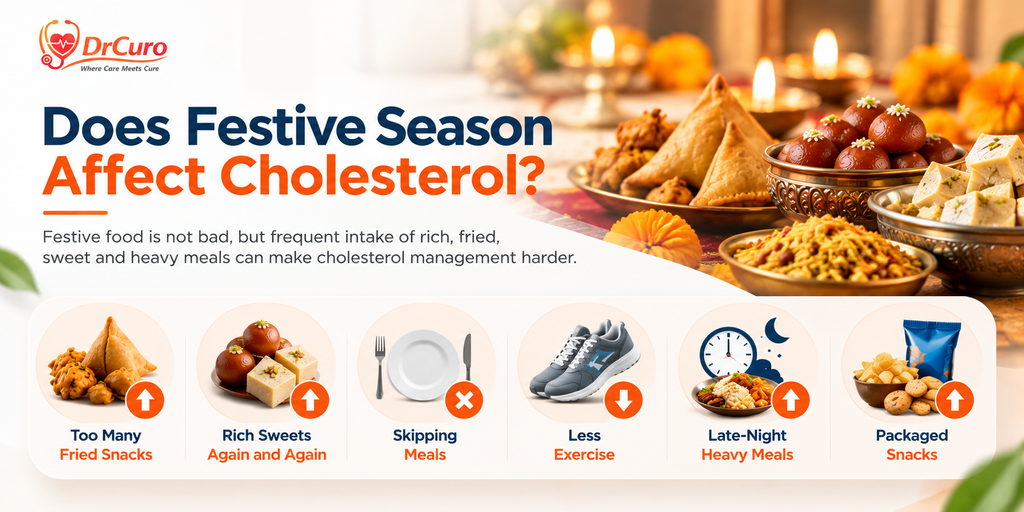
- Too many fried snacks: Large portions of samosa, kachori and pakora add a lot of calories and unhealthy fat.
- Rich sweets again and again: Mithai, halwa and creamy desserts can be high in sugar and saturated fat.
- Skipping meals: If you skip breakfast or lunch to “save space” for a party, you may feel very hungry and overeat later.
- Less exercise: Shopping, travel and visitors can break your normal walking or workout routine.
- Late-night heavy meals: Eating a big meal just before bed can disturb your sleep, digestion and routine. If you often feel gassy after festive food, see our tips on how to reduce stomach bloating naturally.
- Packaged snacks: Many packets of namkeen and biscuits are high in saturated fat, salt and calories.
10 Easy Tips for Healthy Festive Eating
1. Choose your sweets wisely
You do not have to say no to every sweet. Pick your one or two favourites and take a small piece instead of eating from a big box all day. If you want something sweet, fresh fruit is a good option too. Do not assume that sweets made with jaggery, honey or dates are always safe for high cholesterol or diabetes, because they still contain sugar and often ghee. If you have both diabetes and high cholesterol, look at the sugar and the fat in the sweet.
2. Limit deep-fried snacks
Samosas, kachoris, pakoras and puris are festival favourites. Enjoy them in small amounts and not every day. At home, do not use the same oil again and again for frying, because reused oil loses quality. Try these lighter options instead:
- Roasted chana or a small handful of unsalted nuts
- Roasted makhana with light seasoning
- Vegetable tikki cooked with very little oil
- Steamed or grilled snacks next to the fried ones
3. Cut down on saturated fat
Reducing saturated fat is the most important step in a high cholesterol diet. Saturated fat is found in butter, ghee, cream, fatty meat, coconut oil and palm oil. Your body still needs some fat, so the goal is to choose better fats, not zero fat. Use a moderate amount of liquid vegetable oil, make gravies with tomato and onion instead of heavy cream, and choose lower-fat dairy if it suits you. Try to avoid products that list “partially hydrogenated oil” on the label, because they contain harmful trans fat.
4. Eat more fibre
Fibre, especially soluble fibre, helps lower LDL cholesterol by reducing how much cholesterol your body absorbs. These are good foods to lower cholesterol:
- Oats and dalia
- Whole-wheat roti
- Dal, rajma, chana and other pulses
- Vegetables and seasonal fruits such as apple and guava
- A small portion of nuts and seeds
Add fibre slowly and drink enough water so your stomach stays comfortable.
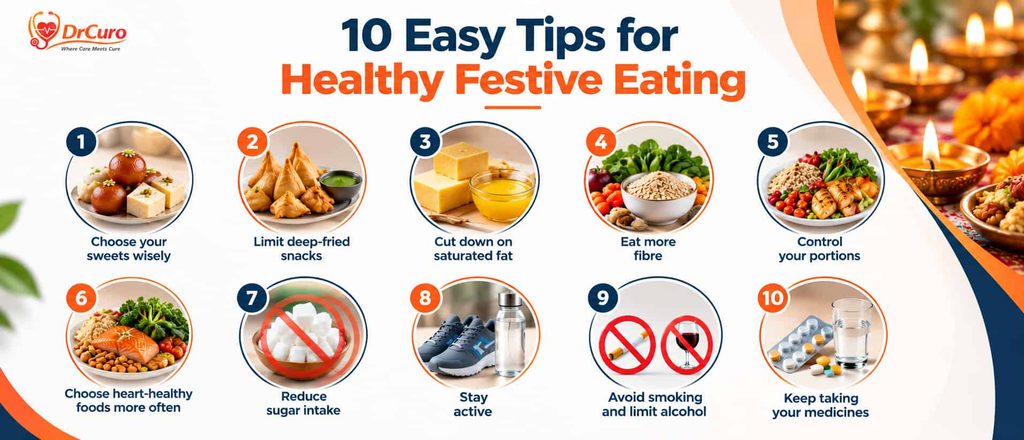
5. Control your portions
Decide what you want to eat before you fill your plate, and eat slowly. A simple festive plate can look like this: half the plate with vegetables or salad, one quarter with whole grains like roti, one quarter with protein like dal, beans, chickpeas, fish or lean chicken, and a small serving of your favourite festive dish. This is a guide, not a strict rule. Do not skip meals during the day to save room for dinner, as it usually leads to overeating.
6. Choose heart-healthy foods more often
A heart-healthy diet is not one magic food. It is a regular pattern of vegetables, fruits, whole grains, pulses and healthy fats. Serve chana chaat or a salad with your snacks, pick whole fruit instead of fruit juice, and grill, bake or steam non-vegetarian dishes instead of deep frying them.
7. Reduce sugar intake
Sugar does not raise LDL cholesterol as much as saturated fat does, but too much sugar leads to weight gain and can raise triglycerides. It also matters a lot if you have diabetes or pre-diabetes. Festive drinks, packaged juices, soft drinks and sweetened tea add a lot of hidden sugar. To reduce sugar intake, drink water as your main drink, cut the sugar in tea slowly and keep sweets as an occasional treat. Read more in our guide Simple Ways to Reduce Sugar Without Feeling Deprived, and learn why pre-diabetes should be treated early.
8. Stay active
Exercise helps improve triglycerides, supports HDL (good) cholesterol and keeps your weight in check. You do not need a gym. A 10 to 15 minute walk after meals, a brisk morning walk, using the stairs and dancing at celebrations all count. Aim for at least 150 minutes of moderate activity in a week if your doctor says it is safe for you. Wondering whether food or exercise matters more? See our article on Diet vs Exercise. Stop and get medical help if you feel chest pain, severe breathlessness or faintness.
9. Avoid smoking and limit alcohol
Smoking damages blood vessels, lowers HDL cholesterol and raises the risk of heart disease. Quitting is one of the best things you can do for your heart. Alcohol does not treat cholesterol, and it adds calories and can raise triglycerides and strain the liver. If you do not drink, do not start. If you do drink, ask your doctor what is safe with your health and medicines.
10. Keep taking your medicines
Diet and exercise are very helpful, but they do not replace medicine when your doctor has prescribed it. If you take a statin or another cholesterol medicine, keep taking it on time during the festival. Do not stop because you feel well or have been eating better. If you have side effects or doubts, talk to your doctor instead of changing the dose yourself.
Foods to Eat More and Foods to Avoid with High Cholesterol
You do not need to label foods as “good” or “bad”. Think about what you eat most often. This table shows which choices to make more often and which to limit, including the foods to avoid with high cholesterol.
| Food group | Choose more often | Limit or have less often |
| Breakfast | Oats, dalia, whole-grain options | Butter-rich pastries and parathas every day |
| Snacks | Roasted chana, vegetables, small portion of nuts | Large portions of deep-fried namkeen |
| Main meals | Dal, beans, vegetables, whole grains | Meals full of fried food and heavy gravies |
| Cooking fats | Moderate amount of unsaturated vegetable oil | Too much ghee, butter and cream |
| Sweets | A small piece of your favourite mithai | Many large servings of rich desserts |
| Drinks | Water and unsweetened drinks | Sugary drinks and packaged juices |
| Protein | Pulses, beans, tofu, fish, lean chicken | Fatty and processed meats |
| Packaged foods | Options low in saturated fat and sugar | Products high in saturated fat or trans fat |
A Simple One-Day Festive Meal Plan
This is a sample plan only, not personal medical advice. People with diabetes, kidney disease or other conditions may need different foods and portions.
| Time | Meal | Example |
| Early morning | Water | A glass of water |
| Breakfast | High-fibre meal | Vegetable oats or dalia |
| Mid-morning | Fruit | One serving of whole fruit |
| Lunch | Balanced meal | Whole-wheat roti, dal, cooked vegetables, salad |
| Evening | Light snack | Roasted chana or a few unsalted nuts |
| Festive dinner | Main meal | Vegetables, dal or lean protein, a suitable grain, and one small festive dish |
| Dessert | Treat | A small piece of mithai, if suitable for you |
Cholesterol, Diabetes and Your Heart
Many people have high cholesterol and high blood sugar together, and the two can raise heart risk even more. If you have diabetes, festive sweets and fried food need extra care. Read our guide on Diabetes and Heart Disease: Understanding the Link to learn how they affect each other and what you can do.
How Often Should You Check Your Cholesterol?
There is no single schedule for everyone. It depends on your age, past reports, family history, other health problems and whether you take treatment. A lipid profile is the blood test that measures total cholesterol, LDL, HDL and triglycerides. If you already have high cholesterol, diabetes, high blood pressure or a family history of early heart disease, your doctor may ask you to test more often. Target levels differ from person to person, so discuss your report with a doctor instead of relying only on online ranges.
When Should You See a Doctor?
Do not wait for symptoms, because high cholesterol is often silent. Book a visit with a doctor if:
- Your lipid profile shows high LDL cholesterol or high triglycerides
- You have diabetes, high blood pressure or a family history of early heart disease
- You need a review of your cholesterol medicine
- Your cholesterol stays high even after changing your diet and exercise
- You are not sure whether your diet and exercise suit your health
Get emergency help right away if you have chest pressure or pain, pain spreading to the arm or jaw, severe breathlessness, cold sweat or fainting. Not every chest pain is a heart attack, as our article on chest pain that isn’t a heart attack explains, but never guess. Do not assume it is only gas or a heavy festive meal. To learn about heart treatment options and expert care, visit our Heart Care page.
Frequently Asked Questions
1. Can I eat sweets on Diwali if I have high cholesterol?
Yes, a small portion now and then is usually fine, but it depends on your overall health. Do not make rich sweets a daily habit. If you also have diabetes or high triglycerides, be extra careful with sugar.
2. Which foods should I avoid with high cholesterol?
Limit foods high in saturated fat, such as those made with a lot of ghee, butter, cream, palm oil or coconut oil. Avoid trans fats from partially hydrogenated oils. Frequent fried and packaged foods also make a heart-healthy diet harder.
3. What are the best foods to lower cholesterol?
Oats, barley, beans, lentils, chickpeas, fruits, vegetables, nuts and whole grains all help. No single food can fix cholesterol alone, and some people also need medicine.
4. Does walking help with cholesterol?
Yes. Regular walking can improve triglycerides, support HDL cholesterol and help control weight. Choose a pace that matches your fitness and health.
5. Can high cholesterol cause a heart attack?
It can add to the risk. High LDL builds plaque in the arteries, and if a clot blocks an artery, a heart attack can happen. Blood pressure, blood sugar and smoking also matter.
6. Can lifestyle changes replace cholesterol medicine?
Not always. Some people improve with lifestyle changes alone, while others need medicine because of high LDL, family history or higher heart risk. Never stop your medicine without asking your doctor.
7. How long does it take to lower cholesterol?
It depends on your starting level, diet, activity, genes and treatment. Your doctor will usually repeat the test after some time to check your progress.
Conclusion
Managing cholesterol during the festive season does not mean refusing invitations or giving up every traditional dish. Enjoy your favourite foods in small portions, add more vegetables, fruits, whole grains and pulses, stay active, avoid smoking and take your medicines on time. Cholesterol care is a long-term habit, not a few days of dieting after Diwali. If you have diabetes, high blood pressure or heart disease in your family, regular check-ups and personal medical advice are even more important.
At Dr Curo, where care meets cure, we want to make health information simple and practical. Build small, steady habits, talk to your doctor when needed, and enjoy a happy and heart-healthy festive season.
Disclaimer: This blog is for general information only and is not a substitute for personal medical advice. Please consult your doctor about your own health and treatment.


No Comment! Be the first one.