






Diet vs Exercise: Which Plays a Bigger Role in Weight Loss?
If you have ever tried to lose weight, you have probably asked yourself this question at some point: should I focus more on what I eat, or how much I exercise? It is one of the most common debates in...

If you have ever tried to lose weight, you have probably asked yourself this question at some point: should I focus more on what I eat, or how much I exercise? It is one of the most common debates in the world of health and fitness, and honestly, most people never get a clear answer. Some friends will tell you that the gym is everything and food barely matters if you sweat enough. Others will insist that you can eat whatever you want as long as you cut your food intake. Both of these ideas are a little bit true and a little bit wrong at the same time, which is exactly why the confusion never really goes away. The truth is that your body weight depends on the balance between the energy you take in through food and the energy you burn through daily life, movement, and exercise. Both diet and exercise affect this balance, but they do not affect it in the same way or to the same degree. In this blog, we will break down exactly how diet and exercise each contribute to weight loss, which one usually has the bigger direct impact, why the other one still matters a lot, and how to bring both together into a routine you can actually stick to.
Table Of Content
- What Does Weight Loss Actually Mean?
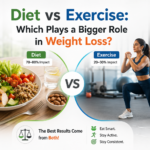
- So, Which One Matters More: Diet or Exercise?
- Diet vs Exercise: A Simple Side-by-Side Comparison
- Why Diet Plays Such a Big Role in Weight Loss
- Foods That Can Support Healthy Weight Loss
- Foods You May Want to Limit
- Why Portion Size Deserves More Attention Than You Think
- Why Protein Deserves a Special Mention
- Why Fibre Matters Just as Much
- How Exercise Helps With Weight Loss
- Different Types of Exercise Worth Including
- What Happens If You Only Focus on One of Them?
- Diet Without Any Exercise
- Exercise Without Changing Your Diet
- A Simple Diet and Exercise Plan You Can Follow
- Common Mistakes People Make While Trying to Lose Weight
- Why Sleep Quietly Affects Your Weight Too
- How Stress Plays Into the Weight Loss Picture
- How to Stay Consistent With Your Routine
- How to Actually Measure Your Progress
- When Should You Consider Professional Help?
- Frequently Asked Questions
- Conclusion
What Does Weight Loss Actually Mean?
Before comparing diet and exercise, it helps to understand what is really happening in your body when you lose weight. Every single day, your body uses energy just to keep you alive. It needs energy for your heart to beat, your lungs to breathe, your brain to think, and your body temperature to stay stable. On top of this, you use extra energy every time you walk, work, climb stairs, clean the house, or exercise.
Food and drinks are where this energy comes from. When you regularly eat more energy than your body actually needs, the extra amount tends to get stored, often as body fat. When you consistently use more energy than you take in, your body starts using its stored energy instead, and this is what leads to weight loss over time.
This is why healthy weight loss is never really just about “eating less” in a random way. Your body still needs protein, fibre, vitamins, minerals, healthy fats, and carbohydrates to function properly. A good weight loss approach focuses on eating better quality food in the right amount, not starving yourself or cutting out entire food groups without a real reason.
So, Which One Matters More: Diet or Exercise?
Here is the honest answer. For most people, diet tends to have a bigger direct impact on weight loss, while exercise plays a huge role in keeping you fit, healthy, and helping you maintain your weight once you lose it.
The reason behind this is fairly simple once you think about it. It can take a long amount of physical activity to burn off the calories from just one heavy meal or one sugary drink. But on the flip side, making a few smart changes to your food choices can reduce your calorie intake fairly easily, without needing hours of extra exercise.
For example, simply switching from a sugary cold drink to plain water, cutting back on daily sweets, watching your portion sizes, and choosing less oily food can lower your daily calorie intake quite a bit. These kinds of changes are often easier for many people to manage compared to trying to burn off that same amount of energy by running or working out.
That said, this does not mean exercise is any less important. Exercise brings a long list of benefits that diet alone simply cannot give you, such as preserving muscle while you lose fat, improving your fitness level, boosting your mood, strengthening your heart, and making it much easier to keep the weight off in the long run.
So really, the smartest approach is not choosing one over the other. It is doing both, together, in a way that fits your lifestyle.
Diet vs Exercise: A Simple Side-by-Side Comparison
| Factor | Diet | Exercise |
|---|---|---|
| Direct effect on calorie intake | High | None |
| Helps burn extra energy | Limited | Yes |
| Supports muscle strength | Indirectly, through nutrition | Strongly |
| Supports heart health | Yes | Strongly |
| Helps maintain weight long-term | Yes | Yes |
| Improves overall fitness | Limited | Strongly |
| Helps control portion sizes | Yes | No |
| Supports mental well-being | Can help | Strongly |
| Builds long-term healthy habits | Yes | Yes |
| Best overall approach | Balanced nutrition | Regular physical activity |
Why Diet Plays Such a Big Role in Weight Loss
The food you eat every day has a huge influence on how much energy you are taking in. Some foods pack a lot of calories into a small amount, while others give you more volume and fewer calories at the same time.
Take sugary drinks, for example. A single glass can carry a large amount of energy without actually filling you up or keeping you satisfied for long. The same goes for fried snacks, sweets, pastries, and heavily processed packaged foods. These foods make it very easy to eat more energy than your body actually needs, often without you even realizing it.
A balanced diet helps manage hunger in a much smarter way. Foods that are rich in protein and fibre tend to keep you feeling full for longer, while vegetables and whole fruits add volume, vitamins, and minerals without piling on unnecessary calories. Instead of only thinking about eating less, it is far more helpful to think about eating better and eating the right portions.
Foods That Can Support Healthy Weight Loss
A weight loss diet does not need to be boring, tasteless, or extremely restrictive. There is actually a lot of room to include a wide variety of foods, such as:
- Different types of vegetables
- Whole fruits in reasonable portions
- Whole grains like oats, brown rice, and whole wheat
- Beans and lentils
- Eggs
- Fish
- Lean meats, if you eat non-vegetarian food
- Low-fat or suitable dairy products
- Nuts and seeds in controlled portions
- Healthy sources of fat, like olive oil or ghee in moderation
- Plenty of water throughout the day
The idea is to build meals that leave you feeling satisfied and properly nourished, not meals that leave you hungry and irritated an hour later.

Foods You May Want to Limit
You do not have to completely give up your favourite foods to lose weight. But foods and drinks that are high in added sugar, unhealthy fats, or extra calories can make weight loss harder if you eat them very often or in large amounts. It is worth keeping an eye on:
- Sugary soft drinks and packaged juices
- Frequent sweets and desserts
- Deep-fried snacks
- Heavily processed packaged foods
- Large portions of refined carbohydrates like white bread and maida
- Excessive alcohol
- Frequent fast food and takeout
- Foods with very high added sugar content
The real goal here is balance, not perfection. One indulgent meal is not going to ruin your progress.
Why Portion Size Deserves More Attention Than You Think
Even genuinely healthy foods can add up and contribute to weight gain if you eat them in very large amounts. This is why portion control matters just as much as food choice.
For example, nuts, seeds, cooking oils, and whole grains are all healthy, but they are also fairly calorie-dense. Eating them in the right amount lets you enjoy their benefits without accidentally increasing your total energy intake more than you meant to.
Here are a few simple portion strategies that actually work:
- Use a smaller plate if it helps you naturally eat less
- Fill a large part of your plate with vegetables first
- Always include a good source of protein in your meal
- Keep high-calorie foods like fried items and sweets in moderate portions
- Eat slowly and actually chew your food properly
- Pay attention to your hunger and fullness signals instead of eating out of habit
Why Protein Deserves a Special Mention
Protein plays a big role during weight loss because it supports your muscles, tissues, hormones, and many other important body functions. It also happens to be one of the most filling nutrients, which naturally helps you eat less without feeling deprived.
Good protein sources include eggs, fish, chicken, lean meats, beans, lentils, Greek yogurt, tofu, paneer in reasonable portions, and nuts and seeds. Everyone’s exact protein needs can vary depending on their age, body size, activity level, and overall health, so there is no single number that fits everyone perfectly.
Why Fibre Matters Just as Much
Fibre is found mainly in plant-based foods, and it plays a big role in keeping your digestion healthy while also helping you feel full after meals. Good sources of fibre include vegetables, fruits, beans, lentils, whole grains, nuts, and seeds.
If your current diet is quite low in fibre, it is best to increase it slowly rather than all at once, along with drinking enough water. Adding too much fibre too quickly can sometimes cause gas or bloating, especially if your body is not used to it yet.
How Exercise Helps With Weight Loss
Exercise increases the total amount of energy your body burns, which means it directly contributes to the calorie deficit needed for weight loss. But honestly, the benefits of exercise go far beyond just burning calories.
Regular physical activity can:
- Improve your cardiovascular fitness
- Strengthen your muscles
- Support stronger bones
- Improve how well your body responds to insulin
- Boost your mood and reduce stress
- Support better quality sleep
- Improve your overall mobility and flexibility
- Help preserve muscle while you are losing fat
- Make it much easier to maintain your weight after you have lost it
This is exactly why exercise should never be thought of only as a calorie-burning tool. It genuinely improves your quality of life in ways that stepping on a weighing scale can never show you.
Different Types of Exercise Worth Including
A well-rounded exercise routine usually includes a mix of different activity types, and you do not need to do all of them every single day.
Walking: One of the simplest and most underrated ways to become more active. It needs no equipment and can be adjusted to any fitness level. You can build it into your day by taking short walks, using the stairs, walking during breaks, or walking after meals.
Cardio Exercise: Activities that raise your heart rate and improve fitness, such as brisk walking, cycling, swimming, jogging, dancing, or general aerobic exercise. Try to choose something you genuinely enjoy, because enjoyment is what makes people actually stick with it.

Strength Training: Especially important during weight loss because it helps you hold on to your muscle while you lose fat. This can include squats, lunges, push-ups, resistance band exercises, bodyweight movements, or weight training. If you are new to this, start with simple movements and focus on getting your form right before adding heavier weights.
Flexibility and Mobility Work: Stretching, yoga, and mobility exercises may not burn as many calories as cardio, but they still play a valuable role in keeping your body moving well and reducing your risk of injury.
What Happens If You Only Focus on One of Them?
Diet Without Any Exercise
It is entirely possible to lose weight by changing your diet alone, without doing any structured exercise. Reducing your calorie intake can still create the energy deficit your body needs to lose weight.
However, if you skip exercise completely, you miss out on a lot of its other benefits. During weight loss, some muscle loss can also happen, especially if your protein intake is low and you are not doing any resistance training to protect your muscle mass.
Exercise Without Changing Your Diet
Exercise alone can absolutely help with weight management, but your weight loss may end up being much slower if your food intake stays high.
For instance, someone might be exercising regularly and consistently, but if they are still eating large portions, drinking sugary beverages, having frequent desserts, or relying heavily on processed food, the calories burned during their workout can easily get cancelled out by the calories eaten afterward. This is exactly why combining both diet and exercise tends to work far better than relying on just one.
A Simple Diet and Exercise Plan You Can Follow
| Part of the Day | Healthy Habit |
|---|---|
| Morning | Balanced breakfast with protein and fibre |
| Mid-morning | Water, and a light nutritious snack if hungry |
| Lunch | Vegetables, a protein source, and a moderate carb portion |
| Afternoon | A short walk or some light physical activity |
| Evening | A healthy snack if genuinely needed |
| Workout time | Cardio, strength training, or another activity you enjoy |
| Dinner | A balanced, moderate-sized meal |
| Night | Avoid unnecessary snacking and stick to a regular sleep routine |
This is only a general example to help you visualize a balanced day, not a personalized diet or medical plan.
Common Mistakes People Make While Trying to Lose Weight
Most people start their weight loss journey with genuinely good intentions, but end up choosing strategies that are simply too hard to maintain for long. Some of the most common mistakes include:
- Skipping meals regularly, thinking it will speed things up
- Following extremely low-calorie diets that leave them exhausted
- Completely cutting out carbohydrates without any real medical reason
- Exercising excessively, without giving the body time to recover
- Eating very little during the day and then overeating late at night
- Drinking a lot of hidden calories without realizing it
- Ignoring portion sizes even while eating “healthy” foods
- Expecting fast, dramatic results within just a few days
- Giving up completely after eating one unhealthy meal
- Focusing only on the number on the weighing scale
- Not getting enough sleep
- Not allowing the body enough recovery time after workouts
It genuinely helps to remember that weight loss is a gradual process. One unhealthy meal will not undo your progress, in the exact same way that one healthy meal will not create instant results overnight.
Why Sleep Quietly Affects Your Weight Too
Sleep is something people often forget to consider when talking about diet and exercise, but it plays a bigger role than most realize. Good sleep supports many processes in your body that are connected to appetite, energy levels, mood, and how active you feel throughout the day.
When you are running on very little sleep, it naturally becomes harder to make healthy food choices, and you may also feel far less motivated to exercise or move around. Try to maintain a fairly consistent sleep schedule and build a relaxing bedtime routine that helps you wind down properly.
How Stress Plays Into the Weight Loss Picture
Stress can quietly influence both your eating habits and your activity levels. Some people tend to eat more when they are stressed, while others lose their appetite completely. Either way, long-term stress can make it genuinely difficult to stick to healthy routines over time.
Some simple ways to manage stress include:
- Going for a walk outdoors
- Practicing deep breathing
- Trying meditation
- Doing gentle yoga
- Reading something you enjoy
- Spending quality time with loved ones
- Listening to music
- Keeping up with hobbies you love
- Prioritizing enough sleep
Managing stress is not about avoiding every stressful moment in life, since that simply is not realistic. It is really about finding healthier ways to respond when stress does show up.
How to Stay Consistent With Your Routine
Consistency is honestly one of the most underrated parts of successful weight management. A “perfect” plan that you only manage to follow for one week is far less valuable than a realistic plan you can actually continue for months.
A few strategies that genuinely help with consistency include:
- Setting small, realistic goals instead of huge ones
- Tracking your progress if that keeps you motivated
- Preparing some meals ahead of time
- Keeping nutritious food easily available at home
- Planning your exercise around your existing daily routine
- Avoiding an “all or nothing” mindset
- Celebrating improvements beyond just weight, like better energy or sleep
- Focusing on building habits rather than chasing quick results
Instead of telling yourself “I must lose 10 kg fast,” it helps far more to focus on smaller, repeatable goals like walking daily, eating more vegetables, cutting back on sugary drinks, and staying consistent with strength exercises.
How to Actually Measure Your Progress
The weighing scale is only one small piece of the puzzle, and relying on it alone can honestly be discouraging. There are several other ways to track real progress, such as:
- Your waist measurement
- How your clothes fit you
- Your overall fitness level
- Your strength in the gym or at home
- Your daily energy levels
- Your sleep quality
- Your general daily activity
- Your blood pressure
- Your blood sugar, when medically relevant
- Your cholesterol levels, when relevant
Your body weight can naturally shift from day to day because of water retention, food intake, digestion, and several other factors that have nothing to do with actual fat loss. Try not to get discouraged by small, short-term ups and downs on the scale.
When Should You Consider Professional Help?
Some people are able to lose weight successfully through lifestyle changes alone, while others genuinely need professional guidance to get there safely. It is worth speaking with a doctor or a qualified dietitian if you have significant weight-related concerns, an existing medical condition, are taking medicines that affect your weight, or have tried losing weight multiple times without much success.
Professional guidance can help build a plan that actually takes your health history, eating habits, activity level, medications, and personal goals into account, rather than relying on generic advice that may not suit your specific situation. If you ever notice sudden or unexplained weight gain, it is also important to get it properly checked by a doctor.
Frequently Asked Questions
Is diet more important than exercise for weight loss?
For direct weight loss, diet usually has a bigger effect because reducing your calorie intake tends to be easier than burning that same amount of energy through exercise. That said, exercise remains extremely important for fitness, muscle strength, and keeping the weight off in the long run.
Can I lose weight without exercising at all?
Yes, weight loss can happen purely through dietary changes that create a calorie deficit. However, regular physical activity brings a lot of extra health benefits and makes it much easier to hold on to your muscle and maintain your results over time.
Can I still eat my favourite foods while trying to lose weight?
Yes, absolutely. Most people can include their favourite foods in moderation while still maintaining an overall balanced eating pattern. What really matters is the portion size and how often you eat them.
Is cardio or strength training better for weight loss?
Both bring real value in their own way. Cardio helps increase your energy expenditure and improves cardiovascular fitness, while strength training helps you build and maintain muscle. A combination of both usually works better than relying on just one.
How quickly should I expect to lose weight?
A slow and steady approach is generally much easier to maintain than rapid weight loss. The right pace really depends on your starting weight, overall health, diet, activity level, and several other individual factors.
Do I need a gym membership to lose weight?
Not at all. Walking, cycling, home workouts, bodyweight exercises, sports, dancing, and simply staying active throughout the day can all genuinely help. The best form of exercise is one that you enjoy and can realistically keep doing on a regular basis.
Conclusion
At the end of the day, diet and exercise should never be treated as two competing choices in your weight loss journey. Diet tends to have a bigger direct influence on creating the calorie deficit your body needs to lose weight, while exercise brings its own irreplaceable benefits like stronger muscles, better fitness, a healthier heart, improved mood, and long-term weight maintenance. The most effective and sustainable approach is almost always a thoughtful combination of balanced nutrition, regular physical activity, good sleep, stress management, and consistent daily habits. Instead of chasing extreme diets or spending endless hours in the gym, it is far more effective to focus on realistic changes you can genuinely maintain over time. Choose nutritious food, watch your portions, stay physically active, include some strength training, and give your body the time it actually needs to adapt and change. If you ever feel stuck or unsure about the right approach for your body, professional guidance can make a real difference. At drcuro, the focus has always been on helping people build practical, sustainable habits that support real and lasting health, one small step at a time.





No Comment! Be the first one.