








Cholesterol Levels: Normal Range and When to Worry
Cholesterol has a bad reputation, but your body actually needs it. It helps build healthy cells, make hormones, and produce vitamin D. The real problem isn’t cholesterol itself it’s...
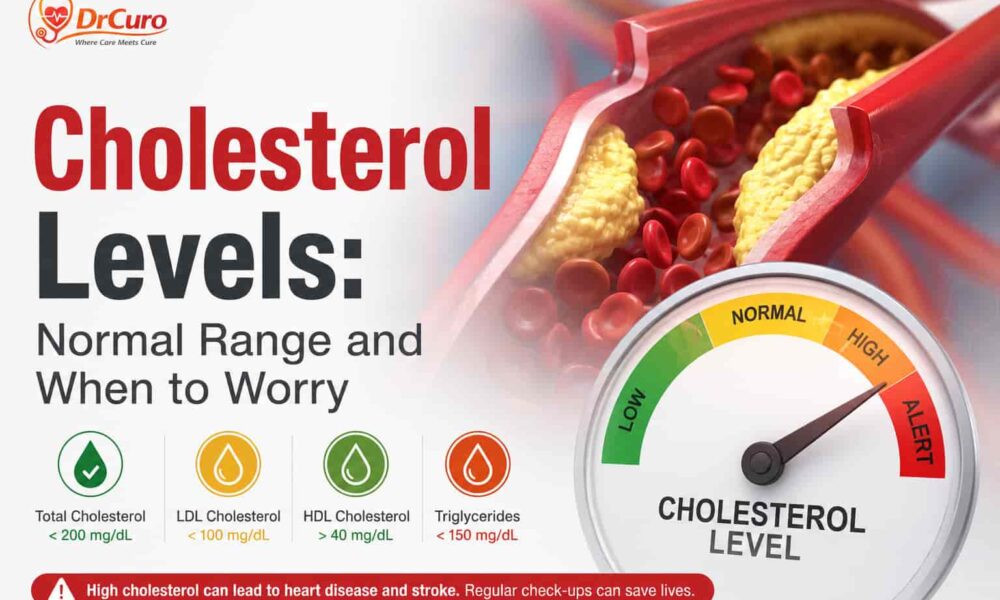
Cholesterol has a bad reputation, but your body actually needs it. It helps build healthy cells, make hormones, and produce vitamin D. The real problem isn’t cholesterol itself it’s having too much of the wrong kind, or too little of the right kind.
Table Of Content
- What Is Cholesterol?
- The Different Types of Cholesterol
- What Counts as a Normal Cholesterol Range?
- Understanding Your Report, Number by Number
- Total Cholesterol
- LDL Cholesterol (“Bad” Cholesterol)
- HDL Cholesterol (“Good” Cholesterol)
- Triglycerides
- When Should You Actually Worry?
- Why High Cholesterol Often Goes Unnoticed
- What Causes High Cholesterol?
- Who Should Get Tested, and How Often?
- Foods That Support Better Cholesterol
- Foods to Cut Back On
- Lifestyle Changes That Genuinely Move the Needle
- Do You Always Need Medication?
- Cholesterol Myths vs. Facts
- Frequently Asked Questions
- Conclusion
High cholesterol usually causes no symptoms at all. Most people find out they have it during a routine blood test, or worse, after a heart attack. That’s exactly why understanding your numbers matters it’s one of the simplest things you can do for long-term heart care.
This guide breaks down what cholesterol actually is, what a normal range looks like, and when your numbers mean it’s time to talk to a doctor.
What Is Cholesterol?
Cholesterol is a waxy, fat-like substance found in every cell of your body. Your liver makes most of what you need on its own. The rest comes from food, especially anything high in saturated or trans fats.
Your body uses cholesterol to:
- Build and repair cells
- Produce hormones
- Make vitamin D
- Digest food through bile acids
The trouble starts when there’s too much cholesterol floating in your blood. Extra cholesterol can stick to the walls of your arteries, slowly narrowing them and raising your risk of heart disease and stroke.
The Different Types of Cholesterol
Not all cholesterol behaves the same way. A single blood test, called a lipid profile, measures four things:
| Type | Also Known As | What It Does |
| LDL | “Bad” cholesterol | Builds up in artery walls when levels are high |
| HDL | “Good” cholesterol | Clears extra cholesterol from the blood |
| Triglycerides | Blood fat | High levels raise heart disease risk |
| Total Cholesterol | Overall cholesterol | A combined snapshot of all the above |
What Counts as a Normal Cholesterol Range?
This is the part most people want a quick answer to, so here it is but with one honest caveat first: there’s no single number that’s “normal” for everyone. What counts as healthy depends on your age, whether you have diabetes or high blood pressure, your family history, and your overall heart disease risk. A cardiologist doesn’t just look at your numbers in isolation they look at your numbers in context.
With that said, here are the general reference ranges most labs use as a starting point:
| Test | General Healthy Range |
| Total Cholesterol | Below 200 mg/dL |
| LDL Cholesterol | Below 100 mg/dL for most people |
| HDL Cholesterol (Men) | Above 40 mg/dL |
| HDL Cholesterol (Women) | Above 50 mg/dL |
| Triglycerides | Below 150 mg/dL |
If you already have heart disease, diabetes, or other risk factors, your doctor may recommend a much lower LDL target sometimes below 70 mg/dL, or even below 55 mg/dL for higher-risk patients. This isn’t because the standard range is wrong; it’s because your personal risk changes what “safe” looks like for you. Never assume your number is fine just because it’s close to a chart you found online always confirm with your doctor.
Understanding Your Report, Number by Number
Total Cholesterol
This is simply the sum of LDL, HDL, and part of your triglycerides. As a rough guide:
- Below 200 — generally healthy
- 200–239 — borderline high
- 240 and above — high
On its own, total cholesterol doesn’t tell the full story. Two people with the same total number can have very different risk levels depending on how much of that is LDL versus HDL.
LDL Cholesterol (“Bad” Cholesterol)
LDL carries cholesterol into your artery walls. The higher it climbs, the more it contributes to blockages over time. For most healthy adults, under 100 mg/dL is a reasonable target. For people with existing heart disease or multiple risk factors, doctors now often aim much lower this is one of the biggest shifts in recent heart care guidance, moving from “one number fits all” to “your target depends on your risk.”
HDL Cholesterol (“Good” Cholesterol)
HDL works in your favor it picks up excess cholesterol and carries it back to the liver to be cleared out. Higher HDL generally means better protection. Levels above 60 mg/dL are considered especially protective.
Triglycerides
Triglycerides are a different kind of fat, and they respond strongly to lifestyle. High triglycerides are commonly linked to:
- Excess body weight
- Poorly controlled diabetes
- Regular alcohol intake
- A diet high in sugar and refined carbs
- Low physical activity
When Should You Actually Worry?
One high reading isn’t a reason to panic but it’s also not something to brush off. Pay closer attention if:
- Your LDL stays consistently above 160 mg/dL
- Your total cholesterol is repeatedly above 240 mg/dL
- Your triglycerides stay above 200 mg/dL
- Your HDL is persistently low
- You have diabetes or high blood pressure
- Heart disease runs in your family
- You smoke
The more of these apply to you, the more seriously your cholesterol numbers should be taken even if you feel completely fine physically.
Why High Cholesterol Often Goes Unnoticed
This is the part that catches people off guard: high cholesterol rarely causes any symptoms on its own. You can feel perfectly healthy while it quietly damages your arteries for years. Often, the first sign is a complication itself chest pain, shortness of breath, leg pain while walking, or a heart attack.
This is exactly why routine blood testing matters more than how you feel day to day.
What Causes High Cholesterol?
Several things can push your numbers up, and usually it’s a mix rather than one single cause.
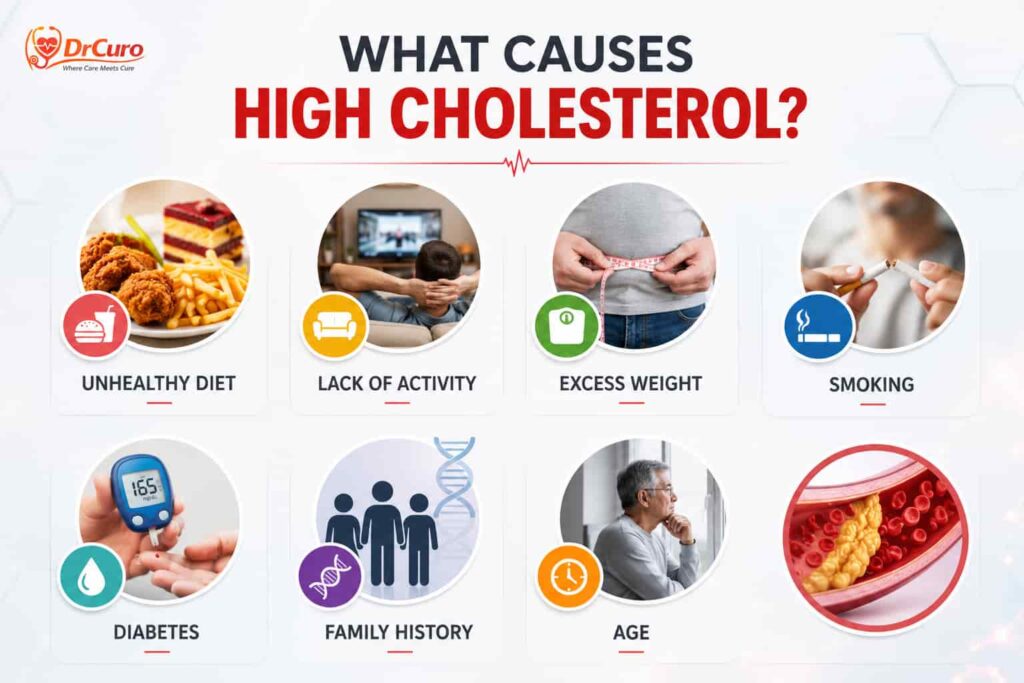
- Diet — Fried foods, excess butter and ghee, processed meats, and bakery items raise LDL over time.
- Inactivity — Regular movement raises HDL and helps lower LDL; a sedentary lifestyle does the opposite.
- Excess weight — Extra body fat tends to raise both LDL and triglycerides.
- Smoking — Damages blood vessels and lowers your good cholesterol.
- Diabetes — Poorly controlled blood sugar often pushes both cholesterol and triglycerides higher.
- Family history — Some people inherit a condition called familial hypercholesterolemia, which causes high cholesterol from a young age regardless of diet or lifestyle. If heart disease runs in your family, mention it to your doctor even if you feel fine.
- Age — Cholesterol naturally tends to rise as you get older.
Who Should Get Tested, and How Often?
Cholesterol testing isn’t just for older adults. Current guidance recommends screening start much earlier than many people expect including a baseline check in childhood between ages 9 and 11, and regular testing through adulthood.
| Group | Suggested Testing Frequency |
| Generally healthy adults | Every 4–6 years |
| People with diabetes | Every year |
| People with existing heart disease | As advised by your doctor |
| People with known high cholesterol | Every 6–12 months |
If you have risk factors like obesity, smoking, high blood pressure, or a family history of heart disease, don’t wait for the “standard” testing interval ask your doctor when you should start.
Foods That Support Better Cholesterol
Small, consistent changes in what you eat make a real difference over time. Foods that tend to help include:
- Oats and whole grains
- Beans and lentils
- Fruits and green vegetables
- Almonds, walnuts, and flaxseeds
- Fish rich in omega-3 fatty acids
- Olive oil in place of butter or ghee
Foods to Cut Back On
On the other side, these tend to push LDL and triglycerides up when eaten regularly:
- Fried snacks and chips
- Full-fat cheese and cream
- Processed and packaged meats
- Bakery items made with refined flour and sugar
- Sugary drinks and packaged juices
Lifestyle Changes That Genuinely Move the Needle
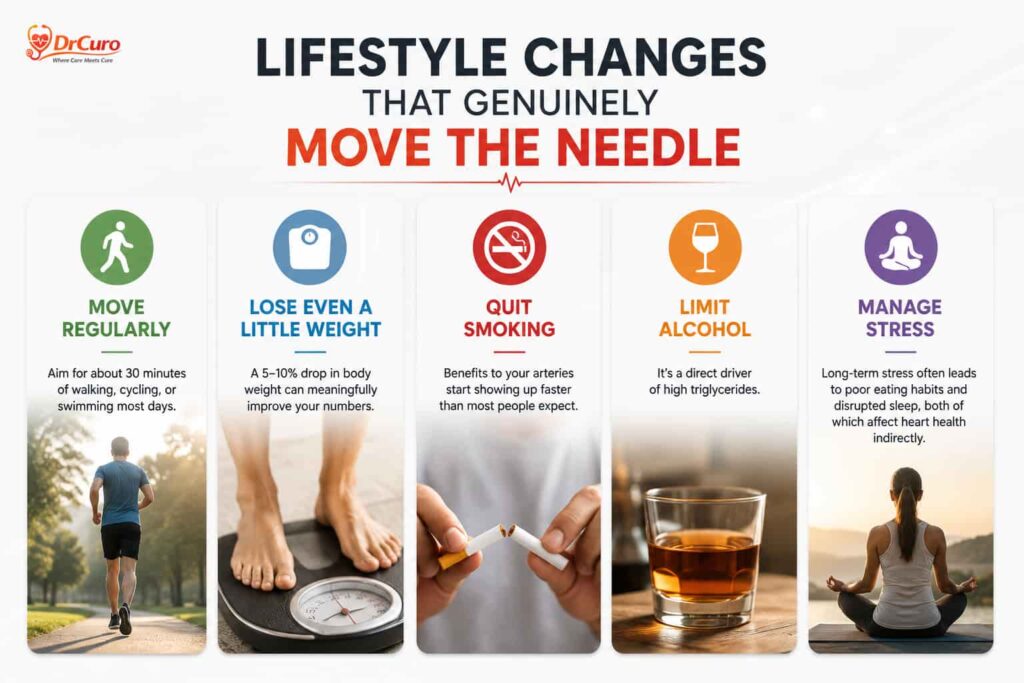
- Move regularly — Aim for about 30 minutes of walking, cycling, or swimming most days.
- Lose even a little weight — A 5–10% drop in body weight can meaningfully improve your numbers.
- Quit smoking — Benefits to your arteries start showing up faster than most people expect.
- Limit alcohol — It’s a direct driver of high triglycerides.
- Manage stress — Long-term stress often leads to poor eating habits and disrupted sleep, both of which affect heart health indirectly.
Do You Always Need Medication?
Not always. Many people with mildly elevated cholesterol can bring their numbers down through diet, exercise, weight loss, and better blood sugar control alone. But if your levels are very high, or you already have heart disease, medication such as statins is often necessary and genuinely effective at reducing risk.
Never start, stop, or adjust cholesterol medication without your doctor’s guidance, even if your latest test looks better.
Cholesterol Myths vs. Facts
| Myth | Fact |
| Cholesterol is always bad | Your body needs a healthy amount to function |
| Thin people can’t have high cholesterol | Anyone can have high cholesterol, regardless of body size |
| High cholesterol always causes symptoms | Most people feel completely normal |
| Medication alone is enough | Lifestyle changes matter just as much |
| Young people don’t need testing | Cholesterol can rise at any age, sometimes from childhood |
Frequently Asked Questions
1. What is considered a normal cholesterol level?
A total cholesterol level under 200 mg/dL is a commonly used general reference point, but your doctor will look at your LDL, HDL, and triglycerides together along with your personal risk factors rather than relying on one number alone.
2. Can I lower high cholesterol without medicine?
Often, yes, especially if the increase is mild. Diet changes, regular exercise, weight loss, and quitting smoking can meaningfully improve your numbers. If levels remain high despite these changes, your doctor may recommend medication.
3. Does high cholesterol always show symptoms?
No — this is what makes it risky. Most people have no warning signs until a complication like chest pain or a heart attack occurs. Regular testing is the only reliable way to catch it early.
4. At what age should I start checking my cholesterol?
Testing can start as early as childhood if there’s a family history of high cholesterol or heart disease. For most people without major risk factors, checks typically begin in early adulthood and continue every few years after that.
Conclusion
Your cholesterol numbers won’t tell you how you feel but they can tell you a lot about how your heart is doing over the years ahead. Because high cholesterol rarely causes symptoms, the only real way to stay ahead of it is through regular testing, a diet that supports your arteries rather than works against them, and honest conversations with your doctor about your personal risk.
Good heart care isn’t about one big change it’s about small, consistent habits that add up over time. At drcuro, we believe informed patients make better health decisions. Stay on top of your numbers, don’t ignore what your body isn’t telling you, and take the next step toward a healthier heart today.



No Comment! Be the first one.