







Blood Pressure Normal Range: What’s Healthy for Indians?
High blood pressure has quietly become one of the most common health problems in India today. It no longer affects only older adults younger people in their twenties and thirties are being diagnosed...
High blood pressure has quietly become one of the most common health problems in India today. It no longer affects only older adults younger people in their twenties and thirties are being diagnosed with it too, often because of stress, poor eating habits, lack of exercise, obesity, and family history. What makes this condition tricky is that it usually shows no symptoms in its early stages. A person can feel completely fine while their blood pressure quietly stays higher than it should be. This is exactly why doctors often call hypertension the “silent killer.” On the other end, blood pressure that drops too low can also cause problems like dizziness, weakness, and fainting. Understanding the blood pressure normal range is one of the simplest things you can do to protect your heart, brain, and kidneys in the long run. This blog breaks it down in plain, simple language so you know exactly what your numbers mean and what to do about them.
Table Of Content
- What Is Blood Pressure?
- How Is Blood Pressure Measured?
- Understanding Systolic and Diastolic Numbers
- Systolic vs Diastolic Pressure
- Blood Pressure Normal Range for Adults
- Blood Pressure Categories
- Why Staying in the Normal Range Matters
- What Affects Your Blood Pressure?
- Symptoms to Watch For
- High Blood Pressure
- Low Blood Pressure
- High vs Low Blood Pressure
- Who Should Check Their Blood Pressure Regularly?
- Common Causes of High and Low Blood Pressure
- How to Maintain Healthy Blood Pressure Naturally
- Foods That Support Healthy Blood Pressure
- When Should You See a Doctor?
- Frequently Asked Questions
- Conclusion
What Is Blood Pressure?
Blood pressure is simply the force with which your blood pushes against the walls of your arteries as your heart pumps it around your body. Every time your heart beats, it sends blood carrying oxygen and nutrients to your organs and muscles, and this movement creates pressure inside your blood vessels.
Your blood pressure is not a fixed number — it naturally goes up and down through the day depending on what you are doing. It may rise a little when you are exercising, stressed, or excited, and settle back down once you relax. This is completely normal. The concern is when blood pressure stays high consistently, not just for a few minutes.
Keeping your blood pressure in a healthy range means your organs are getting enough oxygen-rich blood without your heart having to overwork itself.
How Is Blood Pressure Measured?
Blood pressure is measured using a device called a blood pressure monitor, or sphygmomanometer. You have probably seen it during a doctor’s visitr a cuff wraps around your upper arm and gives a reading with two numbers, shown in mmHg (millimeters of mercury).
For example, a reading might look like this:
120/80 mmHg
The top number is your systolic pressure, and the bottom number is your diastolic pressure. Both matter, and doctors look at both together, not just one.
For an accurate reading:
- Sit comfortably with your back supported and feet flat on the floor.
- Rest your arm at heart level.
- Avoid smoking, coffee, alcohol, or exercise for at least 30 minutes before the test.
- Take two or three readings a few minutes apart rather than relying on just one.
Understanding Systolic and Diastolic Numbers
Systolic pressure (the top number) measures the pressure in your arteries when your heart contracts and pushes blood out. Since the heart is actively working here, this number is naturally higher.
Diastolic pressure (the bottom number) measures the pressure in your arteries when your heart is resting between beats and refilling with blood.
Both numbers are important on their own. Even if only one of the two is outside the healthy range, it can still be worth discussing with a doctor.
Systolic vs Diastolic Pressure
| Feature | Systolic Pressure | Diastolic Pressure |
| Position in reading | Top number | Bottom number |
| Measures | Pressure when heart pumps | Pressure when heart rests |
| Example | 120 | 80 |
| Reflects | How hard the heart is working | How much resistance is in the arteries |
Blood Pressure Normal Range for Adults
For most healthy adults, a reading below 120/80 mmHg is generally considered normal. This benchmark is widely used by doctors and health bodies as a general reference point for adults.
That said, one single reading does not tell the whole story. Blood pressure can shift depending on stress, physical activity, sleep, illness, or even the time of day. This is why doctors usually look at several readings taken on different days before making any diagnosis, rather than reacting to one number.
Blood Pressure Categories
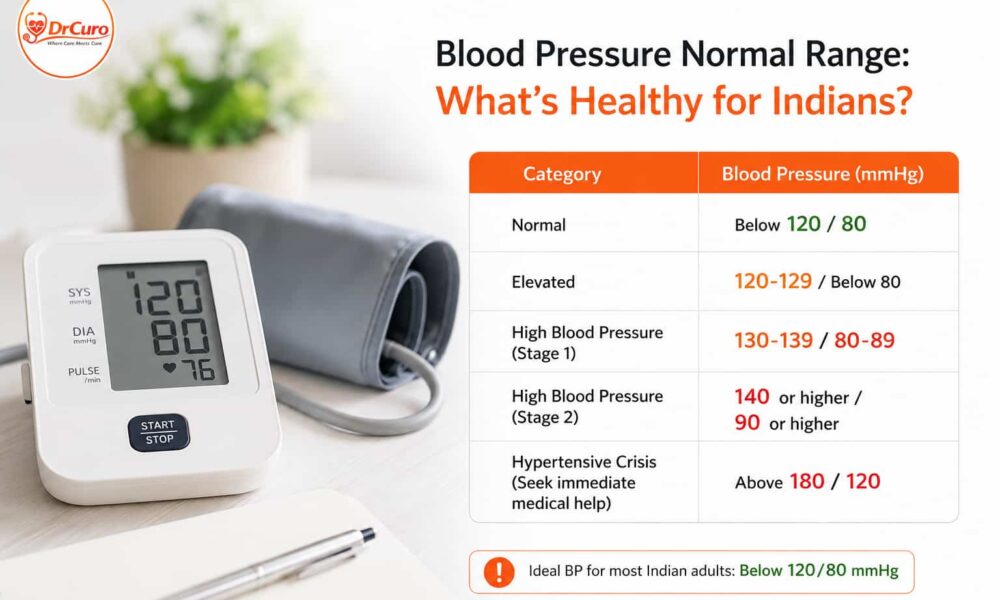
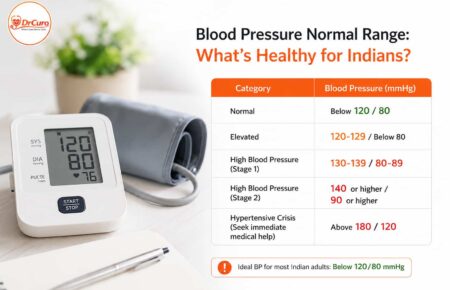
| Category | Systolic (mmHg) | Diastolic (mmHg) |
| Normal | Less than 120 | Less than 80 |
| Elevated | 120–129 | Less than 80 |
| High Blood Pressure (Stage 1) | 130–139 | 80–89 |
| High Blood Pressure (Stage 2) | 140 or higher | 90 or higher |
| Hypertensive Crisis | 180 or higher | 120 or higher |
A hypertensive crisis is a medical emergency. If your reading falls in this range, especially with symptoms like chest pain, confusion, or severe headache, seek medical help immediately rather than waiting it out.
It’s worth noting that Indians are often flagged as being at higher risk of developing hypertension and heart disease earlier in life compared to some other populations largely linked to diet patterns, higher rates of abdominal obesity, and genetic factors. This is a reason for earlier and more regular screening, not a reason to use a different set of “normal” numbers the healthy range itself doesn’t change by nationality.
Why Staying in the Normal Range Matters
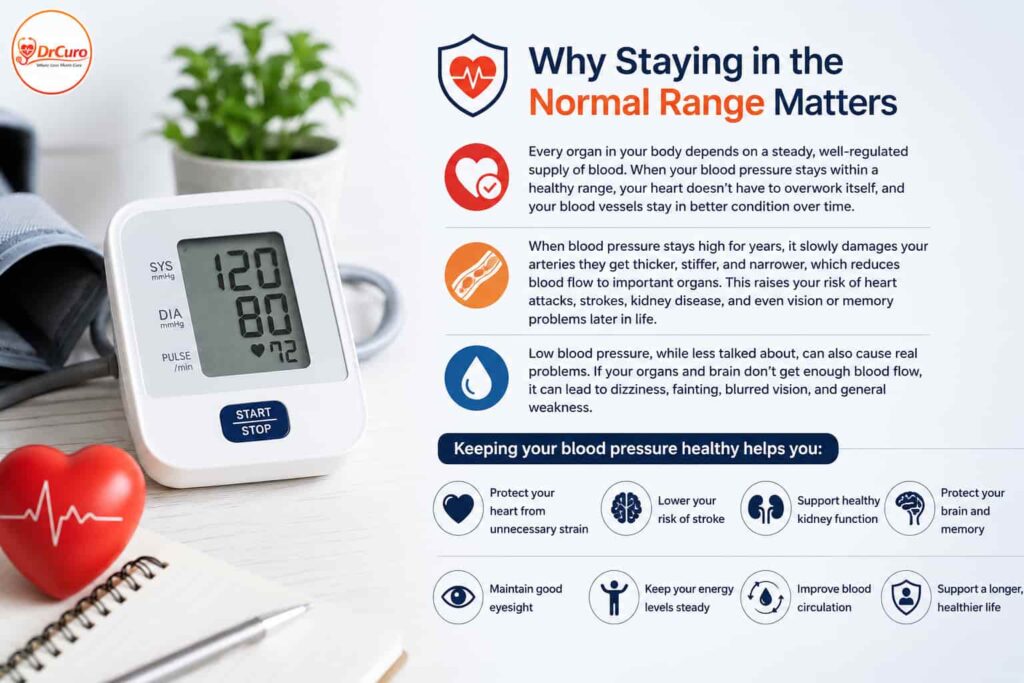
Every organ in your body depends on a steady, well-regulated supply of blood. When your blood pressure stays within a healthy range, your heart doesn’t have to overwork itself, and your blood vessels stay in better condition over time.
When blood pressure stays high for years, it slowly damages your arteries they get thicker, stiffer, and narrower, which reduces blood flow to important organs. This raises your risk of heart attacks, strokes, kidney disease, and even vision or memory problems later in life.
Low blood pressure, while less talked about, can also cause real problems. If your organs and brain don’t get enough blood flow, it can lead to dizziness, fainting, blurred vision, and general weakness.
Keeping your blood pressure healthy helps you:
- Protect your heart from unnecessary strain
- Lower your risk of stroke
- Support healthy kidney function
- Protect your brain and memory
- Maintain good eyesight
- Keep your energy levels steady
- Improve blood circulation
- Support a longer, healthier life
What Affects Your Blood Pressure?
Several factors influence your blood pressure some you can control, some you cannot.
- Age
- Family history
- Body weight
- High salt intake
- Lack of physical activity
- Smoking
- Alcohol consumption
- Chronic stress
- Poor sleep
- Diabetes
- Kidney disease
- High cholesterol
- Hormonal imbalances
- Certain medications
Knowing which of these apply to you can help you understand your own risk level and take action before it becomes a bigger problem.
Symptoms to Watch For
High Blood Pressure
Most of the time, high blood pressure has no symptoms at all, which is exactly what makes it dangerous. When symptoms do show up, they usually mean the pressure has been high for a while. These can include:
- Frequent headaches
- Dizziness
- Blurred vision
- Chest pain
- Shortness of breath
- Nosebleeds
- Irregular heartbeat
- Fatigue
Low Blood Pressure
- Dizziness or lightheadedness
- Fainting
- Weakness
- Blurred vision
- Nausea
- Cold hands and feet
- Fatigue
High vs Low Blood Pressure
| High Blood Pressure | Low Blood Pressure |
| Often no symptoms | Dizziness |
| Headaches | Fainting |
| Blurred vision | Weakness |
| Chest pain | Nausea |
| Shortness of breath | Cold hands and feet |
| Risk of stroke over time | Risk of falls |
Who Should Check Their Blood Pressure Regularly?
- Adults above 18 years, at least once a year
- People with diabetes or kidney disease
- Those who are overweight or obese
- Anyone with a family history of hypertension
- Smokers and heavy alcohol consumers
- People with high cholesterol
- Pregnant women, as guided by their doctor
- Adults above 40, even if they feel completely healthy
Regular checks matter precisely because hypertension often gives no warning signs. A yearly reading can catch a problem long before it becomes serious.
Common Causes of High and Low Blood Pressure
High blood pressure is commonly linked to:
- Excess salt and processed food intake
- Being overweight
- Physical inactivity
- Chronic stress
- Smoking or tobacco use
- Excess alcohol
- Poor sleep
- Diabetes and high cholesterol
- Family history
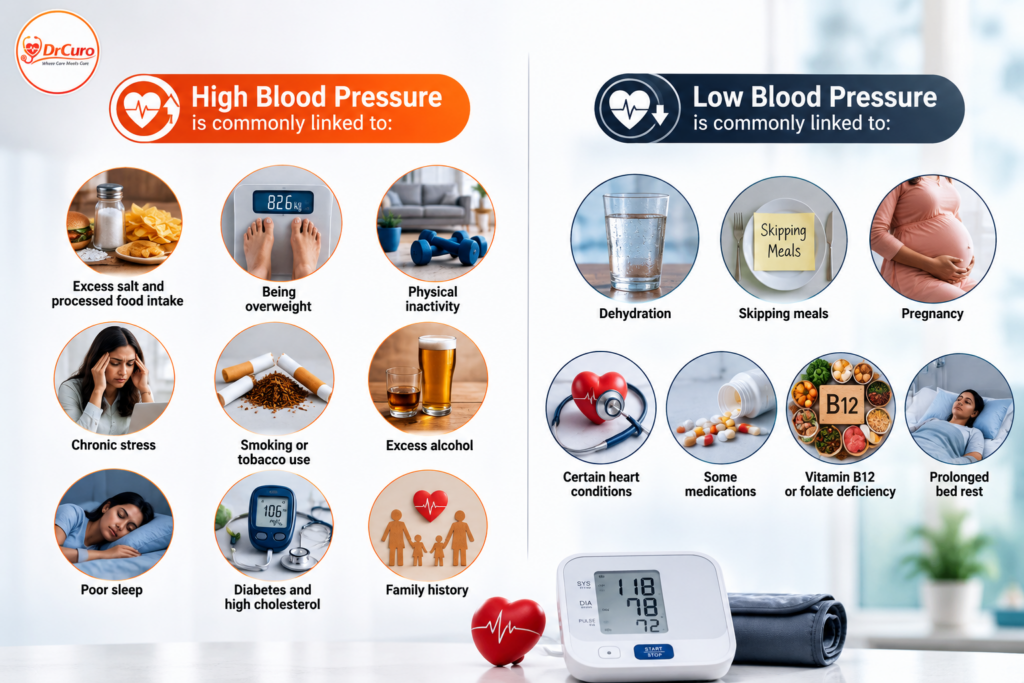
Low blood pressure is commonly linked to:
- Dehydration
- Skipping meals
- Pregnancy
- Certain heart conditions
- Some medications
- Vitamin B12 or folate deficiency
- Prolonged bed rest
How to Maintain Healthy Blood Pressure Naturally
- Eat a balanced diet with plenty of fruits, vegetables, whole grains, and lean protein
- Cut back on salt, and avoid adding extra salt at the table
- Exercise for at least 30 minutes most days walking, cycling, or yoga all work
- Maintain a healthy body weight
- Drink enough water through the day
- Sleep 7-8 hours a night
- Manage stress through meditation, hobbies, or simply slowing down
- Quit smoking and limit alcohol
- Check your blood pressure regularly, especially if you’re at higher risk
- Take prescribed medication exactly as advised, and never stop it on your own
Small, consistent habits matter far more here than any drastic short-term fix.
Foods That Support Healthy Blood Pressure
| Foods to Include | Foods to Limit |
| Green leafy vegetables | Pickles and papads |
| Bananas, oranges, apples | Chips and packaged snacks |
| Oats and brown rice | Instant noodles |
| Lentils and beans | Processed and fried foods |
| Low-fat milk and curd | Sugary and soft drinks |
| Fish and skinless chicken | Excess sweets |
| Almonds, walnuts, flaxseeds | High-sodium canned foods |
| Fresh homemade meals | Excess butter, ghee, and alcohol |
Reading food labels and choosing lower-sodium options can make a real difference over time, especially in a diet that leans heavily on packaged and restaurant food.
When Should You See a Doctor?
- Your blood pressure consistently reads above the normal range on repeated checks
- You experience severe headaches, chest pain, or shortness of breath
- You feel dizzy or faint frequently
- Your blood pressure is low along with weakness or confusion
- You have diabetes, kidney disease, or are pregnant and notice unusual readings
- Your home BP monitor keeps showing abnormal numbers over several days
Don’t wait for symptoms to get worse before checking in with a doctor early evaluation is what prevents long-term damage.
Frequently Asked Questions
1. What is the normal blood pressure range for adults?
Generally, a reading below 120/80 mmHg is considered normal for most healthy adults.
2. Is 140/90 considered high blood pressure?
Yes, this falls under Stage 2 hypertension and should be discussed with a doctor.
3. Can young adults get high blood pressure?
Yes. Poor diet, stress, obesity, lack of exercise, and family history have made hypertension increasingly common among younger adults.
4. How often should I check my blood pressure?
Healthy adults should check at least once a year. Those with diabetes, kidney disease, or existing hypertension may need more frequent monitoring, as advised by their doctor.
5. Can lifestyle changes actually lower blood pressure?
Yes reducing salt, regular exercise, weight management, quitting smoking, and managing stress can meaningfully improve blood pressure over time.
6. Is low blood pressure always a concern?
Not necessarily. Some people naturally run low without issues. But frequent dizziness, fainting, or weakness should always be checked by a doctor.
Conclusion
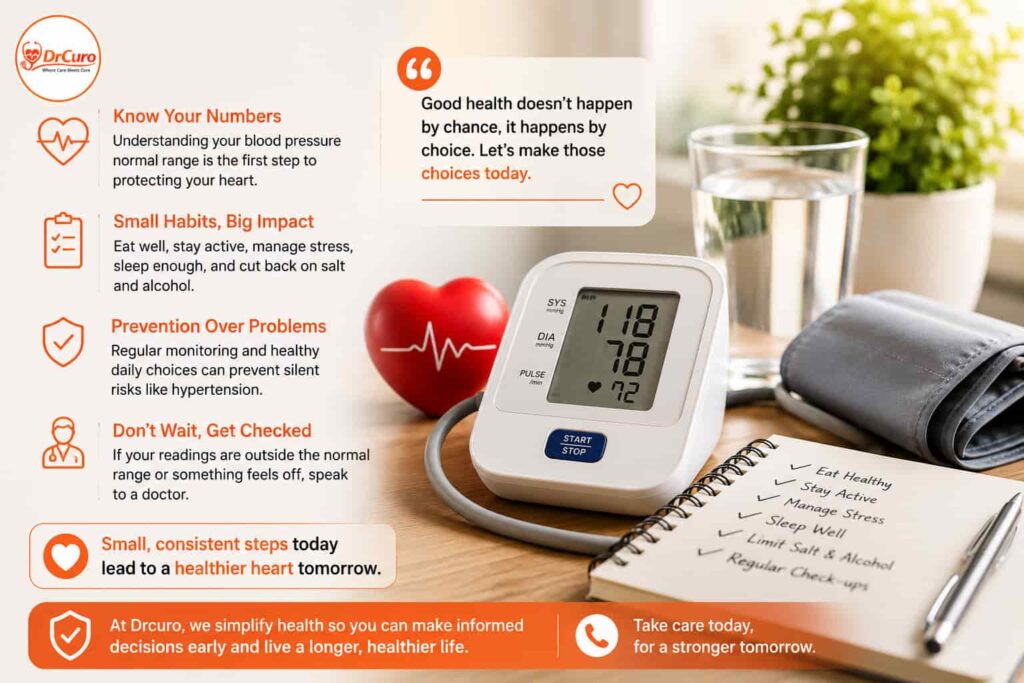
Knowing your blood pressure normal range is one of the simplest things you can do for your long-term health, yet it’s something most people overlook until a problem shows up. Because hypertension so often develops silently, regular monitoring combined with everyday habits eating well, staying active, managing stress, sleeping enough, and cutting back on salt and alcoho makes a real difference over the years, not just in the moment. At Drcuro, we believe in helping people understand their health in simple, practical terms so they can make informed decisions early, not after a problem has already taken hold. If your readings are outside the normal range or something feels off, don’t wait speak to a doctor and get it checked properly. Small, consistent steps today go a long way toward protecting your heart and health tomorrow.






No Comment! Be the first one.