







Diarrhea Treatment: Home Remedies and Medical Options
Diarrhea is something almost everyone deals with at some point it’s one of the most common digestive problems out there, affecting people of every age group. It happens when you pass loose,...
Diarrhea is something almost everyone deals with at some point it’s one of the most common digestive problems out there, affecting people of every age group. It happens when you pass loose, watery stools more often than usual, and while it can feel alarming in the moment, most cases clear up on their own within a few days. That said, the right diarrhea treatment at the right time makes a real difference. It can shorten how long you’re unwell, prevent complications like dehydration, and tell you early on whether this is something you can manage at home or something that needs a doctor’s attention. In this blog, we’ll walk through what causes diarrhea, its symptoms, simple home remedies, foods to eat and avoid, medical treatment options, and clear signs of when it’s time to seek help all explained in plain, easy-to-understand language.
Table Of Content
- What is Diarrhea?
- Common Causes of Diarrhea
- Symptoms to Watch For
- Types of Diarrhea
- Home Remedies for Diarrhea
- Foods to Eat During Diarrhea
- Foods to Avoid
- Medical Treatment for Diarrhea
- Signs of Dehydration You Shouldn’t Ignore
- When Should You See a Doctor?
- How to Prevent Diarrhea
- Home Remedies vs Medical Treatment
- Frequently Asked Questions (FAQs)
- Conclusion
What is Diarrhea?
Diarrhea is a digestive condition where you experience frequent loose or watery stools. In most people, it lasts anywhere from one to three days and resolves on its own. Acute diarrhea the kind that comes on suddenly is usually caused by an infection or something you ate. Chronic diarrhea, on the other hand, lasts for weeks and is often linked to ongoing digestive conditions such as Irritable Bowel Syndrome (IBS), Crohn’s disease, or ulcerative colitis, and this kind usually needs proper gastro treatment rather than home care alone.
Common Causes of Diarrhea
Diarrhea can be triggered by a wide range of factors, and figuring out the cause is often the first step toward choosing the right treatment.
- Viral infections such as rotavirus and norovirus
- Bacterial infections from contaminated food or water
- Food poisoning
- Parasitic infections
- Food allergies or intolerance, including lactose intolerance
- Side effects of antibiotics or other medications
- Digestive disorders such as IBS or inflammatory bowel disease
- Stress and anxiety, in some people
- Eating unhygienic or spoiled food
- Drinking unsafe or contaminated water
Symptoms to Watch For
Besides frequent loose stools, diarrhea often comes with a handful of other symptoms:
- Stomach cramps and abdominal pain
- Bloating
- Nausea or vomiting
- Fever
- A sudden, urgent need to pass stools
- General weakness
- Loss of appetite
- Early signs of dehydration dry mouth, dizziness, reduced urination, and unusual thirst
Types of Diarrhea
Not all diarrhea is the same, and understanding which type you’re dealing with helps you know what kind of treatment is appropriate.
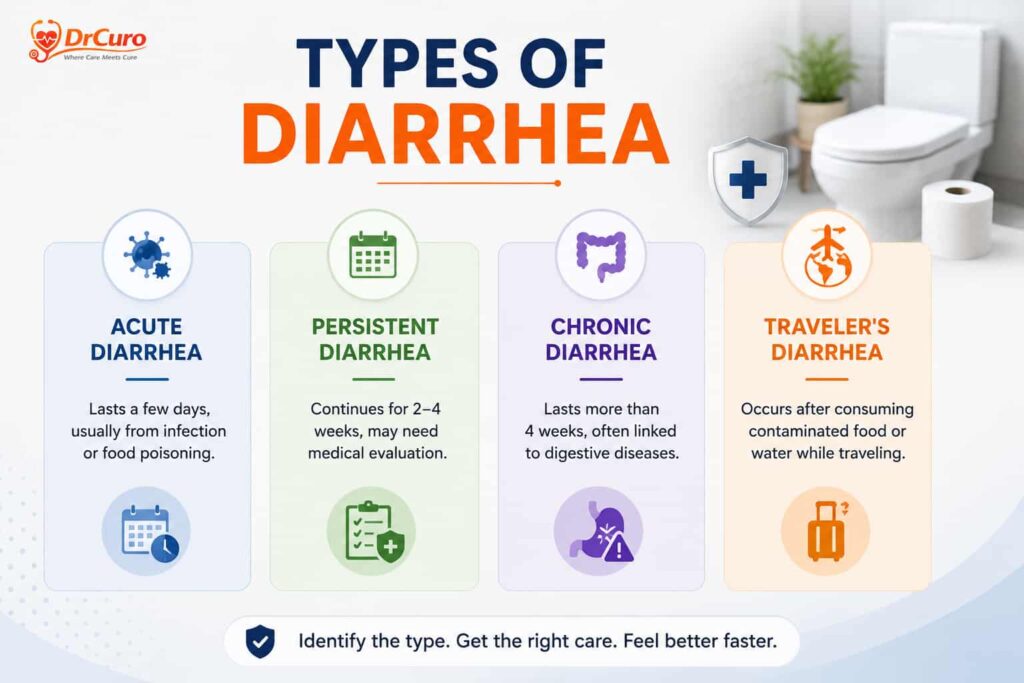
| Type | Description |
|---|---|
| Acute Diarrhea | Lasts a few days, usually from infection or food poisoning |
| Persistent Diarrhea | Continues for 2–4 weeks, may need medical evaluation |
| Chronic Diarrhea | Lasts more than 4 weeks, often linked to digestive diseases |
| Traveler’s Diarrhea | Occurs after consuming contaminated food or water while traveling |
Home Remedies for Diarrhea
Most mild cases respond well to simple home care focused on hydration and gentle nutrition.
1. Drink Plenty of Fluids
Diarrhea causes your body to lose water and essential minerals quickly, so replacing fluids is the single most important thing you can do.
Good options include:
- Water
- ORS (Oral Rehydration Solution)
- Coconut water
- Clear soups
- Lemon water
- Rice water
Try to avoid sugary drinks and too much caffeine, as both can make diarrhea worse.
2. Follow the BRAT Diet
This is a classic, doctor-recommended approach that’s gentle on an upset stomach.
BRAT stands for:
- Bananas
- Rice
- Applesauce
- Toast
These foods are easy to digest and can help firm up loose stools.
3. Eat Light, Easily Digestible Meals
While recovering, stick to simple foods such as khichdi, boiled potatoes, oatmeal, plain curd, boiled vegetables, and plain crackers. Avoid anything spicy, oily, or fried until you feel better.
4. Add Probiotic Foods
Probiotics help restore the good bacteria in your gut that diarrhea often disrupts. Curd, yogurt with live cultures, and tolerated fermented foods are good choices.
5. Get Enough Rest
Your body needs energy to fight off whatever’s causing the diarrhea, so don’t underestimate the value of sleep and rest during recovery.
Foods to Eat During Diarrhea
| Recommended Food | Why It Helps |
|---|---|
| Bananas | Rich in potassium, easy to digest |
| Rice | Helps firm up stools |
| Applesauce | Gentle on the stomach |
| Toast | Easy to digest |
| Khichdi | Provides energy without irritating the gut |
| Curd | Supports healthy gut bacteria |
| Oatmeal | Easy on digestion |
| Boiled vegetables | Nutritious yet gentle on the stomach |
Foods to Avoid
Certain foods can worsen diarrhea and are best skipped until you’ve fully recovered:
- Fried foods
- Spicy foods
- Fatty or heavy meals
- Sugary drinks
- Alcohol
- Excess coffee or tea
- Dairy products, if lactose intolerance is suspected
- Raw vegetables that are hard to digest
- Processed foods
Medical Treatment for Diarrhea
If diarrhea is severe, doesn’t improve within a couple of days, or keeps coming back, it’s time to move beyond home remedies. A doctor’s approach to diarrhea treatment typically depends on identifying the underlying cause first, rather than treating the symptom alone.
Depending on your situation, a doctor may recommend:
- Oral Rehydration Solution (ORS) to restore lost fluids and electrolytes
- Zinc supplementation, particularly for children only as advised by a doctor
- Probiotics to help rebuild gut bacteria
- Antibiotics, but only when a bacterial infection is confirmed through testing
- Anti-diarrheal medication in specific, doctor-approved cases
- IV fluids if dehydration is severe
- Ongoing gastro treatment for chronic conditions like IBS or inflammatory bowel disease, where diarrhea is a recurring symptom rather than a one-off episode
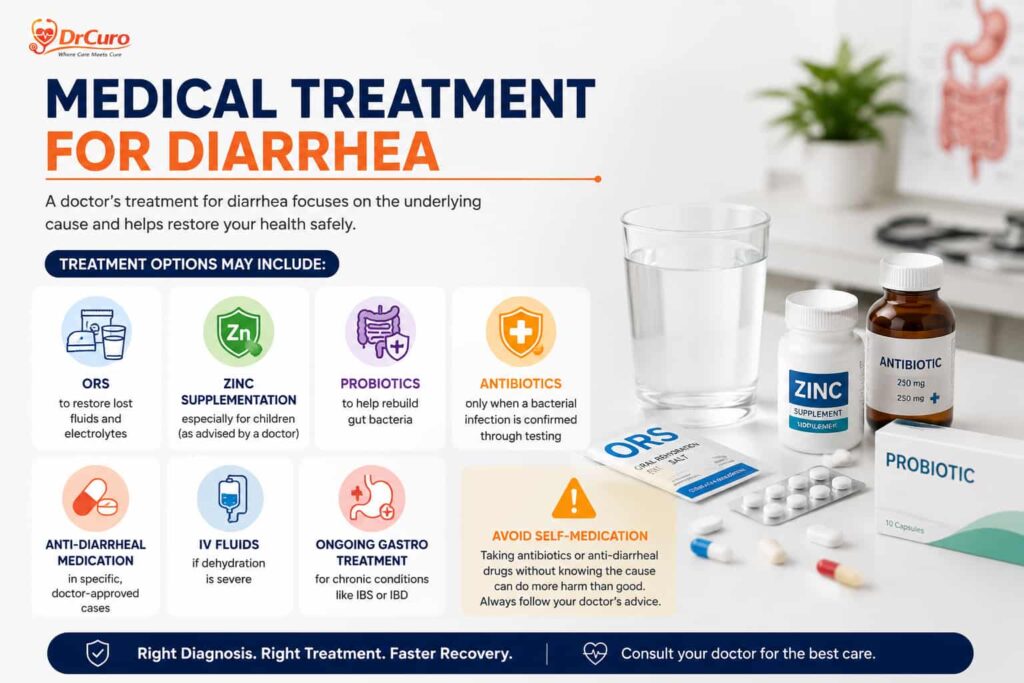
It’s worth being cautious here self-medicating with antibiotics or anti-diarrheal drugs without knowing the actual cause can sometimes do more harm than good, so these should always be taken under medical guidance.
Signs of Dehydration You Shouldn’t Ignore
Dehydration is the biggest risk that comes with diarrhea, and it can escalate quickly, especially in children and elderly people. Watch for:
- Dry mouth
- Extreme thirst
- Dark-colored urine
- Passing very little urine
- Dizziness
- Unusual weakness
- Sunken eyes
- Rapid heartbeat
If you notice these signs, don’t wait it out seek medical care right away.
When Should You See a Doctor?
Home care works for most mild cases, but you should consult a healthcare provider if:
- Diarrhea lasts more than two days in adults
- A high fever develops
- You notice blood or mucus in the stool
- Severe abdominal pain sets in
- Signs of dehydration appear
- Frequent vomiting is preventing you from keeping fluids down
- The affected person is an infant, elderly, or has a weakened immune system
- Symptoms keep returning even after apparent recovery
Getting evaluated early — including proper gastro treatment where needed — helps catch underlying issues before they become bigger problems.
How to Prevent Diarrhea
A few consistent habits go a long way in lowering your risk:
- Wash your hands thoroughly before eating and after using the toilet
- Drink clean, filtered, or boiled water
- Eat freshly cooked food and avoid anything stale or spoiled
- Wash fruits and vegetables properly before eating
- Maintain good hygiene in the kitchen
- Store food at safe temperatures
- Avoid street food from unhygienic places
- Follow safe food and water practices while traveling
Home Remedies vs Medical Treatment
Here’s a quick side-by-side to help you understand where home care ends and medical treatment begins.
| Home Remedies | Medical Treatment |
|---|---|
| Drinking ORS | Prescription medicines when required |
| Staying hydrated | IV fluids for severe dehydration |
| Following the BRAT diet | Antibiotics for confirmed bacterial infections |
| Probiotic foods | Probiotic supplements |
| Rest | Diagnostic tests for prolonged diarrhea |
| Avoiding spicy foods | Ongoing treatment for chronic digestive diseases |
Frequently Asked Questions (FAQs)
| Question | Answer |
|---|---|
| How long does diarrhea usually last? | Most cases improve within 2–3 days with proper hydration and rest. |
| Is ORS really necessary during diarrhea? | Yes — it replaces lost fluids and electrolytes and significantly lowers the risk of dehydration. |
| Should I always take antibiotics for diarrhea? | No. Antibiotics only help with certain bacterial infections and should only be taken on a doctor’s advice. |
| Can stress cause diarrhea? | Yes, stress and anxiety can affect digestion and trigger diarrhea in some people. |
| When should I treat this as an emergency? | If there’s severe dehydration, blood in the stool, persistent vomiting, or high fever, seek medical attention immediately rather than waiting it out. |
Conclusion
Diarrhea is common, and in most cases, it’s manageable at home with the right hydration, a gentle diet, and some rest. But it’s important not to brush off warning signs persistent symptoms, severe dehydration, or recurring digestive issues need proper medical evaluation rather than repeated home remedies. Getting the right diarrhea treatment early, whether that’s simple home care or professional gastro treatment for an underlying condition, is what actually prevents complications down the line. At Drcuro, we understand how disruptive digestive issues can be to your everyday life. Our team offers thorough evaluation, personalized care, and dependable treatment for everything from a one-off case of diarrhea to long-term digestive conditions so you get the right kind of care at the right time, without unnecessary guesswork.






No Comment! Be the first one.