







Monsoon Skin Care Tips for Healthy and Glowing Skin
The monsoon season brings a welcome break from the summer heat, cooler days, and the smell of fresh rain in the air. But along with the relief, it also brings high humidity, sudden weather changes,...
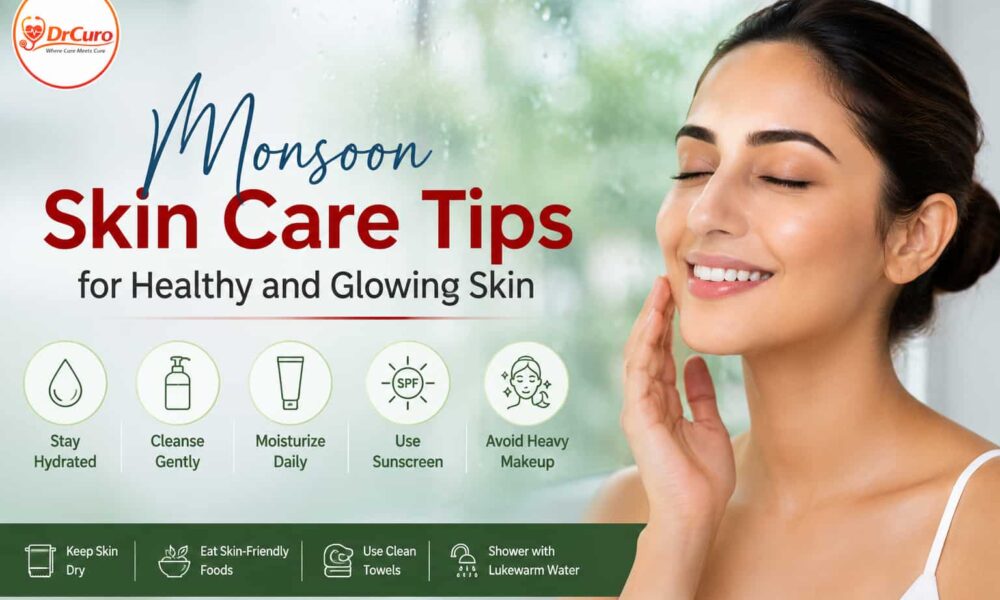
The monsoon season brings a welcome break from the summer heat, cooler days, and the smell of fresh rain in the air. But along with the relief, it also brings high humidity, sudden weather changes, and a lot more exposure to dirt, bacteria, and fungi than your skin is used to. For a lot of people, this shows up as oily skin, sudden breakouts, clogged pores, itching, rashes, or fungal infections in areas that stay damp for too long. Even if your skin is usually dry or fairly low-maintenance, you might notice it behaving differently once the rains set in. None of this means your skin is doing something wrong it’s simply reacting to a season that asks for a slightly different kind of care than summer or winter does.
Table Of Content
- Why Monsoon Is Tougher on Your Skin Than You’d Expect
- Common Skin Problems During Monsoon
- How Monsoon Affects Different Skin Types
- A Simple Monsoon Skincare Routine You Can Actually Stick To
- Daily Habits That Quietly Make a Big Difference
- Eating for Healthy Skin, Not Just Applying Products
- Don’t Underestimate Hydration Just Because It’s Not Hot
- Final Thoughts
The good news is that you don’t need a complicated ten-step routine to keep your skin healthy through monsoon. A handful of simple, consistent habits can make a real difference in how your skin looks and feels over the next few months.
Why Monsoon Is Tougher on Your Skin Than You’d Expect
It’s easy to assume skin problems are mostly a summer or winter issue, but monsoon quietly creates its own set of challenges. The high humidity in the air pushes your skin to produce more oil than usual, and that extra oil, combined with sweat and everyday pollution, gives bacteria and fungi exactly the environment they need to thrive. This is a big part of why breakouts, irritation, and infections tend to spike this time of year.
Rainwater itself isn’t as harmless as it looks either it often carries dust, pollutants, and microorganisms picked up on its way down, which is why skin left un-rinsed after a walk in the rain can react with irritation or breakouts. Add in the habit of staying in damp clothes or wet shoes for hours at a stretch, and you’ve got near-perfect conditions for fungal infections to take hold, especially in areas like the feet, underarms, and skin folds.
None of this is meant to alarm you it’s just useful context for why a slightly adjusted routine during monsoon isn’t overkill. It’s simply matching your skincare to what the season is actually doing to your skin.
Common Skin Problems During Monsoon
Not everyone experiences monsoon skin issues the same way it really depends on your skin type. Someone with oily skin might battle nonstop shine and breakouts, while someone with dry skin might find their skin feeling unexpectedly tight and dull. Here’s a quick look at what tends to show up:
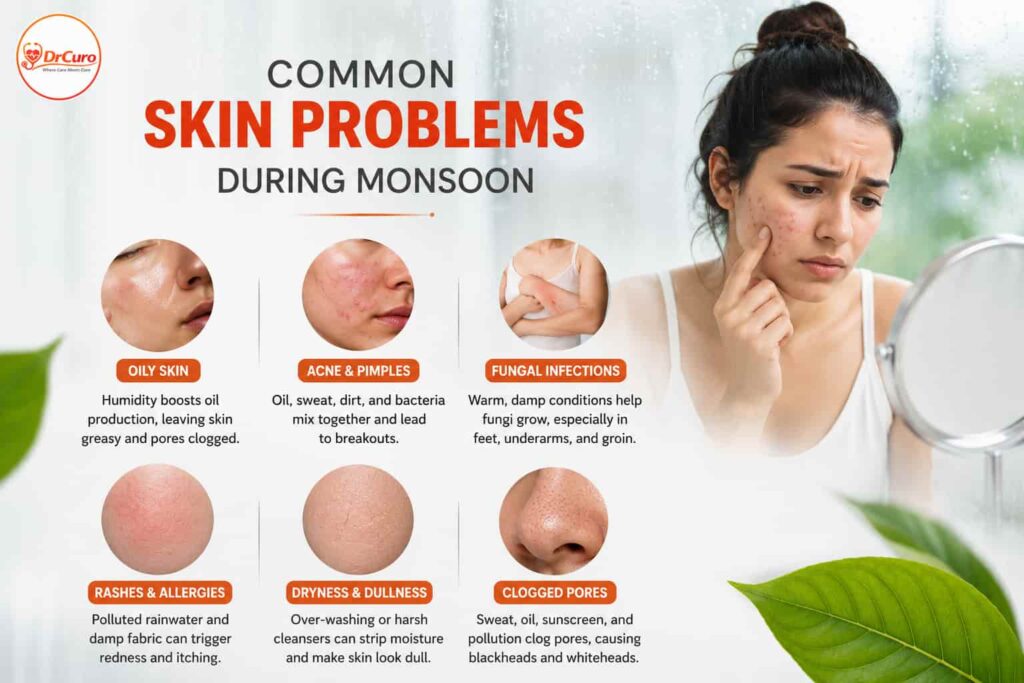
- Oily skin — humidity ramps up sebum production, leaving your face looking greasy and pores more prone to clogging
- Acne and pimples — oil mixing with sweat, dirt, and bacteria is a reliable recipe for breakouts
- Fungal infections — damp skin and clothing create a warm, moist environment fungi thrive in, especially around the feet, underarms, and groin
- Rashes and allergic reactions — sensitive skin can react to polluted rainwater or damp fabric with redness and itching
- Dryness and dullness — ironically, over-washing or harsh cleansers during humid weather can strip your skin and leave it looking flat
- Clogged pores — sweat, oil, sunscreen, and pollution combine to block pores, leading to blackheads and whiteheads
How Monsoon Affects Different Skin Types
Since not all skin reacts the same way, it helps to know what your specific skin type needs to watch out for this season.
| Skin Type | Common Monsoon Problems | What Helps |
| Oily Skin | Excess shine, breakouts, enlarged pores | Cleanse twice daily, use an oil-free moisturizer |
| Dry Skin | Tightness, flaking, irritation | Stick with a gentle, hydrating moisturizer |
| Combination Skin | Oily T-zone, dry cheeks | Balance oil control with light hydration |
| Sensitive Skin | Redness, itching, allergic reactions | Choose fragrance-free, mild products |
| Acne-Prone Skin | Frequent breakouts, clogged pores | Keep skin clean, avoid heavy or oily cosmetics |
A Simple Monsoon Skincare Routine You Can Actually Stick To
You really don’t need an overflowing shelf of products to get through monsoon with healthy skin. A few consistent steps, done daily, go a long way.
Start by cleansing properly, twice a day. This clears out the sweat, oil, and grime that build up over the day and overnight. Pick a gentle cleanser suited to your skin type, and resist the urge to wash more than twice over-cleansing strips your skin’s natural oils, which often backfires by making it either overly dry or oilier than before as it overcompensates.
Follow up with a toner, ideally alcohol-free, to clear out anything cleansing missed and to help keep pores looking tighter and refreshed.
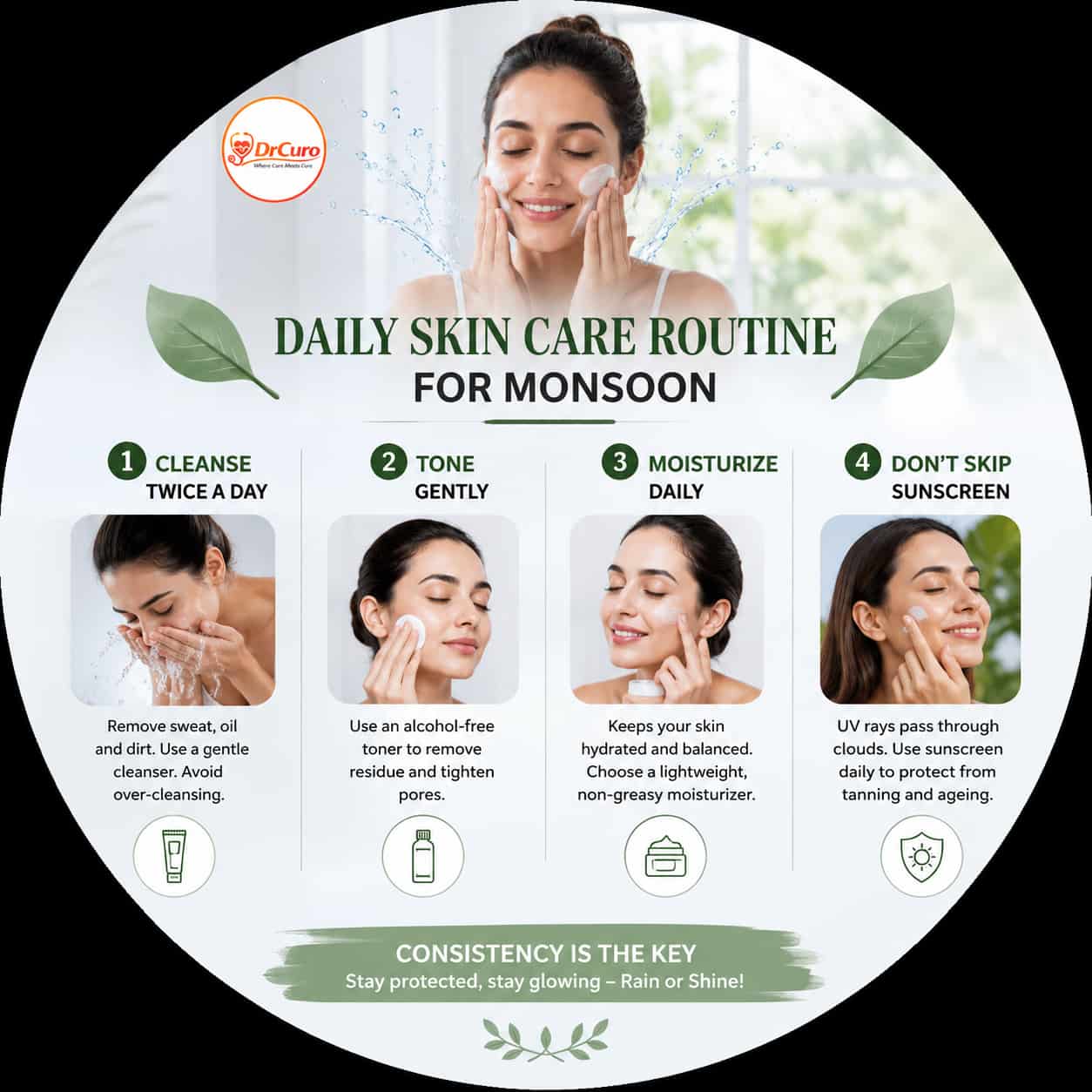
Then comes the step people most often skip: moisturizer. There’s a common myth that humid air means your skin doesn’t need extra hydration but every skin type, including oily skin, needs a moisturizer to stay balanced. Just go for something lightweight and non-greasy so it doesn’t feel heavy in humid weather.
And don’t let cloudy skies fool you into skipping sunscreen. UV rays pass through clouds just fine, so daily sunscreen is still your best defense against tanning, pigmentation, and early signs of ageing rain or shine.
Daily Habits That Quietly Make a Big Difference
Skincare products only do part of the job the rest comes down to daily habits that either help or work against your skin. A few worth building into your routine:
- Wash your face as soon as you get wet in the rain
- Keep your skin clean and properly dried, especially in skin folds
- Avoid touching your face with unwashed hands
- Always remove makeup before bed
- Drink enough water through the day
- Include fresh fruits and vegetables in your meals
- Prioritize enough sleep each night
- Change out of wet clothes as soon as you can
- Use clean towels and pillow covers regularly
- Keep up with basic personal hygiene
Eating for Healthy Skin, Not Just Applying Products
What you eat shows up on your skin just as much as what you put on it. A diet rich in vitamins, antioxidants, and hydration helps your skin repair itself and hold on to its natural glow, even when the weather outside isn’t cooperating.
| Food | How It Helps Your Skin |
| Citrus fruits | Rich in Vitamin C, supports collagen production |
| Papaya | Improves skin texture and brightness |
| Tomatoes | Packed with antioxidants that protect skin cells |
| Carrots | Vitamin A supports healthy skin renewal |
| Cucumber | Keeps the body cool and hydrated |
| Almonds | Vitamin E helps nourish the skin |
| Walnuts | Healthy fats support overall skin health |
| Spinach | Iron and antioxidants for a natural glow |
| Yogurt | Supports gut health, which can reflect on skin |
| Coconut Water | Helps maintain hydration in humid weather |
Don’t Underestimate Hydration Just Because It’s Not Hot
It’s easy to drink less water during monsoon simply because you don’t feel as thirsty as you do in peak summer. But your body is still losing fluids through sweat and daily activity, whether you notice it or not. Staying properly hydrated helps your skin hold on to its elasticity, keeps its natural barrier working the way it should, and cuts down on dryness. Try to drink water consistently through the day, and lean on water-rich foods like cucumber, watermelon, oranges, and coconut water to help fill the gap.

Final Thoughts
Glowing skin during monsoon isn’t about finding one miracle product it’s the result of small, consistent habits repeated daily: cleansing properly, moisturizing even when it feels unnecessary, never skipping sunscreen, eating well, and staying hydrated. Once you understand how the season actually affects your skin, adjusting your routine becomes far less complicated than it seems.
At DrCuro, we believe healthy skin is built on healthy habits, not complicated routines or expensive products. If your skin concerns persist beyond simple care whether it’s recurring breakouts, fungal infections, or unexplained irritation it’s always worth getting a proper evaluation rather than guessing your way through it.








No Comment! Be the first one.