








Gestational Diabetes: Risks, Treatment & Management
Pregnancy brings enormous physical and hormonal changes to a woman’s body, and while most of these changes are a normal part of carrying a baby, some can signal health conditions that need...

Pregnancy brings enormous physical and hormonal changes to a woman’s body, and while most of these changes are a normal part of carrying a baby, some can signal health conditions that need careful attention. One such condition is Gestational Diabetes a type of high blood sugar that develops during pregnancy in women who had no prior history of diabetes. It is more common than many people realize, affecting roughly 1 in 7 pregnancies globally, and its frequency is rising alongside increasing rates of obesity and sedentary lifestyles. While a diagnosis can feel alarming, the important thing to understand from the start is this: Gestational Diabetes is manageable. With the right information, proper monitoring, dietary adjustments, and timely diabities treatment when needed, most women go on to have healthy pregnancies and deliver healthy babies.
Table Of Content
- What Causes Gestational Diabetes?
- Symptoms: Why Routine Screening Cannot Be Skipped
- How is Gestational Diabetes Diagnosed?
- Risks and Complications — What Happens If It Goes Unmanaged
- Treatment and Management of Gestational Diabetes
- Diet: The First and Most Powerful Tool
- Exercise: Underused and Underrated
- Monitoring Blood Sugar at Home
- When Medication or Insulin Is Needed
- After Delivery: What Happens Next
- Can Gestational Diabetes Be Prevented?
- Conclusion
- Frequently Asked Questions (FAQs)
Understanding why Gestational Diabetes happens requires a brief look at how insulin works. Insulin is a hormone produced by the pancreas that acts like a key it allows glucose from food to enter your body’s cells and be used as energy. During pregnancy, the placenta produces hormones that are essential for the baby’s development, but these same hormones interfere with the mother’s insulin, making it less effective. This is called insulin resistance. In most pregnancies, the pancreas compensates by producing more insulin. But when the pancreas cannot keep up with the increased demand, blood sugar levels rise above normal and that is when Gestational Diabetes is diagnosed. It typically appears between the 24th and 28th week of pregnancy, though women with multiple risk factors may develop it earlier.
What Causes Gestational Diabetes?
There is no single cause. Gestational Diabetes develops from a combination of hormonal, genetic, and lifestyle factors working together. The primary driver is the natural hormonal shift during pregnancy, particularly the insulin-blocking effect of placental hormones like human placental lactogen, progesterone, and cortisol. As the placenta grows, these hormone levels rise, and insulin resistance worsens. However, not every pregnant woman develops the condition which means individual risk factors play a significant role.
Key contributing factors include:
- Overweight or obesity before pregnancy (BMI above 25–30)
- Family history of Type 2 diabetes
- Previous pregnancy with Gestational Diabetes
- Age above 25 years, with risk increasing significantly after 35
- Polycystic Ovarian Syndrome (PCOS), which already involves insulin resistance
- Carrying twins or multiples, which increases placental hormone output
- Sedentary lifestyle with little to no physical activity
- Diet high in refined carbohydrates, sugar, and processed foods
- Prediabetes detected before pregnancy
- Ethnicity South Asian, Middle Eastern, Hispanic, and African women face higher risk
It is worth emphasizing that having one or more of these risk factors does not guarantee a diagnosis. Conversely, some women with no obvious risk factors still develop Gestational Diabetes which is exactly why universal screening during pregnancy is so important.
Symptoms: Why Routine Screening Cannot Be Skipped
One of the most challenging aspects of Gestational Diabetes is that the majority of women experience no obvious symptoms at all. Blood sugar can be elevated for weeks without the mother feeling anything unusual. When symptoms do appear, they can easily be mistaken for normal pregnancy discomforts, which further delays recognition.
Symptoms that may indicate elevated blood sugar include:
- Unusual thirst that persists even after drinking water
- Frequent urination beyond the normal increase during pregnancy
- Persistent fatigue that does not improve with rest
- Blurred vision
- Dry mouth
- Increased hunger, especially shortly after eating
- Recurrent infections such as urinary tract infections or yeast infections
- Slow healing of minor cuts or wounds
Because these symptoms are either absent or easily overlooked, routine blood sugar testing between 24 and 28 weeks of pregnancy is the only reliable way to detect Gestational Diabetes early. Women with high-risk factors may be screened as early as the first prenatal visit. Do not wait for symptoms they are an unreliable indicator.
How is Gestational Diabetes Diagnosed?
Diagnosis involves a straightforward series of blood tests that measure how your body processes glucose.
Step 1 — Glucose Challenge Test (GCT):
You drink a 50g glucose solution and have blood drawn one hour later. No fasting is required beforehand. If blood sugar is 140 mg/dL or higher, you move to the next test.
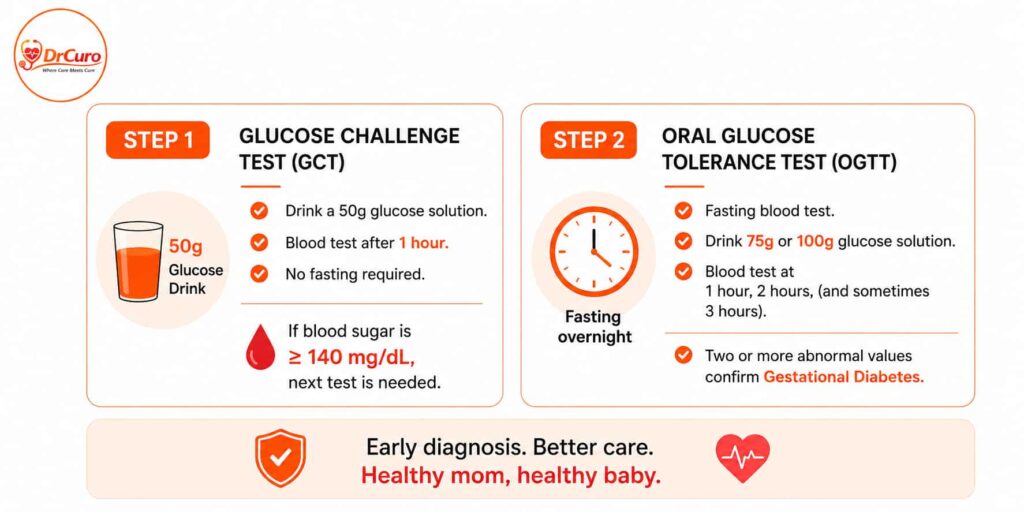
Step 2 — Oral Glucose Tolerance Test (OGTT):
This is the confirmatory test. You fast overnight, have a fasting blood draw, then drink a 75g or 100g glucose solution, and blood is drawn again at one hour, two hours, and sometimes three hours. Two or more abnormal values confirm Gestational Diabetes.
| Test | When | Threshold |
| Glucose Challenge Test (GCT) | 24–28 weeks | ≥140 mg/dL at 1 hour |
| Fasting OGTT | After abnormal GCT | ≥95 mg/dL |
| OGTT 1-hour | After abnormal GCT | ≥180 mg/dL |
| OGTT 2-hour | After abnormal GCT | ≥155 mg/dL |
Once diagnosed, your doctor will set blood sugar targets that you will aim to stay within throughout the remainder of your pregnancy.
Target blood sugar levels during pregnancy:
| Timing | Target |
| Fasting (morning) | Below 95 mg/dL |
| 1 hour after meals | Below 140 mg/dL |
| 2 hours after meals | Below 120 mg/dL |
Risks and Complications — What Happens If It Goes Unmanaged
This is the section that matters most for motivation. Gestational Diabetes that is poorly controlled does carry real risks for both mother and baby. Understanding these risks is not meant to cause fear; it is meant to make clear why consistent management is non-negotiable.
Risks for the mother:
- Preeclampsia — a dangerous combination of high blood pressure and protein in the urine that can threaten both lives if severe
- Increased likelihood of cesarean delivery, often because the baby grows too large for safe vaginal birth
- Premature labor — delivery before 37 weeks, requiring neonatal intensive care
- Polyhydramnios — excess amniotic fluid, which increases discomfort and risk of complications
- Higher chance of Type 2 diabetes — women with Gestational Diabetes have a 50% lifetime risk of developing Type 2 diabetes if lifestyle changes are not made after delivery
- Recurrence in future pregnancies — having Gestational Diabetes once significantly raises the risk in subsequent pregnancies
Risks for the baby:
- Macrosomia (large birth weight above 4 kg) — caused by the baby producing extra insulin to process the mother’s excess glucose, which drives excess fat storage
- Neonatal hypoglycemia — the baby’s blood sugar drops sharply after birth because it is no longer receiving the mother’s high-glucose blood
- Respiratory distress syndrome — premature babies especially may struggle to breathe independently
- Birth injuries — a large baby attempting normal delivery risks shoulder dystocia and other trauma
- Long-term risk — children born to mothers with poorly controlled Gestational Diabetes have higher lifetime risk of obesity and Type 2 diabetes themselves
| Complication | Mother | Baby |
| Blood pressure issues | Preeclampsia | — |
| Blood sugar crash | — | Neonatal hypoglycemia |
| Size-related complications | C-section delivery | Macrosomia, birth injury |
| Breathing problems | — | Respiratory distress |
| Long-term health risk | Type 2 diabetes | Obesity, Type 2 diabetes |
The critical point: virtually all of these complications become significantly less likely with proper blood sugar control. They are not inevitable they are the consequence of unmanaged disease.
Treatment and Management of Gestational Diabetes
Gestational Diabetes treatment works across three layers diet, physical activity, and medication when required. For approximately 70–80% of women, diet and exercise alone are sufficient to keep blood sugar within the target range. The remaining 20–30% will need medication, most commonly insulin.
Diet: The First and Most Powerful Tool
What you eat has the most direct impact on blood sugar levels. The goal is not to starve yourself or follow a crash diet you are pregnant and your baby needs nutrition. The goal is to choose foods that release glucose slowly and steadily rather than causing sharp spikes.
Foods to prioritize:
- Whole grains — brown rice, whole wheat chapati, oats, quinoa, millets
- Non-starchy vegetables — spinach, broccoli, cauliflower, cucumber, tomatoes, bottle gourd
- Legumes — lentils, chickpeas, kidney beans (high fiber, slow digestion)
- Lean protein — eggs, chicken breast, fish (as approved by your doctor), paneer, tofu
- Healthy fats — nuts, seeds, avocado, olive oil
- Low-fat dairy — plain yogurt, milk in measured quantities
- Fresh fruits in controlled portions — berries, guava, apple, pear (avoid mango, banana, grapes in large amounts)
Foods to significantly limit or avoid:
- Sugary drinks — cold drinks, packaged juices, sweetened chai
- Refined carbohydrates — white bread, maida-based products, instant noodles
- Sweets and desserts — mithai, cakes, biscuits, ice cream
- Fried snacks — samosa, pakoda, chips
- High-sugar fruits in large quantities
Sample daily meal plan:
| Meal | What to Eat |
| Breakfast | Vegetable oats / 2 whole wheat rotis with egg / besan chilla |
| Mid-morning snack | Small apple + 5 almonds |
| Lunch | 1 cup brown rice or 2 rotis + dal + sabzi + cucumber salad |
| Evening snack | Plain yogurt or a small handful of roasted chana |
| Dinner | 2 rotis + grilled paneer or chicken + cooked vegetables |
| Before bed (if advised) | 1 glass warm low-fat milk |
Eating 5–6 smaller meals instead of 3 large ones helps prevent blood sugar from spiking after meals. Never skip breakfast fasting overnight already raises blood sugar, and skipping breakfast worsens it.
Exercise: Underused and Underrated
Physical activity makes your body more sensitive to insulin, meaning the insulin you produce works more effectively. Even moderate exercise can meaningfully lower post-meal blood sugar. Most pregnant women with Gestational Diabetes can exercise safely with their doctor’s approval.
Safe exercises during pregnancy:
- Brisk walking (30 minutes after meals is especially effective)
- Prenatal yoga
- Swimming or water aerobics
- Stationary cycling
- Light strength training with guidance
- Stretching and pelvic floor exercises
Aim for at least 150 minutes of moderate activity per week, spread across most days. A 15-minute walk after each meal is one of the simplest and most effective habits you can build.
Monitoring Blood Sugar at Home
Self-monitoring is not optional it is how you and your doctor know whether your management plan is working. You will use a glucometer to check blood sugar at multiple points throughout the day.
Typical monitoring schedule:
- Fasting reading every morning before eating
- One or two hours after each main meal
- Occasionally before bedtime if advised
Keep a log of your readings. This data guides every clinical decision your doctor makes whether to adjust your diet, increase activity, or begin diabities treatment with medication.
When Medication or Insulin Is Needed
If blood sugar stays above target despite consistent diet and exercise for 1–2 weeks, your doctor will recommend medication. Insulin is the most commonly used and most studied option during pregnancy because it does not cross the placenta and is considered safe for the baby. Some doctors also use oral medications like Metformin, though insulin remains the gold standard.
Insulin is given by injection the dose and timing are carefully calibrated to your blood sugar pattern. Many women feel anxious about this, but insulin injections during pregnancy are well-established, safe, and effective. Needing insulin is not a failure; it simply means your pancreas needs extra support during this period.
After Delivery: What Happens Next
For most women, blood sugar returns to normal within a few days of delivery once the placenta and its insulin-blocking hormones is gone. However, this does not mean the story ends there.
Post-delivery care should include:
- Blood sugar test 6–12 weeks after delivery to confirm it has normalized
- Annual diabetes screening going forward, every year
- Maintaining a healthy weight through diet and exercise
- Breastfeeding — which actually helps lower blood sugar and reduce future diabetes risk
- Planning future pregnancies with your doctor’s guidance, since recurrence is likely
Women who have had Gestational Diabetes carry a significantly elevated lifetime risk of Type 2 diabetes. The postpartum period is not a finish line it is an opportunity to build the habits that protect your long-term health.
Can Gestational Diabetes Be Prevented?
Not always hormonal factors are beyond individual control. But you can meaningfully reduce your risk.
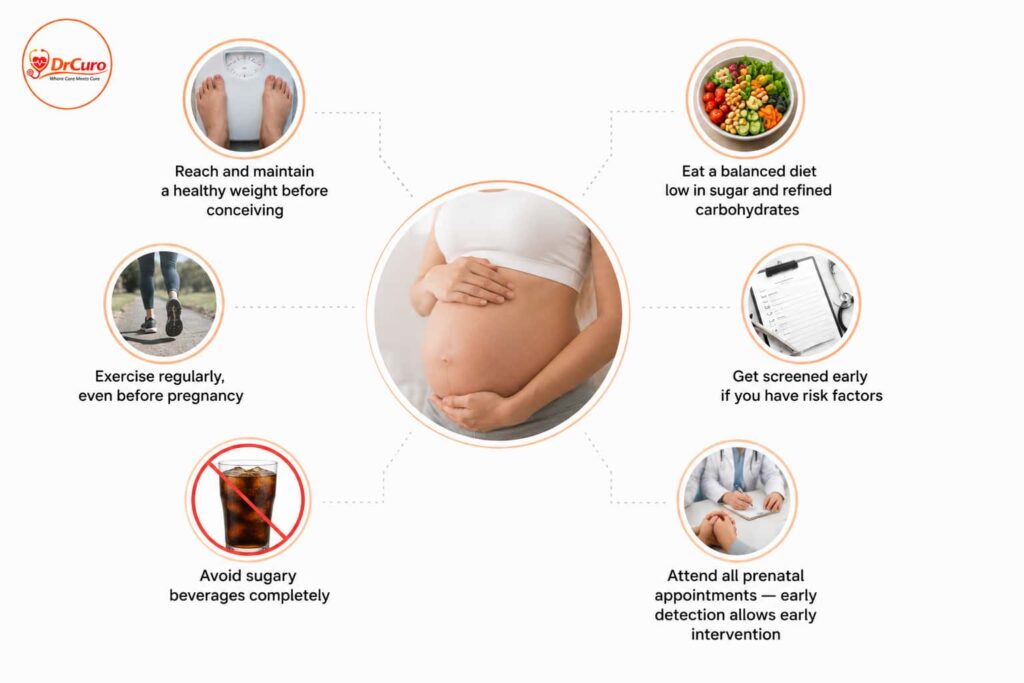
- Reach and maintain a healthy weight before conceiving
- Eat a balanced diet low in sugar and refined carbohydrates
- Exercise regularly, even before pregnancy
- Get screened early if you have risk factors
- Avoid sugary beverages completely
- Attend all prenatal appointments early detection allows early intervention
Conclusion
Gestational Diabetes is one of the more common complications of pregnancy, but it is also one of the most manageable. A timely diagnosis, consistent blood sugar monitoring, a well-planned diet, regular physical activity, and appropriate diabities treatment when required give you every tool you need to navigate this condition safely. The risks are real, but they are largely preventable with the right care and commitment. At DrCuro, we believe that informed mothers make healthier choices for themselves and for their babies. If you are pregnant, do not skip your glucose screening, and if you are diagnosed, know that you are not alone and that with proper support, a healthy pregnancy outcome is absolutely within reach.
Frequently Asked Questions (FAQs)
Q1. Can gestational diabetes harm my baby?
Yes, if unmanaged it can cause excessive birth weight, low blood sugar at birth, and breathing difficulties. With proper care and monitoring, these risks are greatly reduced.
Q2. Will gestational diabetes go away after delivery?
In most cases, yes. Blood sugar usually returns to normal within a few weeks after delivery. However, you remain at higher risk for Type 2 diabetes later in life, so annual screening is recommended.
Q3. What foods should I avoid with gestational diabetes?
Avoid sugary drinks, white bread, white rice, sweets, pastries, fried foods, and high-sugar fruits like mangoes and grapes. Choose whole grains, vegetables, lean proteins, and low-glycemic fruits instead.
Q4. Can I prevent gestational diabetes in my next pregnancy?
You cannot guarantee prevention, but maintaining a healthy weight, eating a balanced diet, staying active, and managing conditions like PCOS before pregnancy can significantly lower your risk.







No Comment! Be the first one.