





Natural IVF Treatment: How It Works, Who It’s For & What to Expect
What Is Natural IVF Treatment? (And Why More Women Are Choosing It) Traditional IVF can be highly effective, but it often involves intense hormonal stimulation, physical discomfort, higher treatment...
What Is Natural IVF Treatment? (And Why More Women Are Choosing It)
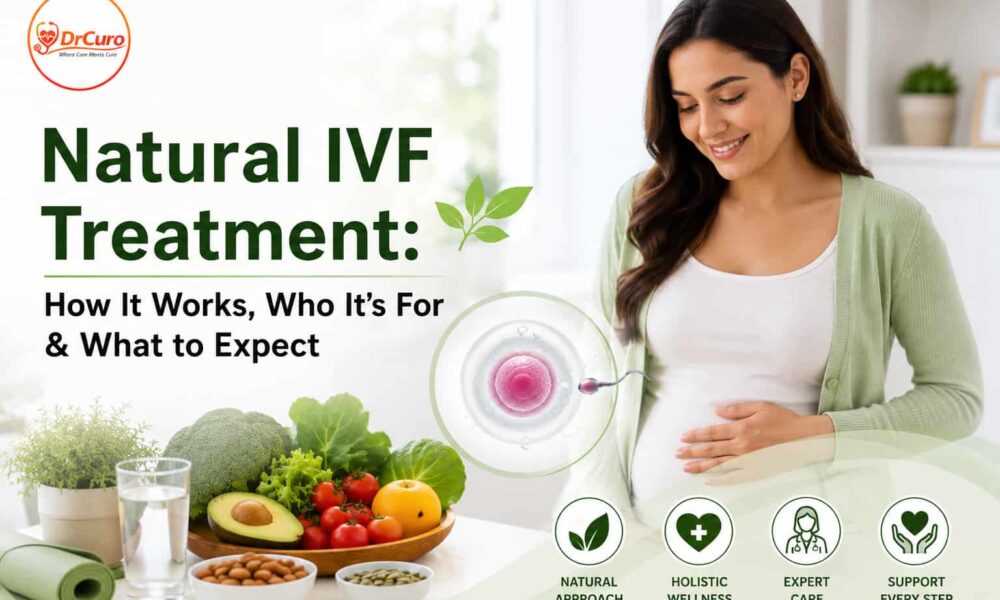
Traditional IVF can be highly effective, but it often involves intense hormonal stimulation, physical discomfort, higher treatment costs, and emotional stress that many women struggle with during IVF treatment in India. For women looking for a gentler and more natural approach to fertility care, natural IVF treatment offers an alternative path with minimal medication and a more body-friendly process.
Table Of Content
- What Is Natural IVF Treatment? (And Why More Women Are Choosing It)
- The Core Philosophy: Working With Your Biology, Not Against It
- How Natural IVF Treatment Works: Step by Step
- Step 1 — Baseline Monitoring (Day 2–3 of Your Cycle)
- Step 2 — Cycle Tracking (Day 5–12)
- Step 3 — Trigger Injection
- Step 4 — Egg Retrieval
- Step 5 — Fertilisation in the Laboratory
- Step 6 — Embryo Transfer
- Step 7 — The Two-Week Wait & Pregnancy Test
- Natural IVF vs Conventional IVF vs Mini IVF: What Is the Difference?
- Who Is Natural IVF Treatment Best Suited For?
- 1. Women With Poor Ovarian Reserve (Low AMH / High FSH)
- 2. Older Women (Over 38–40)
- 3. Women Who Have Had Poor Response to Previous Stimulation Cycles
- 4. Women Who Cannot Use Hormonal Medications
- 5. Women Seeking Emotional and Physical Gentleness
- 6. Younger Women With Regular Cycles and Good Egg Quality
- Who Is Natural IVF Treatment NOT Suited For?
- Understanding Natural IVF Success Rates Honestly
- Per Cycle vs Cumulative Success
- What the Research Shows
- The Role of the Laboratory in Natural IVF Success
- Natural IVF and the Endometrium: A Hidden Advantage
- Natural IVF: Frequently Asked Questions
- How Dr Curo Approaches Natural IVF
- Final Thoughts: Is Natural IVF Right for You?
Natural IVF works with your body’s own cycle rather than overriding it. Instead of stimulating your ovaries to produce 10–15 eggs with powerful injectable medications, natural IVF retrieves the one egg your body naturally selects each month your body’s best egg and fertilises it in the lab.
The Core Philosophy: Working With Your Biology, Not Against It
To understand natural IVF, you first need to understand what conventional IVF actually does to your body.
In a standard IVF cycle, you inject yourself with synthetic follicle-stimulating hormone (FSH) every day for 10–14 days. This forces your ovaries into hyperdrive producing a large number of follicles simultaneously. The reasoning is simple: more eggs means more embryos, which means more chances.
But this approach has real trade-offs:
- Your ovaries are artificially stimulated beyond their natural range
- Egg quality can be variable when large numbers are forced to mature together
- The risk of Ovarian Hyperstimulation Syndrome (OHSS) is real and sometimes serious
- The hormonal load is significant affecting mood, sleep, digestion, and overall wellbeing
- The cost per cycle is high, and many women cannot sustain multiple rounds
Natural IVF takes a completely different view.
Your body already knows how to select the best egg each month. In every natural menstrual cycle, your ovaries mature multiple follicles but ultimately select one dominant follicle — the one with the highest quality, the strongest chromosomal integrity, and the best chance of becoming a healthy embryo. This is called follicular selection, and it is one of the most elegant processes in human reproductive biology.
Natural IVF honours this process. It tracks your natural cycle, identifies that dominant follicle, retrieves the egg at precisely the right moment, fertilises it in the laboratory, and transfers the resulting embryo back just like conventional IVF, but using nature’s chosen egg rather than a forced harvest.
Dr Curo’s View: The body’s natural follicular selection process is not a limitation it is wisdom. Natural IVF respects that wisdom and builds clinical excellence around it.
How Natural IVF Treatment Works: Step by Step
Step 1 — Baseline Monitoring (Day 2–3 of Your Cycle)
Your Dr Curo specialist will perform an ultrasound at the start of your cycle to assess your ovaries and confirm that the cycle is proceeding normally. Blood tests may be taken to check baseline hormone levels including FSH, LH, and oestradiol.
No stimulation medications are given at this stage.
Step 2 — Cycle Tracking (Day 5–12)
This is where natural IVF requires precision. Your team at Dr Curo will monitor you closely with serial ultrasound scans every 1–2 days to track the growth of your dominant follicle. A healthy dominant follicle grows approximately 1–2mm per day and is ready for retrieval when it reaches around 18–20mm.
Blood tests for LH (Luteinising Hormone) are taken regularly. The LH surge the hormonal signal that triggers natural ovulation — is the critical event the entire monitoring process is watching for.
In modified natural IVF, a small, low dose of gonadotropins may be introduced at this stage not to stimulate multiple eggs, but simply to support the dominant follicle’s final maturation. This is the key distinction between pure natural IVF and modified natural IVF.
Step 3 — Trigger Injection
When the dominant follicle reaches the right size and LH patterns indicate the optimal window, a trigger injection (hCG or a GnRH agonist) is administered. This finalises the egg’s maturation and precisely times ovulation so retrieval can be scheduled at exactly the right moment typically 34–36 hours after the trigger.
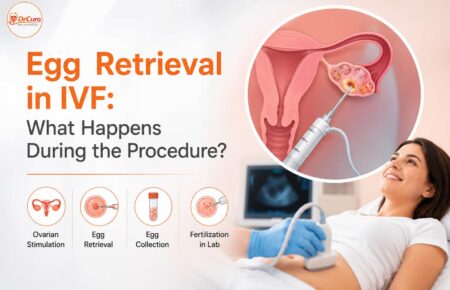
Step 4 — Egg Retrieval
Egg retrieval in natural IVF is a minor procedure performed under light sedation or local anaesthetic. Because only one (or occasionally two) eggs are being retrieved, the process is faster and less invasive than conventional IVF retrieval. Most women recover within a few hours.
The retrieved egg is immediately assessed by the embryologist for maturity and quality.
Step 5 — Fertilisation in the Laboratory
The mature egg is fertilised using either:
- Conventional IVF insemination — placing the egg with prepared sperm and allowing fertilisation to occur naturally in the dish
- ICSI (Intracytoplasmic Sperm Injection) — injecting a single sperm directly into the egg, used when sperm parameters are a concern
The fertilised egg (now a zygote) is cultured in the laboratory for 3–5 days until it reaches the cleavage stage or the blastocyst stage.
Step 6 — Embryo Transfer
The resulting embryo is transferred into the uterus via a thin, soft catheter a procedure that takes only a few minutes and requires no anaesthetic. The uterine lining has been developing naturally throughout your cycle, which many embryologists believe creates a more receptive implantation environment than a heavily stimulated, medicated uterus.
Step 7 — The Two-Week Wait & Pregnancy Test
A blood pregnancy test (beta-hCG) is taken approximately 10–14 days after transfer. If positive, an early ultrasound confirms the pregnancy at around 6–7 weeks.
Natural IVF vs Conventional IVF vs Mini IVF: What Is the Difference?
This is one of the most common points of confusion. Here is a clear comparison:
| Feature | Natural IVF | Mini IVF | Conventional IVF |
| Medications | None or minimal | Low-dose oral medications | High-dose injectable FSH |
| Eggs Retrieved | 1 (occasionally 2) | 2–5 | 8–15+ |
| Monitoring Required | Intensive (daily scans) | Moderate | Moderate |
| OHSS Risk | Negligible | Very low | Moderate to high |
| Cost Per Cycle | Significantly lower | Lower | Highest |
| Physical Side Effects | Minimal | Mild | Significant |
| Embryos Available | 1 per cycle | 2–4 per cycle | Multiple |
| Best For | Poor responders, older women, personal preference | Low responders, PCOS, cost-conscious | Most patients, first-line IVF |
| Cycle Repeatability | High — every month | Monthly possible | Requires recovery time |
Important note from Dr Curo: Natural IVF is not simply “IVF without drugs.” It requires a higher level of clinical skill, more intensive monitoring, and a laboratory team highly experienced in handling single eggs. The expertise of your clinic matters enormously with natural IVF.
Who Is Natural IVF Treatment Best Suited For?
Natural IVF is not the right choice for everyone. But for specific groups of women, it can be the most sensible, safe, and effective approach available.
1. Women With Poor Ovarian Reserve (Low AMH / High FSH)
This is perhaps the most significant group. Women with diminished ovarian reserve often identified through low AMH (Anti-Müllerian Hormone) levels and high day-3 FSH respond poorly to conventional stimulation. Pumping large doses of FSH into an ovary with few follicles produces few eggs anyway, but at significant cost and physical toll.
For these women, natural IVF makes biological sense. Their body is still selecting and maturing one good egg every month. Natural IVF works with that reality rather than fighting it.
2. Older Women (Over 38–40)
As women age, ovarian reserve naturally declines. Conventional IVF stimulation in older women often yields fewer eggs than expected and the quality can be variable. Many fertility specialists, including the Dr Curo team, argue that the one egg an older woman’s body naturally selects each month may actually be the best egg available and natural IVF captures exactly that egg.
3. Women Who Have Had Poor Response to Previous Stimulation Cycles
If you have gone through conventional IVF and responded poorly producing very few eggs despite high medication doses natural IVF is a logical, cost-effective alternative worth serious consideration.
4. Women Who Cannot Use Hormonal Medications
Certain medical conditions make high-dose ovarian stimulation contraindicated or inadvisable:
- Oestrogen-sensitive cancers (some breast cancers, ovarian conditions)
- Severe endometriosis where stimulation worsens symptoms
- History of OHSS in previous cycles
- Certain autoimmune or clotting conditions
For these women, natural IVF may be the only safe IVF option available.
5. Women Seeking Emotional and Physical Gentleness
IVF is psychologically demanding. Daily injections, mood swings from hormones, bloating, and the physical discomfort of hyperstimulation cause genuine suffering for many women. Some women prioritise a gentler process even if it means fewer embryos per cycle for the sake of their mental health and overall wellbeing. This is a completely valid, informed choice that Dr Curo fully supports.
6. Younger Women With Regular Cycles and Good Egg Quality
Younger women with good ovarian reserve who simply prefer a natural, low-intervention approach and are willing to do multiple cycles if needed are excellent candidates for natural IVF.
Who Is Natural IVF Treatment NOT Suited For?
Being honest with patients is a core value at Dr Curo. Natural IVF is not appropriate for everyone.
- Women with irregular or absent ovulation — if your body is not naturally selecting and maturing a dominant follicle, natural IVF has nothing to work with
- Women with severe tubal factor infertility who need multiple embryos for genetic testing (PGT) before transfer
- Couples who need to freeze multiple embryos due to genetic disease risk and require embryo banking
- Women with very limited time who cannot commit to the intensive monitoring schedule natural IVF requires
- Couples where male factor infertility is very severe — though ICSI can be combined with natural IVF in many cases
Understanding Natural IVF Success Rates Honestly
Success rates in natural IVF require honest, nuanced interpretation and any clinic that gives you a single simple number without context is not giving you the full picture.
Per Cycle vs Cumulative Success
Natural IVF typically has a lower per-cycle success rate than conventional IVF. This is expected you have one embryo instead of multiple. However, the cumulative success rate across multiple cycles can be comparable, because:
- Natural IVF can be repeated every month with minimal recovery time
- The cost per cycle is significantly lower, making multiple attempts accessible
- The physical toll is far less, so women are more willing and able to keep trying
What the Research Shows
Studies from leading natural IVF programmes suggest:
| Patient Group | Per-Cycle Clinical Pregnancy Rate |
| Women under 35, good reserve | 15–25% per cycle |
| Women 35–37 | 12–18% per cycle |
| Women 38–40 | 8–15% per cycle |
| Women over 40, poor reserve | 5–10% per cycle |
| Poor responders (low AMH) | 7–14% per cycle |
These numbers look modest in isolation. But consider: a woman under 35 doing natural IVF has approximately a 15–25% chance per cycle, can attempt a cycle every month, and spends a fraction of what conventional IVF costs. Across 4–6 cycles, cumulative success rates approach those of single conventional IVF cycles.
Dr Curo’s perspective: The right comparison is not one natural IVF cycle vs one conventional IVF cycle. It is the cumulative outcome, total cost, physical burden, and emotional experience of a complete treatment journey.
The Role of the Laboratory in Natural IVF Success
One factor that is almost never discussed with patients but is critically important is the quality of the embryology laboratory.
In conventional IVF, the laboratory receives many eggs. Even if handling is imperfect, multiple embryos are available. In natural IVF, there is one egg. One chance. The laboratory team must handle it flawlessly.
This means your natural IVF success is heavily dependent on:
- Experienced embryologists who specialise in handling single eggs
- Advanced culture media optimised for single embryo development
- State-of-the-art incubation systems with minimal disturbance
- ICSI capability for fertilisation when needed
- Time-lapse embryo monitoring (where available) to select the optimal transfer timing
At Dr Curo, our laboratory protocols for natural IVF are designed specifically around single-egg handling. This is not standard practice at every clinic, and it is one of the most important questions to ask when choosing where to have your natural IVF cycle.
Natural IVF and the Endometrium: A Hidden Advantage
One of the most compelling arguments for natural IVF and one that conventional fertility medicine is increasingly taking seriously is the quality of the uterine lining at the time of transfer.
In conventional IVF, the endometrium develops under the influence of high oestrogen levels produced by multiple stimulated follicles. This can create a uterine environment that is not fully synchronised with the embryo’s developmental stage, potentially reducing receptivity.
In natural IVF, the endometrium develops exactly as it would in a natural conception cycle responding to normal oestrogen levels, progesterone timing, and the body’s own hormonal rhythms. This synchrony between the embryo and the uterus is biologically optimal.
Emerging research suggests that the natural cycle endometrium may be more receptive than a stimulated one which is one reason why frozen embryo transfers in natural cycles (rather than medicated cycles) are increasingly preferred at leading fertility centres worldwide, including at Dr Curo.
Natural IVF: Frequently Asked Questions
Is natural IVF painful? Far less so than conventional IVF. There are no daily injections, no significant bloating from ovarian stimulation, and egg retrieval is a minor procedure. Most women describe the experience as much more manageable than they expected.
How many cycles of natural IVF should I try before switching approaches? Most specialists, including at Dr Curo, recommend reassessing after 3–4 natural IVF cycles. If you achieve fertilisation and have good-quality embryos but implantation is failing, investigations into uterine factors are warranted. If fertilisation is consistently failing, sperm parameters or egg quality need review.
Can natural IVF be combined with genetic testing (PGT)? Yes, though it is logistically more challenging with a single embryo. Some women choose to bank embryos over several natural IVF cycles before running PGT creating a small but carefully selected cohort for testing.
Is natural IVF cheaper? Significantly. Because medication costs are minimal or zero, and monitoring is the primary cost driver, natural IVF typically costs 40–60% less per cycle than conventional IVF at most centres including Dr Curo.
Can I do natural IVF if I have PCOS? With care. Women with PCOS who have regular ovulatory cycles are reasonable candidates. However, because PCOS cycles can be irregular and follicular selection unpredictable, monitoring must be especially careful. This is a case-by-case clinical decision.
How Dr Curo Approaches Natural IVF
At Dr Curo, natural IVF is not a budget option or a last resort. It is a sophisticated, evidence-informed treatment pathway that we offer as a first-line choice for appropriate candidates.
Our approach includes:
- Comprehensive pre-cycle assessment — AMH, AFC, FSH, LH, thyroid, and uterine evaluation before recommending natural IVF
- Personalised monitoring protocol — cycle tracking adjusted to your individual follicular growth pattern, not a standard template
- Expert single-egg embryology — our laboratory team is specifically trained in the handling, fertilisation, and culture of single eggs
- Holistic support — nutrition guidance, stress management, and lifestyle coaching alongside clinical treatment
- Transparent success data — we share honest, stratified success rates by age and diagnosis, not headline numbers
Our philosophy is simple: the best IVF cycle is the one designed specifically for you. For some women, that is conventional IVF. For many others, it is natural IVF. Our role at Dr Curo is to make that assessment carefully, honestly, and with your complete understanding and agreement.
Final Thoughts: Is Natural IVF Right for You?
Natural IVF treatment is not for everyone. But for the right woman, it offers something conventional IVF cannot: a fertility treatment that works entirely in harmony with your body, carries minimal physical risk, can be repeated month after month, and treats the entire experience of trying to conceive with the gentleness and respect it deserves.
If you have been told your ovarian reserve is low, if you have responded poorly to stimulation before, if you cannot use fertility medications for medical reasons, or if you simply want a gentler path natural IVF deserves serious, informed consideration.
The questions to ask yourself:
- Is my body still naturally selecting and ovulating an egg each month?
- Am I willing to do multiple cycles for a gentler experience?
- Is cost per cycle a significant factor in my decision?
- Have I responded poorly to stimulation in the past?
- Do I have medical reasons to avoid heavy hormonal medication?
If you answered yes to several of these, natural IVF at Dr Curo may be the right conversation to start.
© 2026 Dr Curo | This article is written for informational and educational purposes. It does not replace a personalised consultation with a qualified fertility specialist. Every woman’s fertility situation is unique please speak with your Dr Curo doctor before making any treatment decisions.



No Comment! Be the first one.