







What to Eat During Low Blood Sugar (Hypoglycemia)? Ways to Get Immediate Relief
Low blood sugar, medically known as Hypoglycemia, is one of those health conditions that can catch you completely off guard. One moment you feel perfectly fine, and the next moment your hands are...
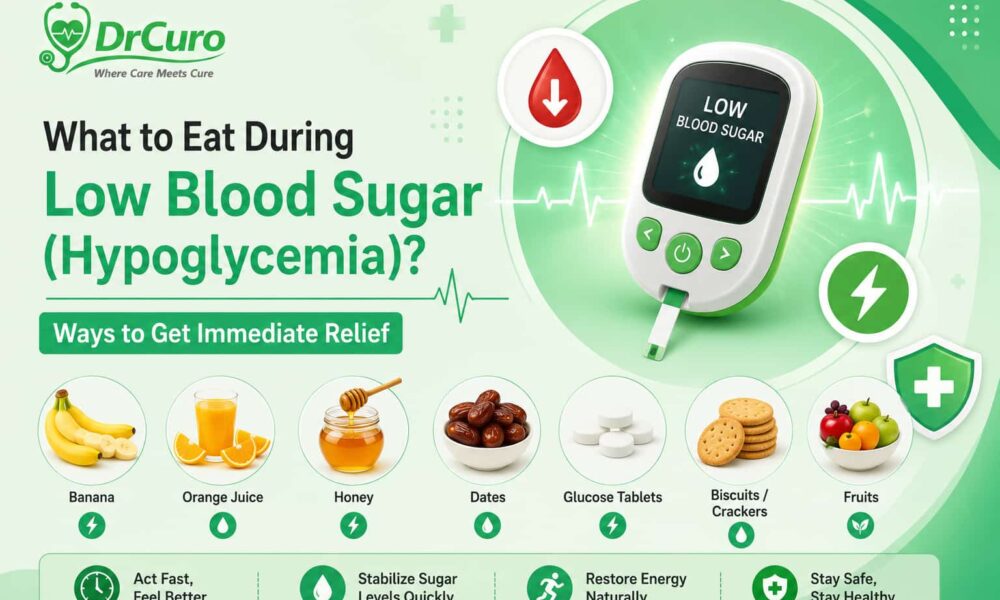
Low blood sugar, medically known as Hypoglycemia, is one of those health conditions that can catch you completely off guard. One moment you feel perfectly fine, and the next moment your hands are shaking, your vision is blurring, your heart is racing, and you feel an overwhelming sense of weakness and confusion. For many people, this experience is frightening and rightfully so, because low blood sugar is not something the body handles quietly. It sends urgent distress signals that demand immediate attention.
Table Of Content
- What Is Low Blood Sugar and Why Does It Happen?
- Recognizing the Symptoms of Low Blood Sugar
- The 15-15 Rule: The Golden Standard for Immediate Relief
- Best Foods to Eat Immediately During Low Blood Sugar
- 1. Glucose Tablets
- 2. Fruit Juice
- 3. Honey
- 4. Regular Soft Drinks (Not Diet)
- 5. Raisins
- 6. Bananas
- Foods That Stabilize Blood Sugar After Immediate Relief
- Foods to Avoid During a Low Blood Sugar Episode
- Managing Nighttime Low Blood Sugar
- Special Situations: Children, Exercise, and Non-Diabetics
- Sample Daily Diet Plan to Prevent Low Blood Sugar
- Myths About Low Blood Sugar That Need to Be Corrected
- When Should You See a Doctor?
- Final Thoughts
One of the most widespread misconceptions about low blood sugar is that it only affects people with diabetes. This is far from the truth. While diabetic individuals are certainly at higher risk due to insulin and medications, non-diabetic people can also experience dangerous drops in blood glucose levels due to prolonged fasting, skipping meals, excessive exercise, alcohol consumption, chronic stress, poor nutrition, or certain underlying medical conditions. Understanding that anyone can be affected is the first step toward taking this condition seriously.
At DrCuro, we believe that the right knowledge at the right time can prevent a medical emergency. This comprehensive guide will walk you through everything you need to know about low blood sugar what it is, why it happens, what to eat immediately when it strikes, how to stabilize your glucose levels afterward, and most importantly, how to prevent it from happening repeatedly.
What Is Low Blood Sugar and Why Does It Happen?
Low blood sugar occurs when the glucose level in your bloodstream falls below the threshold your body needs to function properly. For most people, a blood sugar reading below 70 mg/dL is considered low. However, some individuals may start experiencing symptoms even slightly above this level, especially if their body is used to higher glucose readings.
Glucose is the primary fuel source for your brain and muscles. When glucose drops, your brain which cannot store its own energy immediately begins sending out warning signals. This is why symptoms of low blood sugar often feel neurological in nature: confusion, dizziness, difficulty concentrating, mood changes, and in severe cases, loss of consciousness.
The causes of low blood sugar are different depending on whether a person has diabetes or not. In diabetic patients, common triggers include taking too much insulin, taking diabetes medications without eating properly, skipping or delaying meals, engaging in intense physical activity without adequate food intake, and consuming alcohol without food. In non-diabetic individuals, the causes are often related to lifestyle factors such as crash dieting, extremely long gaps between meals, poor nutritional habits, hormonal imbalances, liver disorders, or reactive hypoglycemia a condition where blood sugar drops a few hours after eating a high-carbohydrate meal.
Recognizing the Symptoms of Low Blood Sugar
One of the biggest dangers of low blood sugar is that its early symptoms are easy to dismiss or confuse with other conditions like dehydration, anxiety, or simple tiredness. Knowing the full spectrum of symptoms can help you respond quickly and correctly.
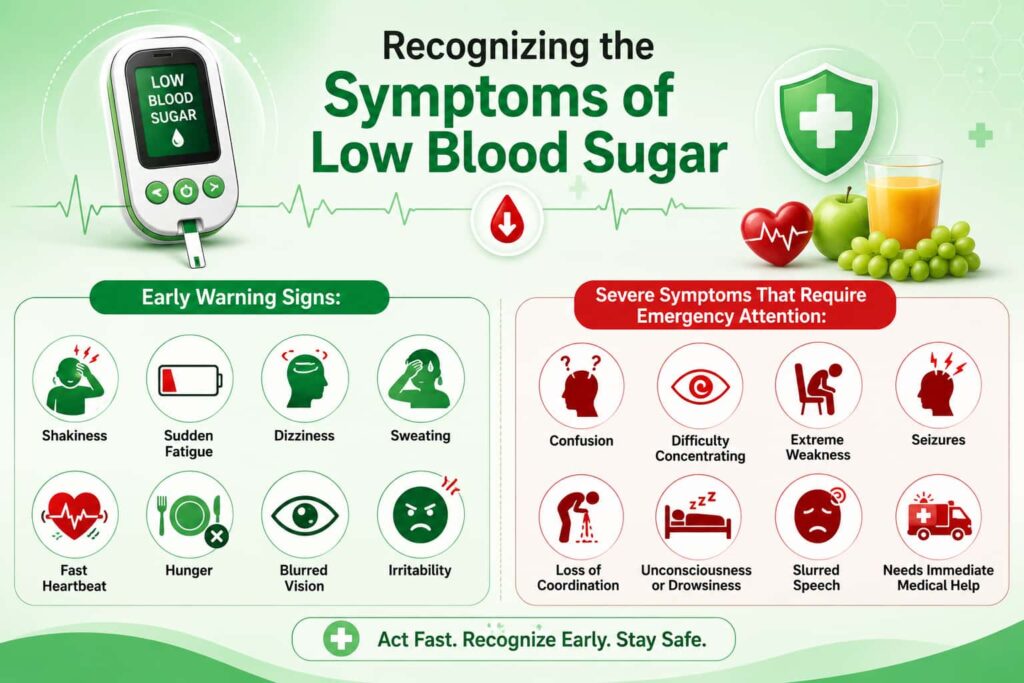
Early Warning Signs:
- Sudden and intense hunger
- Unexplained sweating, even in cool temperatures
- Trembling or shakiness in hands and legs
- Feeling unusually weak or fatigued
- Dizziness or lightheadedness
- Rapid or irregular heartbeat
- Anxiety or a feeling of nervousness
- Irritability or sudden mood changes
- Blurred or double vision
- Mild headache or difficulty concentrating
Severe Symptoms That Require Emergency Attention:
- Significant confusion or disorientation
- Slurred speech
- Loss of coordination or balance
- Fainting or near-fainting episodes
- Seizures
- Loss of consciousness
If symptoms progress to the severe stage, immediate medical attention is absolutely necessary. Do not wait or try to manage it alone at that point. DrCuro strongly advises anyone experiencing repeated episodes even mild ones to seek proper medical evaluation rather than relying solely on home management.
The 15-15 Rule: The Golden Standard for Immediate Relief
When low blood sugar strikes, the primary goal is fast glucose absorption. Medical experts widely recommend the 15-15 Rule as the most practical and effective first response. The rule is simple: consume 15 grams of fast-acting carbohydrates, wait 15 minutes, and then reassess your symptoms. If you still feel unwell, repeat the process. This approach gives your body enough glucose to begin recovering without overshooting into dangerously high blood sugar territory.
The key here is to choose the right kind of carbohydrates fast-acting, simple sugars that the body can absorb rapidly. Fat, fiber, and protein all slow down glucose absorption, which is why reaching for a burger or a chocolate bar during a low blood sugar episode is counterproductive. The foods you choose in those critical first minutes matter enormously.
Best Foods to Eat Immediately During Low Blood Sugar
1. Glucose Tablets
Glucose tablets are widely considered the gold standard for managing low blood sugar episodes, particularly for diabetic individuals. They are specifically designed to deliver a precise, measured dose of glucose directly into the bloodstream with maximum speed. Unlike food items that need to be digested first, glucose tablets are formulated for rapid absorption through the mouth lining. They are portable, easy to carry in a pocket or bag, and do not require refrigeration. If you or someone you care for experiences frequent low blood sugar episodes, keeping glucose tablets within reach at all times is a smart and potentially life-saving habit.
2. Fruit Juice
Fruit juice is one of the most accessible and effective immediate remedies for low blood sugar. The natural sugars present in fruit juice primarily fructose and glucose are absorbed quickly into the bloodstream, providing a rapid rise in glucose levels. Orange juice, apple juice, and grape juice are all good options. Approximately half a glass, which is around 120 ml, is usually sufficient to begin raising blood sugar. One critical point to remember is to always choose regular fruit juice and never “sugar-free” or “diet” versions during a hypoglycemic episode, as these contain artificial sweeteners that provide no glucose benefit whatsoever.
3. Honey
Honey is a natural, simple-sugar food that has been used for generations as a quick energy booster and it works remarkably well during low blood sugar episodes. A single tablespoon of honey contains simple sugars that are absorbed rapidly, helping to raise glucose levels within minutes. You can take it directly off the spoon or mix it into a small amount of warm water. However, it is important to understand that honey provides only a temporary glucose spike. After taking honey, you must follow it up with a more balanced meal or snack that contains protein and complex carbohydrates to prevent your blood sugar from dropping again.
4. Regular Soft Drinks (Not Diet)
While soft drinks are not recommended as a regular part of any healthy diet, they can serve as a useful emergency option when nothing else is immediately available during a low blood sugar episode. Regular soda contains high amounts of simple sugar that are absorbed quickly. A small glass around 150 ml can help raise blood sugar in an emergency situation. Diet or zero-calorie versions must be strictly avoided during hypoglycemia as they contain no actual sugar. This option should be reserved strictly for emergencies and should never become a go-to strategy for managing low blood sugar.
5. Raisins
Raisins are a compact and portable source of concentrated natural sugars, making them an excellent emergency snack for anyone prone to low blood sugar. A small handful of raisins approximately two tablespoons contains enough simple carbohydrates to provide a meaningful glucose boost. They are easy to carry in a small bag or pocket, require no preparation, have a long shelf life, and are far healthier than processed candy or sugary snacks. DrCuro recommends that individuals who experience recurrent hypoglycemia episodes keep a small packet of raisins with them when traveling, exercising, or working long hours.
6. Bananas
Bananas are a reliable and widely available food that can help manage mild to moderate low blood sugar. They contain a combination of natural sugars glucose, fructose, and sucrose along with potassium and some fiber. This combination means bananas raise blood sugar at a slightly slower pace than pure sugar sources, which actually makes them more suitable for mild hypoglycemia where a gradual, sustained rise is preferable. They are also gentle on the digestive system, easy to eat even when feeling nauseous or weak, and provide a good amount of energy for recovery. Bananas are not the best choice for severe hypoglycemia where ultra-rapid glucose rise is needed, but for mild episodes they work very well.
Foods That Stabilize Blood Sugar After Immediate Relief
Raising blood sugar quickly is only the first phase of managing a hypoglycemic episode. The second equally important phase is stabilization. If you consume only fast-acting sugars without following up with a balanced meal, your blood sugar will likely spike briefly and then crash again creating a cycle that can be exhausting and dangerous. After your immediate symptoms have subsided, within 15 to 20 minutes you should eat a proper snack or meal that combines protein, healthy fats, and complex carbohydrates.
| Food | Why It Helps |
| Peanut butter on whole grain bread | Combines protein, healthy fat, and complex carbs for sustained energy |
| Oats with nuts | Slow-releasing carbohydrates prevent another glucose drop |
| Boiled eggs with toast | High protein supports stable blood sugar over time |
| Greek yogurt with fruit | Balanced combination of protein and natural carbohydrates |
| Brown rice with dal | Complex carbs and plant protein for longer glucose stability |
| Nuts and seeds mix | Healthy fats and protein slow glucose absorption |
| Paneer with chapati | Protein-rich Indian option that sustains energy effectively |
| Sprouts with vegetables | Fiber and protein combination that regulates glucose release |
Foods to Avoid During a Low Blood Sugar Episode
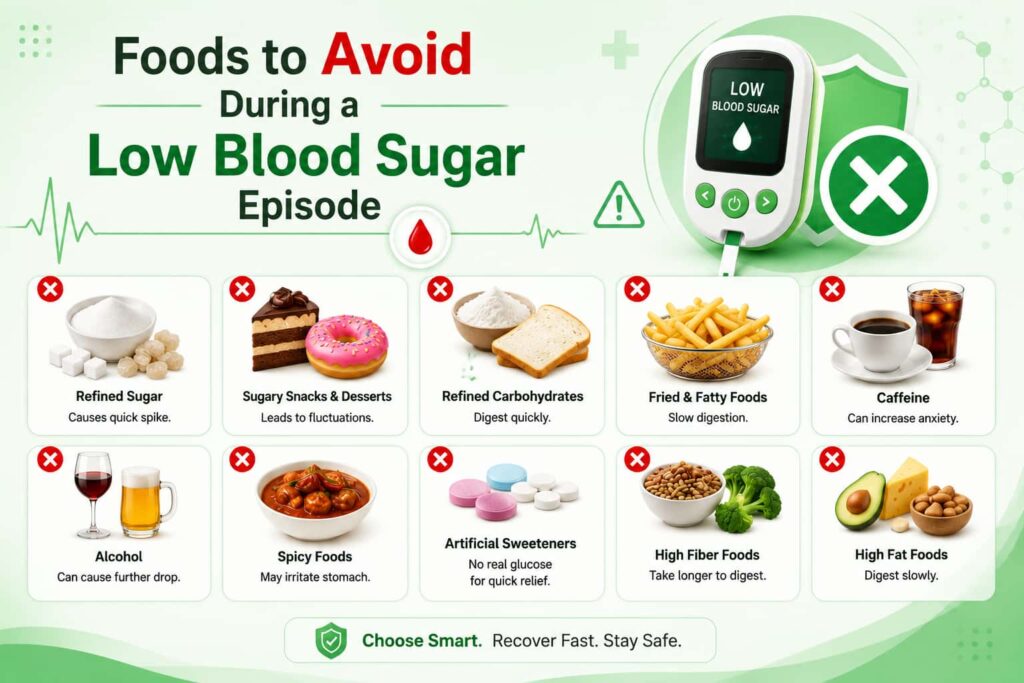
Making the wrong food choice during a low blood sugar episode can delay recovery and make the situation worse. Understanding what not to eat is just as important as knowing what to eat.
- Oily or fried food: Items like samosas, fries, or pakoras digest very slowly because of their high fat content. This delays glucose absorption and prolongs the hypoglycemic state rather than resolving it.
- Excess chocolate: While chocolate does contain sugar, it also contains a significant amount of fat and dairy, both of which slow down sugar absorption considerably. A small amount of dark chocolate is not helpful during a severe episode.
- Alcohol: Alcohol actively interferes with the liver’s ability to release stored glucose into the bloodstream, which means it can worsen low blood sugar significantly and should be completely avoided during an episode.
- Too many sweets at once: Eating an excessive amount of sweets in a panic can cause blood sugar to spike dramatically and then crash again shortly afterward, creating what is known as a rebound hypoglycemia cycle.
- Diet or sugar-free products: These contain artificial sweeteners that provide zero glucose benefit and are completely useless during a genuine low blood sugar episode.
Managing Nighttime Low Blood Sugar
Nighttime hypoglycemia is particularly dangerous because a person is asleep and cannot recognize or respond to their own symptoms. The body may experience the episode for an extended period before it becomes severe enough to wake the person up. Warning signs that you may have experienced nighttime hypoglycemia include waking up with a severe headache, feeling extremely tired despite a full night’s sleep, having vivid or disturbing dreams, or noticing that your sheets are damp from night sweats.
| Bedtime Food | Benefit |
| Warm milk with a handful of nuts | Protein and healthy fat provide sustained overnight glucose |
| Peanut butter on whole grain toast | Slow-releasing energy source through the night |
| Greek yogurt | Protein-rich and slowly digested |
| A small bowl of oats | Complex carbs that release glucose gradually |
Never skip dinner or go to bed on an empty stomach if you are at risk for low blood sugar. A small, balanced bedtime snack can make a significant difference in preventing dangerous overnight drops.
Special Situations: Children, Exercise, and Non-Diabetics
Low Blood Sugar in Children: Children may not be able to clearly articulate what they are feeling, which makes it harder for parents to identify hypoglycemia. Watch for sudden crying for no clear reason, unusual paleness, extreme sleepiness at odd hours, irritability, weakness, or refusal to engage in activities they normally enjoy. Parents of children with diabetes should be especially vigilant and should always keep fast-acting glucose sources nearby.
Low Blood Sugar During Exercise: Physical activity burns through glucose rapidly, which is why exercising on an empty stomach or without adequate pre-workout nutrition is a common trigger for hypoglycemia. Before a workout, eating a banana, a bowl of oats, or peanut butter toast gives the body adequate fuel. During longer workout sessions, having a sports drink, a piece of fruit, or an energy bar helps maintain glucose levels. After exercise, combining protein with complex carbohydrates supports both recovery and blood sugar stability.
Reactive Hypoglycemia in Non-Diabetics: Some non-diabetic individuals experience a condition called reactive hypoglycemia, where blood sugar drops a few hours after consuming a large, carbohydrate-heavy meal. This happens because the body overproduces insulin in response to the sugar spike, causing levels to drop below normal. Symptoms include sudden drowsiness after meals, shakiness, sweating, and intense hunger. Managing this condition involves eating smaller, more frequent meals, reducing refined carbohydrates, and increasing protein and fiber intake.
Sample Daily Diet Plan to Prevent Low Blood Sugar
| Time | Meal |
| Morning (7-8 AM) | Oats with mixed nuts and a boiled egg |
| Mid-Morning (10–11 AM) | A banana or seasonal fruit with a small bowl of yogurt |
| Lunch (1–2 PM) | Brown rice with dal, mixed vegetables, and paneer or fish |
| Evening Snack (4–5 PM) | Roasted chana or a handful of mixed nuts with herbal tea |
| Dinner (7–8 PM) | Chapati with protein curry and a salad |
| Bedtime (10 PM) | A glass of warm milk or a small handful of almonds |
Myths About Low Blood Sugar That Need to Be Corrected
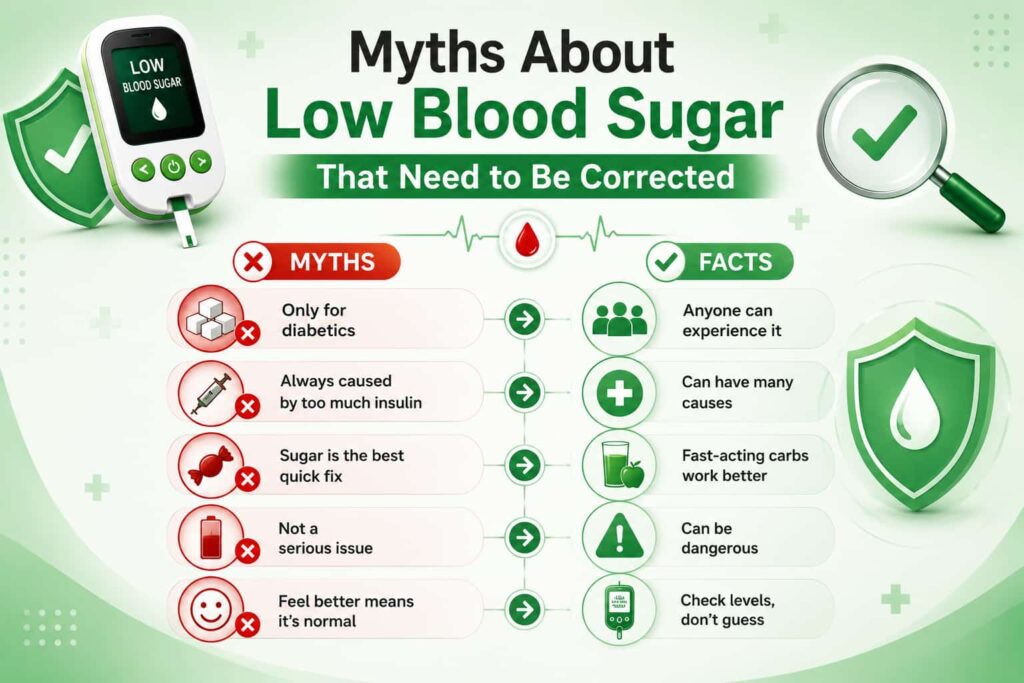
Myth 1 – Only diabetics get low blood sugar: This is completely false. Non-diabetic individuals can and do experience hypoglycemia due to poor diet, excessive exercise, alcohol, hormonal issues, and other factors.
Myth 2 – Eating lots of sweets will fix it: Partially true at best. Eating the right amount of the right type of sugar helps, but overloading on sweets causes a blood sugar spike followed by another crash, which makes the overall situation worse.
Myth 3 – Low blood sugar is never life-threatening: This is dangerously wrong. Severe, untreated hypoglycemia can lead to seizures, brain damage, heart complications, and even death in extreme cases.
Myth 4 – Energy drinks are the best solution: Absolutely not. Most energy drinks contain caffeine, artificial additives, and varying amounts of sugar that make blood sugar response unpredictable. They are not a reliable or safe treatment for hypoglycemia.
When Should You See a Doctor?
DrCuro strongly emphasizes that while home management works well for occasional, mild low blood sugar episodes, recurring or severe episodes are a medical concern that requires professional evaluation. You should consult a doctor if your blood sugar drops frequently without an obvious reason, if you faint or have a seizure during an episode, if someone else has to help you during episodes because you cannot manage yourself, if you have diabetes and your readings are increasingly unstable, or if you experience significant confusion during episodes that takes a long time to clear.
Frequent low blood sugar can be a symptom of serious underlying conditions including insulin-producing tumors, adrenal insufficiency, liver disease, or severe diabetes mismanagement. At DrCuro, the approach goes beyond simply correcting the sugar level in the moment. The focus is on identifying the root cause, creating a personalized nutrition and lifestyle plan, and ensuring that the condition is managed safely for the long term.
Final Thoughts
Low blood sugar is not something to take lightly or manage casually. Your body is designed to give you warning signs before the situation becomes dangerous, but those signs are only useful if you recognize them and respond correctly. The smartest approach to managing low blood sugar involves three clear phases: raise glucose quickly using fast-acting carbohydrates like fruit juice, glucose tablets, honey, or raisins; stabilize blood sugar afterward with balanced meals combining protein, fiber, and complex carbohydrates; and prevent future episodes through consistent eating habits, adequate hydration, regular physical activity, and stress management.
Food choices matter enormously during a low blood sugar episode, but so does the overall lifestyle framework you build around preventing these episodes from happening in the first place. Managing low blood sugar is not about consuming sugar all day it is about creating metabolic stability through smarter, more consistent habits. If episodes are becoming more frequent, more severe, or harder to manage, please do not delay seeking professional medical advice. Your long-term health and safety are always worth prioritizing.







No Comment! Be the first one.