








10 Summer Fruit Beverages That Hydrate Better Than Plain Water
The temperature is 45°C outside. You have been drinking water all day. And yet you still feel drained, dizzy, and completely exhausted. Sound familiar? This is one of the most common summer...
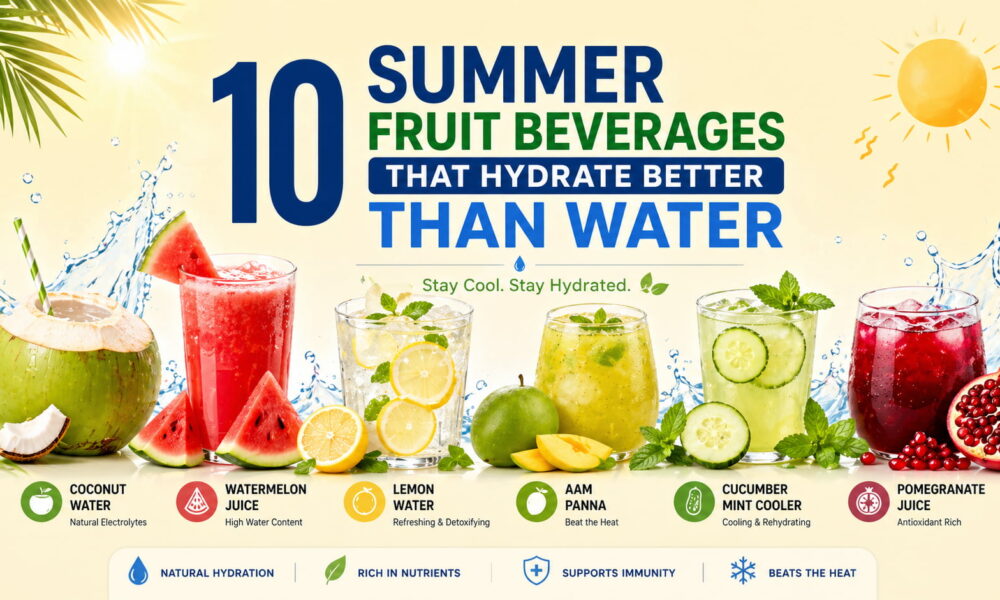
The temperature is 45°C outside. You have been drinking water all day. And yet you still feel drained, dizzy, and completely exhausted.
Table Of Content
- Why Plain Water Is Not Enough in Indian Summer Heat
- 1. Coconut Water – Nature’s Complete Electrolyte Drink
- 2. Watermelon Juice – The Summer Cooler That Cools From Inside
- 3. Lemon Water With Rock Salt – The Simplest Most Powerful Hydrator
- 4. Aam Panna The Traditional Heatstroke Preventer
- 5. Fresh Orange Juice – Immunity and Hydration Combined
- 6. Buttermilk With Fruit – The Gut-Cooling Combination
- 7. Pomegranate Juice – The Circulation and Energy Restorer
- 8. Pineapple Cooler – The Anti-Inflammatory Summer Drink
- 9. Cucumber Mint Cooler – The Most Cooling Drink on This List
- 10. Mixed Fruit Infused Water The All-Day Hydration Solution
- Why These Summer Fruit Beverages Work Better Than Plain Water
- Common Mistakes to Avoid With Summer Fruit Beverages
- Who Should Be Careful With Summer Fruit Beverages
- Final Thoughts
- Frequently Asked Questions
Sound familiar?
This is one of the most common summer complaints across India. And the reason most people never figure out why it keeps happening is because they are solving the wrong problem.
The problem is not that you are not drinking enough water. The problem is that water alone during extreme summer heat is simply not enough.
Every time you sweat, your body loses more than just fluid. It loses sodium, potassium, magnesium, and other electrolytes that are responsible for keeping your cells functioning, your muscles working, and your energy levels stable. Plain water replaces the fluid. It does not replace any of the electrolytes. And without electrolytes, your body cannot use the water you are drinking as efficiently as it needs to.
This is where summer fruit beverages change everything.
The right fruit-based drinks do not just hydrate. They restore electrolytes, provide natural energy, improve fluid retention, support digestion, and cool the body from the inside all without the artificial ingredients, preservatives, and excessive sugar that packaged drinks are loaded with.
At DrCuro, we believe that what you drink in summer matters as much as how much you drink. Natural, fruit-based hydration is not a trend it is how the body was designed to be nourished. And the right choices, made consistently through the summer months, can be the difference between feeling drained every day and actually functioning well in the heat.
This guide covers 10 powerful summer fruit beverages that outperform plain water in the conditions that matter most — extreme heat, heavy sweating, physical activity, and prolonged outdoor exposure. For each one, we explain exactly what it does, why it works, who benefits most from it, when to drink it, and how to prepare it correctly.
Read this once. Drink better all summer.
Why Plain Water Is Not Enough in Indian Summer Heat
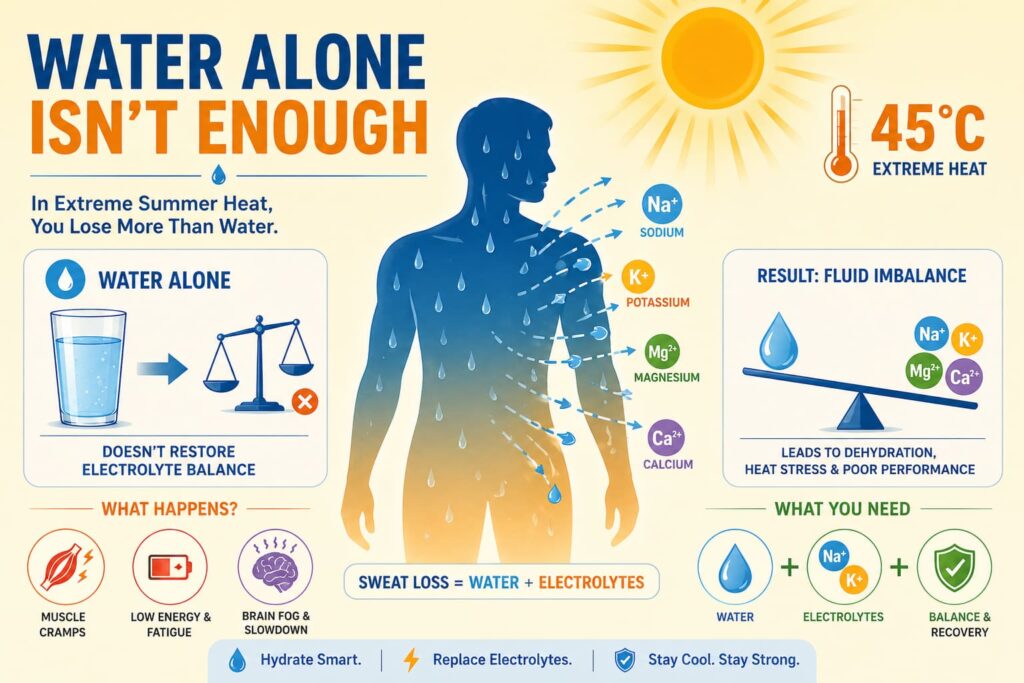
Before diving into the drinks themselves, it is worth understanding exactly why plain water falls short because this is the knowledge that makes everything else in this guide make sense.
Your body is approximately 60 percent water. That water is not just sitting there it is constantly in motion, carrying nutrients to cells, flushing out waste, regulating body temperature, lubricating joints, and supporting every organ system in the body.
When you sweat in extreme heat, you lose this fluid rapidly. But sweat is not pure water. It contains sodium, chloride, potassium, magnesium, and calcium electrolytes that your body requires in precise concentrations to function. When those electrolytes drop below critical levels, several things happen:
- Muscles cramp because sodium and potassium regulate muscle contraction
- Energy drops sharply because magnesium is essential for cellular energy production
- The brain slows down because electrolyte imbalances affect neurological function
- The body cannot retain fluid effectively because sodium is the primary driver of fluid retention
Drinking plain water when electrolytes are depleted can actually dilute the remaining electrolytes further making the situation worse, not better. This is why people who drink large amounts of water in extreme heat still feel terrible. They are hydrating without replenishing.
Summer fruit beverages solve this problem because they combine fluid with natural electrolytes, natural sugars for energy, vitamins, antioxidants, and compounds that actively support the body’s cooling and recovery processes.
This is not opinion. This is basic physiology. And once you understand it, the case for fruit-based hydration in summer becomes impossible to argue against.
1. Coconut Water – Nature’s Complete Electrolyte Drink
If there is one summer fruit beverage that deserves to be called nature’s sports drink — it is coconut water. And unlike actual sports drinks, it comes without artificial colours, synthetic electrolytes, or excessive sugar.
What makes it exceptional:
Coconut water contains a natural electrolyte profile that is remarkably close to what the human body needs during and after heavy sweating. It is rich in potassium one medium coconut provides more potassium than a banana and contains meaningful amounts of sodium, magnesium, calcium, and phosphorus.
Potassium is the electrolyte that prevents and relieves muscle cramps one of the most common summer complaints across India. It also helps regulate blood pressure, which can fluctuate significantly in extreme heat. Sodium helps the body retain the fluid it is taking in. Magnesium supports energy production at the cellular level.
Together, this profile makes coconut water more effective at rehydration than plain water in virtually every meaningful measure.
What it does for the body:
- Rehydrates faster than plain water after heat exposure or physical activity
- Prevents and relieves muscle cramps particularly in the legs
- Reduces fatigue caused by electrolyte depletion
- Supports kidney function by keeping urine dilute
- Helps stabilise blood pressure during heat-related fluctuations
- Is extremely gentle on the stomach ideal for people who feel nauseous in heat
Who benefits most:
Outdoor workers, athletes, elderly individuals, people with a history of muscle cramps, anyone recovering from heat exhaustion, and children who have been active in the sun.
When to drink it:
Mid-morning after the body has started sweating, immediately after physical activity, or during the 11 AM to 4 PM peak heat window when electrolyte loss is highest.
How to drink it correctly:
Always choose fresh coconut water over packaged varieties. Packaged coconut water frequently contains added sugar, preservatives, and significantly reduced electrolyte content compared to fresh. One to two fresh coconuts per day is an appropriate amount for most adults in peak summer.
DrCuro tip: If fresh coconut is not available, add a pinch of rock salt and a small amount of jaggery to water as a basic electrolyte substitute. It is not as complete as coconut water but it is far better than plain water alone.
2. Watermelon Juice – The Summer Cooler That Cools From Inside
Watermelon is over 92 percent water by weight. There is no fruit more perfectly designed for summer hydration — and when consumed as a juice or blended drink, it delivers that hydration along with a set of nutrients that plain water simply cannot match.
What makes it exceptional:
Beyond its extraordinary water content, watermelon contains lycopene — a powerful antioxidant that gives it its red colour and protects cells from the oxidative damage that heat and sun exposure produce. It also contains L-citrulline, an amino acid that has been shown to reduce muscle soreness and improve circulation. And it provides natural sugars — fructose and glucose — that give the body quick energy without the crash associated with refined sugar.
What it does for the body:
- Provides rapid fluid replacement due to extremely high water content
- Delivers lycopene that protects skin from sun damage at the cellular level
- Supplies natural sugars that restore energy quickly after heat depletion
- Reduces inflammation particularly relevant for outdoor workers exposed to physical stress
- Supports kidney function by increasing urine flow and flushing toxins
- Has a natural cooling effect on body temperature
- Contains small but meaningful amounts of potassium and magnesium
Who benefits most:
Anyone spending time outdoors, people with high physical activity levels in summer, individuals prone to skin damage from sun exposure, and those who find plain water unpalatable and need a flavourful alternative that is still genuinely healthy.
When to drink it:
As a mid-morning drink between 9 AM and 11 AM, or as an afternoon refresher. Best consumed fresh and immediately — watermelon juice oxidises quickly and loses nutritional value within an hour of preparation.
How to drink it correctly:
Blend fresh watermelon without adding water, sugar, or salt. The fruit is sweet enough on its own and diluting it reduces its nutritional concentration. Strain if you prefer a smoother consistency. Drink immediately. Do not store watermelon juice consume it fresh every time.
DrCuro tip: Add a few fresh mint leaves and a squeeze of lemon to watermelon juice for an additional cooling effect and a small boost of vitamin C and electrolytes.
3. Lemon Water With Rock Salt – The Simplest Most Powerful Hydrator
Lemon water nimbu pani is arguably India’s oldest and most trusted summer drink. And unlike many traditional remedies that have been romanticised beyond their actual effectiveness, nimbu pani genuinely works with one critical condition. It must be made correctly.
What makes it exceptional:
Lemon provides vitamin C an antioxidant that supports immune function and protects against the oxidative stress that extreme heat produces. It provides citric acid, which supports digestion and alkalises the body despite being acidic itself. And it adds a small but meaningful amount of potassium and magnesium to the water.
The rock salt is the element that most people either skip or underuse and it is the element that makes the difference between flavoured water and an effective hydration drink. Rock salt provides sodium and chloride — the two electrolytes lost in the highest quantities through sweat. Sodium is the primary driver of fluid retention. Without it, the body cannot hold on to the water it is receiving.
What it does for the body:
- Restores sodium and chloride lost through sweat directly addressing the root cause of heat-related fatigue
- Provides vitamin C that supports immunity compromised by heat stress
- Stimulates digestion nausea and digestive discomfort are common in extreme heat
- Helps the body retain fluid more effectively than plain water
- Alkalises the body reducing the acidic environment that heat and physical stress create
- Is inexpensive, universally available, and quick to prepare
Who benefits most:
Virtually everyone this drink is appropriate for all age groups, all activity levels, and all health conditions with minimal modification. It is particularly valuable for outdoor workers, elderly individuals, and anyone who does not have access to fresh fruit.
When to drink it:
First thing in the morning before tea or coffee, before going outdoors, and at regular intervals through the day. One glass of nimbu pani with rock salt in the morning sets the electrolyte baseline for the entire day.
How to drink it correctly:
Juice of half a lemon in 300 ml of water. A pinch of rock salt not table salt, which is processed and contains fewer minerals. A small amount of jaggery or raw honey rather than refined sugar if sweetness is desired. Stir well and drink at room temperature or slightly cool not ice cold.
DrCuro tip: Adding a pinch of cumin powder to nimbu pani improves its digestive benefits and adds a small amount of iron — particularly useful in summer when iron levels can drop with heavy sweating.
4. Aam Panna The Traditional Heatstroke Preventer
Aam panna is not just a summer drink it is a functional food that has been used across India for generations specifically because of its proven effectiveness against heat-related illness. It is made from raw mangoes — the same fruit that ripens into one of India’s most beloved seasonal treats, but consumed before it ripens for an entirely different set of benefits.
What makes it exceptional:
Raw mango is rich in iron, which helps maintain haemoglobin levels that can drop during heavy sweating. It contains significant amounts of vitamin C more than ripe mango. It provides pectin, a natural fibre that supports gut health. And critically, it contains compounds that have a demonstrable cooling effect on the body’s internal temperature regulation system which is why aam panna has been used to prevent heatstroke specifically, not just for general refreshment.
What it does for the body:
- Actively prevents heatstroke by supporting the body’s thermoregulation system
- Restores iron lost through heavy sweating preventing the weakness and dizziness associated with low iron
- Provides vitamin C that supports immunity compromised by heat stress
- Supports liver function the liver works harder in extreme heat
- Improves energy levels through natural sugars and iron
- Supports gut health digestive issues are common in summer
- Provides electrolytes including potassium and sodium
Who benefits most:
Outdoor workers are the primary beneficiary aam panna has historically been the drink of choice for people working in fields during peak summer. It is also highly effective for anyone prone to heatstroke, individuals with low iron levels, and people who experience significant energy crashes in summer afternoons.
When to drink it:
Before going outdoors in peak heat consumed 30 minutes before sun exposure, it provides protective benefit. Also effective as a mid-afternoon drink during the 12 PM to 4 PM danger window.
How to drink it correctly:
Boil or roast raw mangoes until soft. Extract the pulp. Blend with water, a pinch of rock salt, roasted cumin powder, and a small amount of jaggery or sugar. The key is keeping the sugar content moderate traditional aam panna preparations are often made too sweet, which reduces their hydration benefit.
DrCuro tip: Add a few fresh mint leaves and a pinch of black pepper to aam panna. Both enhance its cooling properties and improve digestion black pepper in particular improves the absorption of nutrients from the drink.
5. Fresh Orange Juice – Immunity and Hydration Combined
Fresh orange juice is one of the most widely consumed summer beverages in India and one of the most frequently made incorrectly. The packaged version that most people reach for bears almost no resemblance to the fresh version in terms of nutritional value or hydration effectiveness.
What makes it exceptional:
Fresh oranges are among the richest natural sources of vitamin C available in India. Vitamin C is a powerful antioxidant and oxidative stress increases significantly in extreme heat. It also provides folate, thiamine, and potassium all nutrients that support energy production and fluid balance. The natural sugars in fresh orange juice fructose and glucose – provide quick, clean energy without the dramatic spike and crash associated with refined sugar.
What it does for the body:
- Provides a substantial dose of vitamin C that supports and strengthens immune function
- Delivers natural sugars that restore energy levels quickly after heat-related depletion
- Supplies potassium that helps regulate fluid balance and prevent muscle cramps
- Provides folate that supports cellular repair important during heat stress
- Hydrates effectively due to high water content of fresh oranges
- Supports digestion through natural enzymes present in fresh juice
- Has a mild alkalising effect that counteracts the acidic environment heat creates
Who benefits most:
People recovering from mild heat exhaustion, individuals with compromised immunity, children who need an appealing and nutritious hydration option, and anyone who wants a flavourful drink that genuinely contributes to health rather than just quenching thirst.
When to drink it:
Morning — between 8 AM and 10 AM is the optimal time for fresh orange juice. Vitamin C is absorbed most effectively in the morning, and the natural sugars provide clean energy for the day ahead. Avoid drinking it during peak afternoon heat on an empty stomach the acidity can cause discomfort.
How to drink it correctly:
Squeeze fresh oranges at home. Drink immediately vitamin C degrades rapidly when exposed to air and light, and fresh juice loses 50 percent of its vitamin C content within 30 minutes of preparation. Never substitute packaged orange juice it is pasteurised, typically has added sugar, and contains a fraction of the vitamin C of fresh juice.
DrCuro tip: Add a small pinch of rock salt and a few drops of lemon to fresh orange juice. The salt adds electrolytes and the lemon enhances vitamin C absorption making this drink significantly more effective as a summer hydrator.
6. Buttermilk With Fruit – The Gut-Cooling Combination
Buttermilk chaas is one of India’s most respected traditional summer drinks. And for good reason. It is cooling, digestive, probiotic, and hydrating simultaneously. When combined with certain fruits, it becomes one of the most complete summer beverages available.
What makes it exceptional:
Buttermilk is made from curd which means it contains live probiotic bacteria that support gut health. This matters in summer because heat disrupts digestive function significantly. Nausea, bloating, loose motions, and loss of appetite are all common summer digestive complaints all of which are addressed by the probiotic content of buttermilk.
Beyond probiotics, buttermilk provides calcium, phosphorus, and B vitamins. It has a natural cooling effect on the body it is one of the few drinks that actively lowers the body’s perception of heat rather than just providing fluid. And when combined with fruits like mango, pomegranate, or gooseberry it gains additional electrolytes, vitamins, and antioxidants.
What it does for the body:
- Restores gut bacteria disrupted by heat, stress, and dietary changes in summer
- Cools the body from the inside reducing the internal heat sensation
- Provides calcium and phosphorus for bone and muscle health
- Delivers B vitamins that support energy production at the cellular level
- Hydrates effectively while being extremely gentle on the digestive system
- Reduces bloating and nausea two of the most common summer digestive complaints
- The fruit addition provides additional electrolytes, vitamins, and antioxidants
Who benefits most:
People with digestive sensitivity in summer, individuals who experience nausea or bloating in heat, elderly individuals who need gentle hydration, children, and anyone who has been consuming heavy or spicy food and needs digestive recovery.
When to drink it:
After meals — particularly after lunch, when the body is working hardest to digest food in peak heat. Also effective as a mid-afternoon drink. Avoid very cold buttermilk room temperature or slightly chilled is more effective and gentler on the stomach.
How to drink it correctly:
Whisk fresh curd with water in a 1:2 ratio one part curd, two parts water. Add a pinch of rock salt, roasted cumin powder, and fresh mint. For a fruit version, blend a small amount of ripe mango or pomegranate into the mixture before whisking. Keep the fruit amount moderate the curd should remain the primary component.
DrCuro tip: Add a pinch of dried ginger powder saunth to buttermilk. It enhances the digestive and cooling benefits and adds a mild warming note that improves overall digestion even as the drink cools the body.
7. Pomegranate Juice – The Circulation and Energy Restorer
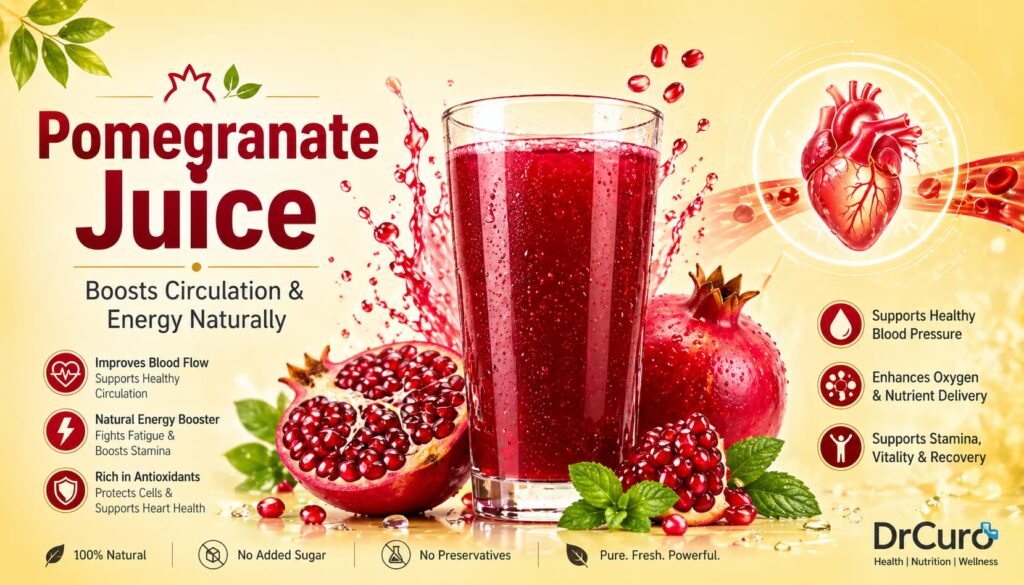
Pomegranate is frequently described as a superfood – a label that is applied so broadly it has almost lost meaning. In the context of summer hydration, however, pomegranate juice earns that description genuinely and specifically.
What makes it exceptional:
Pomegranate is one of the richest natural sources of punicalagins and punicic acid antioxidant compounds that are significantly more potent than those found in green tea or red wine. These antioxidants combat the oxidative stress that extreme heat and UV exposure generate in the body. Pomegranate also contains iron, folate, vitamin C, vitamin K, and potassium — a nutritional profile that supports energy, blood health, and hydration simultaneously.
What it does for the body:
- Provides powerful antioxidants that combat heat-related oxidative stress
- Improves blood circulation particularly important when heat causes blood vessels to dilate and blood pressure to fluctuate
- Restores iron levels that can drop with heavy summer sweating
- Fights fatigue through iron, folate, and natural sugar content
- Supports kidney health by increasing urine flow and reducing urinary tract infection risk common in summer
- Reduces inflammation relevant for both outdoor workers and anyone under physical stress
- Provides vitamin C that supports immunity
Who benefits most:
People who experience significant fatigue in summer, individuals with low iron or anaemia, those prone to urinary tract infections in summer, and people with circulation-related complaints that worsen in heat.
When to drink it:
Mid-morning or early evening pomegranate juice is best consumed not during peak heat but slightly before or after. Its iron content is absorbed most effectively when consumed with vitamin C a squeeze of lemon in pomegranate juice increases iron absorption significantly.
How to drink it correctly:
Extract fresh pomegranate juice by pressing the seeds do not blend the entire fruit as the white pith is bitter and reduces palatability. Do not add sugar pomegranate is naturally sweet enough. Add a squeeze of lemon and a small pinch of rock salt to improve both flavour and electrolyte content. Consume immediately.
DrCuro tip: Pomegranate juice is slightly high in natural sugar people managing diabetes should consume it in small quantities, approximately 100 ml, rather than a full glass. Dilute with water and add lemon to reduce the glycaemic impact.
8. Pineapple Cooler – The Anti-Inflammatory Summer Drink
Pineapple is one of the most underused summer fruits in Indian hydration practices. Most people eat it as a snack or in a raita very few think of it as a hydration tool. That is a missed opportunity, because pineapple juice in summer does something that very few other fruit beverages can claim it actively reduces inflammation while hydrating.
What makes it exceptional:
Pineapple contains bromelain a proteolytic enzyme found almost exclusively in pineapple, particularly in the core and stem. Bromelain has well-documented anti-inflammatory properties. In summer, inflammation increases driven by heat stress, sun exposure, physical activity, and the oxidative damage all of these produce. Bromelain counteracts this directly.
Beyond bromelain, pineapple provides vitamin C, manganese, thiamine, and folate along with natural sugars and a high water content that makes it an effective hydrator.
What it does for the body:
- Reduces systemic inflammation through bromelain making it particularly valuable for outdoor workers and physically active individuals
- Supports digestion bromelain breaks down proteins and reduces bloating and heaviness after meals
- Provides vitamin C for immunity and antioxidant protection
- Supplies manganese that supports bone health and energy metabolism
- Hydrates effectively through high natural water content
- Provides natural sugars for quick energy recovery
- Has a gentle diuretic effect that supports kidney function and toxin clearance
Who benefits most:
Outdoor workers experiencing physical stress and inflammation, people with joint discomfort that worsens in heat, individuals with digestive complaints in summer, and anyone who wants a flavourful hydrating drink with genuine anti-inflammatory benefit.
When to drink it:
After physical activity bromelain’s anti-inflammatory effect is most beneficial when consumed after exertion. Also effective as a mid-morning drink. Avoid drinking on an empty stomach in large quantities — the acidity can cause discomfort in sensitive individuals.
How to drink it correctly:
Blend fresh pineapple chunks including a small amount of the core where bromelain concentration is highest with water. Add a pinch of rock salt and a few fresh mint leaves. Strain for a smoother consistency. Avoid packaged pineapple juice entirely pasteurisation destroys bromelain completely, removing the primary benefit of this drink.
DrCuro tip: Add a small piece of fresh ginger to pineapple juice. Ginger has its own anti-inflammatory compounds gingerols and shogaols that work synergistically with bromelain, enhancing the drink’s anti-inflammatory and digestive benefits.
9. Cucumber Mint Cooler – The Most Cooling Drink on This List
Cucumber is technically a fruit botanically classified alongside watermelon and pumpkin and it is arguably the single most cooling food available during Indian summers. As a beverage, it produces a hydration and cooling effect that no other item on this list matches.
What makes it exceptional:
Cucumber is 96 percent water the highest water content of any food. It contains cucurbitacins compounds with anti-inflammatory and antioxidant properties. It provides silica a mineral that supports skin health and hydration at the cellular level. And it has a natural cooling compound that produces a genuine reduction in the body’s perception of internal heat not just the sensation of coolness from a cold drink, but an actual physiological cooling effect.
Mint adds menthol which activates cold receptors in the mouth and throat, creating an immediate and sustained cooling sensation. Mint also supports digestion and has mild analgesic properties that can reduce heat-related headaches.
What it does for the body:
- Provides the most intensive natural hydration of any drink on this list 96 percent water content means almost pure hydration
- Produces a genuine physiological cooling effect reducing internal body temperature perception
- Supports skin health and hydration from the inside reducing the dry, stretched feeling that extreme heat produces on skin
- Detoxifies gently cucumber supports kidney function and increases urine flow
- Reduces bloating and digestive discomfort both cucumber and mint are digestive aids
- Mint provides immediate and sustained cooling sensation through menthol
- Low in sugar making it one of the safest options for diabetics and weight-conscious individuals
Who benefits most:
People who feel overheated and need immediate cooling relief, individuals with skin that becomes dry and irritated in summer heat, those with digestive complaints, diabetics who need a low-sugar hydration option, and anyone who spends extended periods in hot environments without access to air conditioning.
When to drink it:
During the peak heat hours of 11 AM to 4 PM this is when the cucumber mint cooler is most effective. It can be consumed multiple times through the day without any concern about sugar or caloric excess.
How to drink it correctly:
Blend fresh cucumber unpeeled, as the skin contains the highest concentration of silica and cucurbitacins with fresh mint leaves, a squeeze of lemon, a pinch of rock salt, and water. Do not strain the fibre in the unpeeled cucumber adds digestive benefit. Serve at room temperature or slightly chilled. Add a few ice cubes only if necessary very cold drinks are harder on the stomach in extreme heat.
DrCuro tip: Add a small piece of fresh aloe vera gel scraped from an aloe leaf to the cucumber mint cooler. Aloe vera has its own cooling and anti-inflammatory properties and enhances the drink’s skin hydration benefits significantly.
10. Mixed Fruit Infused Water The All-Day Hydration Solution
This is the simplest drink on this list and in some ways the most practical. Because it solves a problem that none of the other beverages fully address the problem of maintaining consistent hydration through an entire day, not just at specific moments.
What makes it exceptional:
Most people drink water inconsistently large amounts at once, then nothing for hours. Infused water solves this by making water appealing enough to drink continuously. The presence of fruit adds colour, flavour, mild nutrients, and a small amount of natural sugar that makes the water feel rewarding to drink encouraging consistent intake throughout the day without the caloric burden of full fruit juice.
The fruit used for infusion releases vitamins, antioxidants, and trace electrolytes into the water over time producing a drink that is more nutritionally complete than plain water while remaining gentle enough for unlimited daily consumption.
What it does for the body:
- Encourages significantly higher daily water intake by making water genuinely appealing
- Provides a continuous supply of trace vitamins and antioxidants throughout the day
- Delivers small amounts of electrolytes that supplement other hydration sources
- Contains no added sugar all sweetness comes from the fruit
- Supports kidney function through consistent, gentle hydration
- Can be customised for different health needs depending on the fruit combination chosen
- Is the most accessible option on this list requires no blender, no preparation skill, and minimal time
Who benefits most:
People who struggle to drink enough water particularly office workers, students, and anyone whose schedule makes consistent hydration difficult. Also ideal as a base hydration strategy that runs alongside more targeted drinks like coconut water or aam panna at specific times of day.
When to drink it:
All day this is its primary advantage. Prepare a large jug in the morning and drink from it continuously through the day. Refill with fresh fruit and water as needed.
How to make it correctly:
Slice fresh fruits thinly lemon, orange, cucumber, strawberries, or mint leaves work particularly well. Add to a jug of clean water. Allow to infuse for at least 30 minutes longer infusion produces stronger flavour and higher nutrient transfer. Do not add sugar. Change the fruit every 8 to 12 hours to prevent fermentation. Some effective combinations:
- Lemon and mint cooling and digestive
- Orange and cucumber refreshing and gentle
- Strawberry and basil antioxidant-rich and flavourful
- Watermelon and mint deeply hydrating and cooling
- Lemon, ginger, and honey immunity-supporting and energising
DrCuro tip: Add a pinch of rock salt to the infused water jug. It makes the drink marginally more effective as an electrolyte source and enhances the flavour of most fruit combinations.
Why These Summer Fruit Beverages Work Better Than Plain Water
Let us be precise about this because precision matters here.
These drinks are not magically superior to water in all circumstances. Plain water remains essential and should never be replaced entirely by fruit beverages. What these drinks do is address the specific gaps that plain water cannot fill — particularly in the conditions that Indian summers create.
They replace electrolytes The single most important advantage. When the body loses sodium, potassium, and magnesium through sweat, plain water does not restore them. Every drink on this list does to varying degrees and through different mechanisms.
They provide natural energy The fatigue and energy crashes of extreme heat are partly caused by electrolyte depletion and partly by the rapid depletion of blood glucose that heavy sweating and heat stress produce. Natural fruit sugars — fructose and glucose restore this energy without the spike and crash of refined sugar or the artificial stimulation of caffeine.
They help the body retain fluid The sodium in rock salt added to these drinks — and the natural sodium in coconut water and buttermilk helps the body retain the fluid it is receiving. Without sodium, the kidneys excrete excess fluid rapidly. With sodium at appropriate levels, fluid is retained in the cells where it is needed.
They provide antioxidant protection Extreme heat and UV exposure generate free radicals that damage cells. The vitamins C and E, lycopene, punicalagins, bromelain, and other antioxidant compounds in fruit beverages neutralise these free radicals — providing a layer of protection that plain water cannot offer.
They support specific organ systems under summer stress The liver, kidneys, gut, and skin all come under additional stress in extreme heat. The specific compounds in different fruits — pectin in raw mango for gut health, silica in cucumber for skin, potassium in coconut water for kidneys, punicalagins in pomegranate for circulation — support these systems specifically and practically.
Common Mistakes to Avoid With Summer Fruit Beverages
Adding too much sugar This is the most frequent error and the one that most completely defeats the purpose of the drink. Refined sugar increases the osmotic load on the body, drawing water from cells and worsening dehydration. Use jaggery, raw honey, or dates in small amounts if sweetness is needed. The fruit itself should provide most of the sweetness.
Drinking packaged versions instead of fresh Every packaged juice on the market is pasteurised a process that destroys heat-sensitive vitamins like vitamin C and enzymes like bromelain. Most contain added preservatives and sugar. The nutritional content of a packaged juice is a fraction of the equivalent fresh preparation. There is no substitute for fresh in summer.
Drinking too much at once instead of consistently A litre of fruit juice consumed at once is not as effective as 200 ml consumed five times through the day. Consistent intake maintains electrolyte and fluid levels continuously. Infrequent large amounts overwhelm the kidneys and produce rapid excretion rather than effective hydration.
Ignoring the salt component The rock salt addition to most of these drinks is not optional. It is the element that makes the difference between a flavourful drink and an effective hydration strategy. People who skip the salt are missing the most important electrolyte sodium that the body needs to retain fluid.
Consuming ice-cold drinks in extreme heat Very cold drinks cause the blood vessels in the stomach to constrict, slow digestion, and create a shock to the digestive system that can worsen nausea and discomfort. Drinks should be cool — not ice cold. The cooling effect on the body comes from the internal physiology of the drink, not from the temperature at which it is consumed.
Over-consuming fruit juices without balancing with water Fruit juices even fresh ones contain natural sugars that accumulate if consumed in excess. The goal is to use fruit beverages as a complement to water, not a replacement. Maintain plain water intake alongside these drinks.
Who Should Be Careful With Summer Fruit Beverages

People managing diabetes Natural fruit sugars still raise blood glucose more slowly than refined sugar, but they raise it. Diabetics should prioritise low-sugar options cucumber mint cooler, infused water, buttermilk, and diluted coconut water. Avoid mango-based drinks and limit pomegranate and orange juice to small quantities. Always consult a DrCuro doctor before making significant dietary changes.
People with acid reflux or acidity Citrus-based drinks lemon water, orange juice, pineapple juice can worsen acid reflux in sensitive individuals. Consume these in moderation and never on an empty stomach. Prioritise buttermilk, coconut water, and cucumber cooler as primary hydration sources.
Children under 2 years Young children should not be given fruit juices with added salt or sugar. Fresh coconut water, diluted fresh fruit juice without any additions, and plain water are appropriate. Always consult a paediatrician for specific guidance.
Elderly individuals with kidney conditions Coconut water and pomegranate juice are high in potassium. People with kidney disease or on dialysis need to manage potassium intake carefully. Consult a DrCuro doctor before making these a regular part of the diet.
Pregnant women Aam panna made from raw mango should be consumed in moderation during pregnancy large quantities of raw mango can cause digestive upset. All other drinks on this list are generally safe but portion sizes should be moderate and any new dietary addition should be discussed with a healthcare provider.
Final Thoughts
Staying hydrated in Indian summer is not simply about drinking more. It is about drinking smarter.
Plain water is essential. It will always be essential. But in the conditions that Indian summers create 45°C temperatures, hours of sun exposure, heavy sweating, high humidity in many regions plain water alone leaves the body without the electrolytes, energy, and antioxidant protection it needs to function.
The 10 summer fruit beverages in this guide are not complicated. They are not expensive. They do not require special equipment or rare ingredients. They are made from fruits that are available in every market across India during summer often at their cheapest and most abundant precisely when they are needed most.
What they require is the decision to make them consistently, correctly, and as a genuine part of the daily summer routine rather than an occasional treat.
At DrCuro, we believe that the simplest and most natural solutions are often the most powerful ones. The body does not need expensive supplements or engineered sports drinks to stay healthy in summer. It needs the right natural inputs — water, electrolytes, antioxidants, and energy from real food sources delivered consistently through the day.
This summer, make that shift. Drink better. Feel better. Stay healthier.
At DrCuro, we are committed to giving you the information you need to make the right choices not just in a health crisis, but every day, in every season. Your health is not a destination. It is a daily practice. And it starts with something as simple as what you choose to drink.
DrCuro
Frequently Asked Questions
Q1. Are summer fruit beverages better than plain water for hydration?
In normal conditions, plain water is sufficient. In extreme summer heat particularly when sweating heavily or spending time outdoors fruit beverages are more effective because they replace electrolytes that plain water cannot provide. They should complement water, not replace it entirely.
Q2. Can I drink these summer fruit beverages every day?
Yes, most of them are appropriate for daily consumption in summer. The key conditions are fresh preparation, no added refined sugar, and appropriate portion sizes. Coconut water, lemon water with rock salt, buttermilk, and infused water are suitable for unlimited daily consumption. Juices with higher natural sugar content pomegranate, orange, pineapple are best limited to one glass per day.
Q3. Which summer fruit beverage is best for extreme heat and outdoor work?
Coconut water and aam panna are the two most effective options for people working in extreme outdoor heat. Coconut water provides the most complete natural electrolyte replacement. Aam panna provides specific heatstroke prevention benefits that no other drink on this list matches. Used together through the day, they provide comprehensive protection against heat-related illness.
Q4. Are packaged fruit juices acceptable if fresh fruit is not available?
They are significantly less effective than fresh and in some cases counterproductive due to added sugar and preservative content. If fresh fruit is genuinely unavailable, a packaged juice is better than nothing but choose varieties with no added sugar, check the ingredient list carefully, and treat it as a temporary substitute rather than an equivalent alternative.
Q5. How much fruit beverage should I drink in a day during summer?
There is no single fixed amount it depends on body weight, activity level, and heat exposure. A practical framework: maintain plain water as the base minimum 2.5 to 3 litres per day and add 2 to 3 servings of the fruit beverages described in this guide at different points through the day. One in the morning, one at midday, one in the afternoon. This combination maintains electrolyte balance, energy levels, and fluid retention through the entire day.







No Comment! Be the first one.