







How to Avoid Acidity and Bloating During Festivals: Causes, Foods and Easy Tips
Festivals bring family, celebrations and a lot of food. Whether it is Diwali, Holi, Eid, Christmas, Navratri, Onam, Pongal, Durga Puja, Baisakhi or a wedding, food is a big part of the joy. But heavy...
Festivals bring family, celebrations and a lot of food. Whether it is Diwali, Holi, Eid, Christmas, Navratri, Onam, Pongal, Durga Puja, Baisakhi or a wedding, food is a big part of the joy. But heavy meals, sweets, fried snacks, late nights and irregular timings can leave you with a burning chest, gas, a heavy stomach and indigestion.
Table Of Content
- Quick Answer
- What Are Acidity and Bloating?
- Why Acidity and Bloating Increase During Festivals
- Foods That May Trigger Acidity and Gas
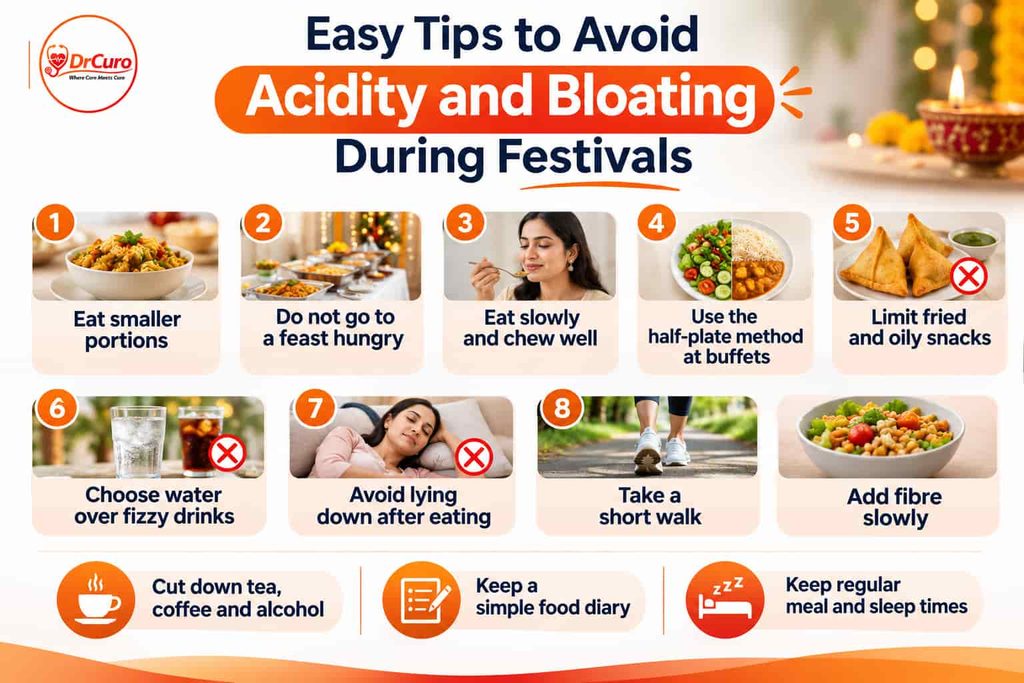
- 12 Easy Tips to Avoid Acidity and Bloating During Festivals
- 1. Eat smaller portions
- 2. Do not go to a feast hungry
- 3. Eat slowly and chew well
- 4. Use the half-plate method at buffets
- 5. Limit fried and oily snacks
- 6. Choose water over fizzy drinks
- 7. Avoid lying down after eating
- 8. Take a short walk
- 9. Add fibre slowly
- 10. Cut down tea, coffee and alcohol
- 11. Keep a simple food diary
- 12. Keep regular meal and sleep times
- Fasting and Feasting: How to Avoid Problems
- Festival Food Swaps That Help Digestion
- Home Remedies for Acidity and Gas
- Best Foods for Better Digestion During Festivals
- Simple One-Day Meal Plan for Festival Season
- What to Do After a Heavy Meal
- Who Needs Extra Care?
- Common Stomach Pain Issues During Festivals
- When Should You See a Doctor?
- Frequently Asked Questions (FAQs)
- Conclusion
The good news is that you do not have to give up your favourite festive foods. A few small changes in how much, how fast and when you eat can help you enjoy every celebration comfortably. This guide explains the causes, the foods that trigger discomfort, practical tips, simple home remedies and when to see a doctor.
Quick Answer
To avoid acidity and bloating during festivals:
- Eat smaller portions and eat slowly.
- Do not skip meals before a feast.
- Limit fried, very spicy and sugary foods.
- Drink plain water instead of fizzy drinks.
- Stay upright and take a short walk after meals.
- Finish dinner 2–3 hours before sleeping.
What Are Acidity and Bloating?
Acidity is the common word for heartburn, a sour taste in the mouth and acid reflux. It happens when stomach acid moves up into the food pipe (oesophagus). You may feel a burning in the chest, especially after a heavy meal or when lying down.
Bloating is a feeling of fullness, tightness or swelling in the stomach. It usually comes with gas, burping or a swollen belly. If you often feel this, read our guide on stomach bloating.
Many people confuse these problems. Read acidity vs gas vs ulcer to understand the difference.
| Problem | Common signs | Usually linked to |
| Acidity / reflux | Burning in the chest, sour taste, burping | Heavy meals, spicy or fatty food, lying down after eating |
| Gas / bloating | Tight, swollen belly, passing gas, cramps | Eating fast, gas-producing foods, constipation |
| Indigestion | Heaviness, nausea, early fullness | Overeating, oily food, irregular meals |
Occasional symptoms after a big meal are common. Frequent or severe symptoms may point to GERD, gastritis, food intolerance, constipation or IBS, and should be checked by a doctor.
Why Acidity and Bloating Increase During Festivals
During festivals our routine changes. We eat more, eat at odd times and have more rich food around us. Common reasons are:
- Overeating: Many gatherings and many dishes mean large portions in a short time.
- Fried and oily food: Fat slows stomach emptying and can worsen reflux.
- Very spicy food: Chilli and strong masalas can trigger heartburn in some people.
- Sugary and fizzy drinks: Soda adds gas, and sweet drinks add extra sugar.
- Eating too fast: You swallow more air, which leads to gas and bloating.
- Skipping meals: Staying hungry all day and then eating a huge meal often causes indigestion.
- Late-night meals: Lying down soon after eating pushes acid upward.
- Changed routine: Travel, late nights and less movement can cause constipation and bloating.
- Fasting followed by feasting: Long gaps without food, then a heavy meal, upset digestion (explained below).
Foods That May Trigger Acidity and Gas
Triggers differ from person to person. You do not need to avoid every food below, only the ones that bother you.
| Food or drink | Why it may cause discomfort | What you can do |
| Deep-fried snacks (samosa, pakora, puri) | High fat slows digestion and can worsen reflux | Keep portions small |
| Very spicy food | May trigger heartburn | Reduce chilli if it affects you |
| Carbonated drinks | Increase burping and gas | Choose plain water |
| Rich sweets (mithai, gujiya, halwa) | Heavy and high in sugar and fat | Have one small piece |
| Creamy gravies | High fat may worsen reflux | Choose lighter dishes |
| Rajma, chole, beans | Can produce gas | Soak well, cook well, eat moderate portions |
| Onion and garlic | Trigger symptoms in some people | Notice your own reaction |
| Tea and coffee | Caffeine may worsen reflux | Limit if you get symptoms |
| Chocolate and citrus | Trigger reflux in some people | Notice your own reaction |
| Milk and dairy | Cause gas in lactose intolerance | Try lactose-free options if needed |
| Alcohol | Irritates the stomach and worsens reflux | Limit or avoid |
12 Easy Tips to Avoid Acidity and Bloating During Festivals
1. Eat smaller portions
Large meals increase pressure in the stomach. Take small servings of the dishes you love instead of filling the plate. Skip repeat servings if you already feel full.
2. Do not go to a feast hungry
Have a light meal or fruit before a party or wedding. This stops you from overeating when the food arrives.
3. Eat slowly and chew well
Fast eating makes you swallow air. Sit down, chew properly and take short breaks between bites.
4. Use the half-plate method at buffets
- Fill half your plate with salad, vegetables or dal.
- Fill one quarter with roti, rice or other grains.
- Use the last quarter for a small portion of rich or fried food or sweets.
5. Limit fried and oily snacks
You can still enjoy them in small amounts. Balance them with roasted makhana, roasted chana, fruit or steamed snacks, and avoid eating several heavy dishes in one meal.
6. Choose water over fizzy drinks
Sip plain water through the day. Avoid drinking large amounts very fast. Carry a bottle when travelling.
7. Avoid lying down after eating
Stay upright for at least 2–3 hours after a meal. If you get night-time acidity, finish dinner early.
8. Take a short walk
A gentle 10–15 minute walk after meals helps digestion and reduces heaviness. Avoid hard exercise right after a heavy meal.
9. Add fibre slowly
Fruits, vegetables, oats, dalia, whole-wheat roti and pulses help prevent constipation, a common cause of bloating. Increase fibre gradually and drink enough water, because a sudden jump can cause more gas.
10. Cut down tea, coffee and alcohol
If these cause burning or discomfort, reduce them and choose water or other non-fizzy, unsweetened drinks.
11. Keep a simple food diary
Note what you ate, how much, when symptoms began and how long they lasted. This helps you find your personal triggers. Discuss repeated patterns with a doctor before cutting out major food groups.
12. Keep regular meal and sleep times
Avoid skipping breakfast or lunch, eat dinner at a sensible time and try to sleep on time, even in festival season.
Fasting and Feasting: How to Avoid Problems
Many festivals involve fasting, such as Navratri, Karwa Chauth, Ekadashi, Ramadan and Maha Shivratri. Long gaps without food increase stomach acid, and a heavy meal afterwards can cause acidity, bloating and weakness.
How to break a fast gently:
- Start with water, coconut water or a fruit, dates or a small portion of light food.
- Wait a little before the main meal.
- Eat slowly and avoid fried, very sweet and very spicy foods first.
- Do not eat a very large meal in one sitting.
- Drink enough water between the fasting hours, if your fast allows it.
If you follow intermittent fasting or regular religious fasts, read our guide on intermittent fasting to learn how to do it safely.
People with diabetes, pregnant women, older adults and anyone on regular medicines should speak to a doctor before fasting. Fasting can sometimes cause dizziness, shakiness and weakness. See our guide on what to eat during low blood sugar to know what helps.
Women who skip meals often or fast frequently may also be at risk of low iron. Read more on iron deficiency women. Drinking tea or coffee with meals can reduce iron absorption, so leave a gap of an hour or two.
Festival Food Swaps That Help Digestion
You do not have to avoid festival food. Small swaps make a big difference.
| Instead of | Try this | Why it helps |
| Several fried snacks | One fried snack plus roasted makhana or chana | Less oil and fat |
| Fizzy drinks | Plain water or diluted buttermilk | Less gas |
| Many heavy sweets | One small piece, eaten after a meal | Less heaviness and sugar |
| Creamy, heavy gravies | Dal, lighter curries or cooked vegetables | Easier to digest |
| Late heavy dinner | Early, light dinner such as khichdi | Less reflux at night |
| Skipping meals before a feast | Light, fibre-rich meal earlier in the day | Prevents overeating |
| Sugary packaged juice | Whole fruit | More fibre, less sugar |
Rich sweets and fried foods are also worth limiting if you want to manage cholesterol or have fatty liver. Moderation during festivals protects your digestion and your long-term health.
Home Remedies for Acidity and Gas
Many people use home remedies for mild, occasional symptoms. Scientific evidence for most of them is limited, and they do not suit everyone, so treat them as comfort measures, not cures.
| Remedy | How people use it | Things to remember |
| Jeera (cumin) water | Sip small amounts of lukewarm water with roasted jeera | Generally well tolerated |
| Saunf (fennel) | Chew a small pinch after meals | Commonly used for gas and heaviness |
| Ajwain with warm water | Small pinch after a heavy meal | Avoid large amounts |
| Ginger tea | A small cup, lightly brewed | May help nausea, but can worsen heartburn in some people |
| Buttermilk | Plain, thin, not too sour | Avoid if dairy gives you gas |
| Banana | One ripe banana | Simple and easy to digest |
| Warm water | Small sips through the day | Avoid gulping |
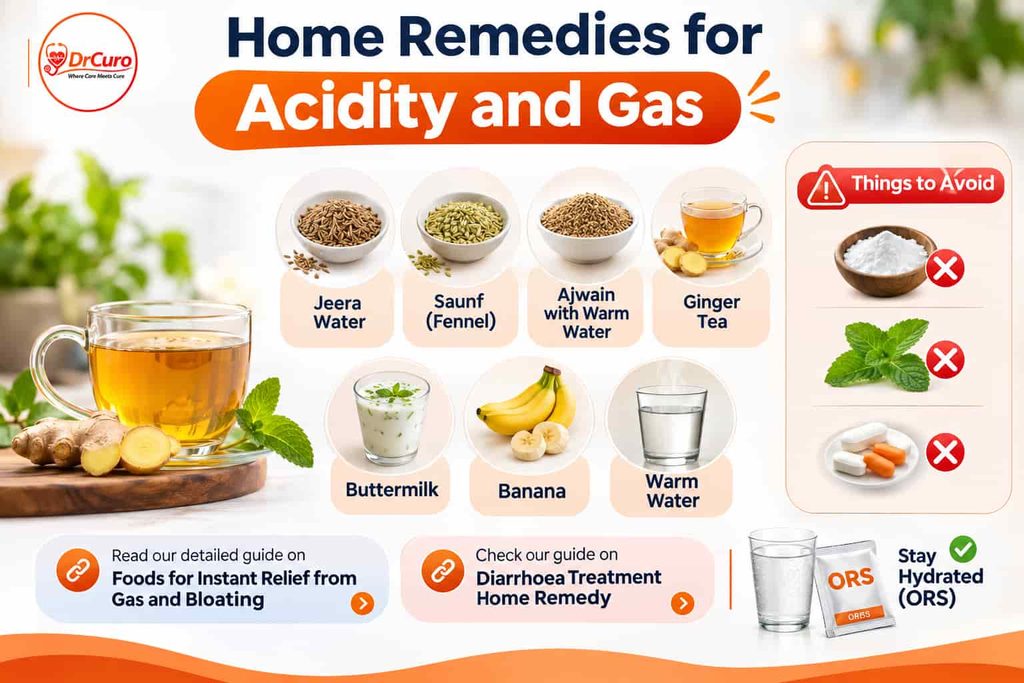
Things to avoid:
- Do not use baking soda regularly. It is not suitable for everyone.
- Peppermint can worsen reflux in some people.
- Do not rely on remedies for repeated or severe symptoms.
- Do not take medicines for acidity daily without medical advice.
For quick comfort, read food to eat for instant relief for gas and bloating. If you get loose motions after festive or outside food, read our guide on diarrhoea treatment home remedy, and drink plenty of fluids such as ORS to prevent dehydration.
Best Foods for Better Digestion During Festivals
No single food cures acidity or bloating, but the following can support a balanced diet.
| Food | How it helps | How to include it |
| Papaya | Provides fibre and gentle digestive support | Eat as a whole fruit |
| Banana | Easy to digest, provides fibre | Have as a snack if you tolerate it |
| Oats and dalia | Provide fibre | Make porridge or a vegetable dalia |
| Curd | May contain helpful live cultures | Include if you tolerate dairy |
| Moong dal | Light protein and fibre | Add to lunch or dinner |
| Cooked vegetables | Fibre and nutrients | Add to both meals |
| Whole grains | Support regular bowel movements | Choose whole-wheat roti |
| Beans and chickpeas | Good fibre, but may cause gas | Soak overnight, cook well, eat small portions |
Simple One-Day Meal Plan for Festival Season
| Time | Meal | Options |
| Early morning | Hydration | A glass of water |
| Breakfast | Fibre-rich | Vegetable dalia or oats |
| Mid-morning | Fruit | Banana, papaya or apple |
| Lunch | Balanced meal | Roti, moong dal, cooked vegetables, curd if tolerated |
| Evening | Light snack | Roasted chana or a small portion of makhana |
| Dinner | Light and early | Vegetable khichdi or roti with vegetables |
| After dinner | Gentle movement | A 10–15 minute walk |
This is a general example. Adjust it to your appetite, preferences, allergies and medical conditions.
What to Do After a Heavy Meal
If you have acidity:
- Stay upright and do not lie down for 2–3 hours.
- Avoid more spicy, oily or trigger foods.
- Sip water normally.
- Loosen tight clothes or belts.
- Speak to a doctor or pharmacist if symptoms continue.
If you have bloating:
- Take a gentle walk.
- Avoid fizzy drinks.
- Eat lighter, smaller meals until you feel better.
- Eat slowly and avoid known gas-causing foods.
- Keep regular bowel habits.
Who Needs Extra Care?
- People with diabetes: Watch sweet portions and meal gaps, and follow your doctor’s advice.
- Pregnant women: Reflux is common in pregnancy. Eat small meals and ask your doctor before taking any medicine.
- People with high cholesterol or fatty liver: Limit fried food and sweets.
- Regular painkiller users: Painkillers can irritate the stomach and worsen acidity. Ask your doctor before using them.
- Smokers: Smoking worsens reflux.
- Older adults and children: Prefer light, small meals.
Common Stomach Pain Issues During Festivals
Overeating, food poisoning, constipation, gastritis and food intolerance can all cause stomach pain. To know when pain needs attention, read our guide on common stomach pain issues.
When Should You See a Doctor?
Occasional acidity or bloating after a heavy meal is usually not serious. Consult a doctor if you have:
- Acidity several times a week
- Bloating even after small meals
- Persistent stomach pain
- Frequent nausea or vomiting
- Difficulty swallowing
- Sleep or daily activities affected by symptoms
- Unexplained weight loss or loss of appetite
Seek urgent medical help for severe chest pain, trouble breathing, vomiting blood, black tarry stools, severe stomach pain or repeated vomiting. Do not assume chest discomfort is always acidity.
Persistent symptoms may be linked to GERD, gastritis, ulcers, IBS or food intolerance. A doctor can examine you and suggest tests or treatment.
Frequently Asked Questions (FAQs)
1. Why do I get acidity during festivals?
Overeating, fried and spicy food, fizzy drinks, long gaps between meals and late-night eating are the usual causes. People with reflux may notice worse symptoms when their routine changes.
2. How can I reduce bloating after a heavy meal?
Eat slowly, take smaller portions, avoid fizzy drinks, take a gentle walk and stay upright after eating.
3. Which foods should I avoid if I have acidity?
Common triggers are very spicy food, fried snacks, high-fat meals, coffee, chocolate, citrus fruits and fizzy drinks. Triggers differ from person to person, so avoid only what affects you.
4. What are some home remedies for acidity?
Jeera water, saunf, buttermilk, banana and sips of warm water are commonly used for mild symptoms. They are not guaranteed treatments. Do not rely on them for repeated or severe symptoms.
5. Is curd good for acidity and bloating?
Curd can be part of a balanced diet, but it does not treat acidity for everyone. People with lactose intolerance may get more gas from it.
6. Does walking after meals help?
A gentle walk can help some people feel lighter and support bowel movement. Avoid hard exercise right after a big meal.
7. Can drinking water reduce acidity?
Water supports hydration and digestion but is not a guaranteed treatment. Sip it regularly and avoid your personal triggers.
8. What is the difference between acidity and gas?
Acidity causes burning in the chest or a sour taste. Gas causes fullness, swelling and cramps in the belly. They can happen together but have different causes.
9. How can I avoid acidity while fasting?
Do not stay without food or water for too long if your fast allows it. Break the fast with light foods such as fruit or dates, then eat a small balanced meal.
10. When is bloating a sign of a problem?
If bloating is frequent or comes with pain, a change in bowel habits, weight loss or vomiting, see a doctor.
Conclusion
Festivals are meant to be enjoyed, and food is a big part of them. Overeating, too much fried food, skipped meals, fasting followed by feasting and late-night eating can lead to acidity, bloating and indigestion. Eating smaller portions, chewing slowly, drinking water, choosing fibre-rich foods, keeping regular meal times and taking short walks can keep your digestion comfortable all year round.
Healthy eating does not mean giving up traditional dishes. It means balance and listening to your body. If symptoms are frequent or severe, consult a qualified doctor instead of depending only on home remedies.
Need help with digestive problems? Book a consultation with a Dr Curo gastroenterology specialist today.
Disclaimer: This article is for general information only and is not a substitute for medical advice, diagnosis or treatment. Please consult a qualified healthcare professional for your condition.




No Comment! Be the first one.