







Iron Deficiency Symptoms in Women: Signs, Causes and Foods to Improve Iron Levels
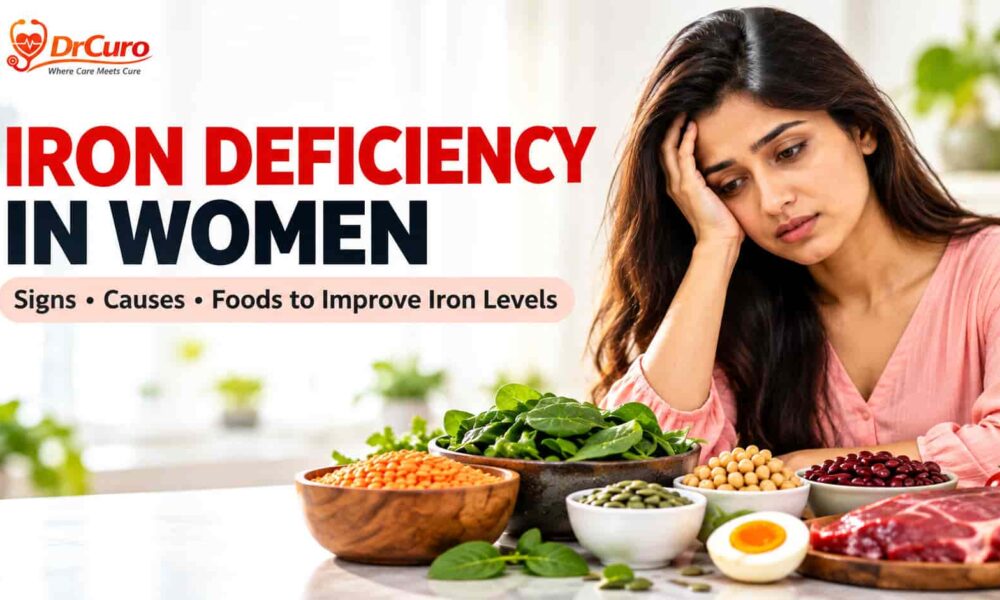
Last reviewed: [27/10/26] The most common iron deficiency symptoms in women are constant tiredness, weakness, dizziness, pale skin, hair fall and shortness of breath. These signs often start slowly,...
Last reviewed: [27/10/26]
Table Of Content
- Signs of Low Iron at a Glance
- What Is Iron Deficiency?
- Iron Deficiency Symptoms in Women
- Constant tiredness and low energy
- Weakness and dizziness
- Pale skin
- Hair fall or thin hair
- Brittle or weak nails
- Shortness of breath
- Headaches and poor focus
- Fast heartbeat
- Unusual cravings (pica)
- Restless legs
- Cold hands and feet
- Sore tongue and cracked mouth corners
- Low mood and irritability
- Frequent infections
- Quick Reference Table
- Iron Deficiency vs Anaemia: What Is the Difference?
- What Causes Low Iron in Women?
- Who Is at Higher Risk?
- How Doctors Check Iron Levels
- Iron-Rich Foods for Women
- Indian Iron-Rich Foods
- Vitamin C Foods That Help Iron Absorption
- How to Improve Iron Absorption
- Iron Myths: Beetroot, Pomegranate and Jaggery
- Iron Deficiency Treatment
- When to See a Doctor
- Frequently Asked Questions (FAQs)
- What are the signs of iron deficiency in females?
- What is the difference between iron deficiency symptoms and iron deficiency anaemia symptoms?
- Can low iron cause hair fall in women?
- How can I increase my iron levels naturally?
- Which fruits are good for low iron?
- Can I have iron deficiency without anaemia?
- Should I take iron tablets if I feel tired all the time?
- Is low iron common during pregnancy?
- Key Takeaways
- Conclusion
The most common iron deficiency symptoms in women are constant tiredness, weakness, dizziness, pale skin, hair fall and shortness of breath. These signs often start slowly, so many women think they are just “normal tiredness” and ignore them for months.
Iron helps your body make haemoglobin. This is the part of your blood that carries oxygen everywhere in your body. When iron runs low, your body gets less oxygen, and you start to feel tired and weak.
Iron deficiency in women is very common in India. According to the National Family Health Survey (NFHS-5, 2019–21), about 57 out of every 100 women aged 15–49 in India are anaemic. Lack of iron is one of the main reasons. On Dr Curo, we explain such health topics in simple words, so you can understand what your body may be telling you.
Signs of Low Iron at a Glance
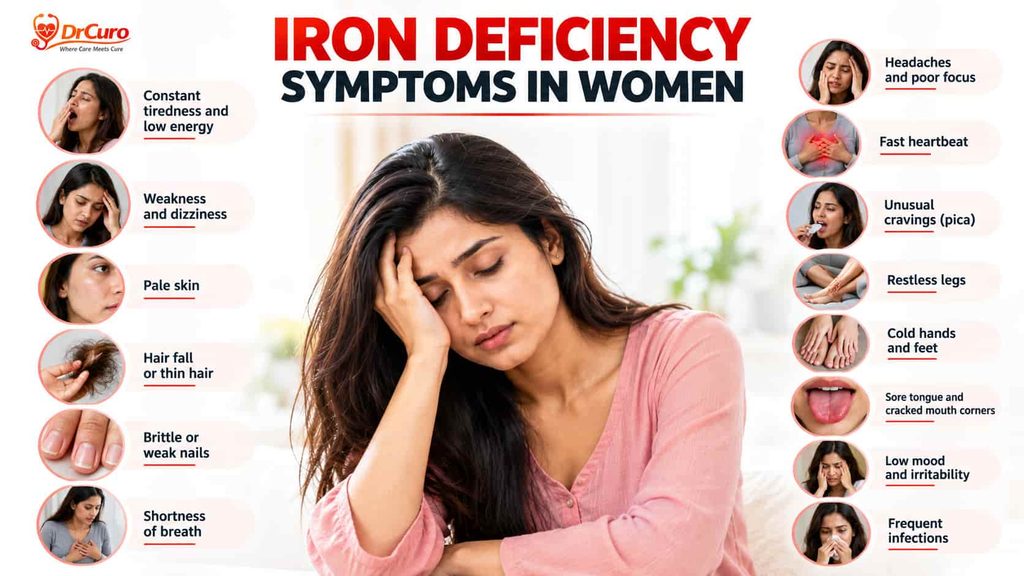
Here are the 14 most common signs of low iron:
- Constant tiredness and low energy
- Weakness and dizziness
- Pale skin
- Hair fall or thin hair
- Brittle or spoon-shaped nails
- Shortness of breath during normal activity
- Headaches and trouble focusing
- Fast heartbeat or palpitations
- Craving ice, chalk or soil (pica)
- Restless legs, especially at night
- Cold hands and feet
- Sore or smooth tongue, and cracks at the corners of the mouth
- Low mood or irritability
- Getting sick often
Please note: These symptoms can also come from other problems, such as thyroid disease, stress, poor sleep or other nutritional deficiencies. Symptoms alone cannot confirm iron deficiency. Only a blood test can. Do not start iron tablets on your own. Too much iron can be harmful, and it can hide the real cause of your symptoms.
What Is Iron Deficiency?
Iron deficiency means your body does not have enough iron for its needs. Iron is one of the essential nutrients your body needs every day. It helps make red blood cells and supports your energy and brain function.
Iron deficiency can happen in two steps:
- Step 1: Your iron stores become low, but your haemoglobin is still normal.
- Step 2: Your haemoglobin also falls. This is called iron deficiency anaemia.
This is why some women feel unwell even when a simple blood count looks normal.
Iron Deficiency Symptoms in Women
The symptoms of low iron in women can be mild at first. Some women have many signs, and some have only one or two.
Constant tiredness and low energy
You feel tired even after a full night’s sleep. Simple tasks like climbing stairs or cooking feel heavy. This is the most common sign.
Weakness and dizziness
You may feel weak, light-headed or unsteady, especially when you stand up fast.
Pale skin
Your face, lips, or the inside of your lower eyelids may look paler than normal. Skin colour changes naturally from person to person, so a blood test is a better guide than the mirror.
Hair fall or thin hair
Low iron may increase hair shedding in some women. Hair fall also has many other causes, such as stress, thyroid problems and seasonal changes. To learn more, read our guide on hair care tips to reduce hair fall.
Brittle or weak nails
Nails may break easily. In more severe cases, they can curve inward like a spoon (called koilonychia).
Shortness of breath
You may get out of breath while walking fast or climbing stairs. Your heart and lungs work harder when your blood carries less oxygen.
Headaches and poor focus
You may get frequent headaches or find it hard to concentrate at work or study.
Fast heartbeat
Your heart may feel like it is racing or pounding, especially during activity.
Unusual cravings (pica)
Some women crave ice, chalk, soil or paper. Craving ice is often linked to low iron. Eating non-food items can be harmful, so tell your doctor about it.
Restless legs
You feel an urge to move your legs, mostly at night. Low iron stores can be one reason.
Cold hands and feet
Low iron can reduce warmth and blood flow to your hands and feet, so they feel cold even in mild weather.
Sore tongue and cracked mouth corners
Your tongue may look pale, smooth or sore. You may also get painful cracks at the corners of your mouth.
Low mood and irritability
Low energy and poor sleep can make you feel low, anxious or short-tempered.
Frequent infections
Iron supports your body’s defence system. When it is low, you may catch colds and infections more often.
Quick Reference Table
| Symptom | What you may notice |
| Tiredness | Low energy all day, even after rest |
| Dizziness | Feeling faint or weak |
| Pale skin | Pale face, lips or inner eyelids |
| Hair fall | More hair on the comb or in the drain |
| Brittle nails | Nails that break or curve inward |
| Breathlessness | Out of breath on stairs or while walking |
| Palpitations | Racing or pounding heartbeat |
| Pica | Craving ice, chalk or soil |
| Cold hands and feet | Cold fingers and toes in mild weather |
| Sore tongue | Smooth, sore tongue or cracked mouth corners |
| Low mood | Irritability, low energy |
Iron Deficiency vs Anaemia: What Is the Difference?
Many people use these two words as if they mean the same thing, but they do not.
| Iron deficiency (no anaemia yet) | Iron deficiency anaemia | |
| What is low | Iron stores (ferritin) | Iron stores and haemoglobin |
| Haemoglobin | Usually normal | Low |
| Symptoms | May be none, or mild (tiredness, hair fall, restless legs, low focus) | Stronger (breathlessness, dizziness, pale skin, fast heartbeat) |
| Found by | Ferritin blood test | Haemoglobin and other blood tests |
Reference values (as per WHO): Anaemia is diagnosed when haemoglobin is below 12 g/dL in non-pregnant women and below 11 g/dL in pregnant women.
| Level of anaemia | Non-pregnant women (Hb) | Pregnant women (Hb) |
| Mild | 11.0–11.9 g/dL | 10.0–10.9 g/dL |
| Moderate | 8.0–10.9 g/dL | 7.0–9.9 g/dL |
| Severe | Below 8.0 g/dL | Below 7.0 g/dL |
Ferritin shows how much iron your body has stored. A ferritin level below about 15 ng/mL usually points to iron deficiency. Labs and doctors may use slightly different ranges, so always read your report with your doctor.
Not all anaemia is caused by iron. Low vitamin B12 or folate, infections and some blood conditions can also cause it. Our article on signs your body may be missing essential nutrients explains how different nutritional deficiencies can look alike.
What Causes Low Iron in Women?
Low iron happens when your body loses more iron than it gets, or does not absorb enough.
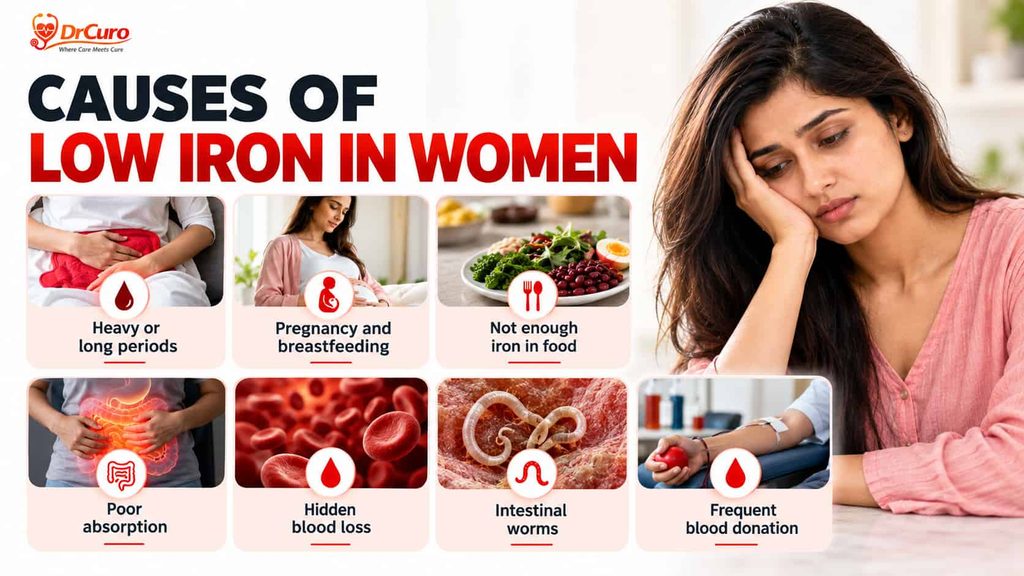
- Heavy or long periods: This is one of the biggest causes in women. Signs include changing pads very often, bleeding for more than 7 days, or passing large clots. Causes can include fibroids, adenomyosis and PCOS-related bleeding.
- Pregnancy and breastfeeding: Your body needs much more iron to support your baby and your own blood.
- Not enough iron in food: This can happen with strict dieting, skipping meals, or diets with few pulses, greens and iron-rich foods.
- Poor absorption: Conditions like coeliac disease, long-term acidity medicines (PPIs) and H. pylori infection can reduce how much iron you absorb.
- Hidden blood loss: Bleeding in the stomach or gut, such as from an ulcer or piles, can slowly drain iron. Read more in our guide on stomach ulcer treatment and the best diet.
- Intestinal worms: Hookworm infection can cause blood loss in the gut and is a known cause of anaemia in India.
- Frequent blood donation.
Who Is at Higher Risk?
| Group | Why the risk is higher |
| Teenage girls | Growing body plus the start of periods |
| Women with heavy periods | Regular blood loss |
| Pregnant and breastfeeding women | Higher iron needs |
| Women in perimenopause | Heavy or irregular bleeding can happen |
| Vegetarians and vegans | Plant iron is absorbed less easily |
| Women on strict diets | Low food and iron intake |
| Athletes and very active women | Higher iron loss and needs |
| Women with gut problems or past stomach surgery | Poor absorption |
Having a risk factor does not mean you have iron deficiency. It only means you should be more alert.
How Doctors Check Iron Levels
Your doctor may ask about your periods, diet, medicines and symptoms. Then they may suggest:
- Complete Blood Count (CBC): Checks haemoglobin and red blood cells. It can show anaemia, but may miss early iron deficiency.
- Serum ferritin: Shows your iron stores. It can read falsely high during infection or inflammation.
- Other iron tests: Serum iron, transferrin saturation and TIBC give more detail when needed.
Not everyone needs every test. Your doctor will choose what fits your case.
Iron-Rich Foods for Women
Iron comes in two forms. Haem iron (from meat, fish and eggs) is absorbed more easily. Non-haem iron (from plant foods) is absorbed less easily, but you can improve this with the right food combinations.
Indian Iron-Rich Foods
| Food | Type | Easy way to eat it |
| Rajma, black chana, chickpeas | Plant | Curry, chaat, sprouts |
| Lentils (masoor, moong, tur) | Plant | Dal with lemon or tomato |
| Ragi and bajra | Plant | Roti, dosa, porridge |
| Poha (iron-fortified or regular) | Plant | Add peas and a squeeze of lemon |
| Sesame seeds (til) and pumpkin seeds | Plant | Chutney, laddoo, sprinkled on meals |
| Dates and dried figs | Plant | Snack, or in milkshakes |
| Green leafy vegetables (methi, sarson, amaranth) | Plant | Sabzi, paratha, soup |
| Tofu and soya chunks | Plant | Curry or stir-fry |
| Eggs | Animal | Boiled, bhurji, omelette |
| Chicken, fish and lean meat | Animal | Curry, grilled |
Vitamin C Foods That Help Iron Absorption
Eating these with an iron-rich meal can help your body take in more iron from plant foods:
- Amla
- Guava
- Oranges and mosambi
- Lemon
- Tomato
- Capsicum
- Kiwi and strawberries
These are good foods to improve iron levels, and they fit easily into a balanced diet.
How to Improve Iron Absorption
Good healthy eating habits help your body use iron better. Try these simple steps:
Do this:
- Add lemon, tomato, amla or guava to iron-rich meals.
- Soak, sprout or ferment pulses and grains (dosa, idli, dhokla). This lowers phytates, which block iron absorption.
- Cook in an iron kadhai or tawa, especially tomato-based or sour dishes. Small amounts of iron can move into the food.
- Eat a mix of foods in your meals, not just one “iron food.”
Avoid this with your iron-rich meal:
- Tea and coffee: They contain tannins that reduce iron absorption. Drink them at least an hour before or after meals.
- Calcium-rich foods and supplements: Milk, curd, paneer and calcium tablets can reduce iron absorption when taken at the same time. Keep a gap between them and your main iron-rich meal. Do not stop calcium, though. It is also important. See our article on calcium and vitamin D deficiency.
- Too much spinach for iron: Spinach has iron, but it also has oxalates, which stop your body from absorbing much of it. Eat a variety of greens.
Iron Myths: Beetroot, Pomegranate and Jaggery
| Myth | Fact |
| “Beetroot fixes low iron fast.” | Beetroot has only a small amount of iron. It is healthy, but not a quick fix. |
| “Pomegranate juice cures anaemia.” | It is nutritious, but it is not a proven treatment for iron deficiency. |
| “Jaggery is full of iron, so it replaces tablets.” | Jaggery has some iron, but also a lot of sugar. It cannot replace medical treatment. |
| “Spinach is the best iron food.” | Oxalates lower its absorption. Pulses, ragi and seeds are also good choices. |
| “If I feel tired, I need iron tablets.” | Tiredness has many causes. Test first. |
No single food can fix iron deficiency. A balanced diet helps, but if you have confirmed anaemia, you may need treatment as well.
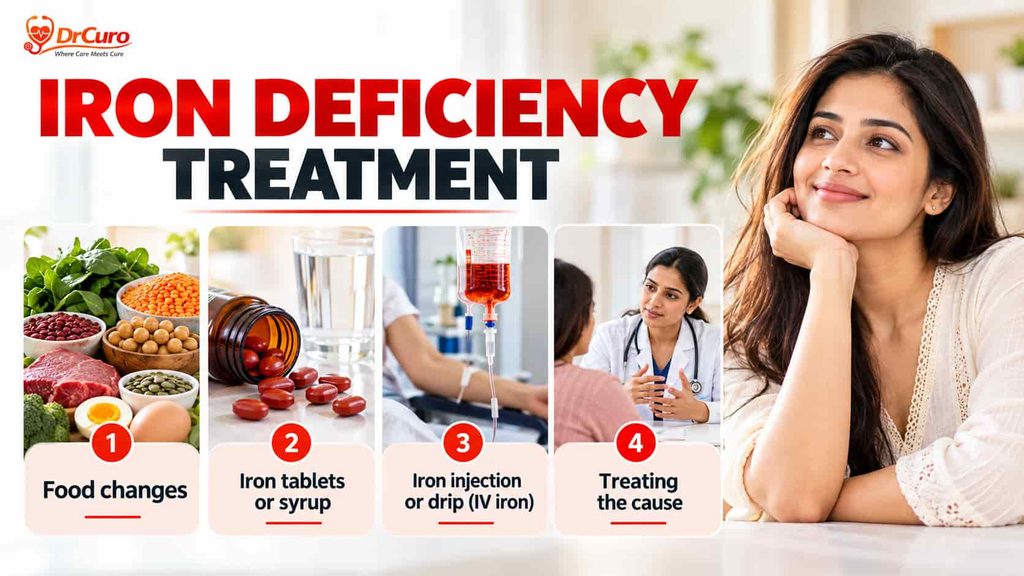
Iron Deficiency Treatment
Treatment depends on how low your iron is and what is causing it.
- Food changes: More iron-rich foods plus vitamin C, as explained above.
- Iron tablets or syrup: Your doctor may prescribe these if your tests show low iron. They are often best absorbed on an empty stomach with a vitamin C source, but your doctor will guide you. Keep a gap from tea, coffee, calcium and antacids. Common side effects are constipation, nausea and dark stools. Tell your doctor if they bother you instead of stopping on your own. Keep iron tablets away from children.
- Iron injection or drip (IV iron): Used when tablets do not work, are not tolerated, or when iron is needed quickly. It is given under medical supervision.
- Treating the cause: Heavy periods, worms, gut problems or hidden bleeding must be found and treated. If the cause stays, iron can drop again.
How long does recovery take? Haemoglobin often starts to improve in a few weeks. Rebuilding iron stores (ferritin) usually takes longer, often a few months. Your doctor may repeat blood tests and tell you when to stop. Do not stop early, even if you feel better.
When to See a Doctor
Get checked if you have:
- Tiredness or weakness that lasts for weeks
- Heavy or long periods
- Dizziness, headaches or breathlessness in daily life
- Frequent palpitations
- Cravings for ice, chalk or soil
- Iron deficiency that has come back
- Pregnancy, or plans for pregnancy (get your haemoglobin checked early)
Get urgent medical help for sudden or severe breathlessness, chest pain, fainting or very heavy bleeding.
Frequently Asked Questions (FAQs)
What are the signs of iron deficiency in females?
The most common signs of iron deficiency in females are tiredness, weakness, pale skin, dizziness, hair fall, brittle nails, cold hands and feet, and shortness of breath. Girls and women with heavy periods should watch for these signs, because they lose iron every month. A blood test can confirm it.
What is the difference between iron deficiency symptoms and iron deficiency anaemia symptoms?
In early iron deficiency, you may have mild signs like tiredness, hair fall, restless legs or poor focus, and your haemoglobin may still be normal. In iron deficiency anaemia, your haemoglobin is low, so you may also feel breathless, dizzy and weak, with pale skin and a fast heartbeat.
Can low iron cause hair fall in women?
It can in some women, but it is not the only cause. Thyroid problems, stress, illness and other nutritional deficiencies can also cause hair fall. Get tested before taking iron for hair.
How can I increase my iron levels naturally?
Eat iron-rich foods like pulses, ragi, seeds, dates, green leafy vegetables, eggs or meat. Add vitamin C foods such as lemon, amla or guava. Avoid tea and coffee with meals. If your tests show anaemia, food alone may not be enough.
Which fruits are good for low iron?
Guava, orange, amla, kiwi and strawberries do not have much iron themselves. However, their vitamin C helps your body absorb iron from plant foods. Dates and dried figs have more iron.
Can I have iron deficiency without anaemia?
Yes. Your iron stores can be low while your haemoglobin is still normal. A ferritin test can find this.
Should I take iron tablets if I feel tired all the time?
Not without testing. Tiredness can come from poor sleep, stress, thyroid problems or low vitamin B12. Take iron only if a doctor advises it.
Is low iron common during pregnancy?
Yes. Your body needs more iron to support your baby and your increased blood supply. Haemoglobin is usually checked during pregnancy, and your doctor may advise supplements. Do not choose the dose yourself.
Key Takeaways
- Common iron deficiency symptoms in women include tiredness, weakness, dizziness, pale skin, hair fall and breathlessness.
- Heavy periods, pregnancy, poor diet, poor absorption and hidden bleeding are the main causes.
- Anaemia in women means Hb below 12 g/dL (below 11 g/dL in pregnancy).
- Pair iron-rich foods with vitamin C, and keep tea, coffee and calcium away from iron-rich meals.
- Test before you treat, and find the cause.
Conclusion
Low iron is common, and it can be fixed once you know the cause. If you often feel tired, weak or dizzy, listen to your body and get a simple blood test. Along with the right treatment, a balanced diet and healthy eating habits can help you get your energy back.
Dr Curo is a medical information website, and it shares simple, easy-to-follow guides to help you understand your health. To read more about nutrition and everyday health, visit our Lifestyle & Wellness section. If you are pregnant, or if you have heavy periods, read more in our Fertility & Women Health section.
Disclaimer: This article is for general education only. It does not replace advice, diagnosis or treatment from a qualified doctor.


No Comment! Be the first one.