








Insulin Therapy: Types, Doses and How to Use It
Introduction Diabetes is one of the fastest-growing health conditions in the world today, and for a large number of people, managing it eventually means adding insulin to the treatment plan....
Introduction
Diabetes is one of the fastest-growing health conditions in the world today, and for a large number of people, managing it eventually means adding insulin to the treatment plan. Lifestyle changes, healthy eating, and oral medicines work well for many patients in the early stages, but they don’t always stay effective as the condition progresses. When the body stops producing enough insulin on its own, or when it can’t use the insulin it does make, insulin therapy becomes a necessary and often life-saving part of diabetes treatment. The word “insulin” tends to make people nervous, mostly because of the injections involved, but in reality it’s one of the safest and most predictable tools available for keeping blood sugar under control.
Table Of Content
- Introduction
- What Is Insulin?
- What Is Insulin Therapy?
- Why Is Insulin Therapy Needed?
- Who Actually Needs Insulin Therapy?
- Types of Insulin
- How Doctors Decide Which Insulin to Use
- How Is the Right Insulin Dose Decided?
- Factors That Affect Insulin Dosage
- Different Ways Insulin Is Given
- Step-by-Step: How to Use Insulin Correctly
- Best Places to Inject Insulin
- How to Store Insulin Properly
- Common Mistakes People Make With Insulin
- Benefits of Insulin Therapy
- Possible Side Effects
- Understanding Hypoglycemia
- Diet and Exercise Alongside Insulin
- Myths vs Facts About Insulin Therapy
- When to Contact Your Doctor
- Frequently Asked Questions
- Conclusion
This guide walks through what insulin actually does, the different types available, how doctors decide on dosage, and the practical side of using it correctly from injection technique to storage to avoiding common mistakes. The goal is to make this simple enough that if you or someone you know has just been prescribed insulin, this answers most of the questions that come up in the first few weeks.
What Is Insulin?
Insulin is a hormone made by the pancreas, an organ sitting behind the stomach. Its job is to move glucose (sugar) out of the bloodstream and into the body’s cells, where it gets used as energy. Every time you eat something with carbohydrates rice, bread, fruit, potatoes your blood sugar rises, and the pancreas responds by releasing insulin to move that sugar where it belongs.
When the pancreas doesn’t make enough insulin, or when the body’s cells stop responding to it properly (called insulin resistance), glucose stays stuck in the bloodstream instead of moving into cells. Blood sugar levels climb, and over time, that excess sugar damages organs eyes, kidneys, nerves, blood vessels, and the heart. Without functioning insulin, the body eventually starts breaking down fat and muscle for energy instead, which creates its own set of serious problems. This is the core reason insulin management sits at the center of diabetes treatment for so many patients.
What Is Insulin Therapy?
Insulin therapy means giving insulin from an outside source through injections, pens, or pumps because the body isn’t producing enough of it or isn’t using it correctly. Insulin can’t be taken as a pill; it’s a protein, and stomach acid would break it down before it ever reached the bloodstream. That’s why it has to be delivered directly under the skin.
The goal of insulin therapy is simple: keep blood sugar in a healthy range and lower the risk of long-term complications. Starting insulin doesn’t mean a person has “failed” at managing their diabetes that’s a common misconception. It’s simply the next appropriate step in treatment when other methods aren’t doing enough on their own. Many people notice better energy, steadier blood sugar, and fewer symptoms once they start.
Why Is Insulin Therapy Needed?
Insulin therapy gets recommended in several different situations, and it’s rarely a single factor that decides it. Common reasons include:
- The pancreas produces very little or no insulin
- Blood sugar stays high even with oral diabetes medicines
- Diabetes develops during pregnancy (gestational diabetes)
- During severe infections or illness, when the body’s insulin needs spike temporarily
- Before or after major surgery
- In diabetic ketoacidosis (DKA), which is a medical emergency
- When diet and exercise alone can no longer control blood sugar
- When long-term diabetes gradually reduces the pancreas’s own insulin output
Doctors look at blood sugar readings, HbA1c levels, age, overall health, and medical history before recommending insulin it’s not a decision made from a single test result.
Who Actually Needs Insulin Therapy?
Not everyone with diabetes needs insulin right away. It depends heavily on the type of diabetes and how well it’s currently controlled.
- People with Type 1 diabetes — their immune system destroys the insulin-producing cells in the pancreas, so they need insulin for life to survive.
- Some people with Type 2 diabetes — many start with diet, exercise, and tablets, but a portion eventually need insulin as the disease progresses.
- Women with gestational diabetes — if diet and exercise don’t control blood sugar during pregnancy, insulin is considered the safest option for both mother and baby.
- Hospitalized patients — severe illness, infection, or surgery can require temporary insulin, even for people who normally manage on tablets.
- Patients with pancreatic disorders — certain diseases or surgeries reduce the pancreas’s ability to produce insulin.
Some signs that a doctor might consider insulin necessary: blood sugar staying high despite medication, HbA1c above target, frequent urination, constant thirst, unexplained weight loss, blurred vision, slow-healing wounds, or repeated infections. These are signals that the current treatment plan isn’t enough anymore, not something to self-diagnose from.
Types of Insulin
Insulin isn’t one-size-fits-all. Different types act at different speeds and for different durations, and doctors combine them based on a person’s blood sugar pattern, lifestyle, and diabetes type.
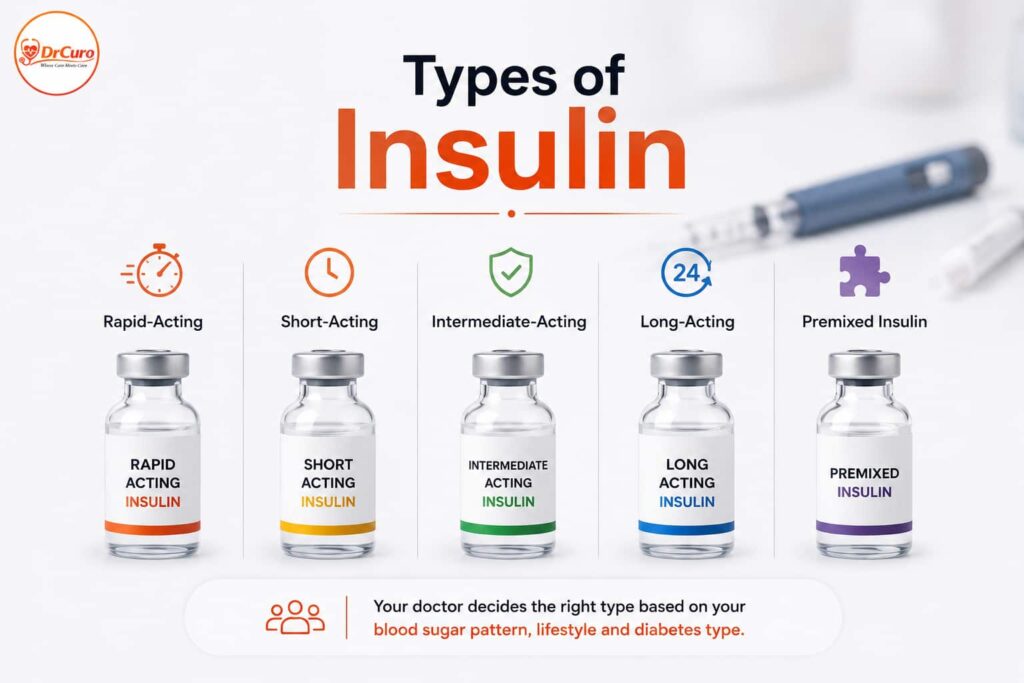
Rapid-acting insulin starts working in about 10–20 minutes and is usually taken right before meals to control the sugar spike that follows eating. It doesn’t last long a few hours at most. Common examples: Insulin Lispro, Insulin Aspart, Insulin Glulisine.
Short-acting insulin takes a bit longer to kick in, around 30–60 minutes, and stays active for several hours. Regular Human Insulin falls into this category.
Intermediate-acting insulin works more gradually and covers roughly half a day. It’s often paired with a rapid or short-acting insulin to cover both meal spikes and background sugar control. NPH insulin is the standard example.
Long-acting insulin releases steadily over 24 hours or more, keeping blood sugar stable between meals and overnight. Examples include Insulin Glargine, Insulin Detemir, and Insulin Degludec.
Premixed insulin combines a rapid or short-acting insulin with an intermediate-acting one in a single injection useful for people who want fewer daily shots.
| Type of Insulin | Starts Working | Peak Action | Duration | Common Use |
| Rapid-Acting | 10–20 minutes | 1–3 hours | 3–5 hours | Before meals |
| Short-Acting | 30–60 minutes | 2–4 hours | 5–8 hours | Before meals |
| Intermediate-Acting | 1–2 hours | 4–12 hours | 12–18 hours | Daily background control |
| Long-Acting | 1–2 hours | Minimal peak | Up to 24–42 hours | Basal (background) insulin |
| Premixed | Depends on combination | Variable | 12–24 hours | Simplified dosing schedule |
How Doctors Decide Which Insulin to Use
There’s no universal insulin regimen that fits every patient. Doctors weigh several factors before settling on a plan:
- Type of diabetes
- Blood sugar pattern throughout the day
- HbA1c level
- Age and weight
- Daily schedule and meal timings
- Physical activity levels
- Pregnancy status
- Kidney and liver function
- Other existing medical conditions
- Risk of hypoglycemia (low blood sugar)
This plan isn’t fixed forever it gets revisited and adjusted as the person’s diabetes, lifestyle, or health status changes. Regular follow-up appointments are what keep the regimen actually matched to what the body needs.
How Is the Right Insulin Dose Decided?
There’s no fixed dose that works across the board insulin dosage is personal, and it’s calculated based on blood sugar readings, body weight, eating patterns, activity levels, age, and the specific type of diabetes involved. When insulin therapy starts, doctors typically begin with a conservative dose and adjust it gradually based on how blood glucose responds. Most patients are asked to monitor their sugar regularly using a glucometer or a Continuous Glucose Monitor (CGM), and those readings guide any dose changes during follow-up visits.
One point worth repeating clearly: never adjust your own insulin dose without talking to your doctor first. Getting it wrong in either direction too much or too little can cause real complications, from dangerous blood sugar drops to poor long-term control.
Factors That Affect Insulin Dosage
- Type of diabetes (Type 1 or Type 2)
- Body weight
- Age
- Daily physical activity
- Meal size and carbohydrate intake
- Stress levels
- Illness or infection
- Pregnancy
- Hormonal changes
- Kidney or liver disease
- Other medications being taken
- Blood sugar monitoring results and HbA1c trends
A physically active person, for example, generally needs less insulin than someone with a sedentary routine, because exercise itself improves how effectively the body uses insulin. On the flip side, illness or infection often temporarily increases insulin needs, since stress hormones released during sickness push blood sugar up.
Different Ways Insulin Is Given
Insulin syringe — the traditional method, using a syringe drawn from a vial. It’s affordable and works with most insulin types, but requires careful manual measurement and isn’t the most convenient for travel or for people intimidated by manual dosing.
Insulin pen — prefilled or refillable pens have become the most commonly preferred delivery method because they’re portable, allow more accurate dosing, and cause less discomfort than traditional syringes. For most people starting insulin today, this is the default recommendation.
Insulin pump — a small electronic device that delivers insulin continuously through a thin tube placed under the skin, providing both background insulin and extra doses at meals. It offers better overall control and fewer individual injections, but it’s more expensive and needs proper training before use.
Step-by-Step: How to Use Insulin Correctly
Getting the dose right doesn’t help much if the injection technique is wrong. Here’s the basic process:
- Wash your hands with soap and water before handling insulin or the injection site.
- Check the insulin — verify the label, check the expiry date, and make sure it looks normal in color and consistency. Never use insulin that’s expired or discolored.
- Prepare the injection — if using a syringe, draw the prescribed dose carefully; if using a pen, attach a new needle and dial in the correct dose.
- Choose the injection site and clean the area if needed.
- Inject the insulin at the correct angle, injecting slowly, and hold the needle in place for about 10 seconds before withdrawing to make sure the full dose goes in.
- Dispose of the needle safely — never reuse disposable needles, and use a proper sharps disposal container.
Best Places to Inject Insulin
Insulin goes into the fatty layer just under the skin, not into muscle. The common injection sites are the abdomen, front of the thighs, upper outer arms, and buttocks and each absorbs insulin at a slightly different speed.
| Injection Site | Absorption Speed | Advantage | Thing to Remember |
| Abdomen | Fast | Most consistent absorption | Stay at least 2 inches from the navel |
| Upper Arm | Moderate | Easy if someone else is injecting you | Rotate sites regularly |
| Thigh | Moderate to Slow | Convenient for self-injection | Exercise can speed up absorption |
| Buttocks | Slow | Comfortable for long-acting insulin | Rotate injection areas |
Rotating between and within these sites matters more than people realize. Injecting into the same exact spot repeatedly can damage the fatty tissue underneath, causing lumps (lipohypertrophy), poor and unpredictable insulin absorption, and more painful injections over time.
How to Store Insulin Properly
Insulin loses effectiveness if it’s exposed to extreme heat or cold, so storage isn’t a minor detail:
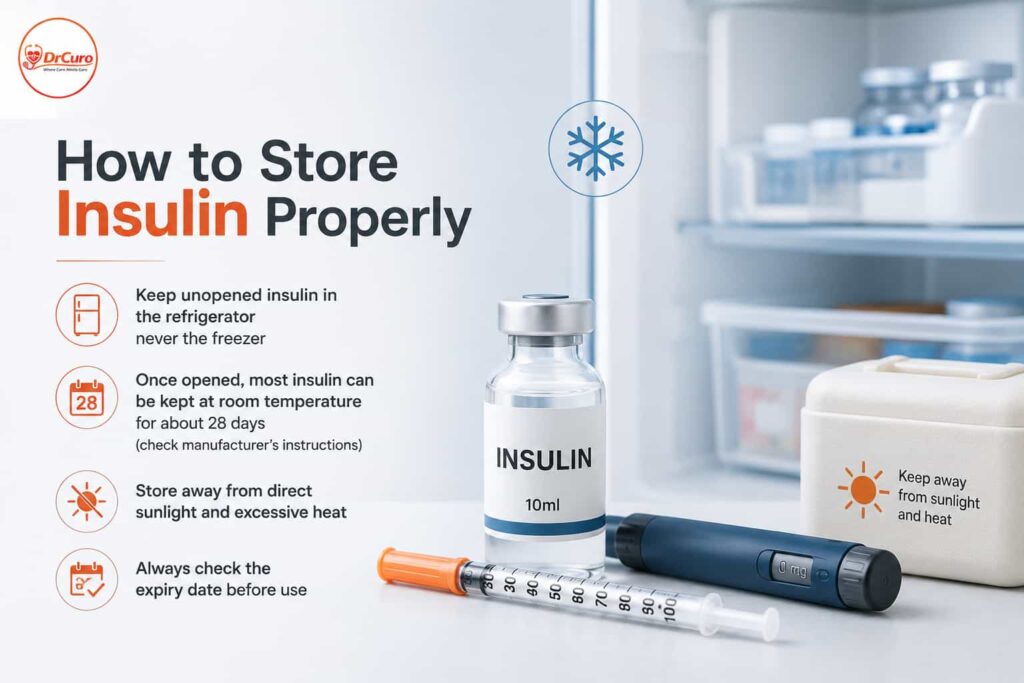
- Keep unopened insulin in the refrigerator never the freezer
- Once opened, most insulin can be kept at room temperature for about 28 days (always check the manufacturer’s specific instructions, since this varies by product)
- Store away from direct sunlight and excessive heat
- Always check the expiry date before use
Incorrect storage is one of those mistakes that doesn’t show up immediately the insulin just quietly stops working as well, and blood sugar control suffers without an obvious explanation.
Common Mistakes People Make With Insulin
Most insulin-related problems come from a handful of avoidable habits:
- Skipping doses
- Taking insulin at the wrong time relative to meals
- Injecting into the same spot repeatedly
- Using expired insulin
- Measuring the dose incorrectly
- Reusing disposable needles
- Not monitoring blood sugar consistently
- Storing insulin improperly
- Skipping a meal after taking rapid-acting insulin
- Stopping insulin without consulting a doctor
None of these are dramatic on their own, but they add up over weeks and months into genuinely poor blood sugar control.
Benefits of Insulin Therapy
When used correctly, insulin therapy does a lot more than just lower blood sugar numbers on a chart. It protects organs and improves day-to-day quality of life:
- Keeps blood sugar within target range
- Lowers the risk of kidney disease
- Protects vision by reducing diabetic eye disease risk
- Supports healthy nerve function
- Improves wound healing
- Reduces excessive thirst and frequent urination
- Increases energy levels
- Helps achieve better HbA1c results over time
- Can be used safely during pregnancy when properly prescribed
Possible Side Effects
Insulin is generally safe, but like any medication it can cause side effects most of them manageable with correct technique and monitoring.
The most common one by far is hypoglycemia (low blood sugar), which happens when too much insulin is taken, a meal is skipped, or physical activity increases without adjusting food intake. Other possible effects include mild weight gain, redness or swelling at the injection site, and skin thickening from repeated injections in the same spot.
Understanding Hypoglycemia
Hypoglycemia occurs when blood sugar drops below roughly 70 mg/dL, and it needs quick attention. Common causes include taking too much insulin, skipping or delaying meals, exercising more than usual, drinking alcohol without eating enough, or combining insulin with certain other diabetes medicines.
Warning signs include sweating, shaking, sudden hunger, a fast heartbeat, dizziness, weakness, headache, blurred vision, irritability, difficulty concentrating, and confusion and in severe cases, fainting.
If symptoms appear, the standard approach is the 15-15 rule:
- Check blood sugar if a glucometer is available
- Eat about 15 grams of fast-acting carbohydrate glucose tablets, half a glass of fruit juice, a regular (non-diet) soft drink, or a tablespoon of sugar or honey in water
- Wait 15 minutes
- Recheck blood sugar
- Repeat if it’s still low
If the person becomes unconscious, this is a medical emergency and needs immediate attention — not a wait-and-see situation.
Diet and Exercise Alongside Insulin
Insulin works best paired with sensible eating habits, not a restrictive diet. Eating at regular times, not skipping breakfast, favoring whole grains over refined ones, including plenty of vegetables, choosing fruit in moderation, and adding lean protein sources like pulses, eggs, fish, or chicken all help keep blood sugar steadier. Cutting back on sugary drinks and processed food, and staying hydrated, rounds out the basics.

Exercise helps too it improves how effectively the body uses insulin, supports heart health, and helps with weight management. But because physical activity lowers blood sugar, people on insulin should check their levels before and after exercising, carry a fast-acting sugar source, stay hydrated, and avoid exercising when blood sugar is either very high or very low. Brisk walking, cycling, swimming, yoga, and light strength training are all reasonable starting points, but any new routine is worth discussing with a doctor first.
Myths vs Facts About Insulin Therapy
| Myth | Fact |
| Insulin is only for severe diabetes | Insulin is used whenever the body needs extra help controlling blood sugar, regardless of severity |
| Needing insulin means you failed to control your diabetes | Insulin is simply another treatment option, not a sign of failure |
| Insulin is addictive | Insulin is not addictive — it replaces a hormone the body already needs |
| Insulin injections are always painful | Modern needles are thin enough that most people feel minimal discomfort |
| Once you start insulin, you can never stop | Some Type 2 diabetes patients can reduce or stop insulin under medical supervision if their condition improves |
When to Contact Your Doctor
Reach out to your healthcare provider if you notice:
- Frequent episodes of low blood sugar
- Blood sugar that stays consistently high
- Fever or severe illness
- Vomiting or inability to eat
- Swelling or infection at an injection site
- Difficulty using your insulin device
- Sudden changes in vision
- Pregnancy or plans for pregnancy
And never change your insulin dose on your own that decision belongs with your doctor, based on actual readings and context.
Frequently Asked Questions
Is insulin therapy lifelong?
For Type 1 diabetes, yes insulin is required for life. For Type 2 diabetes, it depends on the individual; some need it temporarily, others long-term.
Can insulin cure diabetes?
No. Insulin controls blood sugar and prevents complications, but it doesn’t cure the underlying condition.
Is insulin safe during pregnancy?
Yes, it’s considered one of the safest treatment options for managing diabetes during pregnancy when properly prescribed and monitored.
Can I skip a dose if I feel fine?
No. Feeling fine doesn’t mean blood sugar is actually under control — skipping doses without medical guidance can undo the stability insulin is providing.
How often should I check my blood sugar on insulin?
It depends on your specific treatment plan your doctor will tell you the right monitoring frequency for your situation.
Conclusion
Insulin therapy is one of the most effective tools available in modern diabetes treatment, particularly for people whose bodies can’t produce or use enough insulin on their own. Understanding the different types of insulin, how dosage gets decided, proper injection technique, and the everyday habits that support stable blood sugar can make a real difference in both short-term control and long-term health outcomes. None of this replaces working closely with a healthcare provider insulin therapy works best as part of an ongoing, monitored relationship with your doctor, not a set-it-and-forget-it routine.
If you or someone you know needs expert guidance on diabetes management, working with experienced professionals who build a personalized treatment plan matters more than following generic advice. At drcuro, the focus is on comprehensive diabetes care, patient education, and evidence-based treatment aimed at real, sustained blood sugar control not just short-term fixes.





No Comment! Be the first one.