





Water Intake During Summer: Myths vs Facts You Need to Know
Everyone says “drink more water in summer.” But nobody explains how much, when, or why. And that’s where people go wrong. Too little water leads to dehydration. Too much plain water...
Everyone says “drink more water in summer.” But nobody explains how much, when, or why.
Table Of Content
- Why Water Intake During Summer Is Different
- Myth vs Fact: Water Intake During Summer
- Myth 1: 8 Glasses a Day Is Enough for Everyone
- Myth 2: Drink Water Only When You Feel Thirsty
- Myth 3: The More Water You Drink, the Better
- Myth 4: Cold Drinks and Packaged Juices Keep You Hydrated
- Myth 5: If You Are Sitting Indoors, You Don’t Need Extra Water
- Myth 6: Dark Urine Just Means You Ate Something Different
- So How Much Water Do You Actually Need?
- Signs Your Water Intake During Summer Is Not Enough
- Smart Hydration Habits That Actually Work
- Start the Day With Water – Before Tea or Coffee
- Drink Small Amounts Frequently Not Large Amounts Rarely
- Add Electrolytes Especially on Hot Days
- Eat Your Water Too
- Carry a Water Bottle Everywhere
- Set Reminders if You Forget
- Who Needs Extra Attention on Water Intake During Summer
- Children
- Elderly People
- Pregnant Women
- Outdoor Workers
- When Water Alone Is Not Enough
- Common Mistakes People Make With Water Intake During Summer
- Conclusion
- Frequently Asked Questions (FAQ)
And that’s where people go wrong.
Too little water leads to dehydration. Too much plain water without electrolytes creates its own problems. Wrong timing makes hydration less effective.
Most people are following advice that sounds right but isn’t complete.
This blog fixes that. Simple facts, zero myths, practical habits on water intake during summer that actually work.
Why Water Intake During Summer Is Different
In normal weather, your body loses fluids at a manageable pace.
In summer especially above 40°C that changes completely.
Your body sweats heavily to keep itself cool. That sweat takes more than just water with it. It pulls out sodium, potassium, and other electrolytes that your body needs to function.
If you only replace water without replacing electrolytes your body stays out of balance.
Result:
- Weakness and fatigue even after drinking water
- Muscle cramps
- Headaches that don’t go away
- In serious cases hyponatremia, where low sodium causes confusion and nausea
This is why “just drink water” is incomplete advice in summer.
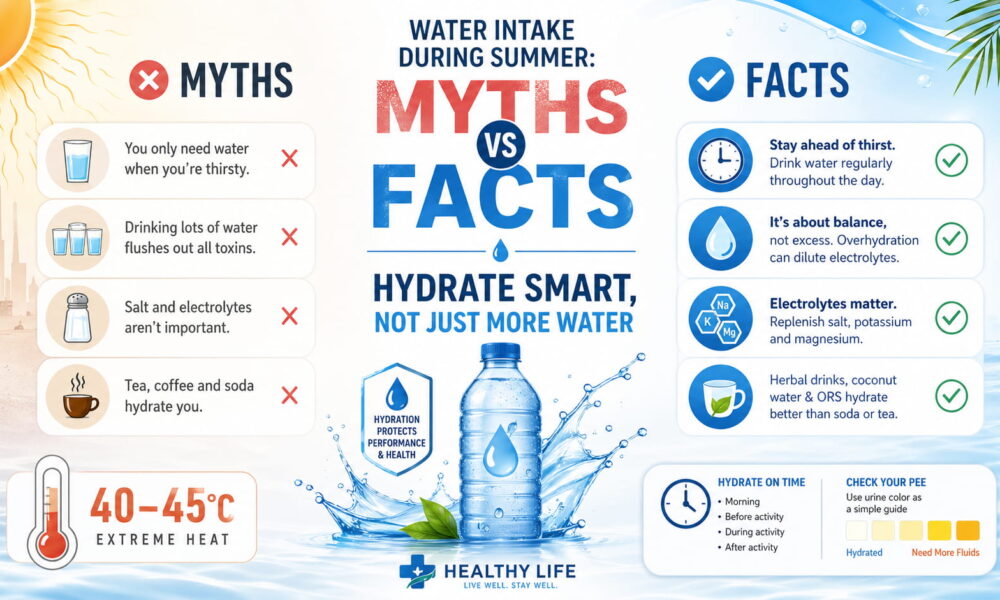
Myth vs Fact: Water Intake During Summer
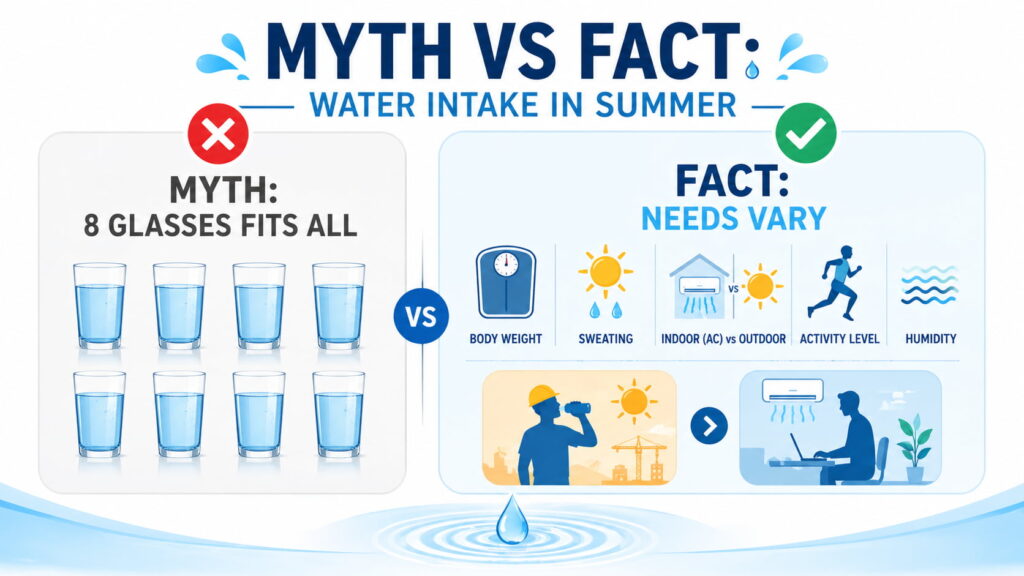
Myth 1: 8 Glasses a Day Is Enough for Everyone
Fact: 8 glasses is a general starting point not a fixed rule for summer.
Your actual needs depend on:
- Your body weight
- How much you sweat
- Whether you work indoors or outdoors
- Your activity level
- The humidity in your area
A 90 kg construction worker sweating in direct sun needs far more than 8 glasses. An office worker in AC may need slightly less. One number does not fit everyone.
Myth 2: Drink Water Only When You Feel Thirsty
Fact: Thirst is your body’s late alarm not its first signal.
By the time thirst hits, your body has already lost 1 to 2 percent of its water content. That sounds small, but it is enough to reduce your concentration, energy, and physical performance.
In summer, waiting for thirst means you are always playing catch-up with hydration. Drink on a schedule — not on demand.
Myth 3: The More Water You Drink, the Better
Fact: Overhydration is a real medical condition.
Drinking excessive plain water in a short period dilutes sodium levels in the blood a condition called hyponatremia. Symptoms include:
- Nausea and vomiting
- Headache
- Confusion
- In severe cases seizures
More is not always better. Consistent and balanced is better.
Myth 4: Cold Drinks and Packaged Juices Keep You Hydrated
Fact: They feel refreshing. They do not hydrate you properly.
Most cold drinks and packaged juices are high in sugar and low in actual hydration value. Sugar pulls water from your cells in the process of digestion making dehydration worse, not better.
They also do not replace electrolytes lost through sweat.
Better options:
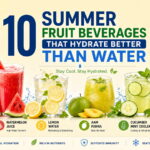
- Coconut water
- Nimbu pani with salt and sugar
- ORS
- Plain water with a pinch of salt
Myth 5: If You Are Sitting Indoors, You Don’t Need Extra Water
Fact: Being indoors does not stop fluid loss.
If your space is hot and poorly ventilated, you are sweating even without realizing it. And if you are sitting in AC all day, the dry air pulls moisture from your skin and respiratory tract continuously.
Both situations increase your water needs. Indoors does not mean safe from dehydration.
Myth 6: Dark Urine Just Means You Ate Something Different
Fact: Dark yellow or orange urine is one of the clearest signs of dehydration.
Food can occasionally affect urine color but if it is consistently dark through the day, your water intake during summer is not enough.
Target: light yellow or almost clear urine throughout the day. That is your simplest hydration check.
So How Much Water Do You Actually Need?
No fixed number works for everyone but here is a practical starting point:
General baseline for adults in summer: 3 to 4 litres per day minimum
Simple formula: Drink 35 to 40 ml of water per kg of body weight per day
Example:
- 60 kg person → 60 × 35 = 2,100 ml minimum
- In summer with sweating → add 500 ml to 1 litre on top of that
Increase your intake if you:
- Exercise or do physical work
- Work outdoors in direct sun
- Feel muscle cramps or fatigue
- Notice dark urine
Reduce slightly if:
- You are sedentary and indoors in AC
- You are eating a lot of water-rich fruits and vegetables
Signs Your Water Intake During Summer Is Not Enough
Watch your body it tells you before it becomes serious:
- Urine is dark yellow
- Dry or sticky mouth
- Tiredness that rest doesn’t fix
- Mild headache through the day
- Difficulty concentrating
- Feeling dizzy when standing up quickly
- Muscle cramps, especially in legs
These are not random summer symptoms. They are dehydration signals. Respond to them immediately.
Smart Hydration Habits That Actually Work
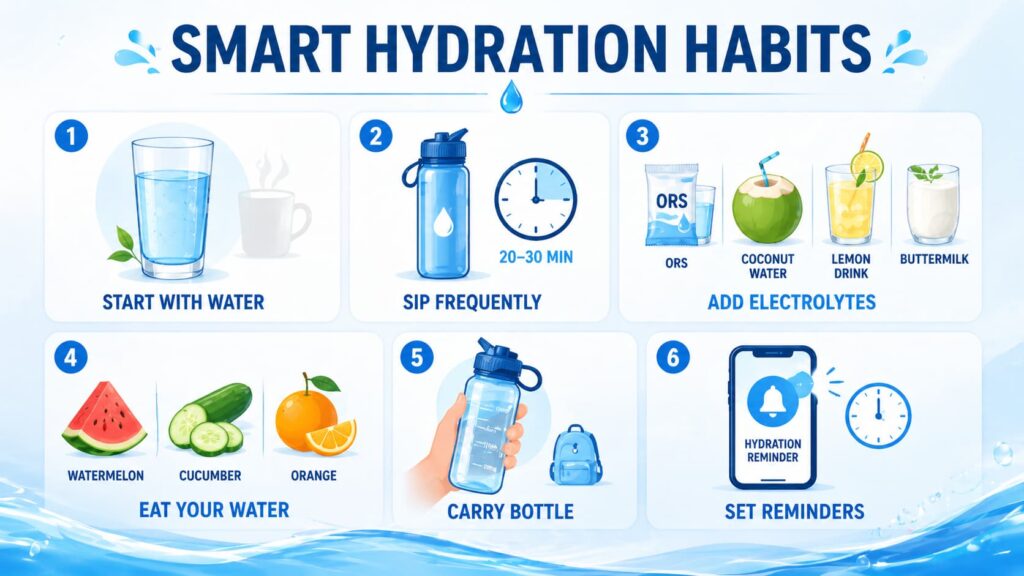
Start the Day With Water – Before Tea or Coffee
Your body loses fluid during sleep through breathing and mild sweating. Drinking 1 to 2 glasses of water first thing in the morning replaces that loss before the day begins.
Most people reach for tea or coffee first both of which are mild diuretics that increase urination. Water first, then your morning drink.
Drink Small Amounts Frequently Not Large Amounts Rarely
Drinking 1 litre at once and then nothing for 3 hours does not maintain hydration. The kidneys process and expel excess water quickly.
Sip water every 20 to 30 minutes through the day. Small and consistent beats large and occasional.
Add Electrolytes Especially on Hot Days
Plain water is not enough when you are sweating heavily. Include:
- ORS – most effective and most affordable
- Coconut water – natural electrolytes
- Nimbu pani with a pinch of salt and sugar
- Buttermilk or thin lassi
At least one electrolyte drink per day during peak summer is not optional – it is necessary.
Eat Your Water Too
Hydration does not only come from drinking. Include water-rich foods:
- Watermelon – 92 percent water
- Cucumber – 96 percent water
- Oranges, tomatoes, muskmelon
- Curd and buttermilk
These contribute meaningfully to your daily fluid intake and also provide nutrients.
Carry a Water Bottle Everywhere
Simple but consistently effective. You drink significantly more when water is in your hand than when you have to go find it. Make it automatic.
Set Reminders if You Forget
Many people get busy and simply forget to drink. A reminder every 30 to 45 minutes during work hours takes 2 seconds to set and solves the problem entirely.
Who Needs Extra Attention on Water Intake During Summer
Children
Children dehydrate faster than adults because their bodies have less fluid reserve. They also often don’t ask for water until they are significantly dehydrated.
Give them fluids every 30 minutes during hot days. Don’t wait for them to ask.
Elderly People
The sense of thirst weakens significantly with age. Many elderly people are chronically mildly dehydrated in summer without realizing it.
Check on them regularly. Bring water and fluids to them. Watch for unusual confusion or weakness — both can be signs of dehydration in older adults.
Pregnant Women
Pregnancy increases fluid needs significantly. Dehydration in pregnancy can cause complications including preterm contractions and fatigue.
Extra fluid intake, rest, and avoiding peak heat hours are non-negotiable during pregnancy in summer.
Outdoor Workers
Constant sun exposure, physical labor, and limited access to clean water make outdoor workers the highest risk group.
They need water or electrolyte drinks every 20 minutes not when thirsty. Employers have a responsibility to make this possible.
When Water Alone Is Not Enough
If you experience any of these plain water will not fix it:
- Muscle cramps during or after activity
- Extreme weakness despite drinking water
- Nausea with no other cause
- Persistent headache even after rehydrating
These point to electrolyte depletion not just dehydration.
Use:
- ORS solution most effective
- Lemon water with salt and sugar
- Coconut water
- Buttermilk
If symptoms are severe or don’t improve within 30 minutes get medical help. Don’t wait it out.
Common Mistakes People Make With Water Intake During Summer
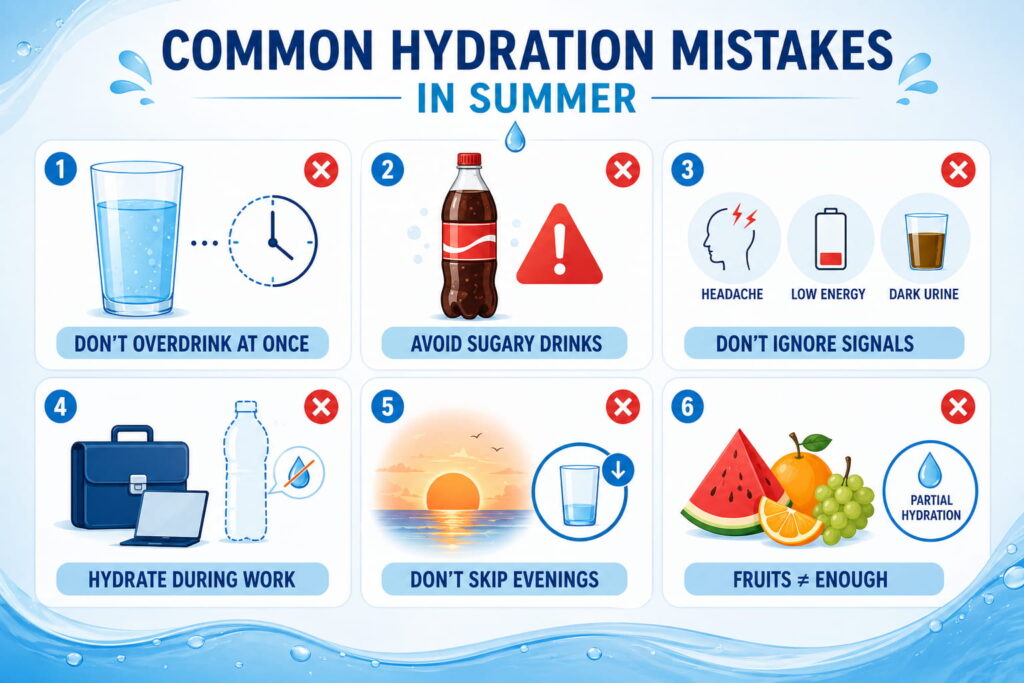
Drinking large amounts at once and then nothing for hours Your body cannot store the excess. It expels it. Spread intake through the day.
Replacing water with only cold drinks Feels good. Does not hydrate. Often makes it worse.
Ignoring early dehydration signals Mild headache, slight tiredness, slightly dark urine these are early. Most people wait until symptoms are severe. Don’t.
Skipping fluids during busy work hours Work does not pause dehydration. Your body keeps losing fluids whether you are busy or not.
Drinking less in the evening thinking the hot part of the day is over Your body still needs hydration through the night. Sweat continues during sleep. Drink water before bed.
Assuming fruits and vegetables replace all fluid needs They help significantly but they do not replace drinking water entirely.
Conclusion
Water intake during summer is not complicated but most people still get it wrong.
It is not about drinking the most water. It is about drinking the right amount, at the right intervals, with the right balance of electrolytes.
Follow the signals your body sends. Don’t wait for thirst. Don’t rely on sugary drinks. Don’t assume indoors means safe.
Small, consistent habits make the difference between feeling drained every summer and actually functioning well in the heat.
At DrCuro, we believe that the right information simple, clear, and practical is the first step to staying healthy. Hydration is not a summer tip. It is a daily habit that protects you when the heat is working hardest against you.
DrCuro
Frequently Asked Questions (FAQ)
Q1. How much water should I drink daily during summer?
Most adults need 3 to 4 litres per day in summer. A simple formula 35 to 40 ml per kg of body weight gives you a personal baseline. Increase it if you exercise, work outdoors, or sweat heavily.
Q2. Is it harmful to drink too much water?
Yes. Drinking excessive plain water rapidly can dilute sodium in the blood a condition called hyponatremia causing nausea, headache, and confusion. Consistent and balanced intake is better than large amounts at once.
Q3. What is the best drink for hydration in summer?
Plain water remains the best option. For heavy sweating, add ORS, coconut water, or nimbu pani with salt and sugar to replace electrolytes. Avoid sugary cold drinks and packaged juices as primary hydration sources.
Q4. How do I know if I am dehydrated?
Check your urine color dark yellow means you need more fluids. Other signs include dry mouth, persistent headache, tiredness, dizziness, and muscle cramps. Light yellow urine through the day means you are hydrated well.
Q5. Do fruits and vegetables count toward daily water intake?
Yes, significantly. Watermelon is 92 percent water, cucumber is 96 percent water. Eating water-rich foods contributes meaningfully to your daily fluid intake. But they supplement water they do not replace it entirely.
Q6. Should children and elderly people drink more water in summer?
Yes. Both groups are at higher risk. Children dehydrate faster and may not ask for water. Elderly people have a weaker sense of thirst. Both need regular fluid intake throughout the day don’t wait for them to ask.



No Comment! Be the first one.