






45 Degree Still Hydrated: How to Stay Fit, Healthy & Fresh in Extreme Heat
45°C outside. Your phone is hot. The road is melting. And somehow, life still has to go on. Most people handle extreme heat the wrong way they either ignore it completely or panic and do nothing...
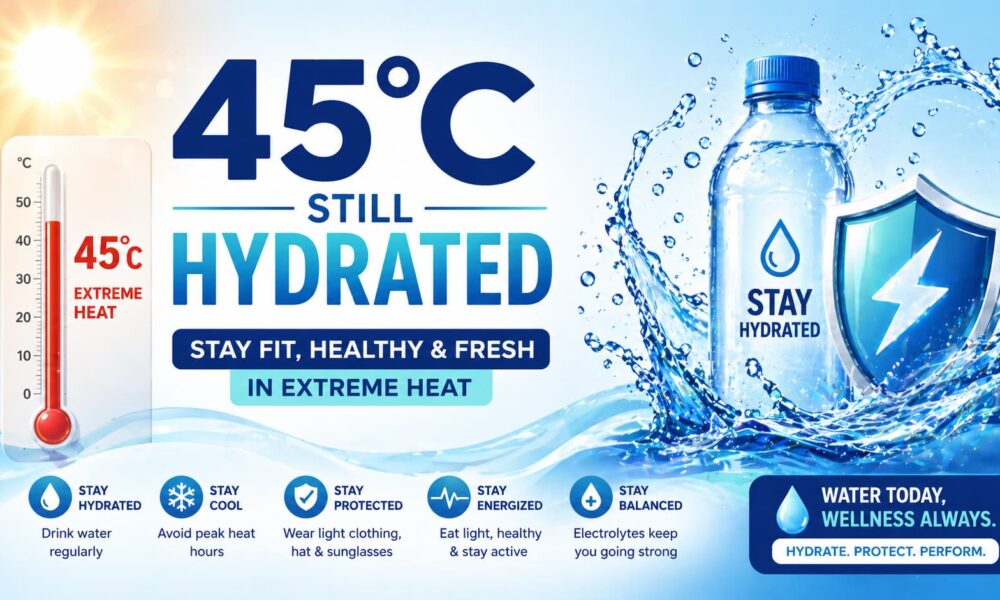
45°C outside. Your phone is hot. The road is melting. And somehow, life still has to go on.
Table Of Content
- What Actually Happens to Your Body at 45°C
- The Real Goal at 45°C: Smart Functioning, Not Peak Performance
- 45 Degree Still Hydrated: The Hydration Strategy Most People Get Wrong
- Drink Small Amounts Frequently Not Large Amounts Rarely
- Water Alone Is Not Enough
- What to Completely Avoid
- Smart Daily Routine When It’s 45°C Outside
- Morning – Your Best Window (5 AM to 10 AM)
- Afternoon – The Danger Zone (11 AM to 4 PM)
- Evening – Slow Recovery Window (5 PM onwards)
- Can You Exercise at 45°C and Stay Fit?
- What Works
- What Does Not Work
- Diet Plan to Stay Cool, Energized and 45 Degree Still Hydrated
- What to Eat
- What to Avoid
- How to Stay Mentally Fresh When Heat Is Draining You
- Practical Ways to Stay Mentally Sharp
- Home Cooling Hacks That Actually Work Without AC
- Warning Signs Your Body Is Losing the Fight
- Early Signals – Act Now
- Danger Signs – Get Help Immediately
- Special Care for High-Risk Groups
- Children
- Elderly
- Pregnant Women
- Common Mistakes That Make 45°C Even Worse
- Emergency: What to Do If Someone Collapses in the Heat
- Bottom Line
- Frequently Asked Questions (FAQ)
Most people handle extreme heat the wrong way they either ignore it completely or panic and do nothing productive. Neither works.
The truth is simple: your body can handle extreme heat, but only if you stop treating it like a normal day. The rules change at 45°C. Your routine, your diet, your water intake, your exercise all of it needs to shift.
This blog tells you exactly how to stay 45 degree still hydrated, functional, and reasonably fresh without unrealistic advice.
What Actually Happens to Your Body at 45°C
Before fixing the problem, understand what’s happening inside.
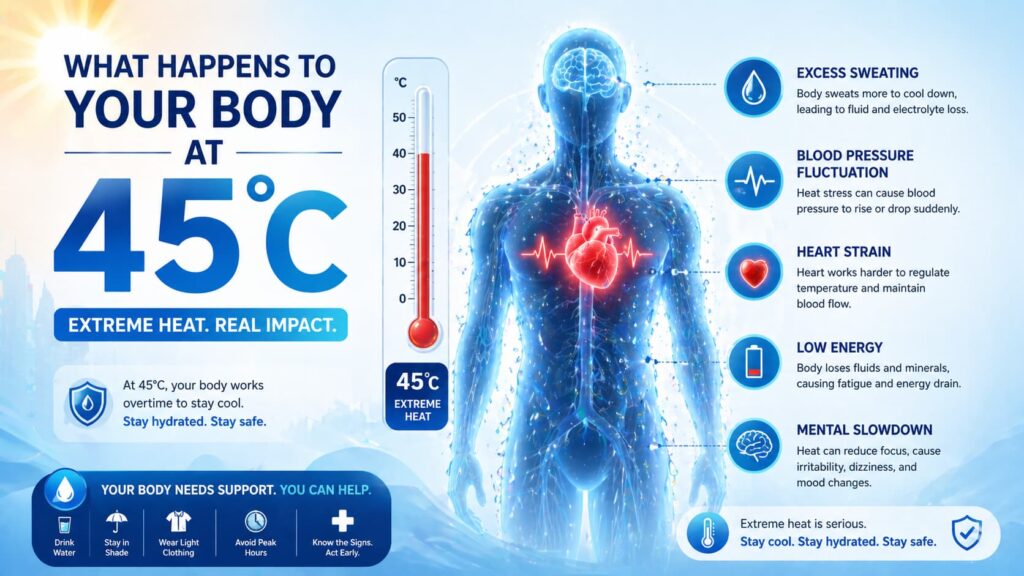
At 45°C, your body is doing one thing non-stop trying to cool itself down. That costs energy, fluids, and focus.
Here’s what’s happening:
- You are sweating more than you realize even when sitting still
- Your blood pressure fluctuates as fluids drop
- Your heart works harder to pump blood to the skin for cooling
- Energy drains faster than on a normal day
- Your brain slows down heat affects focus and mood directly
This is not weakness. This is biology. The body is doing its job. Your job is to support it not fight it.
The Real Goal at 45°C: Smart Functioning, Not Peak Performance
This needs to be said clearly trying to maintain your normal pace at 45°C is poor judgment, not dedication.
Your goal shifts to:
- Keeping the body hydrated consistently
- Preserving energy for what actually matters
- Avoiding heat stress before it becomes a health emergency
- Supporting your body’s cooling system instead of overloading it
Pushing through extreme heat without adapting isn’t strength. It’s how people end up in hospitals.
45 Degree Still Hydrated: The Hydration Strategy Most People Get Wrong
“Drink more water” is the most repeated and most incomplete advice about heat.
Here’s what actually works:
Drink Small Amounts Frequently Not Large Amounts Rarely
Drinking 2 glasses at once and then nothing for 3 hours does not keep you hydrated. Your kidneys process and expel excess water quickly. Small, consistent intake throughout the day is what keeps your cells actually hydrated.
Drink something every 20 to 30 minutes. Set a reminder if needed.
Water Alone Is Not Enough
When you sweat, you lose more than water. You lose sodium, potassium, and other electrolytes. Replacing only water without replacing electrolytes can actually make things worse a condition called hyponatremia where the blood becomes too diluted.
Include:
- ORS (Oral Rehydration Salts) most effective and cheapest option
- Coconut water natural electrolytes
- Nimbu pani with a pinch of salt and sugar
- Buttermilk or thin curd-based drinks
What to Completely Avoid
- Sugary cold drinks they pull water from cells and worsen dehydration
- Alcohol causes rapid fluid loss
- Excess tea and coffee mild diuretics that increase urination
Hydration at 45°C is about consistency plus electrolyte balance not just volume.
Smart Daily Routine When It’s 45°C Outside
If your schedule doesn’t adapt to the heat, your health will pay the price.
Morning – Your Best Window (5 AM to 10 AM)
- Wake up early and use this window for important tasks, outdoor work, or exercise
- The air is cooler, humidity is lower, and your body performs better
- Light stretching, walking, or yoga works well in this window
- Eat a proper breakfast skipping it leads to weakness by midday
Afternoon – The Danger Zone (11 AM to 4 PM)
- Stay indoors if there is any possible way to do so
- If you must go out, cover your head, carry water, and minimize time outside
- Keep your space ventilated curtains closed against sunlight, windows creating cross-ventilation
- Do low-effort tasks this is not the time for physically demanding work
- Rest is not laziness in 45°C heat. It is strategy.
Evening – Slow Recovery Window (5 PM onwards)
- Resume light activity gradually after 5 PM
- Hydrate consistently as temperatures drop
- Avoid heavy exercise even in the evening your body has already been working all day
- Light meals work better than heavy dinners in summer
Can You Exercise at 45°C and Stay Fit?
Yes but with strict, non-negotiable limits.
What Works
- Early morning sessions between 5 AM and 8 AM
- Low to moderate intensity walking, light yoga, bodyweight exercises
- Sessions no longer than 20 to 30 minutes
- Hydrate before, during, and after not just after
What Does Not Work
- Running or cycling in direct afternoon sunlight
- High-intensity training in unventilated spaces
- Outdoor sports during peak heat hours
- Pushing through fatigue because “it’s just heat”
One important point muscle cramps during exercise in summer are not normal soreness. They are an early sign of electrolyte depletion. Stop, hydrate with ORS, and rest.
Fitness in extreme heat means maintaining not building. Maintenance is the goal. That is enough.
Diet Plan to Stay Cool, Energized and 45 Degree Still Hydrated
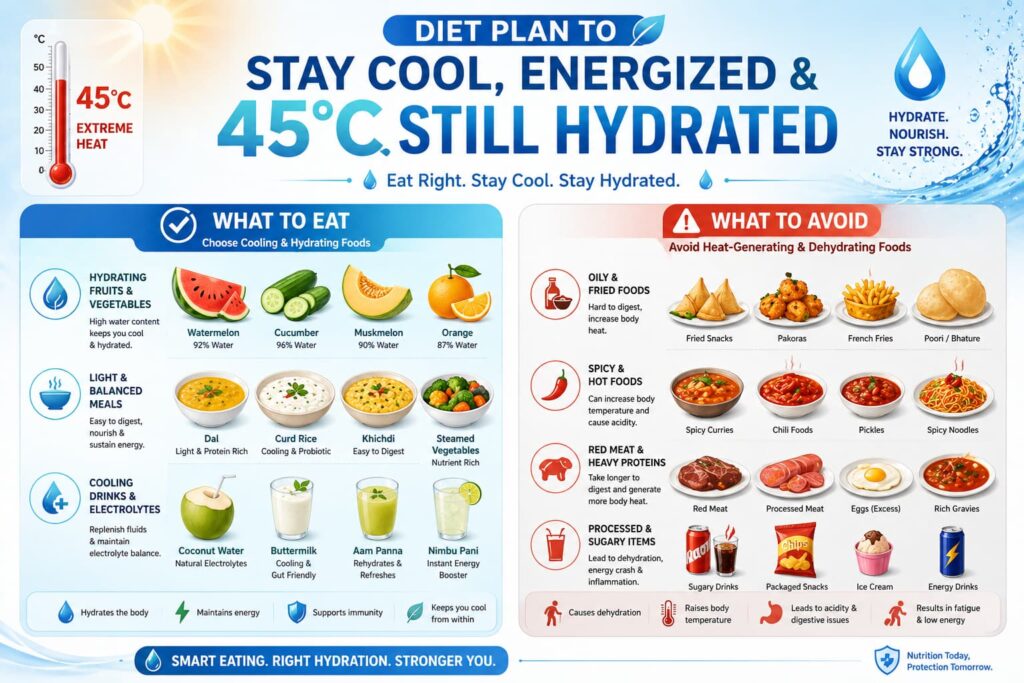
Food directly affects how hot or cool your body runs. Most people don’t realize this.
What to Eat
Water-rich fruits: Watermelon, cucumber, muskmelon, oranges high water content, natural sugars, easy on digestion
Light meals: Dal, curd rice, steamed vegetables, khichdi easy to digest, don’t generate excessive body heat
Natural cooling drinks: Buttermilk, coconut water, aam panna, nimbu pani all help maintain electrolyte balance
Small and frequent: Eat 4 to 5 small meals instead of 2 to 3 large ones large meals make the body work harder and generate more internal heat
What to Avoid
- Oily and fried food heavy on digestion, raises body temperature
- Spicy food increases sweating and heat sensation
- Red meat and heavy non-veg meals during daytime
- Processed and packaged food high sodium, low nutrition
- Excess sugar spikes energy then crashes it
Your food is either helping your body stay cool or making it work harder. Choose accordingly.
How to Stay Mentally Fresh When Heat Is Draining You
Heat is not just a physical problem. It affects your mood, focus, and decision-making.
Research consistently shows that high temperatures increase irritability, reduce concentration, and slow cognitive performance. This is not a mindset issue it is a physiological response.
Practical Ways to Stay Mentally Sharp
- Cool showers twice a day not ice cold, just cool. Sudden cold shocks the system.
- Wash your face and wrists frequently pulse points cool the blood quickly
- Wear breathable cotton – physical comfort directly reduces mental stress
- Keep your workspace ventilated – even a slight breeze improves focus
- Sleep enough – heat disrupts sleep, and poor sleep makes heat harder to handle the next day. Prioritize it.
- Limit screen time in peak heat – screens generate heat and add to eye strain
Mental fatigue in summer is real and it compounds. Ignore it once, and it gets harder to recover each day.
Home Cooling Hacks That Actually Work Without AC
Not everyone has AC. These actually help:
Block sunlight before it enters Close curtains and blinds on the sun-facing side of your home before 9 AM. Once heat enters a room, it is hard to remove.
Create cross-ventilation Open windows on opposite sides of a room. this creates airflow even without a fan. Works best in early morning and after sunset.
Damp curtains Hang slightly damp curtains near windows. Air passing through them cools slightly before entering the room.
Bowl of cold water in front of a fan Not powerful, but adds slight cooling effect in small rooms.
Cool your pulse points Wet cloth on the back of the neck, inner wrists, and forehead cools the body faster than most people expect.
Sleep low Hot air rises. If you sleep on the floor or on a low cot during peak summer, the temperature is genuinely lower.
Being realistic at 45°C, these are supportive measures, not solutions. If you have access to a cooling center or AC, use it.
Warning Signs Your Body Is Losing the Fight
Early Signals – Act Now
- Persistent headache
- Unusual tiredness that rest doesn’t fix
- Muscle cramps, especially in legs
- Nausea without obvious cause
- Mouth feeling dry even after drinking water
Danger Signs – Get Help Immediately
- Confusion or disorientation
- Sweating stops suddenly despite the heat
- Skin is hot and dry
- Very high body temperature
- Loss of consciousness
Do not wait these out. Do not assume they will pass. Heatstroke can move from early signs to life-threatening within an hour.
Special Care for High-Risk Groups
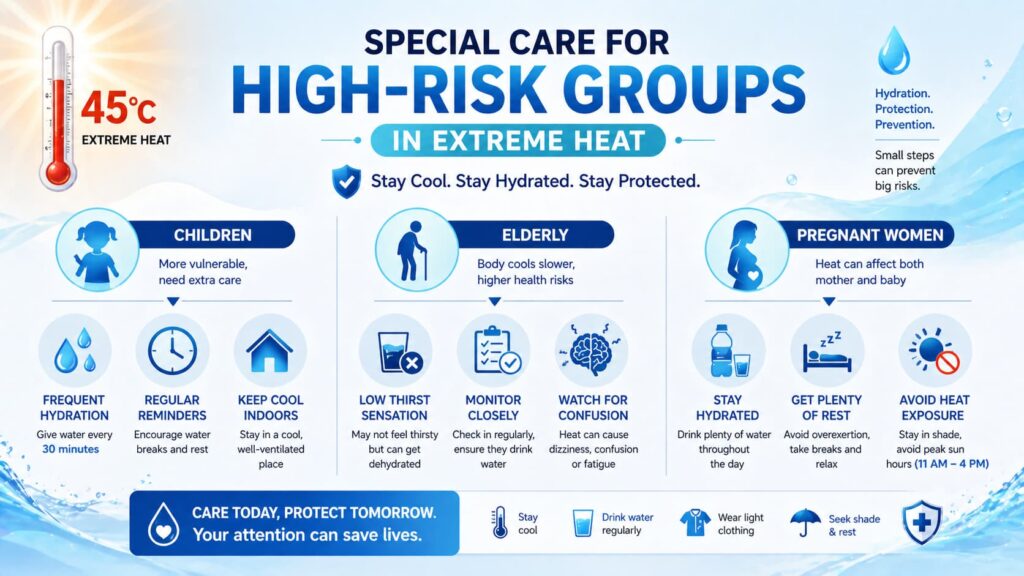
Children
- Dehydrate faster than adults their bodies have less fluid reserve
- Need fluid intake every 30 minutes during heat
- Watch for unusual crying, dry mouth, or reduced urination
- Keep them indoors during peak hours without exception
Elderly
- The sense of thirst weakens with age they often don’t feel dehydrated until it’s serious
- Check on them regularly and bring fluids to them
- Watch for confusion, which can be an early sign of dehydration in older adults
Pregnant Women
- Higher risk of dehydration, fatigue, and heat-related complications
- Need extra fluid intake beyond normal recommendations
- Avoid outdoor exposure during peak hours completely
- Rest is non-negotiable — not optional
Common Mistakes That Make 45°C Even Worse
Skipping meals to feel lighter This leads to weakness and low blood sugar making heat harder to handle, not easier.
Drinking only cold drinks Feels good for 5 minutes, worsens dehydration over the next few hours.
Sitting in full AC all day then stepping into 45°C Repeated extreme temperature transitions stress the cardiovascular system. Keep temperature differences moderate.
Ignoring early warning signs Most heat emergencies are preventable. People ignore signals and wait too long.
Reducing water intake in the evening Many people drink well during the day but cut back in the evening. The body still needs hydration through the night, especially in summer.
Emergency: What to Do If Someone Collapses in the Heat
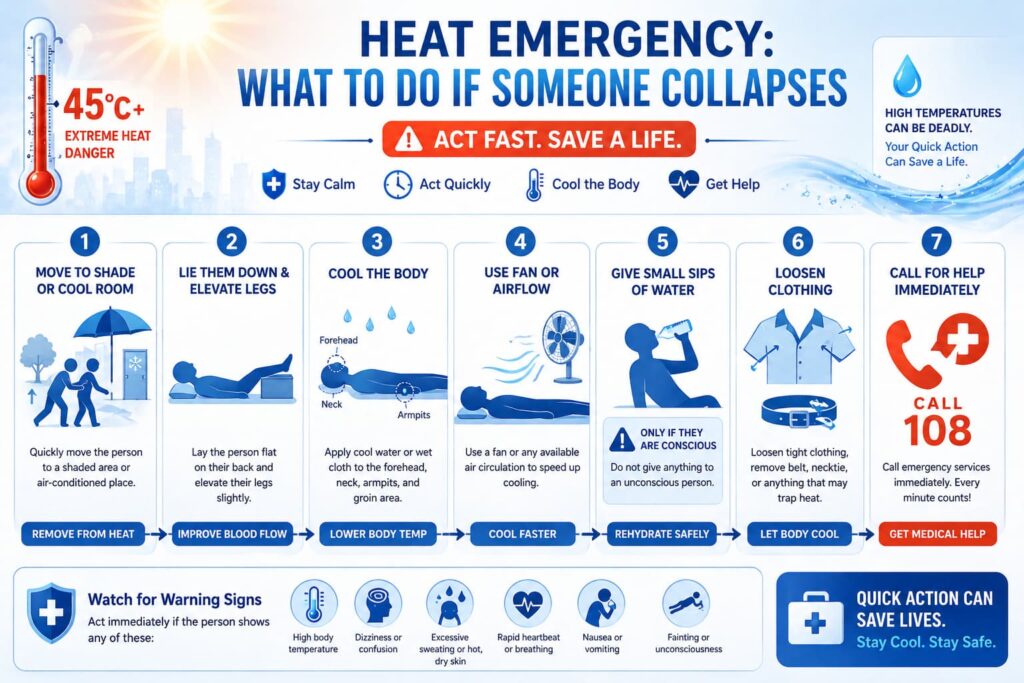
- Move them to shade or a cool room immediately, without delay
- Lay them flat, legs slightly elevated
- Sponge the body with cool water neck, armpits, forehead first
- Fan them while cooling airflow speeds up the process
- Give small sips of water only if they are fully conscious
- Loosen all tight clothing
- Call for medical help if they are confused, unconscious, or not improving within 15 minutes
Do not wait for symptoms to “settle on their own.” With heatstroke, they won’t.
Bottom Line
At 45°C, the body is not your enemy it is working harder than ever to keep you alive. Your job is to work with it, not against it.
Staying 45 degree still hydrated is not complicated. It is consistent. Drink before thirst. Eat light. Avoid peak hours. Recognize warning signs. Adapt your routine.
The people who struggle most in extreme heat are not the weakest they are the ones who refused to change their habits when the environment demanded it.
Heat at this level is not a minor inconvenience. It is a genuine threat. Treat it as one.
At DrCuro, we believe that staying healthy in extreme conditions starts with the right information not panic, not guesswork. This guide is our commitment to keeping you informed, prepared, and protected whether it’s 35°C or 45°C outside.
Frequently Asked Questions (FAQ)
Q1. Is it really possible to stay 45 degree still hydrated throughout the day?
Yes but only with a consistent strategy. Small sips every 20 to 30 minutes, electrolyte drinks alongside plain water, and avoiding drinks that dehydrate you. Volume alone doesn’t keep you hydrated consistency and electrolyte balance do.
Q2. How much water is enough at 45°C?
There is no single fixed number because it depends on your body weight, activity level, and humidity. A general baseline is 3.5 to 5 litres per day for an active adult in extreme heat. Include ORS or coconut water — not just plain water.
Q3. Can I exercise at 45°C without risking my health?
Yes, with limits. Early morning, low intensity, 20 to 30 minutes maximum. Avoid anything high-intensity or outdoors during peak heat hours. Hydrate before, during, and after.
Q4. Are cold drinks the best way to cool down?
No. They feel cooling but most sugary cold drinks worsen dehydration within hours. Water, ORS, nimbu pani, and coconut water are far more effective for actual hydration.
Q5. What is the fastest way to bring body temperature down?
Move to a cool area. Sponge cool water on neck, armpits, and forehead. Fan yourself or have someone fan you. Drink small sips of water or ORS if conscious. These work faster than most people expect.
Q6. Who needs the most protection during a 45°C heat wave?
Elderly people, young children, pregnant women, and outdoor workers. These groups dehydrate faster, have less ability to regulate body temperature, or have no choice but to be outside. They need active monitoring — not just general advice.
Q7. Is it safe to sleep with a fan on all night in extreme heat?
Yes, but keep yourself hydrated before sleeping. A fan in high humidity moves hot air without cooling you. If humidity is high, a damp cloth on your forehead or a bowl of water near the fan helps slightly. Drink water before bed — you sweat during sleep too.
Q8. What foods should I completely avoid at 45°C?
Oily and fried food, heavy spicy meals, red meat during daytime, alcohol, sugary cold drinks, and processed packaged food. All of these either raise body temperature, cause dehydration, or both.




No Comment! Be the first one.