





Heat Wave Alert: What It Is, Why It Happens & How to Protect Yourself
Every summer, a heat wave alert flashes across news channels and weather apps and most people treat it like background noise. That’s a dangerous habit. A heat wave is not just uncomfortable...
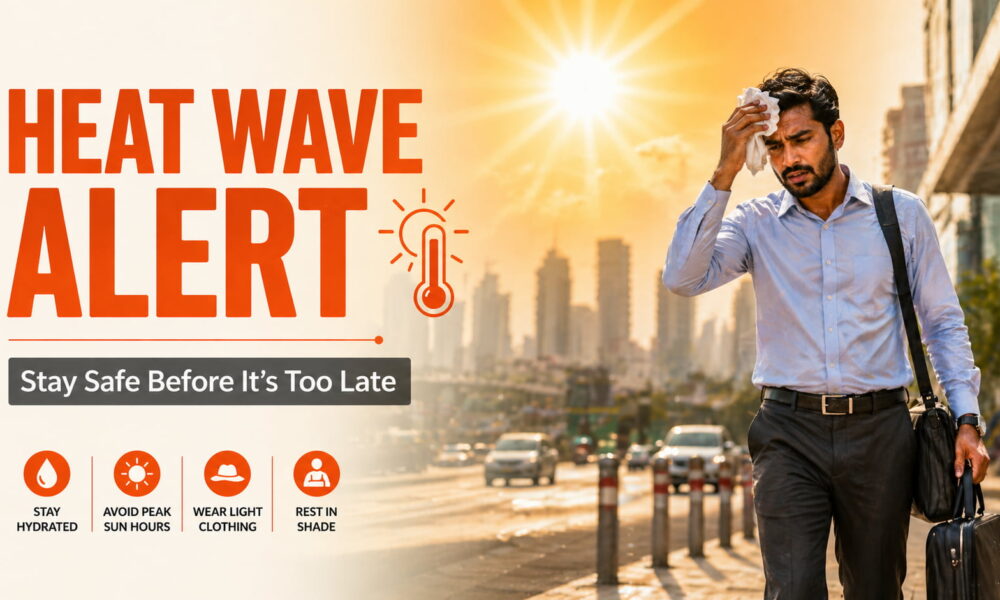
Every summer, a heat wave alert flashes across news channels and weather apps and most people treat it like background noise. That’s a dangerous habit.
Table Of Content
- What Is a Heat Wave?
- Why Does a Heat Wave Happen?
- 1. High-Pressure Systems Trap Hot Air
- 2. Climate Change Is Making It Worse
- 3. Urban Heat Islands
- 4. Loss of Green Cover
- 5. Delayed or Weak Monsoon
- Who Is Most at Risk During a Heat Wave Alert?
- What Heat Does to Your Body
- Dehydration – The Starting Point
- Heat Exhaustion – Your Body Is Struggling
- Heatstroke – This Is a Medical Emergency
- Early Warning Signs You Should Never Ignore
- How to Actually Stay Safe During a Heat Wave
- DrCuro Says: Hydrate Before You’re Thirsty
- DrCuro Says: Respect Peak Heat Hours
- DrCuro Says: Wear the Right Clothes
- DrCuro Says: Keep Your Space Cool
- DrCuro Says: Eat Light and Smart
- Common Mistakes That Put People at Risk
- What to Do in a Heat Emergency
- DrCuro Says: Act Fast Every Minute Counts
- For Outdoor Workers Specifically
- DrCuro Says: Your Job Shouldn’t Cost You Your Health
- The Bigger Problem Nobody Is Solving Fast Enough
- DrCuro Says: Personal Precautions Are Not Enough on Their Own
- Bottom Line
- DrCuro Says: Take the Alert Seriously Before Someone Gets Hurt
- Frequently Asked Questions (FAQ)
- DrCuro Answers What People Actually Want to Know
A heat wave is not just uncomfortable weather. It is a medical threat that kills thousands of people every year across India many of whom never saw it coming because they didn’t take the warning seriously.
This guide breaks down everything you need to know: what a heat wave actually is, why it happens, who is most at risk, and what to do step by step to protect yourself and your family.
What Is a Heat Wave?
A heat wave is a period of abnormally high temperatures that lasts for several consecutive days significantly above what is normal for that region and time of year.
In India, the IMD (India Meteorological Department) officially declares a heat wave when:
- Plains temperatures reach 40°C or above
- The temperature is at least 4.5°C higher than the normal average for that date
But the number on the thermometer is only part of the story.
Humidity changes everything. When the air is humid, sweat doesn’t evaporate from your skin properly. Sweating is your body’s primary cooling system. When it stops working efficiently, your internal temperature rises faster even if the actual air temperature looks manageable on paper.
This is why a 38°C humid day in eastern UP can be more dangerous than a 42°C dry day in Rajasthan.
Why Does a Heat Wave Happen?
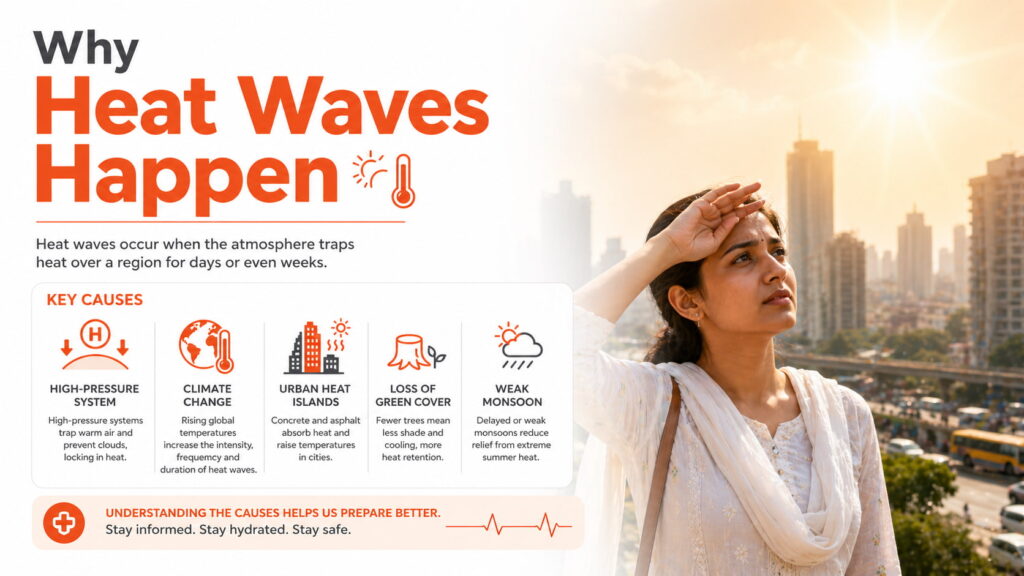
1. High-Pressure Systems Trap Hot Air
When a high-pressure weather system settles over a region, it acts like a lid on a pot. Hot air gets locked in place. Cooler air from surrounding areas cannot enter. Temperatures build up day after day with no relief.
2. Climate Change Is Making It Worse
Global average temperatures are rising. This means the baseline from which heat waves start is already higher than it was 30 years ago. The result heat waves are arriving earlier in the year, lasting longer, and reaching higher peak temperatures than previous generations experienced.
This is not a future projection. It is already happening across India every summer.
3. Urban Heat Islands
Cities trap and hold heat in a way that rural areas do not. Concrete roads, brick buildings, metal rooftops all of these absorb heat during the day and slowly release it at night. This means cities like Lucknow, Delhi, Kanpur, and Agra never fully cool down between day and night during a heat wave.
Urban areas can run 3 to 5°C hotter than nearby villages just because of how they are built.
4. Loss of Green Cover
Trees cool their surroundings in two ways through shade and through a process called evapotranspiration, where they release moisture into the air. Fewer trees means less natural cooling. Most Indian cities are cutting trees faster than they are planting them.
5. Delayed or Weak Monsoon
India’s summer heat is supposed to break when the monsoon arrives. When the monsoon is delayed or weak, the heat season simply extends. More days of extreme temperature, more cumulative risk, more chances of a serious health emergency.
Who Is Most at Risk During a Heat Wave Alert?
Heat does not affect everyone equally. Some people are significantly more vulnerable:
Elderly people – The body’s ability to regulate temperature weakens with age. Elderly people often don’t feel thirsty even when dehydrated, which makes them especially high-risk.
Infants and young children – Their bodies dehydrate faster and have less capacity to handle temperature stress.
Pregnant women – Extreme heat increases the risk of complications including preterm labor and dehydration-related issues.
Outdoor workers – Farmers, construction workers, delivery riders, traffic police, and street vendors face prolonged exposure with little control over their environment.
People with chronic illness – Heart disease, diabetes, kidney disease, and respiratory conditions all become harder to manage in extreme heat.
If anyone in your household falls into these categories, don’t wait for symptoms. Take precautions from day one of a heat wave alert.
What Heat Does to Your Body
Dehydration – The Starting Point
Your body sweats to cool itself down. During a heat wave, it can lose fluids faster than most people replace them. Early dehydration feels like tiredness and mild dizziness easy to dismiss, easy to ignore. That’s the problem.
Heat Exhaustion – Your Body Is Struggling
Heat exhaustion is what happens when dehydration and heat stress go unchecked. The body is still trying to cope, but it is running low on resources.
Symptoms include:
- Heavy sweating
- Weakness and fatigue
- Headache
- Nausea or vomiting
- Feeling faint or actually fainting
At this stage, the person needs to stop immediately, move to a cool area, and hydrate. If this is treated correctly, full recovery is possible without medical intervention.
Heatstroke – This Is a Medical Emergency
Heatstroke is what happens when the body’s cooling system fails completely. Core body temperature rises above 40°C. The brain and organs begin to be affected.
Warning signs:
- Confusion, disorientation, or unusual behavior
- Hot, dry skin sweating has stopped
- Very high body temperature
- Loss of consciousness
- Seizures in severe cases
Heatstroke is fatal if not treated quickly. Call for emergency medical help immediately do not try to manage it at home alone.
Early Warning Signs You Should Never Ignore
Most heat emergencies don’t happen without warning. The body sends signals first:
- Persistent headache during or after heat exposure
- Unusual tiredness that doesn’t improve with rest
- Muscle cramps, especially in the legs
- Nausea without an obvious cause
- Sweating suddenly stops despite the heat
These are not minor inconveniences. They are your body telling you it is losing the fight against heat. Respond immediately move to a cool area, hydrate, and rest.
How to Actually Stay Safe During a Heat Wave
DrCuro Says: Hydrate Before You’re Thirsty
Thirst is a late signal. By the time you feel thirsty, dehydration has already begun.
- Drink water at regular intervals throughout the day don’t wait
- Include ORS, coconut water, and nimbu pani to replace electrolytes
- Avoid alcohol and excessive caffeine both pull water out of the body
- Target at least 3 to 4 litres of fluid per day, more if you’re outdoors
DrCuro Says: Respect Peak Heat Hours
The sun is most dangerous between 11 AM and 4 PM. This is not just advice during an active heat wave alert, being outside during these hours without protection is a genuine health risk.
- Stay indoors if you have no urgent reason to be out
- If you must go out, carry an umbrella, cover your head, and wear sunglasses
- Plan outdoor tasks for early morning or after 5 PM
DrCuro Says: Wear the Right Clothes
- Light-colored, loose-fitting cotton clothes
- Full sleeves are better than sleeveless they block direct sunlight on the skin
- Avoid dark colors they absorb heat
- Avoid synthetic fabrics they trap heat and reduce airflow
DrCuro Says: Keep Your Space Cool
- Use curtains or blinds to block direct sunlight from entering rooms
- Keep windows open at night to let cooler air in
- Use fans, coolers, or AC if available
- If using AC, keep it at 24–26°C extreme cold-to-hot transitions stress the body
DrCuro Says: Eat Light and Smart
- Include water-rich fruits watermelon, cucumber, muskmelon, oranges
- Eat smaller, more frequent meals instead of two or three heavy ones
- Avoid oily, spicy, and heavily processed food they raise body temperature and stress digestion
- Curd, buttermilk, and coconut water are excellent options
Common Mistakes That Put People at Risk
“I’ll drink water when I feel thirsty” Wrong. Thirst means dehydration is already underway. Drink on a schedule, not on demand.
“A fan is enough” In low humidity, a fan helps. In high humidity which is common across UP, Bihar, and coastal areas a fan just moves hot air. It does not cool you down effectively.
“I’m young and healthy, I can handle it” Heatstroke does not check your age or fitness level. Prolonged exposure at extreme temperatures can overwhelm any body.
“Cold drinks will keep me hydrated” Most commercial cold drinks are high in sugar and low in actual hydration value. Many worsen dehydration. Stick to water, ORS, or natural drinks.
What to Do in a Heat Emergency
DrCuro Says: Act Fast Every Minute Counts
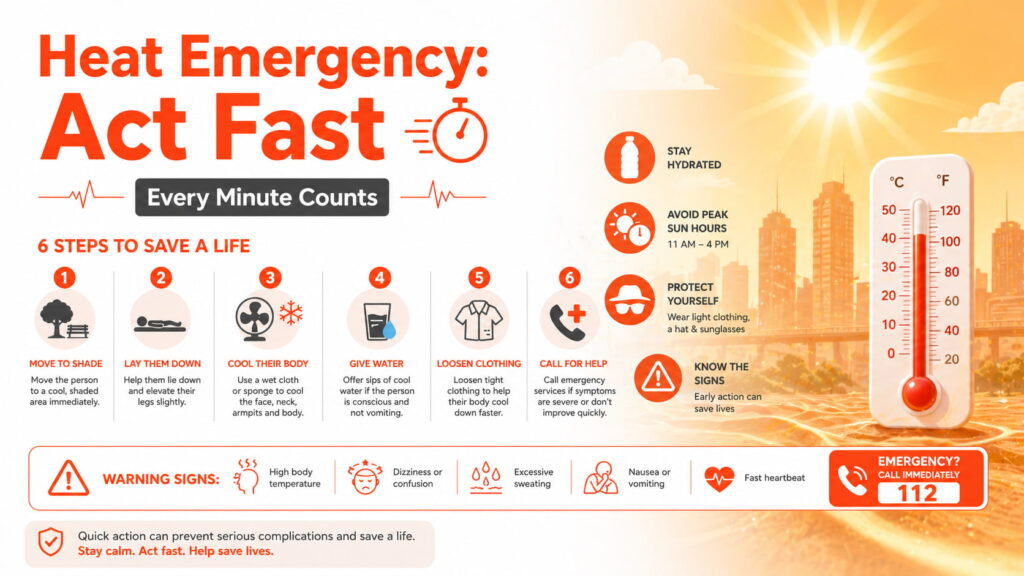
Step 1 – Get Them Out of the Heat Immediately
Move the person to shade, a cool room, or anywhere with airflow. Don’t spend time assessing first remove them from the heat source immediately.
Step 2 – Lay Them Down Correctly
Flat on their back, legs slightly elevated. This helps blood flow to the brain and reduces the risk of shock.
Step 3 – Cool the Body Down Actively
- Wet a cloth with cool water and sponge the body neck, armpits, forehead, and inner wrists are the most effective areas
- Pour cool water over the head and body if possible
- Fan them while doing this airflow accelerates cooling
- Do NOT apply ice directly to skin it constricts blood vessels and can slow cooling
Step 4 – Give Water Carefully
Only if the person is fully conscious and can swallow without difficulty. Small sips, not large gulps. Add ORS or a pinch of salt and sugar if available. Never give water to someone who is unconscious or confused choking risk is serious.
Step 5 – Remove Tight Clothing
Loosen or remove anything restrictive belts, tight collars, helmets, scarves. The body needs maximum airflow.
Step 6 – Know When to Call for Help
Get emergency medical help immediately if:
- The person loses consciousness
- They are confused or speaking strangely
- Skin is hot and completely dry
- They go into seizures
- Symptoms are not improving within 15 minutes of cooling
Do not wait to see if they improve on their own when heatstroke is suspected.
For Outdoor Workers Specifically
DrCuro Says: Your Job Shouldn’t Cost You Your Health
Shift Your Hours Where Possible
Work between 6 AM and 10 AM or after 5 PM. Even one hour of avoiding peak heat makes a measurable difference in total heat exposure.
Take Shade Breaks on a Schedule
Don’t wait until you feel bad. Take a 10-minute break in shade every 30 to 40 minutes. Sit down. Let your body temperature drop before going back.
Drink Every 20 Minutes Without Waiting
Water or an electrolyte drink every 20 minutes. Not when thirsty. Set a reminder if needed. A simple homemade electrolyte drink: 1 litre water + 6 teaspoons sugar + half teaspoon salt.
Cover Up Properly
- Light-colored, full-sleeve cotton shirt
- Wet cloth or towel on the back of the neck
- Head covered a wet cloth under a cap works better than a dry one
- Sunglasses if available
Watch Your Coworkers
People in heat distress often don’t recognize it themselves. Watch for unusual quietness, confusion, stopping of sweating, or dizziness in those around you. Act before it becomes an emergency.
To Employers – This Is Your Responsibility Too
Providing water occasionally and telling workers to “be careful” is not a safety policy. Real steps:
- Drinking water available on-site at all times
- A shaded rest area that workers can actually use
- Adjusted shift timings during active heat wave alerts
- A clear plan for what to do if someone collapses
A heat break costs time. Losing a worker to heatstroke costs everything.
The Bigger Problem Nobody Is Solving Fast Enough
DrCuro Says: Personal Precautions Are Not Enough on Their Own
Telling people to drink more water while cities keep cutting trees and expanding concrete is an incomplete answer. It helps individuals survive. It doesn’t stop heat waves from getting worse.
Cities Need More Trees Urgently
A single mature tree can reduce surrounding temperatures by 2 to 8°C. Most Indian cities are removing green cover faster than they are replacing it. This is a policy failure with direct health consequences.
Urban Planning Must Factor in Heat
New buildings, roads, and residential areas should be designed with heat in mind lighter surface materials, green rooftops, natural airflow between structures. Currently, heat is rarely a factor in urban approvals.
Public Cooling Centers Must Actually Work
Cooling centers exist on paper in several cities. In practice, they are often inaccessible, unknown, or underfunded. The people who need them most daily wage workers, homeless individuals, the elderly living alone are often the ones who can’t reach them.
Heat Wave Alerts Must Reach Everyone
A smartphone notification doesn’t reach a farmer in a field with no data connection. Alerts need to travel through community radio, local networks, and on-ground systems not just Twitter and weather apps.
Without these changes, individual precautions will keep getting harder to maintain as temperatures keep climbing.
Bottom Line
DrCuro Says: Take the Alert Seriously Before Someone Gets Hurt
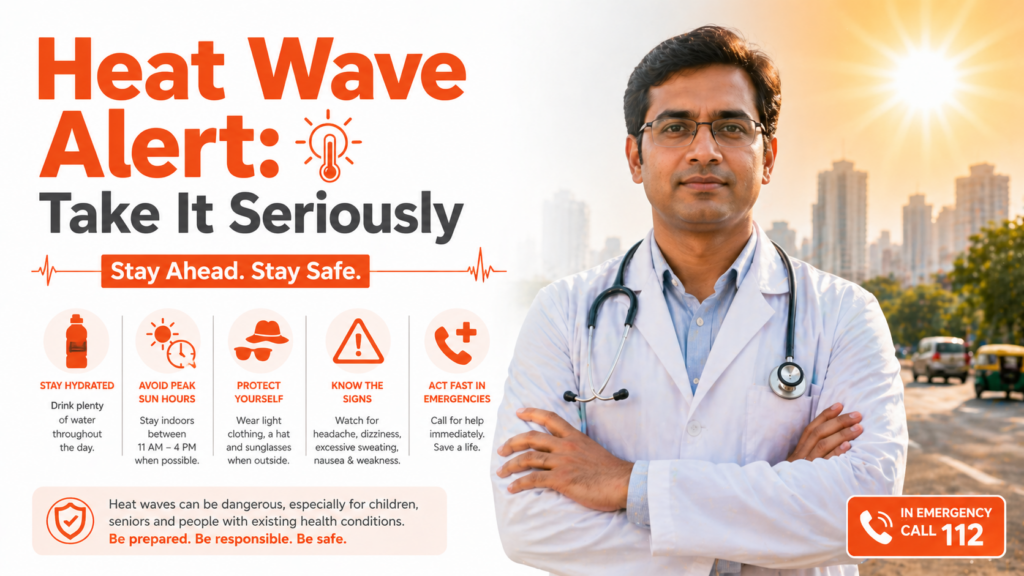
A heat wave alert is not a weather update to scroll past. It is a signal that conditions outside can cause serious medical harm and kill people especially the vulnerable.
The steps to stay safe are not complicated:
- Hydrate early and consistently before thirst hits
- Avoid peak heat hours without protection
- Dress to block heat, not just for appearance
- Recognize early warning signs in yourself and others
- Know exactly what to do if someone around you collapses
What’s actually hard is taking every heat wave alert seriously before something goes wrong not after.
Heat is silent. It doesn’t announce itself the way a storm does. By the time most people realize they’re in danger, they’re already behind. Stay ahead of it.
Frequently Asked Questions (FAQ)
DrCuro Answers What People Actually Want to Know
Q1. What is a heat wave alert and should I be worried?
Yes. A heat wave alert means temperatures are significantly above normal and conditions pose a real health risk not just discomfort. Take it seriously from day one, especially if elderly people, children, or anyone with a chronic illness is in your household.
Q2. How do I know if it’s heat exhaustion or heatstroke?
Heat exhaustion: the person is sweating heavily, feels weak and nauseous, but is conscious and responding normally.
Heatstroke: sweating has stopped, skin is hot and dry, the person seems confused or disoriented, or they lose consciousness.
Heatstroke is a medical emergency. Do not try to manage it at home get medical help immediately.
Q3. How much water should I drink during a heat wave?
At minimum, 3 to 4 litres per day for an average adult. More if you are working outdoors or sweating heavily. Do not rely on thirst drink at fixed intervals. Include ORS or coconut water to replace electrolytes alongside plain water.
Q4. Is AC safe to use during a heat wave?
Yes, with one caution. Avoid extreme temperature jumps between indoors and outdoors. If it is 45°C outside and your AC is set to 18°C, moving in and out repeatedly stresses the body. Keep the AC at 24 to 26°C for a safer balance. Also continue drinking water even while sitting in AC cool air is dry air.
Q5. Can a fan protect me from heatstroke?
Partially. A fan helps when humidity is low because it supports sweat evaporation. In high humidity common in UP, Bihar, and coastal regions sweat doesn’t evaporate well, and a fan just moves hot air around. In those conditions, a fan alone is not sufficient protection.
Q6. What should I feed children and elderly people during a heat wave?
Light, easy-to-digest meals. Water-rich fruits like watermelon, muskmelon, and cucumber. Curd, buttermilk, coconut water, and nimbu pani are excellent options. Avoid heavy, oily, or spicy food. Keep portions small and meals more frequent rather than two or three large ones.
Q7. My elderly parent refuses to drink water regularly. What do I do?
The sense of thirst weakens with age this is normal but dangerous. Don’t wait for them to ask. Bring water to them at regular intervals and set reminders. Offer fluids they enjoy nimbu pani, thin buttermilk, coconut water. Watch for confusion or unusual weakness, which can indicate dehydration even before they complain of thirst.
Q8. What is the fastest way to cool someone with heatstroke at home?
Move them out of the heat immediately. Sponge the body with cool water focus on neck, armpits, and forehead. Fan them while doing this. Do not give water if they are unconscious. Call for medical help immediately. Do not delay by relying on home remedies alone heatstroke can be fatal within hours without treatment.
Q9. Are cold drinks or ice cream helpful during a heat wave?
Not as helpful as most people think. Sugary cold drinks cause a quick spike and then worsen dehydration. Ice cream is high in sugar and fat fine occasionally, but not a hydration strategy. Stick to water, ORS, coconut water, and fresh fruit juices without added sugar.
Q10. How long does a heat wave typically last?
By IMD definition, at least two consecutive days qualify as a heat wave. In practice, Indian heat waves especially in April, May, and June often last one to three weeks, sometimes longer when the monsoon is delayed. Maintain precautions consistently throughout the entire period, not just on the first day of the alert.



No Comment! Be the first one.