







Top Causes of Infertility in Women Explained
Facing difficulty in getting pregnant without knowing the reason? You are not alone and effective solutions are available. At Dr Curo, identifying the root causes of female infertility is the first...
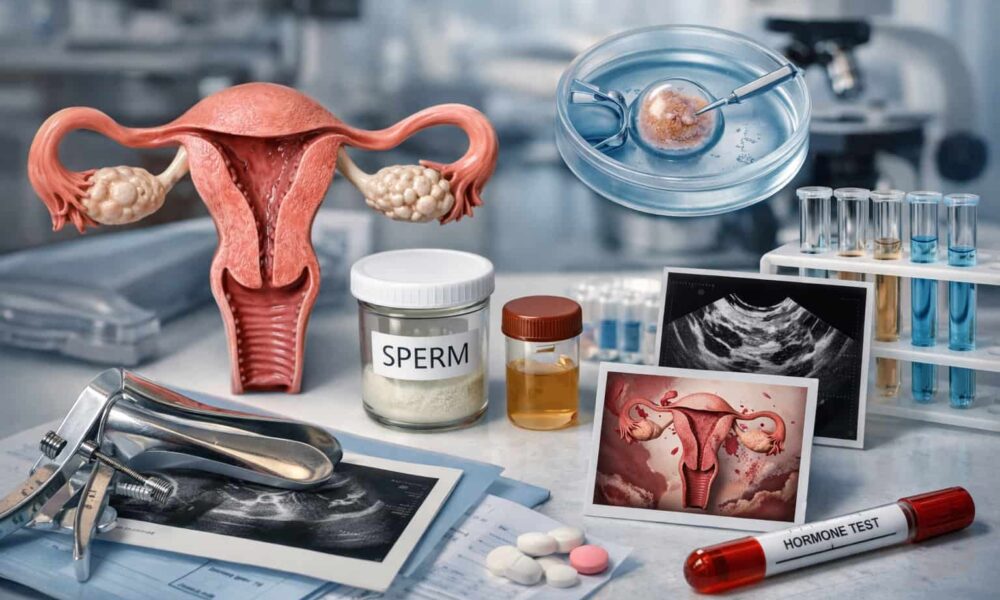
Facing difficulty in getting pregnant without knowing the reason? You are not alone and effective solutions are available.
Table Of Content
- What is Female Infertility?
- How Common is Infertility in Women?
- Top Causes of Infertility in Women Overview
- Infertility Causes in Women — Explained in Detail
- Cause 1 — PCOS (Polycystic Ovary Syndrome)
- Cause 2 — Blocked or Damaged Fallopian Tubes
- Cause 3 — Endometriosis
- Cause 4 — Poor Egg Quality or Low Ovarian Reserve
- Cause 5 — Uterine Problems
- Cause 6 — Hormonal Imbalances
- Cause 7 — Age-Related Fertility Decline
- Lifestyle Factors That Cause Infertility in Women
- When Should You See a Fertility Doctor?
- How Are Infertility Causes in Women Diagnosed?
- Treatment Options at Dr Curo
- Emotional Impact of Infertility
- Can Infertility in Women Be Prevented?
- Tips to Support Female Fertility Naturally
- Frequently Asked Questions
- Dr Curo is With You Every Step
At Dr Curo, identifying the root causes of female infertility is the first and most critical step in every patient’s journey. Infertility impacts millions of women worldwide, yet lack of awareness often delays timely diagnosis and care. With advancements in infertility treatment India, most underlying causes can now be accurately diagnosed and effectively managed.
This guide provides a structured overview of the major causes of infertility in women, explaining what they are, how they impact fertility, how they are diagnosed, and the treatment options available at Dr Curo.
What is Female Infertility?
A woman is generally considered to have a fertility problem if she has been trying to conceive naturally for 12 months or more without success. For women over 35, this window shortens to 6 months.
Female infertility simply means the body is facing one or more obstacles that are preventing a natural pregnancy from occurring. These obstacles can be related to eggs, hormones, the uterus, the fallopian tubes, or a combination of factors.
Importantly infertility is not a life sentence. At Dr Curo, the large majority of women who come to us with fertility challenges go on to achieve pregnancy with the right diagnosis and treatment plan.
How Common is Infertility in Women?
Infertility is far more common than most people realise:
- Approximately 1 in 6 couples worldwide experience infertility
- Female factors alone account for roughly 40% of all infertility cases
- Both male and female factors together account for another 20% of cases
- In India, an estimated 10–15% of couples face some form of fertility challenge
- PCOS alone affects 1 in 5 women of reproductive age in India
- Many women live with infertility causes for years without knowing it conditions like endometriosis and blocked tubes often have no obvious symptoms
At Dr Curo, early diagnosis is key. The sooner the cause is identified, the more treatment options are available.
Top Causes of Infertility in Women Overview
| Cause | How Common | Treatable? |
| PCOS | Very common 20–25% of women | Yes — highly manageable |
| Blocked fallopian tubes | Common – 25–30% of female infertility cases | Yes — surgery or IVF |
| Endometriosis | Affects 10–15% of women | Yes — medication or surgery |
| Poor egg quality / low ovarian reserve | Common after age 35 | Partially — IVF or donor eggs |
| Uterine problems (fibroids, polyps) | Moderate 10–15% of cases | Yes — surgical treatment |
| Hormonal imbalances | Common | Yes — medication |
| Age-related decline | Universal after mid-30s | Partially — assisted reproduction |
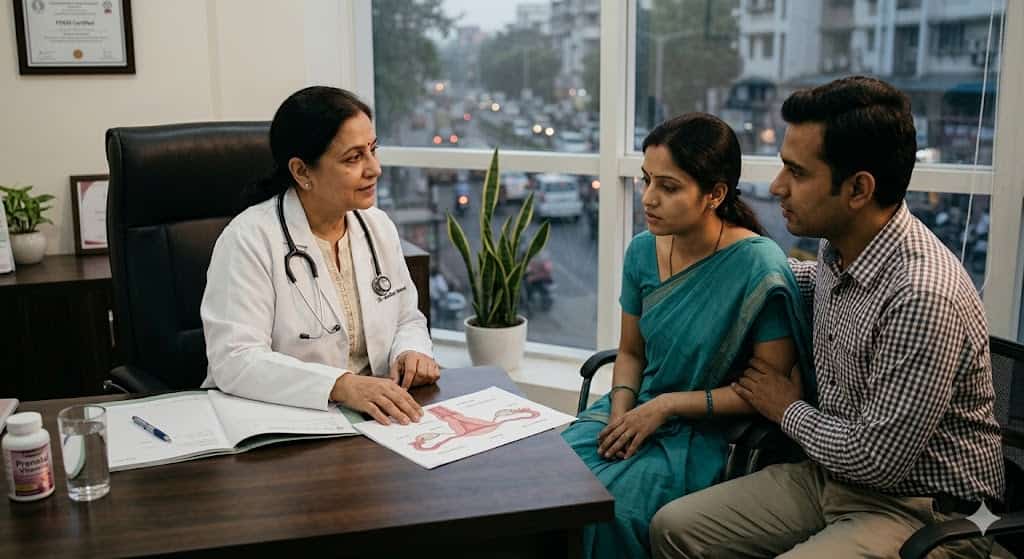
Infertility Causes in Women — Explained in Detail
Cause 1 — PCOS (Polycystic Ovary Syndrome)
PCOS is the single most common infertility cause in women of reproductive age. It is a hormonal condition where the ovaries produce too many small, undeveloped follicles instead of releasing a mature egg each month. Without regular ovulation, natural conception becomes very difficult.
Women with PCOS often have irregular or absent periods, excess body or facial hair, acne, and difficulty managing weight. However, many women have PCOS with no obvious symptoms at all and only discover it when they start trying to conceive.
The encouraging truth is that PCOS is very treatable. At Dr Curo, most women with PCOS respond well to ovulation-stimulating medications and go on to conceive either naturally or with IUI or IVF support.
Key facts about PCOS and infertility:
- PCOS is the cause in up to 70% of women who struggle to ovulate
- Weight management alone can restore ovulation in many PCOS patients
- Medications like Letrozole and Clomiphene are highly effective at triggering ovulation
- IUI is often recommended as the first fertility treatment for women with PCOS
Cause 2 — Blocked or Damaged Fallopian Tubes
The fallopian tubes are the pathway through which a mature egg travels from the ovary to the uterus. If these tubes are blocked, damaged, or scarred, the egg and sperm cannot meet and fertilization cannot happen.
Blocked tubes are one of the most significant infertility causes in women because the damage is often completely silent. There are usually no pain symptoms and no warning signs. Many women only discover blocked tubes during an HSG (hysterosalpingography) test, which is a simple X-ray procedure that checks whether the tubes are open.
Common reasons for blocked or damaged fallopian tubes include:
- Previous pelvic infections or sexually transmitted infections (STIs)
- A history of pelvic inflammatory disease (PID)
- Prior ectopic pregnancy (a pregnancy that develops in the tube rather than the uterus)
- Complications from past abdominal or pelvic surgery
- Severe endometriosis causing adhesions around the tubes
Treatment at Dr Curo depends on the severity. In mild cases, laparoscopic surgery can sometimes open a blocked tube. In more severe cases, IVF is the recommended path because it bypasses the tubes entirely the egg is fertilized directly in the lab.
Cause 3 — Endometriosis
Endometriosis is a condition where tissue similar to the lining of the uterus grows in places it should not most commonly on the ovaries, fallopian tubes, and surrounding pelvic tissue. This displaced tissue behaves like normal uterine lining it thickens and bleeds with every menstrual cycle but it has nowhere to go, causing inflammation, scarring, and pain.
Endometriosis affects fertility in several ways. It can block or damage the fallopian tubes, reduce egg quality, create an environment in the uterus that makes implantation harder, and cause immune system changes that affect how the body responds to an embryo.
One of the trickiest things about endometriosis is that the severity of symptoms does not always match the severity of the disease. Some women with mild endometriosis struggle to conceive, while some with severe endometriosis have no fertility issues at all.
Signs that may indicate endometriosis include:
- Very painful periods especially cramping that disrupts daily life
- Pain during or after intercourse
- Heavy or irregular bleeding
- Chronic lower back or pelvic pain
- Difficulty getting pregnant despite trying for several months
At Dr Curo, endometriosis is diagnosed through laparoscopy a minor surgical procedure that allows the doctor to directly view the pelvic organs. Treatment options include hormonal therapy, surgical removal of endometrial tissue, and IVF for those trying to conceive.
Cause 4 — Poor Egg Quality or Low Ovarian Reserve
A woman is born with all the eggs she will ever have. From the time of birth, that number gradually declines. By the mid-30s, both the quantity and quality of eggs begin to drop more noticeably. By the early 40s, this decline becomes significant.
Poor egg quality means that even when an egg is released and fertilized, the resulting embryo may not be healthy enough to implant or develop into a pregnancy. Low ovarian reserve simply means there are fewer eggs remaining than expected for a woman’s age.
This does not mean pregnancy is impossible but it does mean time matters, and specialist support at Dr Curo becomes more important.
Factors that affect egg quality and reserve include:
- Natural age-related decline the primary factor for most women
- Autoimmune conditions affecting the ovaries
- Previous ovarian surgery or cyst removal
- Smoking which accelerates egg loss significantly
- Certain cancer treatments including chemotherapy and radiation
- Genetic conditions such as Turner syndrome or premature ovarian insufficiency
At Dr Curo, ovarian reserve is assessed through two simple tests an AMH (anti-Müllerian hormone) blood test and an antral follicle count via ultrasound. Based on results, your doctor will recommend the most suitable fertility treatment, which may include IUI, IVF with your own eggs, or IVF using donor eggs.
Cause 5 — Uterine Problems
Even when ovulation is normal and the fallopian tubes are clear, problems inside the uterus itself can prevent a fertilized egg from implanting and growing into a healthy pregnancy.
Common uterine conditions that cause infertility include:
- Uterine fibroids — non-cancerous growths in or around the uterus wall. They are extremely common and most do not affect fertility. However, fibroids that grow inside the uterine cavity or distort its shape can block implantation.
- Uterine polyps — small, soft growths on the inner lining of the uterus. They can interfere with how the embryo attaches to the uterine wall.
- Uterine septum — a wall of tissue that divides the inside of the uterus, present from birth. It can reduce the space available for a growing pregnancy and increases the risk of miscarriage.
- Asherman’s syndrome — scar tissue inside the uterus, usually from a previous surgery, infection, or D&C procedure. This scar tissue reduces the surface area available for implantation.
- Adenomyosis — a condition where the uterine lining grows into the muscular wall of the uterus, making the uterus enlarged and affecting embryo implantation.
At Dr Curo, uterine problems are diagnosed through ultrasound, saline sonohysterography, or hysteroscopy. Most uterine issues are correctable through straightforward surgical procedures before fertility treatment begins.
Cause 6 — Hormonal Imbalances
The female reproductive system is controlled by a precise sequence of hormones. When any one of these hormones is out of balance, the whole process of ovulation, fertilization, and implantation can be disrupted.
The most important hormones involved in female fertility are FSH (follicle-stimulating hormone), LH (luteinising hormone), oestrogen, progesterone, prolactin, and thyroid hormones. A problem with any of these can prevent pregnancy.
Common hormonal issues that cause infertility:
- High prolactin levels (hyperprolactinaemia) — prolactin is the hormone responsible for breast milk production. Elevated prolactin outside of pregnancy can suppress ovulation and cause irregular periods.
- Thyroid disorders — both an underactive thyroid (hypothyroidism) and an overactive thyroid (hyperthyroidism) can disrupt the menstrual cycle and interfere with ovulation.
- Low progesterone — progesterone is needed to prepare the uterine lining for implantation and maintain early pregnancy. Low levels can cause implantation failure or early miscarriage.
- Elevated androgen levels — excess male hormones (often linked to PCOS) interfere with ovulation and egg development.
The good news about hormonal causes of infertility is that they are among the most straightforward to treat. At Dr Curo, a simple hormone blood panel can identify imbalances, and most are managed effectively with targeted medication.
Cause 7 — Age-Related Fertility Decline
Age is one of the most important and honest infertility causes in women and one that is often not discussed openly enough.
A woman’s fertility begins to decline gradually from her late 20s, more noticeably from her mid-30s, and significantly from around age 38 onwards. By age 40, natural conception rates drop considerably and the risk of miscarriage rises.
This decline happens because both the number and quality of eggs reduce with age. Older eggs are more likely to have chromosomal abnormalities, which means even if fertilization occurs, the embryo may not develop normally.
What age-related fertility decline looks like in numbers:
| Age | Monthly Natural Conception Chance | Miscarriage Risk |
| 25–29 | 20–25% | 10% |
| 30–34 | 15–20% | 12% |
| 35–37 | 10–15% | 18% |
| 38–40 | 8–10% | 25–30% |
| Over 40 | 4–5% | 40–50% |
This does not mean women over 35 cannot conceive many do, and Dr Curo has helped women in their late 30s and early 40s achieve successful pregnancies. But it does mean that if you are over 35 and have been trying for 6 months without success, it is worth seeing a specialist sooner rather than later.
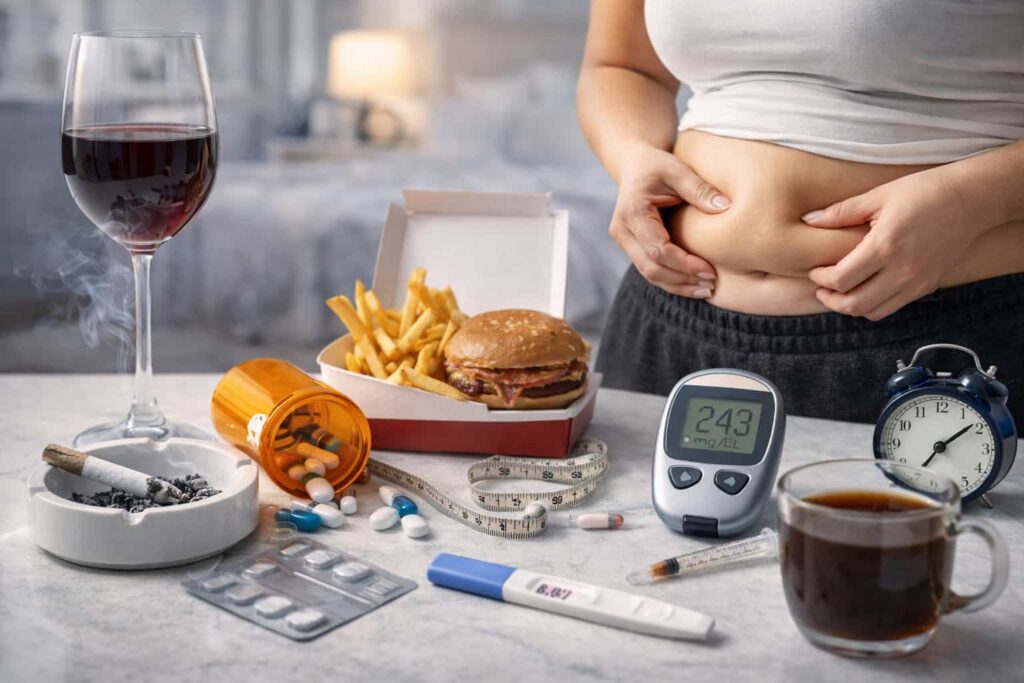
Lifestyle Factors That Cause Infertility in Women
Beyond medical conditions, everyday lifestyle choices can significantly affect female fertility. Here are the most important ones:
- Being overweight or underweight — body fat levels directly affect oestrogen production and can disrupt ovulation entirely
- Smoking — damages egg quality, reduces ovarian reserve, and accelerates menopause by several years
- Excessive alcohol consumption — disrupts hormone levels and reduces the chances of natural conception
- Extreme exercise or very low body fat — can shut down ovulation in women who train very intensively
- Chronic stress — high cortisol levels interfere with reproductive hormones and can delay or prevent ovulation
- Poor nutrition — deficiencies in folic acid, iron, vitamin D, and zinc all affect reproductive health
- Environmental toxins — prolonged exposure to pesticides, plastics (BPA), and industrial chemicals can affect hormone balance
- Delaying pregnancy — waiting until the late 30s or 40s without medical guidance reduces the window of natural fertility
The positive side of lifestyle factors is that they are within your control. At Dr Curo, our team provides detailed lifestyle guidance alongside medical treatment to give patients the best possible overall outcome.
When Should You See a Fertility Doctor?
Many women wait far too long before seeking help. At Dr Curo, we recommend booking a fertility consultation if:
- You are under 35 and have been trying to conceive naturally for 12 months without success
- You are 35 or older and have been trying for 6 months without success
- You are over 40 see a specialist right away, do not wait
- You have irregular, very painful, or absent periods
- You have been diagnosed with PCOS, endometriosis, or fibroids
- You have had two or more miscarriages
- You have had a previous ectopic pregnancy
- You have ever been treated for a pelvic infection or STI
- You have previously undergone cancer treatment
There is no benefit in waiting. Early consultation gives you more options, more time, and a much clearer picture of where you stand.
How Are Infertility Causes in Women Diagnosed?
At Dr Curo, diagnosing infertility causes in women involves a structured set of tests. No single test tells the whole story a complete picture requires looking at all the systems involved.
Hormonal blood tests check FSH, LH, AMH, oestrogen, prolactin, thyroid function, and androgen levels. These are usually done on specific days of the menstrual cycle for accuracy.
Pelvic ultrasound gives a clear view of the uterus, ovaries, and any cysts, fibroids, or polyps. An antral follicle count (AFC) on ultrasound also provides a direct measure of ovarian reserve.
HSG (Hysterosalpingography) is an X-ray test where a small amount of dye is passed through the uterus and fallopian tubes to check for blockages. It takes about 20–30 minutes and is done as an outpatient procedure.
Hysteroscopy is a thin camera inserted through the cervix to view the inside of the uterus directly. It is used to detect polyps, fibroids, adhesions, or a uterine septum.
Laparoscopy is a minor surgical procedure under general anaesthesia where a small camera is inserted through the abdomen. It is the only reliable way to diagnose endometriosis and assess the fallopian tubes visually.
All of these investigations are available at Dr Curo and your doctor will only recommend the tests that are specifically relevant to your situation.
Treatment Options at Dr Curo
Once the infertility cause is identified, treatment can begin. At Dr Curo, treatment is always personalised there is no one-size-fits-all approach.
| Cause | Treatment Options at Dr Curo |
| PCOS | Lifestyle changes, ovulation induction, IUI, IVF |
| Blocked tubes | Laparoscopic surgery (if mild), IVF |
| Endometriosis | Hormonal therapy, surgical removal, IVF |
| Low ovarian reserve | IVF with own eggs, donor egg IVF |
| Uterine problems | Hysteroscopic surgery, then IUI or IVF |
| Hormonal imbalance | Targeted hormone medication |
| Age-related decline | IVF, donor egg IVF, embryo banking |
The goal at Dr Curo is always to use the simplest, most effective treatment first. Many patients with correctable causes go on to conceive naturally or through IUI after treatment. More complex cases move on to IVF with excellent success rates.
Emotional Impact of Infertility
The emotional weight of infertility is something that does not get talked about enough and at Dr Curo, we take it very seriously.
Women facing infertility often experience feelings of grief, guilt, and inadequacy even though infertility is a medical condition, not a personal failure. The monthly cycle of hope and disappointment can be exhausting. Relationships can come under strain. Social situations involving other people’s pregnancies or babies can become painful. And the pressure often unspoken from family and society can feel overwhelming.
What many women going through infertility experience includes the emotional rollercoaster of treatment cycles, difficulty talking about it with friends and family, a sense of losing control over their own body, anxiety about whether treatment will work, and grief when a cycle does not succeed.
At Dr Curo, emotional support is not an afterthought it is built into the care we provide. Every patient has access to counselling, honest conversations with their doctor about what to expect, and a clinic environment where no question is too small and no emotion is out of place. You are seen here as a whole person, not just a patient with a diagnosis.
Can Infertility in Women Be Prevented?
Not all infertility causes in women can be prevented conditions like endometriosis, genetic factors, and age-related decline are not entirely within a woman’s control. However, several meaningful steps can protect and preserve fertility:
- Do not smoke — smoking is one of the most damaging things a woman can do to her long-term fertility
- Maintain a healthy weight — both extremes affect hormone balance and ovulation
- Treat infections early — pelvic infections left untreated are a leading cause of tube damage
- Get regular health check-ups — conditions like PCOS, thyroid disease, and fibroids are easier to treat when caught early
- Consider fertility testing in your late 20s or early 30s — knowing your ovarian reserve gives you time to plan
- Avoid delaying pregnancy if possible — if you know you want children, trying earlier preserves more options
- Reduce alcohol and manage stress — both have a genuine impact on reproductive hormones
At Dr Curo, we also offer fertility preservation services including egg freezing for women who are not ready to conceive now but want to protect their options for the future.
Tips to Support Female Fertility Naturally
Small, consistent changes in daily life can meaningfully support your fertility alongside any medical treatment:
- Eat a fertility-supporting diet — include plenty of leafy greens, beans, whole grains, healthy fats like avocado and nuts, and lean protein
- Take folic acid daily — at least 400mcg every day, ideally starting 3 months before trying to conceive
- Get enough sleep — poor sleep disrupts cortisol and reproductive hormones; aim for 7–8 hours consistently
- Exercise moderately — gentle to moderate exercise supports hormonal balance; avoid extreme training
- Manage stress actively — yoga, mindfulness, breathing exercises, and regular time outdoors all help regulate stress hormones
- Limit caffeine — more than 200mg per day (roughly 2 cups of coffee) has been linked to reduced fertility in some studies
- Avoid BPA plastics — use glass or stainless steel where possible to reduce exposure to hormone-disrupting chemicals
- Track your cycle — understanding your own ovulation pattern is a powerful and practical tool when trying to conceive
Frequently Asked Questions
Q1. What is the most common infertility cause in women? PCOS is the single most common cause, affecting up to 20–25% of women of reproductive age. It is also one of the most treatable most women with PCOS can conceive with the right medical support at Dr Curo.
Q2. Can infertility in women be cured? In many cases, yes. Most infertility causes in women are treatable, whether through medication, surgery, or assisted reproduction. The outcome depends on the specific cause, the woman’s age, and how early diagnosis and treatment begins.
Q3. Can a woman with irregular periods still get pregnant? Yes. Irregular periods often mean irregular ovulation, but ovulation can still occur. At Dr Curo, ovulation can be monitored and stimulated to give you the best possible chance of conceiving.
Q4. At what age does female fertility start to decline? Fertility begins to decline gradually from the late 20s, becomes more noticeable from the mid-30s, and drops significantly from around 38 onwards. However, many women conceive naturally and with assistance well into their 40s.
Q5. How do I know if I have an infertility problem? The clearest sign is being unable to conceive after 12 months of trying (or 6 months if you are over 35). Other signals include irregular or absent periods, very painful periods, a history of pelvic infections, or a known condition like PCOS or endometriosis. A consultation at Dr Curo will give you clear answers.
Dr Curo is With You Every Step
Understanding the infertility causes in women is not just about medical knowledge it is about giving yourself the power to take the next step with confidence and clarity.
Infertility is more common than society admits, more treatable than most women fear, and more manageable than it feels in the middle of the journey. At Dr Curo, no case is too simple to deserve attention and no case is too complex to deserve hope.
Whether you are just beginning to ask questions or have been struggling for years, our team of fertility specialists, diagnostic experts, and counsellors are here for you with compassion, expertise, and a genuine commitment to helping you build the family you are hoping for.





No Comment! Be the first one.