







What is IVF Treatment? A Complete Guide
If you or your partner are facing difficulty in conceiving, you may have come across the term IVF treatment in India. But what exactly does IVF involve? How does the process work, and is it the right...
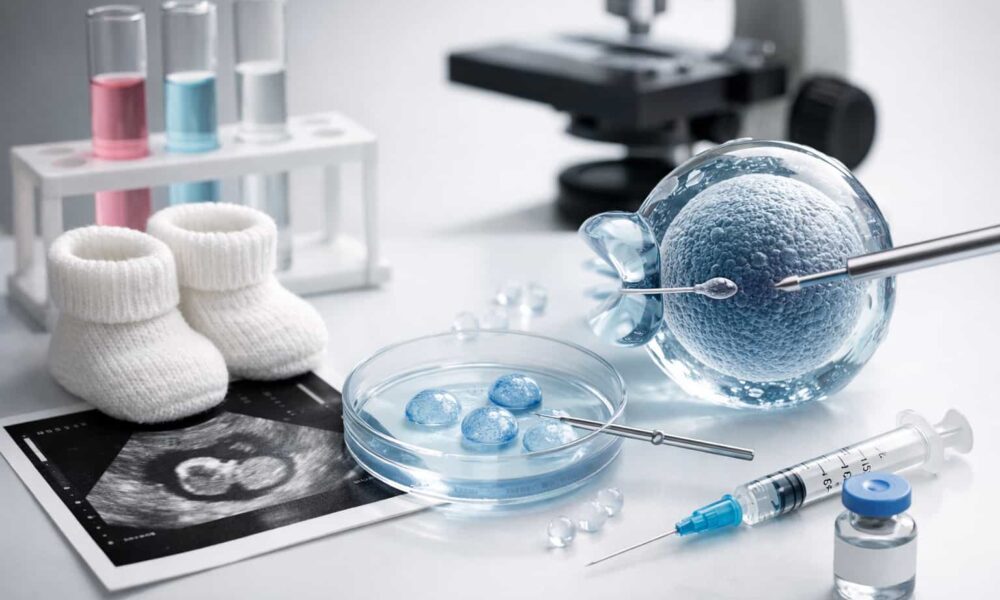
If you or your partner are facing difficulty in conceiving, you may have come across the term IVF treatment in India. But what exactly does IVF involve? How does the process work, and is it the right option for you?
Table Of Content
- What is IVF Treatment?
- Why Do People Choose IVF Treatment?
- How Does IVF Treatment Work? Step-by-Step Process
- Step 1 — Ovarian Stimulation (Week 1–2)
- Step 2 — Egg Retrieval (Egg Collection)
- Step 3 — Sperm Collection and Preparation
- Step 4 — Fertilization in the Laboratory
- Step 5 — Embryo Development and Grading
- Step 6 — Embryo Transfer
- Step 7 — The Two-Week Wait (2WW)
- Step 8 — Pregnancy Test
- IVF Treatment Success Rates
- Other factors that affect success
- Types of IVF Treatment
- What is the Cost of IVF Treatment?
- Risks and Side Effects of IVF Treatment
- Common side effects
- More serious risks (less common)
- IVF Treatment and Emotional Wellbeing
- Dr Curo’s approach includes
- Who is a Good Candidate for IVF?
- Frequently Asked Questions (FAQs)
At Dr Curo, we prioritize providing accurate, transparent, and patient-centric information to support your fertility journey. This comprehensive guide on IVF treatment covers everything you need to know from the fundamentals and step-by-step procedure to success rates, costs, potential risks, and key considerations.
What is IVF Treatment?
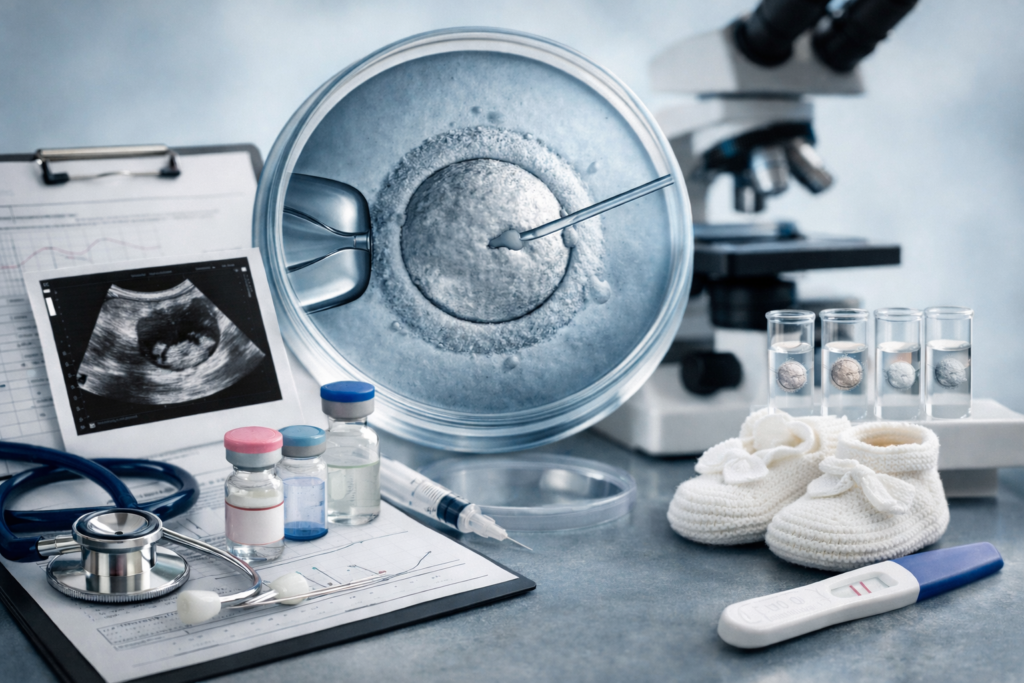
IVF (In Vitro Fertilization) is a type of assisted reproductive technology (ART) where a woman’s eggs are fertilized by sperm outside the body in a laboratory. Once the fertilized egg (embryo) develops, it is placed back into the uterus with the hope of achieving a successful pregnancy.
The phrase “in vitro” is Latin for “in glass” referring to the glass petri dish where fertilization takes place.
IVF is one of the most effective and widely used fertility treatments in the world today. At Dr Curo, our fertility specialists use the latest IVF techniques to give patients the best possible chance of having a healthy baby.
Why Do People Choose IVF Treatment?
People turn to IVF for many different reasons. Here are the most common:
- Blocked or damaged fallopian tubes — eggs cannot travel to the uterus naturally
- Male infertility — low sperm count, poor motility, or abnormal sperm shape
- Ovulation disorders — conditions like PCOS that affect egg release
- Endometriosis — tissue growing outside the uterus affecting fertility
- Unexplained infertility — no clear medical reason found for inability to conceive
- Age-related fertility decline — women over 35 often face reduced egg quality
- Genetic disorders — to screen embryos for hereditary conditions before implantation
- Same-sex couples or single parents — using donor eggs, sperm, or surrogacy
How Does IVF Treatment Work? Step-by-Step Process
Understanding what is IVF treatment means understanding each stage of the process. Here is a simple breakdown:
Step 1 — Ovarian Stimulation (Week 1–2)
Normally, a woman produces one egg per month. In IVF, hormone injections (fertility drugs) are given to stimulate the ovaries to produce multiple eggs at once. More eggs mean more chances of a successful embryo.
What happens:
- Daily hormone injections for 8–14 days
- Regular ultrasound scans and blood tests to monitor egg growth
- Dosage adjusted based on your body’s response
Step 2 — Egg Retrieval (Egg Collection)
Once the eggs are mature, a minor surgical procedure called egg retrieval or egg pick-up is performed.
What happens:
- Done under light sedation or anaesthesia
- A thin needle is guided through the vaginal wall using ultrasound
- Eggs are carefully collected from the follicles
- The procedure takes about 20–30 minutes
- Mild cramping or bloating may be felt afterward
Step 3 — Sperm Collection and Preparation
On the same day as egg retrieval, a sperm sample is collected from the male partner (or a donor). The sample is then processed in the lab to select the healthiest and most active sperm.
Step 4 — Fertilization in the Laboratory
This is the heart of IVF where eggs and sperm meet outside the body.
There are two methods used at Dr Curo:
| Method | What it Means | Best For |
| Standard IVF | Eggs and sperm are placed together in a dish and fertilization happens naturally | Normal sperm quality |
| ICSI (Intracytoplasmic Sperm Injection) | A single sperm is injected directly into each egg | Low sperm count or poor quality |
Fertilized eggs are monitored over the next 3–5 days as they develop into embryos.
Step 5 — Embryo Development and Grading
Not all fertilized eggs will develop into healthy embryos. The lab team at Dr Curo monitors each embryo carefully and grades them based on quality.
Embryo grading considers:
- Cell number and division speed
- Cell symmetry
- Fragmentation level
- Blastocyst formation (Day 5 embryo)
Only the best-quality embryos are selected for transfer.
Step 6 — Embryo Transfer
This is the moment of hope the embryo is placed into the uterus.
What happens:
- A thin, soft catheter is passed through the cervix into the uterus
- The embryo is gently released
- No anaesthesia needed it feels similar to a pap smear
- Takes only 10–15 minutes
- Rest is advised for the remainder of the day
Usually, 1 or 2 embryos are transferred to reduce the risk of multiple pregnancies.
Step 7 — The Two-Week Wait (2WW)
After the embryo transfer, you wait approximately 14 days before taking a pregnancy test. This is often the most emotionally challenging part of the IVF journey.
During the two-week wait:
- Continue prescribed medications (usually progesterone)
- Avoid heavy exercise and stress
- Eat well, stay hydrated, rest
- Avoid testing too early it can give false results
Step 8 — Pregnancy Test
A blood test (beta-hCG test) is done to confirm whether the IVF cycle was successful. A positive result means the embryo has implanted and pregnancy has began.

IVF Treatment Success Rates
One of the most common questions at Dr Curo is: “What are my chances?”
Success rates depend on several factors, especially age:
| Age Group | Approximate IVF Success Rate (per cycle) |
| Under 35 | 40–50% |
| 35–37 | 30–40% |
| 38–40 | 20–30% |
| 41–42 | 10–20% |
| Over 42 | 5–10% |
Other factors that affect success:
- Quality of eggs and sperm
- Thickness and health of the uterine lining
- Number of previous IVF attempts
- Lifestyle factors weight, smoking, alcohol, stress
- Underlying medical conditions
Many patients at Dr Curo achieve success within 2–3 IVF cycles.
Types of IVF Treatment
There is not just one type of IVF. Depending on your situation, your Dr Curo specialist may recommend:
- Conventional IVF — Standard process as described above
- ICSI IVF — Single sperm injected directly into the egg (for male factor infertility)
- Frozen Embryo Transfer (FET) — Previously frozen embryos are thawed and transferred
- Donor Egg IVF — Using eggs from a young, healthy donor (for women with poor egg quality)
- Donor Sperm IVF — Using sperm from a donor
- Natural Cycle IVF — No stimulation drugs; the one natural egg is used
- Mini IVF — Low-dose stimulation for fewer but quality eggs
- PGT (Preimplantation Genetic Testing) — Embryos are tested for genetic conditions before transfer
What is the Cost of IVF Treatment?
IVF cost varies depending on the clinic, location, and the type of cycle. At Dr Curo, we are committed to transparent and affordable pricing.
| IVF Type | Approximate Cost (India) |
| Basic IVF Cycle | ₹1,00,000 – ₹1,50,000 |
| IVF with ICSI | ₹1,50,000 – ₹2,00,000 |
| Frozen Embryo Transfer | ₹30,000 – ₹60,000 |
| Donor Egg IVF | ₹2,00,000 – ₹3,00,000 |
| IVF with PGT | ₹2,50,000 – ₹3,50,000 |
Note: Costs may vary. Contact Dr Curo directly for a personalized consultation and accurate pricing.
Risks and Side Effects of IVF Treatment
Like any medical procedure, what is IVF treatment without knowing the risks? Being informed helps you prepare:
Common side effects:
- Bloating and mild abdominal discomfort
- Mood swings from hormone injections
- Breast tenderness
- Headaches
- Fatigue
More serious risks (less common):
- Ovarian Hyperstimulation Syndrome (OHSS) — ovaries become swollen and painful; rare but requires medical attention
- Multiple pregnancies — twins or triplets carry higher pregnancy risks
- Ectopic pregnancy — embryo implants outside the uterus
- Emotional and psychological stress — the IVF journey can be emotionally demanding
At Dr Curo, every patient is carefully monitored throughout the process to minimize risks and provide full support.
IVF Treatment and Emotional Wellbeing
The emotional side of IVF is just as important as the physical side. Many couples experience:
- Anxiety and stress during the waiting period
- Grief and disappointment if a cycle fails
- Relationship strain
- Feelings of isolation
Dr Curo’s approach includes:
- Dedicated counselling and emotional support at every stage
- Open communication with your care team
- Community support and patient resources
- A compassionate, non-judgmental environment
You are never alone on this journey at Dr Curo.
Who is a Good Candidate for IVF?
You may be a good candidate for IVF if:
- You have been trying to conceive for 12+ months (or 6+ months if over 35) without success
- You have been diagnosed with blocked tubes, PCOS, endometriosis, or low ovarian reserve
- Your partner has a diagnosed sperm problem
- Other fertility treatments like IUI have not worked
- You wish to use donor eggs or sperm
- You want genetic screening of embryos before transfer
A thorough evaluation at Dr Curo will determine the best path forward for your unique situation.
Frequently Asked Questions (FAQs)
Q1. Is IVF treatment painful? Most patients describe the injections as mildly uncomfortable. The egg retrieval is done under sedation so you feel little to nothing. The embryo transfer is generally painless.
Q2. How many IVF cycles will I need? There is no fixed number. Some patients succeed in the first cycle; others need 2–3. Your Dr Curo doctor will guide you based on your test results and history.
Q3. Does IVF guarantee pregnancy? No fertility treatment can guarantee pregnancy. However, IVF gives you the highest chance compared to other assisted reproduction methods.
Q4. Can I do normal activities during IVF? Light daily activities are generally fine. Heavy exercise, smoking, alcohol, and extreme stress should be avoided during treatment.
Q5. Is the IVF baby healthy and normal? Yes. Research shows IVF babies are as healthy as naturally conceived babies. With PGT testing, the risk of genetic conditions can be further reduced.




No Comment! Be the first one.