







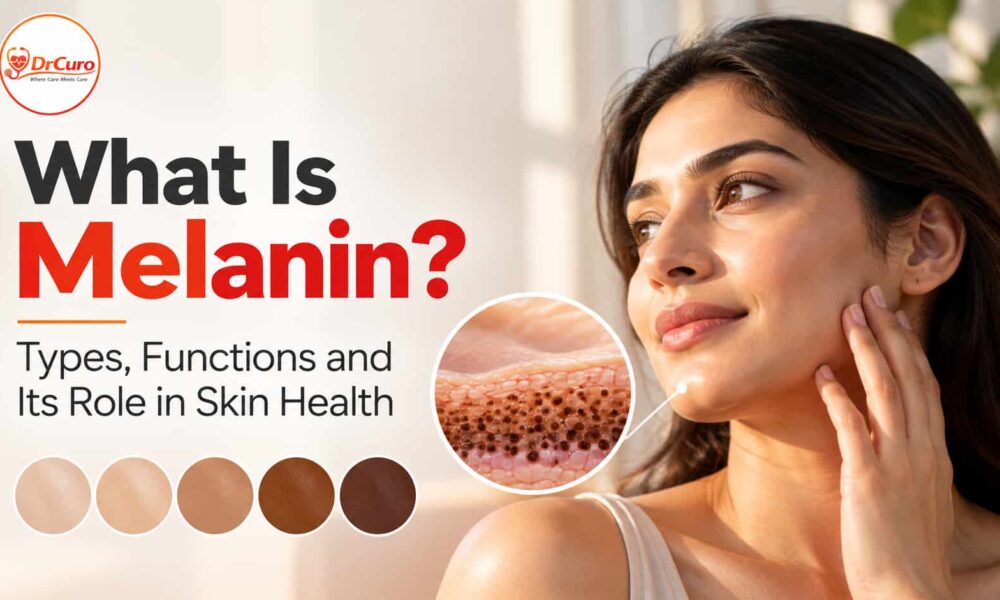
What Is Melanin? Types, Functions and Its Role in Skin Health
Medically reviewed by: [Dermatologist] Last updated: [31/10/26] Introduction Have you ever wondered why people have different skin colours? Why is some skin darker and some lighter? The answer lies...
Medically reviewed by: [Dermatologist]
Last updated: [31/10/26]
Table Of Content
- Introduction
- 1. What Is Melanin?
- Why Do People Have Different Skin Colours?
- How Is Melanin Produced in the Body?
- What Are the Different Types of Melanin?
- A. Eumelanin
- B. Pheomelanin
- C. Neuromelanin
- What Are the Main Functions and Benefits of Melanin?
- 1. Helps Protect the Skin from UV Radiation
- 2. Gives Natural Colour to Skin
- 3. Determines Hair Colour
- 4. Contributes to Eye Colour
- 5. Provides Some Protection Against Oxidative Damage
- What Factors Affect Melanin Production?
- A. Genetics
- B. Sun Exposure
- C. Hormonal Changes
- D. Skin Inflammation
- E. Cumulative Sun Damage and Age
- Normal vs. Excess or Uneven Pigmentation
- Skin Problems Related to Melanin
- 1. Hyperpigmentation
- 2. Melasma
- 3. Post-Inflammatory Hyperpigmentation (PIH)
- 4. Vitiligo
- 5. Albinism
- When Dark Skin Is Not “Just Pigmentation”: Medical Causes
- Melanin, Vitamin D and Sunscreen: Finding the Balance
- Can Diet and Nutrition Affect Melanin?
- Common Myths and Facts About Melanin
- Skin of Colour: What You Should Know
- How to Maintain Healthy Skin and Prevent Pigmentation
- 1. Use Sunscreen Every Day
- 2. Avoid Excessive Sun Exposure
- 3. Follow a Gentle Skincare Routine
- 4. Avoid Picking Acne
- 5. Eat a Balanced Diet
- 6. Avoid Unverified Skin-Lightening Products, Injections and Pills
- When Should You Consult a Dermatologist?
- Frequently Asked Questions (FAQs)
- Conclusion
Introduction
Have you ever wondered why people have different skin colours? Why is some skin darker and some lighter? The answer lies in a natural pigment called melanin. Melanin is produced by our body and gives colour to our skin, hair and eyes. It also helps protect the skin from some of the harmful effects of sunlight.
Many people think melanin is only about dark skin or pigmentation, but that is not true. Melanin is a natural and essential part of the human body. When its production becomes uneven or excessive in certain areas, it can lead to concerns such as dark spots, melasma and hyperpigmentation.
In this article, we explain what melanin is, how it is made, its types and functions, what affects it, and how it connects to skin health.
1. What Is Melanin?
Melanin is a natural pigment produced by special cells called melanocytes. These sit in the basal layer, the deepest layer of the epidermis (the outer layer of the skin). Melanin gives colour to our skin, hair and eyes, and the amount and type of melanin produced are among the main reasons people have different skin tones.
Melanin production is mainly controlled by genetics. Sunlight, hormones, inflammation and certain medical conditions can also affect it.
When skin is exposed to ultraviolet (UV) rays, melanocytes make more melanin. This extra pigment absorbs and spreads some UV energy, reducing the amount that reaches the DNA of skin cells.
An important point about tanning: a tan is not a sign of healthy skin. It is a response to UV exposure that has already caused some cellular stress or DNA damage, and it offers only very limited protection (roughly equal to a low SPF). There is no such thing as a “safe tan” or a “protective base tan”.
Having more melanin does not mean the skin is fully protected from sun damage. People of every skin tone need sun protection.
Key facts about melanin:
- It is a natural pigment produced by the body.
- It determines much of the colour of our skin, hair and eyes.
- It provides some protection against UV-related damage.
- Its production is influenced by genetics and environmental factors.
- Uneven melanin production can contribute to dark spots and pigmentation.
Why Do People Have Different Skin Colours?
Skin colour differences are an adaptation to the environment, not a sign of better or worse health.
Near the equator, UV radiation is strong. Higher natural melanin helped protect skin cells and DNA from this intense radiation. Farther from the equator, UV levels are lower. Lighter skin allowed the body to make enough vitamin D from limited sunlight.
Over thousands of years, populations adapted to the UV levels where they lived. This is why skin tones vary across the world, and why every natural skin tone is normal and healthy.
How Is Melanin Produced in the Body?
The process of making melanin is called melanogenesis. It takes place inside melanocytes.
These cells produce melanin inside small structures called melanosomes. The melanosomes are then transferred to nearby skin cells called keratinocytes, which spreads the pigment through the skin. An enzyme called tyrosinase helps convert the amino acid tyrosine into the substances that form melanin.
When skin receives UV exposure, signals within the skin tell melanocytes to produce more pigment. This is why skin may become darker after time in the sun.
The process in five steps:
- Melanocyte activation: Melanocytes receive signals (such as UV exposure or hormones) that influence pigment production.
- Tyrosinase activity: The enzyme tyrosinase starts the chemical reactions that form melanin.
- Melanin production: Melanin is made inside melanosomes.
- Pigment transfer: Melanosomes move from melanocytes to surrounding keratinocytes.
- Skin pigmentation: The distribution of melanin determines the colour of the skin.
What Are the Different Types of Melanin?
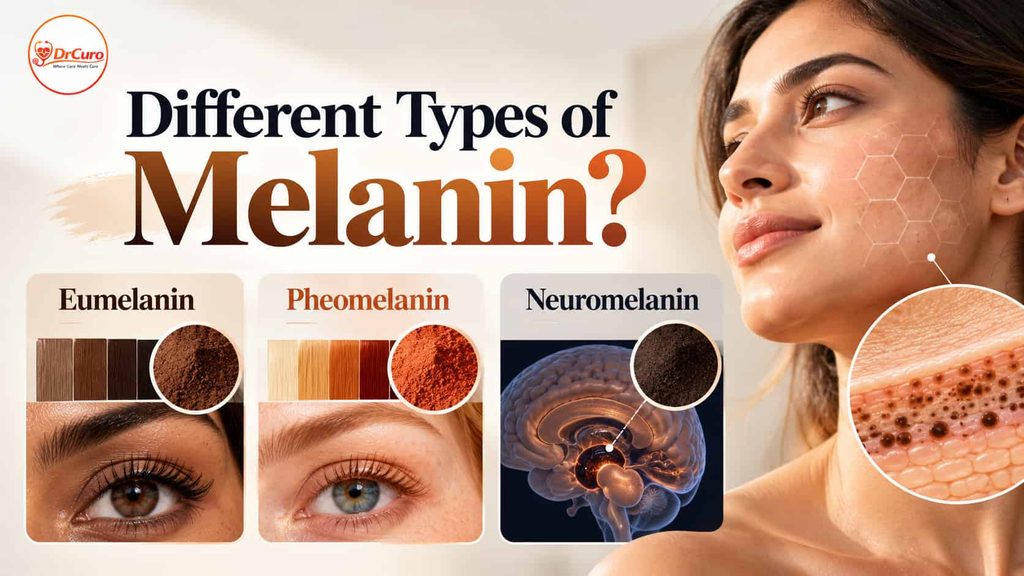
The human body produces different types of melanin. The three commonly discussed forms are eumelanin, pheomelanin and neuromelanin.
| Type of Melanin | Colour | Main Role |
| Eumelanin | Brown to black | Gives darker skin, hair and eye colour; absorbs UV effectively |
| Pheomelanin | Yellow to reddish | Gives red and yellow tones to hair, lips and skin; offers less UV protection |
| Neuromelanin | Dark pigment | Found in certain brain regions; studied for its role in neurological health |
A. Eumelanin
Eumelanin is the most common type of melanin in human skin and hair. It produces brown and black pigmentation, and people with more eumelanin generally have darker skin or hair. It is also the most effective at absorbing UV radiation and protecting skin cells.
B. Pheomelanin
Pheomelanin produces yellow and reddish pigmentation. It is the main pigment behind red hair and contributes to pink and reddish tones in lips and some lighter skin tones.
(Blonde hair is mainly the result of very low amounts of eumelanin rather than high pheomelanin.)
Pheomelanin gives much less protection against UV radiation than eumelanin. When exposed to UV light, it can also generate reactive oxygen species, which may damage cells. This is one reason people with naturally red hair and fair skin are more sensitive to sunlight and have a higher risk of sun damage.
C. Neuromelanin
Neuromelanin is a dark pigment found in certain parts of the brain, particularly areas involved in movement control. It is not responsible for skin, hair or eye colour. Researchers continue to study its role in brain health and neurological conditions.
What Are the Main Functions and Benefits of Melanin?
Melanin does much more than determine colour.
1. Helps Protect the Skin from UV Radiation
Melanin absorbs and dissipates part of the energy from UV rays, helping protect the DNA inside skin cells. However, this protection is partial. Sunburn, premature ageing and skin cancer can still occur in every skin tone.
2. Gives Natural Colour to Skin
Differences in the amount, type and distribution of melanin explain the wide range of human skin tones.
3. Determines Hair Colour
The type and amount of pigment in hair follicles decide whether hair is black, brown, blonde or red. With age, the pigment-producing cells and the stem cells that replenish them gradually become depleted or less active, leading to grey or white hair.
4. Contributes to Eye Colour
Melanin is present in the iris, the coloured part of the eye. Higher amounts generally result in brown eyes, while lower amounts give lighter eye colours.
5. Provides Some Protection Against Oxidative Damage
Eumelanin has antioxidant properties and can neutralise some reactive molecules that may otherwise damage cells. This depends on the type of melanin. Pheomelanin can, under UV light, actually produce reactive molecules. Melanin cannot prevent all forms of skin damage.
What Factors Affect Melanin Production?
| Factor | How It Affects Melanin |
| Genetics | Plays the major role in natural skin, hair and eye pigmentation |
| Sunlight exposure | UV radiation stimulates increased melanin production |
| Visible light | Can worsen pigmentation in some people, especially in melasma |
| Hormonal changes | Fluctuations can contribute to melasma |
| Skin inflammation | Acne, injuries and irritation may trigger excess pigment |
| Cumulative sun damage | Years of sun exposure can cause age spots (solar lentigines) |
| Certain medications | Some medicines can change skin pigmentation |
| Medical conditions | Hormonal, metabolic and nutritional disorders can darken skin |
A. Genetics
Genetics influences the number and activity of melanocytes, the type of melanin produced and how pigment is distributed. This is why skin colour varies naturally from person to person.
B. Sun Exposure
Direct sunlight stimulates melanin production, which can make skin darker or cause uneven pigmentation. Repeated unprotected exposure also increases the risk of premature skin ageing and skin damage.
C. Hormonal Changes
Pregnancy, certain hormonal treatments and other hormonal fluctuations may contribute to pigmentation. Melasma, for example, is often linked to hormones and sun exposure.
D. Skin Inflammation
When skin becomes inflamed from acne, insect bites, burns or irritation, it may produce extra pigment while healing. This leads to post-inflammatory hyperpigmentation (PIH), where dark marks remain after the original problem has healed.
E. Cumulative Sun Damage and Age
Age spots (also called sun spots or liver spots) are mostly caused by years of sun exposure, not by age alone. They appear most often on the face, hands and arms.
Normal vs. Excess or Uneven Pigmentation
| Normal Melanin Production | Excess or Uneven Pigmentation |
| Gives the skin its natural colour | Can cause darker patches or spots |
| Pigment is distributed fairly evenly | Pigment collects in certain areas |
| Provides some UV protection | May develop due to sun, inflammation or hormones |
| Maintains natural skin tone | Can lead to melasma or post-inflammatory dark spots |
Excess pigment is not always a disease. Sometimes it is simply a natural response to sunlight or inflammation. However, sudden or unusual pigmentation changes should be evaluated by a dermatologist.
Skin Problems Related to Melanin
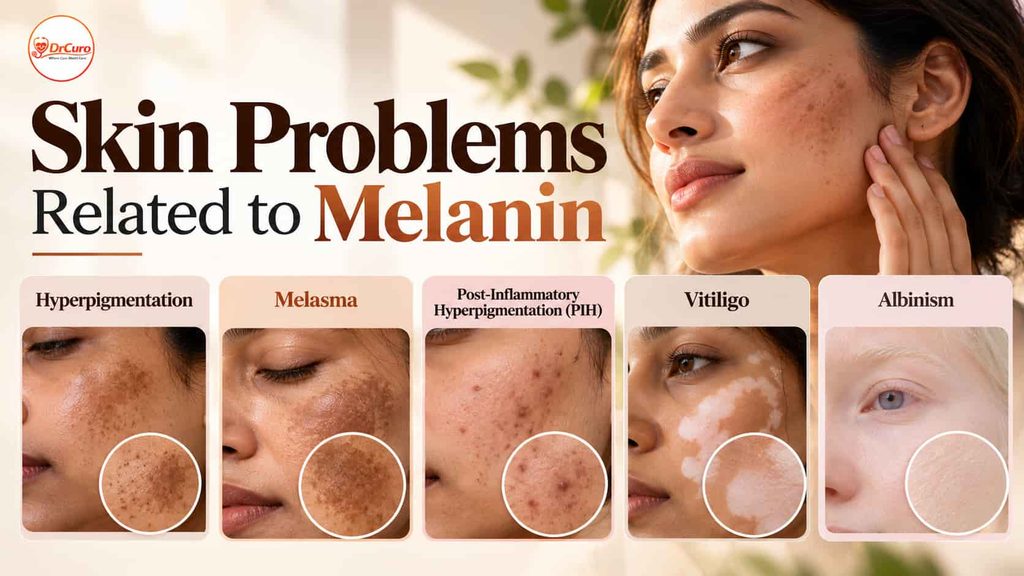
1. Hyperpigmentation
Hyperpigmentation occurs when certain areas become darker than the surrounding skin because of increased or uneven melanin. Common causes include:
- Excessive sun exposure
- Acne and skin inflammation
- Hormonal changes
- Skin injuries
- Certain medications
2. Melasma
Melasma causes brown or grey-brown patches, mainly on the cheeks, forehead, upper lip and nose. It is more common in women and in people with medium to darker skin tones, including many Indians.
Contributing factors include hormonal fluctuations, pregnancy, sun exposure, genetic tendency and visible light. Melasma often needs long-term management because it can return even after improvement.
3. Post-Inflammatory Hyperpigmentation (PIH)
PIH develops after inflammation or injury, such as acne, eczema, burns or irritating skin treatments. The area may look brown, dark or grey. Avoid picking or squeezing acne, and use suitable products to reduce the risk of new marks.
4. Vitiligo
In vitiligo, melanocytes are destroyed or stop working in certain areas, causing white patches. It is generally considered an autoimmune condition. It is not caused by excess melanin, and it is not contagious.
5. Albinism
Albinism is a group of inherited conditions in which the body makes little or no melanin. People with albinism are very sensitive to sunlight and need extra UV protection. Some forms also affect vision.
| Skin Condition | What Happens? | Common Appearance |
| Hyperpigmentation | Increased or uneven pigment | Dark patches or spots |
| Melasma | Increased pigment in certain areas | Brown or grey-brown facial patches |
| PIH | Pigment after inflammation | Dark acne marks or spots |
| Vitiligo | Loss of melanocytes | White patches |
| Albinism | Reduced or absent melanin | Very light skin and hair; eye involvement |
When Dark Skin Is Not “Just Pigmentation”: Medical Causes
Sometimes skin darkening is a sign of an underlying health issue. Do not treat these with creams alone.
- Acanthosis nigricans: Dark, thick, velvety patches on the neck, underarms or groin. It is often linked to insulin resistance, prediabetes or PCOS and is common in India. Treating the underlying cause is essential.
- Vitamin B12 deficiency: Can cause darkening of the knuckles, palms, soles or skin creases. It is more likely in people on vegetarian diets.
- Thyroid and adrenal disorders: Can alter skin pigmentation.
- Medication-related darkening: Some drugs (certain antimalarials, chemotherapy medicines, hormonal medicines and others) can cause pigmentation changes.
If you notice dark patches that are spreading, velvety, or accompanied by tiredness, weight changes or irregular periods, see a doctor for evaluation.
Melanin, Vitamin D and Sunscreen: Finding the Balance
Melanin absorbs UV rays, and the same UV rays are needed to make vitamin D in the skin. As a result, people with darker skin make vitamin D more slowly from the same amount of sunlight. Vitamin D deficiency is common in India despite plenty of sunshine, partly because of indoor lifestyles, clothing and skin tone.
This does not mean you should skip sunscreen. Instead:
- Get your vitamin D level checked if you have symptoms such as fatigue, bone or muscle pain, or if your doctor advises it.
- Include vitamin D sources in your diet, such as eggs, fortified foods and fatty fish, as appropriate.
- Take supplements only on medical advice.
Can Diet and Nutrition Affect Melanin?
A healthy diet supports skin function, collagen formation, antioxidant protection and repair. However, there is no scientific evidence that eating specific foods can safely and reliably increase or decrease your natural skin colour. A balanced diet supports skin health, but it cannot change your genetic skin tone.
| Nutrient | Food Sources | Role in Skin Health |
| Vitamin C | Amla, oranges, guava, lemons | Supports collagen and antioxidant protection (dietary vitamin C does not lighten skin; topical forms are used in skincare under guidance) |
| Vitamin E | Almonds, sunflower seeds, vegetable oils | Helps protect cells from oxidative damage |
| Vitamin A | Carrots, spinach, sweet potatoes | Supports normal skin cell growth |
| Vitamin B12 | Milk, curd, paneer, eggs, fortified foods | Supports healthy blood and skin; deficiency can cause darkening |
| Zinc | Pumpkin seeds, lentils, beans | Supports skin repair and immune function |
| Protein | Milk, eggs, pulses, paneer | Provides amino acids for tissue repair |
| Copper | Nuts, seeds, whole grains | Supports enzymes involved in melanin production |
Foods to include: amla and guava, carrots and sweet potatoes, almonds and sunflower seeds, spinach and green vegetables, pulses and lentils, and pumpkin seeds.
No single food can remove pigmentation or control melanin production on its own.
Common Myths and Facts About Melanin
| Common Myth | Actual Fact |
| More melanin means unhealthy skin | Melanin is a natural pigment and part of normal skin biology |
| Dark skin does not need sunscreen | Every skin tone needs sun protection |
| A tan is healthy or protective | A tan is a sign of UV-related skin stress, and protection is minimal |
| Melanin causes all dark spots | Spots can result from inflammation, hormones, sun and medical conditions |
| Certain foods can permanently reduce melanin | No food can reliably change natural skin tone |
| Glutathione pills or injections safely whiten skin | Evidence is limited, and unsupervised use can be risky |
| Fair skin is healthier than dark skin | Skin colour does not determine health |
| More melanin gives complete sun protection | It gives some protection, but UV damage can still occur |
| All pigmentation is the same | Different conditions have different causes and treatments |
Skin of Colour: What You Should Know
Darker skin tones (Fitzpatrick types IV to VI, common in India) have special considerations:
- Higher tendency for PIH and melasma: Even minor inflammation, such as a pimple or scratch, may leave a lasting dark mark.
- Procedure risk: Strong chemical peels, certain lasers and aggressive treatments can worsen pigmentation if done incorrectly. Always choose a qualified dermatologist experienced in treating skin of colour.
- Skin cancer is less common, but not absent: It is often diagnosed late in darker skin. It can appear in less obvious places such as the palms, soles and under the nails (acral melanoma). Any new, changing or non-healing dark spot there should be checked.
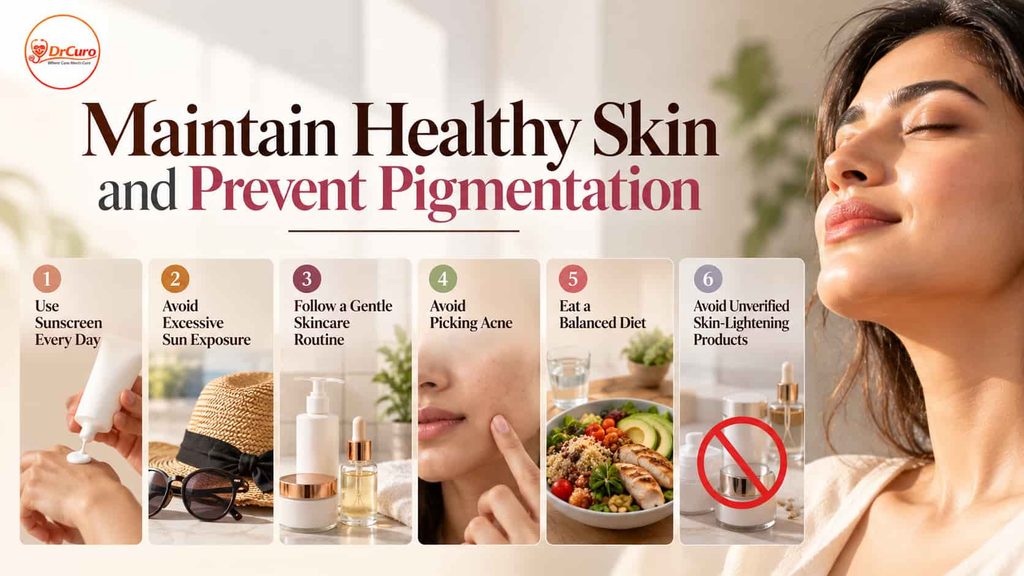
How to Maintain Healthy Skin and Prevent Pigmentation
You cannot control your natural melanin production, but you can reduce the risk of uneven pigmentation.
1. Use Sunscreen Every Day
- Choose a broad-spectrum sunscreen with SPF 30 or higher.
- Look for PA+++ or PA++++ on the label for UVA protection.
- For melasma or pigmentation, consider a tinted sunscreen containing iron oxide, which helps block visible light.
- Use about two finger-lengths of sunscreen for the face and neck.
- Apply 15 to 20 minutes before going out and reapply every two hours when outdoors, and after sweating or swimming.
- Protection is needed on cloudy days and near windows too, because UVA passes through clouds and glass.
2. Avoid Excessive Sun Exposure
- Wear a wide-brimmed hat and sunglasses.
- Choose protective clothing.
- Stay in shade during peak UV hours (around late morning to afternoon).
3. Follow a Gentle Skincare Routine
- A gentle cleanser
- A moisturiser to support the skin barrier
- Sunscreen in the daytime
- Dermatologist-recommended products for pigmentation concerns
4. Avoid Picking Acne
Picking, scratching or squeezing increases inflammation and can leave dark marks. Treat acne early to reduce the risk of PIH.
5. Eat a Balanced Diet
Include fruits, vegetables, whole grains, nuts, seeds and protein-rich foods.
6. Avoid Unverified Skin-Lightening Products, Injections and Pills
Some creams contain harmful or wrongly used ingredients such as mercury or potent steroids. They can cause irritation, skin thinning, permanent damage and even kidney problems.
Be especially careful with glutathione pills, drips and injections marketed for “skin whitening”. Evidence for safe, lasting skin lightening is limited, and health authorities in several countries have issued warnings about unsupervised injectable use. Never use these products without a qualified doctor’s advice.
When Should You Consult a Dermatologist?
Not every dark spot needs treatment, but see a dermatologist if:
- Dark patches appear suddenly without a clear reason.
- Pigmentation keeps spreading or darkening.
- Pigmentation persists despite a good skincare routine.
- Dark spots come with itching, pain or irritation.
- A mole changes in size, shape or colour, or bleeds.
- A new dark spot or streak appears on the palms, soles or nails.
- Dark, velvety patches appear on the neck or underarms.
- White patches develop or spread.
A dermatologist can identify the cause and recommend suitable treatment, which may include topical creams, prescription medicines, chemical peels or selected laser procedures, depending on your skin type and condition. Avoid starting strong pigmentation treatments or prescription creams without medical advice.
Frequently Asked Questions (FAQs)
1. What is melanin in simple words?
Melanin is a natural pigment made by skin cells called melanocytes. It gives colour to our skin, hair and eyes and helps protect the skin from some UV damage.
2. What are the three types of melanin?
Eumelanin (brown to black), pheomelanin (yellow to red) and neuromelanin (found in the brain).
3. Does melanin protect against sunburn and skin cancer?
It gives some protection, and darker skin has a natural SPF-like effect. But it is not complete. People of all skin tones can get sunburn, skin damage and skin cancer, so sunscreen is needed for everyone.
4. Can you increase or decrease melanin naturally?
Your baseline melanin is genetic. Sun exposure can temporarily increase it, but no food or home remedy can safely and reliably change your natural skin colour.
5. Is melanin the same as pigmentation?
Melanin is the pigment itself. Pigmentation (or hyperpigmentation) refers to areas where melanin is increased or unevenly distributed.
6. Why do dark spots appear after pimples?
Inflammation from acne stimulates melanocytes to produce extra pigment, causing post-inflammatory hyperpigmentation. It is more common and lasts longer in darker skin tones.
8. Do people with dark skin need vitamin D supplements?
They may be more prone to vitamin D deficiency, but supplements should be taken based on a blood test and medical advice.
9. Is vitiligo caused by too much or too little melanin?
Vitiligo is caused by loss of melanocytes, leading to white patches. It is not contagious.
10. Are glutathione injections safe for skin whitening?
Evidence for safe and lasting skin lightening is limited, and unsupervised use can carry risks. Consult a qualified doctor before considering any such treatment.
Conclusion
Melanin is a natural and essential pigment that determines the colour of our skin, hair and eyes and gives partial protection against ultraviolet radiation. Genetics, sunlight, hormones, inflammation and even certain medical conditions can influence how much melanin we produce and where it collects.
Darker or lighter skin is a natural variation, not a measure of beauty or health. Instead of trying to change your natural skin colour, focus on daily sun protection, a balanced diet, a gentle skincare routine and timely medical advice for unusual changes.
At Dr Curo, we believe better health begins with the right information. If you notice unusual pigmentation or other skin concerns, consult a qualified dermatologist for proper guidance.
Healthy skin is not about having a particular skin colour. It is about keeping your skin protected, healthy and well cared for.



No Comment! Be the first one.