







Jaundice in Adults: Causes, Treatment and Recovery
Jaundice is a health condition that many people notice first through a simple change the eyes or skin start to look yellow. This happens because of a build-up of a yellow substance called bilirubin...
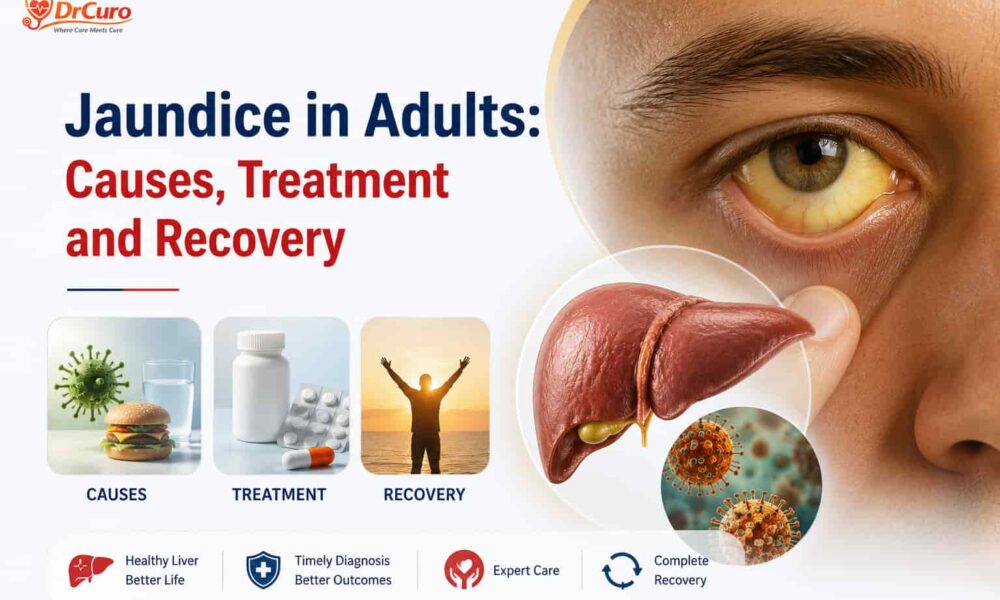
Jaundice is a health condition that many people notice first through a simple change the eyes or skin start to look yellow. This happens because of a build-up of a yellow substance called bilirubin in the blood. Bilirubin is formed naturally when old red blood cells break down, and under normal conditions, the liver processes this bilirubin and removes it from the body through bile and stool. But when the liver is not working the way it should, when bile flow gets blocked somewhere along the way, or when red blood cells are breaking down faster than usual, bilirubin starts to build up, and that is when jaundice appears. It is important to understand that jaundice in adults is not a disease on its own, it is a sign that something else in the body needs attention. The causes can range from mild and temporary issues to more serious liver or blood-related conditions, so understanding what may be behind it is the first and most important step. This blog explains jaundice in adults in simple words, covering its causes, symptoms, diagnosis, treatment, diet, and recovery.
Table Of Content
- What Exactly Is Jaundice?
- Common Symptoms of Jaundice in Adults
- What Causes Jaundice in Adults?
- 1. Hepatitis
- 2. Fatty Liver Disease
- 3. Alcohol-Related Liver Disease
- 4. Gallstones
- 5. Medicines and Toxins
- 6. Blood Disorders
- 7. Liver Cirrhosis
- 8. Pancreas and Bile Duct Problems
- Symptom Changes to Watch For
- How Is Jaundice in Adults Diagnosed?
- How Is Jaundice in Adults Treated?
- What Should You Eat During Jaundice Recovery?
- Foods and Habits to Avoid
- How Long Does Jaundice Take to Recover?
- What Helps During Jaundice Recovery?
- When Does Jaundice Become an Emergency?
- Can Jaundice in Adults Be Prevented?
- Jaundice in Adults: Quick Overview
- Frequently Asked Questions
- Conclusion
What Exactly Is Jaundice?
To understand jaundice properly, it helps to know what bilirubin does in the body. Every day, the body breaks down old red blood cells, and this process naturally produces bilirubin. The liver’s job is to take this bilirubin, process it, and release it into bile so that it eventually leaves the body through the digestive system. When this entire process works smoothly, bilirubin levels stay balanced and there is no yellowing of the skin or eyes. But if something disturbs this process, whether it is a problem with the liver itself, a blockage somewhere in the bile ducts, or too much bilirubin being produced in the first place, the balance is lost and jaundice develops. Since so many different conditions can disturb this process, doctors always look beyond the yellow colour itself to understand the real reason behind it.
Common Symptoms of Jaundice in Adults
While yellowing of the skin and eyes is the most recognisable symptom, jaundice in adults often comes with several other signs that can help point toward the underlying cause. Some people notice mild symptoms that develop slowly, while others may feel quite unwell within a short period.
Common symptoms to watch for include:
- Yellowing of the whites of the eyes
- Yellow or darker-than-usual skin
- Dark yellow or brownish urine
- Pale or clay-coloured stools
- Feeling tired or weak
- Reduced appetite
- Nausea or vomiting
- Pain or discomfort in the abdomen
- Itchy skin
- Fever, especially if an infection is involved
- Unexplained weight loss
- A general feeling of being unwell
- Swelling in the abdomen or legs in more serious liver conditions
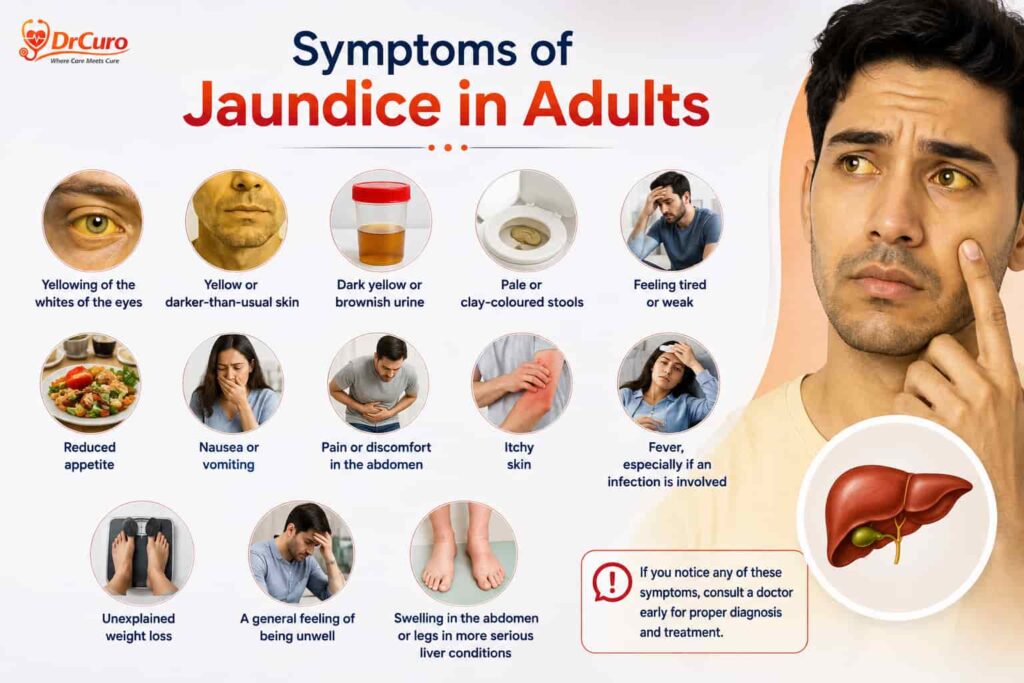
Since these symptoms can overlap across many different conditions, it is always best to get a proper medical evaluation rather than guessing the cause.
What Causes Jaundice in Adults?
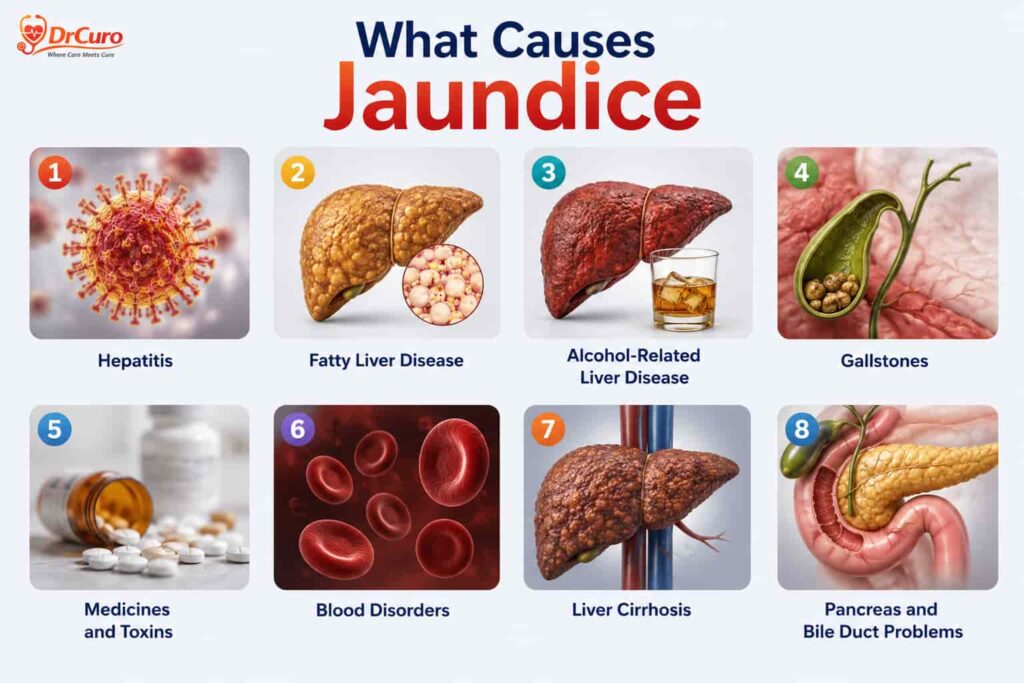
There are many possible reasons behind jaundice, and doctors usually organise them into three broad categories based on where the problem is occurring before bilirubin even reaches the liver, within the liver itself, or after bile has left the liver.
| Type of Cause | What Happens | Examples |
| Before the liver | Too much bilirubin is produced | Increased breakdown of red blood cells |
| Liver-related | The liver cannot process bilirubin properly | Hepatitis, fatty liver disease, alcohol-related liver disease |
| After the liver | Bile cannot flow normally | Gallstones, bile duct blockage, certain tumours |
Let’s look at some of the most common causes in more detail.
1. Hepatitis
Hepatitis simply means inflammation of the liver, and it can happen due to viruses, alcohol use, certain medicines, toxins, or other underlying conditions. Viral hepatitis, including hepatitis A, B, and C, can lead to jaundice in some cases. Along with yellowing, patients may also experience tiredness, nausea, poor appetite, abdominal discomfort, dark urine, and pale stools. Treatment depends heavily on the type and severity of hepatitis some forms improve with rest and supportive care, while others may require specific antiviral medicines along with long-term monitoring by a doctor.
2. Fatty Liver Disease
Fatty liver disease develops when excess fat builds up inside the liver over time. It is commonly linked to obesity, diabetes, high cholesterol, and other metabolic issues. Interestingly, many people with fatty liver disease do not experience any symptoms at all in the early stages. It is usually only when the condition progresses to more significant liver inflammation or damage that jaundice and other symptoms begin to appear. Managing body weight, blood sugar, cholesterol levels, diet, and physical activity plays a major role in keeping fatty liver disease under control.
3. Alcohol-Related Liver Disease
Drinking alcohol heavily over a long period can gradually damage the liver, leading to inflammation, fat build-up, scarring, and eventually more serious liver disease. Jaundice tends to appear once the liver has become significantly affected. If alcohol is contributing to liver problems, cutting it out is an essential part of treatment. That said, people who have been drinking heavily for a long time should talk to a doctor before stopping suddenly, as withdrawal in such cases can sometimes be risky and needs proper medical supervision.
4. Gallstones
Gallstones are small, solid particles that can form inside the gallbladder. Occasionally, one of these stones moves into a bile duct and blocks the normal flow of bile. When this happens, bilirubin cannot pass through as it normally would, and it starts building up in the blood, leading to jaundice.
Signs that gallstones may be involved include:
- Yellow eyes or skin
- Dark urine
- Pale stools
- Pain in the upper right or middle part of the abdomen
- Nausea or vomiting
- Fever, especially if there is an accompanying infection
Doctors typically use an ultrasound or similar imaging test to check for gallstones or blockages in the bile duct, and treatment depends on where the blockage is and how severe it is.
5. Medicines and Toxins
Certain medicines, herbal products, and other substances can affect how the liver functions, and in some cases, this can lead to jaundice. The actual risk depends on the specific substance involved, the dosage, how long it has been used, and the individual’s overall health. This is exactly why it is so important to tell your doctor about every medicine, supplement, or herbal product you are taking, even ones that seem harmless. At the same time, never stop taking an important prescribed medicine on your own without speaking to your doctor first.
6. Blood Disorders
Sometimes jaundice happens not because of a liver problem, but because red blood cells are breaking down faster than the body can replace them, a process known as hemolysis. When large numbers of red blood cells break down at once, the body produces more bilirubin than the liver can comfortably handle. Certain blood disorders, immune-related conditions, infections, and inherited conditions can all cause this kind of increased red blood cell breakdown, and doctors typically run specific blood tests to confirm whether this is the cause.
7. Liver Cirrhosis
Cirrhosis refers to severe, long-term scarring of the liver, and it usually develops as a result of chronic hepatitis, long-term alcohol use, fatty liver disease, or other ongoing liver conditions. As cirrhosis advances, the liver begins to struggle with its normal functions, and jaundice can appear alongside other symptoms such as abdominal swelling, swelling in the legs, easy bruising, confusion, or bleeding problems. Because cirrhosis can lead to serious complications, it requires consistent, long-term medical care and monitoring.
8. Pancreas and Bile Duct Problems
Issues involving the pancreas or bile ducts, such as inflammation, narrowing, infections, cysts, or tumours, can also block the normal flow of bile and lead to jaundice. If jaundice appears together with unexplained weight loss, ongoing abdominal pain, or severe itching, it should be evaluated by a doctor without delay, as these combinations can sometimes point to more serious underlying conditions.
Symptom Changes to Watch For
Paying attention to changes in urine colour, stool colour, skin, appetite, and general health can offer useful clues, even though a proper diagnosis always requires medical testing.
| Symptom | What It May Indicate |
| Yellow eyes or skin | Increased bilirubin in the blood |
| Dark urine | Bilirubin passing into the urine |
| Pale stools | Reduced bile reaching the intestine |
| Itchy skin | Bile-related changes in the body |
| Abdominal pain | Possible liver, gallbladder, or bile duct issue |
| Fever | Possible infection or inflammation |
| Severe tiredness | May occur with liver disease or infection |
| Loss of appetite | Common across several causes of jaundice |
How Is Jaundice in Adults Diagnosed?
Diagnosis usually begins with the doctor asking detailed questions about symptoms, medical history, alcohol use, and current medicines, followed by a physical examination. From there, blood tests play a central role, since they can measure bilirubin levels directly and give important information about how well the liver is functioning.
Tests commonly used include:
- Total and direct bilirubin levels
- Liver function tests
- Complete blood count
- Tests for viral hepatitis when needed
- Kidney function tests
- Blood clotting tests
- Tests to check for red blood cell breakdown, when relevant
- Ultrasound of the abdomen
- CT scan or MRI in selected cases
- Other specialised tests depending on the suspected cause
The doctor decides which combination of tests is needed based on the patient’s specific symptoms and initial findings.
How Is Jaundice in Adults Treated?
There is no single medicine or quick fix that treats every case of jaundice, because treatment depends entirely on what is causing it. Jaundice caused by a viral infection needs a very different approach compared to jaundice caused by a blocked bile duct or an underlying blood disorder.
Depending on the cause, treatment may involve:
- Treating viral or other infections when present
- Stopping or changing a harmful medicine, always under medical supervision
- Managing underlying liver disease
- Addressing fatty liver and related metabolic conditions
- Treating alcohol-related liver damage
- Removing or treating a bile duct blockage
- Treating gallstones when necessary
- Managing underlying blood disorders
- Handling complications of advanced liver disease
- Maintaining proper nutrition and fluid intake
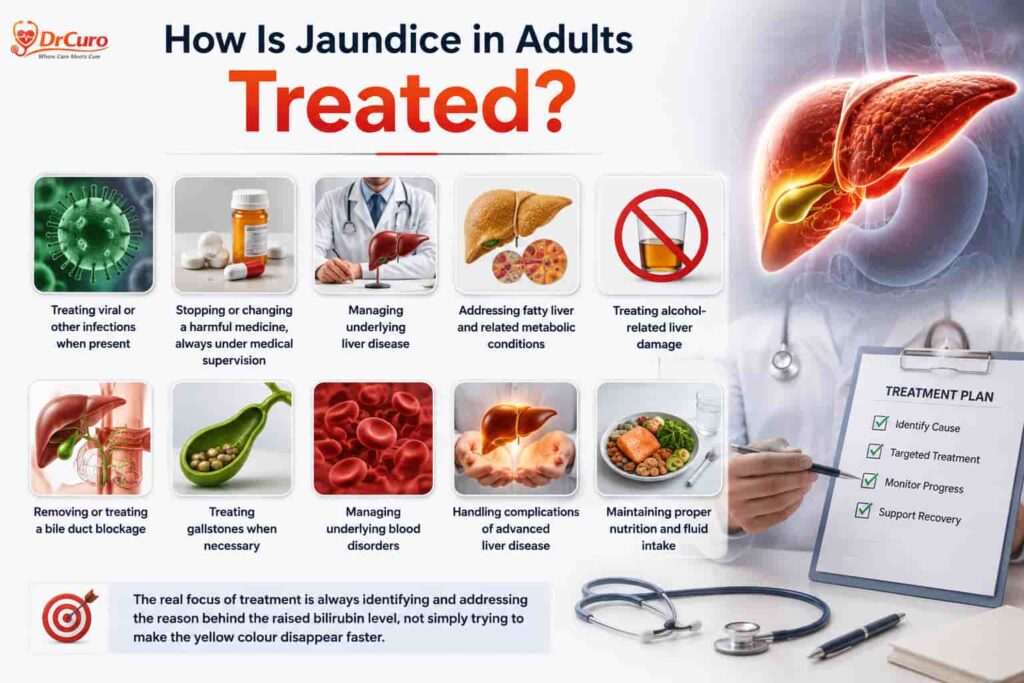
The real focus of treatment is always identifying and addressing the reason behind the raised bilirubin level, not simply trying to make the yellow colour disappear faster.
What Should You Eat During Jaundice Recovery?
There is no single magic food that cures jaundice, and the right diet really depends on the underlying condition and the person’s individual nutritional needs. In general, doctors recommend focusing on balanced, easily digestible meals rather than following any strict or extreme diet.
Foods that may be included, depending on individual needs, are:
- Fresh fruits
- Vegetables
- Whole grains
- Dal and other suitable protein sources
- Eggs or other protein-rich foods, when appropriate
- Light, home-cooked meals
- Adequate fluids through the day
- Easy-to-digest foods if appetite is low
It’s worth remembering that unnecessary supplements, herbal remedies, or so-called “liver detox” products should be avoided unless a healthcare professional specifically recommends them.
Foods and Habits to Avoid
Since the liver is already under some stress during jaundice, it makes sense to avoid anything that could add to that burden. While the exact restrictions depend on the underlying cause, some general precautions apply to most patients.
Helpful precautions include:
- Avoid alcohol completely
- Avoid self-medication
- Do not take herbal remedies without medical advice
- Limit highly processed foods
- Cut back on oily and fried foods if they seem to worsen symptoms
- Avoid unnecessary supplements
- Stick to the diet recommended for your specific liver condition
- Drink fluids according to your doctor’s guidance
People with existing liver or kidney conditions may need more specific dietary restrictions, so it’s important not to rely on general advice alone.
How Long Does Jaundice Take to Recover?
Recovery time can vary quite a lot depending on what caused the jaundice in the first place. Some mild infections may clear up within a few weeks, while chronic liver conditions or a blocked bile duct may take considerably longer to fully resolve. Interestingly, the yellow colour in the eyes and skin can sometimes take a little extra time to fade, even after the underlying problem has already started improving.
Recovery generally depends on:
- The specific cause of jaundice
- How severe the condition is
- Overall liver health
- Age and general health status
- Whether an infection is present
- Whether a bile duct is blocked
- How well the patient responds to treatment
- Presence of other existing medical conditions
Regular follow-up visits and repeat blood tests are often needed to confirm that bilirubin levels and liver function are steadily returning to normal.
What Helps During Jaundice Recovery?
Recovery tends to go more smoothly when patients stick closely to their treatment plan and avoid anything that could worsen the underlying condition.
Helpful steps during recovery include:
- Taking prescribed medicines exactly as directed
- Attending all follow-up appointments
- Eating balanced, nutritious meals
- Drinking enough fluids, unless a fluid restriction has been advised
- Getting adequate rest
- Avoiding alcohol
- Steering clear of unnecessary medicines and supplements
- Keeping track of any new or worsening symptoms
- Following medical advice about physical activity
- Managing related conditions like diabetes, blood pressure, or cholesterol
It is worth remembering that just because the skin looks less yellow does not always mean everything has fully resolved internally follow-up testing is often still necessary.
When Does Jaundice Become an Emergency?
While many cases of jaundice can be managed with routine care, certain symptoms call for urgent medical attention and should never be ignored.
Seek emergency care if jaundice appears along with:
- Severe abdominal pain
- High fever or chills
- Confusion or unusual sleepiness
- Fainting
- Severe vomiting
- Blood in vomit or stool
- Significant bleeding or easy bruising
- Severe weakness
- Rapidly worsening yellowing of the skin or eyes
- Severe swelling of the abdomen
- Difficulty breathing
Sudden confusion or severe weakness alongside jaundice can sometimes point to a serious underlying problem and should always be treated as a medical emergency.
Can Jaundice in Adults Be Prevented?
Not every cause of jaundice can be prevented, but several healthy habits can meaningfully lower the risk of some of the more common causes.
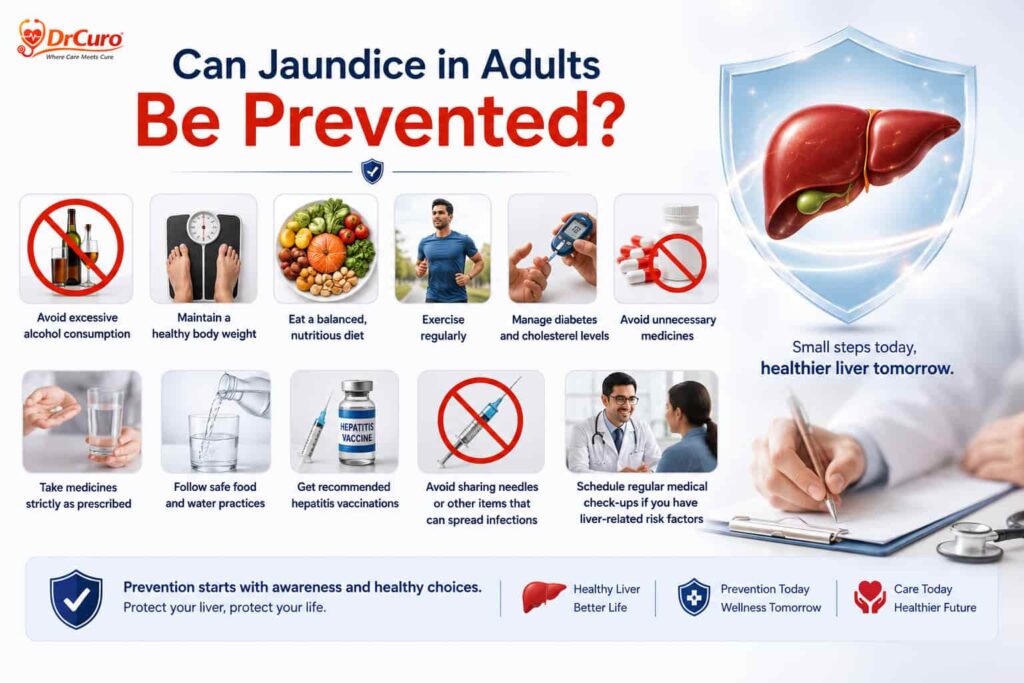
You can support long-term liver health by:
- Avoiding excessive alcohol consumption
- Maintaining a healthy body weight
- Eating a balanced, nutritious diet
- Exercising regularly
- Managing diabetes and cholesterol levels
- Avoiding unnecessary medicines
- Taking medicines strictly as prescribed
- Following safe food and water practices
- Getting recommended hepatitis vaccinations
- Avoiding sharing needles or other items that can spread blood-borne infections
- Scheduling regular medical check-ups if you have known liver-related risk factors
Jaundice in Adults: Quick Overview
| Area | Key Information |
| What is jaundice? | Yellowing of the skin or eyes caused by high bilirubin levels |
| Common causes | Hepatitis, liver disease, gallstones, bile duct blockage, blood disorders, medicines |
| Main symptoms | Yellow eyes/skin, dark urine, pale stools, tiredness, itching |
| Diagnosis | Blood tests, liver function tests, imaging, and other tests as needed |
| Treatment | Depends entirely on the underlying cause |
| Diet | Balanced meals and adequate fluids, based on individual needs |
| Recovery time | Can range from days to weeks or longer, depending on the cause |
| Prevention | Healthy lifestyle, safe food and water, vaccination, careful medicine use |
| When to seek help | New jaundice, or jaundice with severe pain, fever, confusion, or bleeding |
Frequently Asked Questions
Is jaundice a disease?
No, jaundice is usually a sign of an underlying health problem rather than a disease on its own. Proper medical evaluation is needed to find the real cause.
Can adults get jaundice?
Yes, adults can develop jaundice due to a wide range of reasons, including liver disease, hepatitis, gallstones, bile duct blockage, blood disorders, medicines, and alcohol-related liver damage.
Can jaundice go away on its own?
Some mild causes may improve with time and supportive care, but jaundice should never simply be ignored, especially if it is new or accompanied by other symptoms.
Is jaundice contagious?
Jaundice itself is not contagious, but some of its underlying causes, such as certain types of viral hepatitis, can spread from person to person.
Can jaundice damage the liver permanently?
Jaundice is a symptom, but the condition causing it may affect the liver. Some causes are temporary and resolve fully, while others can lead to long-term liver damage if left untreated.
Can I exercise while recovering from jaundice?
It really depends on the underlying cause and how you’re feeling. If you feel weak or unwell, rest is usually recommended. Always check with your doctor before resuming normal physical activity.
Should I take a liver detox product for jaundice?
No, unproven liver detox products are not recommended and can sometimes even harm the liver further. Any supplement or herbal product should only be used after discussing it with a healthcare professional.
Conclusion
Jaundice in adults can occur for many different reasons, from hepatitis and fatty liver disease to alcohol-related liver problems, gallstones, bile duct blockages, blood disorders, and certain medicines. The yellowing of the skin and eyes is really just a visible sign, which is why identifying and treating the underlying cause matters far more than simply focusing on the colour change. Diagnosis usually involves blood tests, liver function tests, and imaging studies, while treatment depends completely on what is causing the condition. During recovery, following your doctor’s advice, eating balanced meals, staying properly hydrated, avoiding alcohol, and steering clear of unnecessary medicines or supplements can all make a real difference. If jaundice develops suddenly or comes along with severe abdominal pain, fever, confusion, or repeated vomiting, medical attention should be sought right away. At drcuro, the aim is to make health information like this simple and easy to understand, so that patients can recognise important warning signs early and have more informed, confident conversations with their doctors about liver health and overall wellbeing.





No Comment! Be the first one.