






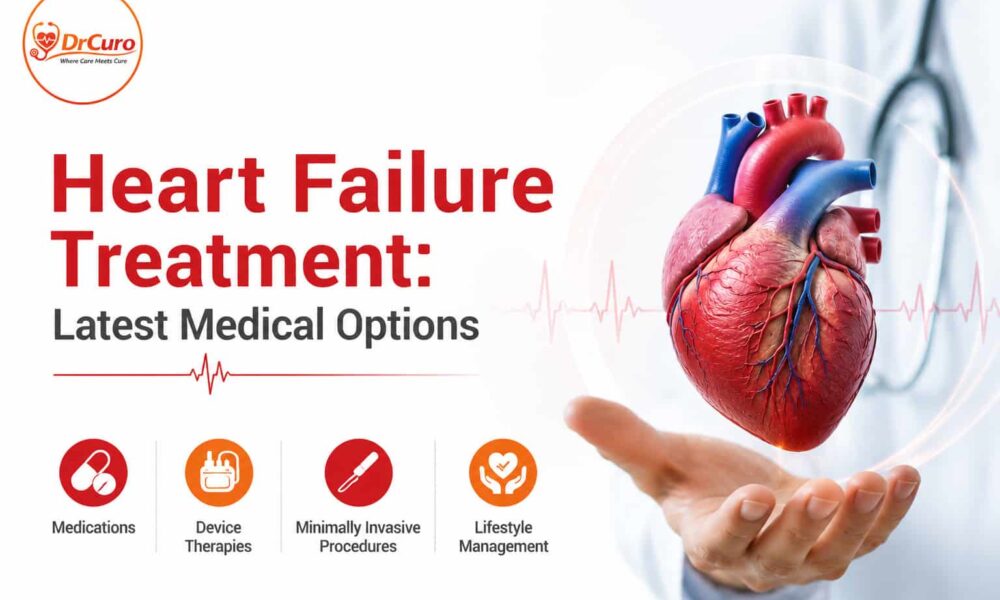
Heart Failure Treatment: Latest Medical Options
Heart failure sounds frightening the first time you hear it, but it does not mean the heart has stopped working. It means the heart cannot pump blood as efficiently as the body needs. Because of...
Heart failure sounds frightening the first time you hear it, but it does not mean the heart has stopped working. It means the heart cannot pump blood as efficiently as the body needs. Because of this, organs and tissues sometimes do not get enough oxygen and nutrients, which is why people with heart failure often feel tired, breathless, or swollen in the legs and feet. The condition can develop slowly over years, or it can show up suddenly after a heart attack or another major cardiac event.
Table Of Content
- What Is Heart Failure, Really?
- What Causes Heart Failure?
- Recognizing the Symptoms Early
- How Doctors Diagnose Heart Failure
- Latest Medicines Used in Heart Failure Treatment
- Medical Devices for Heart Failure
- Surgical Options for Advanced Cases
- Lifestyle Changes That Support Treatment
- Living With Heart Failure Day to Day
- Frequently Asked Questions
- Conclusion
The good news is that heart failure treatment has changed dramatically over the past decade. What used to be managed with just a handful of medicines is now treated with a much wider toolkit newer drug classes, smarter implantable devices, and in some cases, surgery that can add years to a patient’s life. This blog walks through what heart failure actually is, why it happens, and most importantly, what the latest treatment options look like today.
What Is Heart Failure, Really?
Think of the heart as a pump that needs to push blood to every part of the body, all day, every day, without rest. In heart failure, that pump either becomes too weak to push hard enough, or too stiff to fill up properly between beats. Either way, blood does not circulate as well as it should.
The body notices this and tries to compensate usually by holding onto extra fluid or forcing the heart to work harder. In the short term, this might mask the problem. Over time, it usually makes things worse, which is why heart failure tends to be a progressive condition if left unmanaged.
Heart failure is generally split into a few categories:
- Left-sided heart failure — the left side of the heart struggles to pump blood out to the body, often causing fluid to back up into the lungs
- Right-sided heart failure — the right side cannot pump effectively, leading to swelling in the legs, ankles, and abdomen
- HFrEF (Heart Failure with Reduced Ejection Fraction) — the heart muscle is weak and pumps less blood than normal with each beat
- HFpEF (Heart Failure with Preserved Ejection Fraction) — the heart muscle is stiff and cannot fill properly, even though the pumping motion itself looks normal on tests
Doctors need to know which type they are dealing with before deciding on treatment, because a therapy that works well for a weak heart muscle may not help or could even harm a stiff one.
What Causes Heart Failure?
Heart failure rarely shows up out of nowhere. It is almost always the downstream result of another condition that has been quietly damaging the heart for years.
The most common contributors include high blood pressure that forces the heart to work harder than it should, coronary artery disease that narrows the arteries feeding the heart muscle, and damage from a previous heart attack. Diabetes plays a major role too, since high blood sugar over time affects both blood vessels and the heart muscle directly. Other causes include faulty heart valves, abnormal heart rhythms, diseases of the heart muscle itself (cardiomyopathy), congenital heart defects present since birth, and even severe lung disease or chronic kidney disease, both of which put extra strain on the heart indirectly.
| Risk Factor | Why It Matters |
| High blood pressure | Forces the heart to pump against constant resistance |
| Diabetes | Damages blood vessels and heart tissue over time |
| Smoking | Reduces oxygen supply and damages vessel walls |
| Obesity | Increases workload on the heart |
| Sleep apnea | Causes repeated oxygen drops that stress the heart |
| Family history | Genetic factors can increase susceptibility |
Some of these risk factors, like family history, cannot be changed. Most of the others smoking, diet, activity levels, blood sugar control can be, and doing so is one of the most effective ways to lower the risk of ever needing heart failure treatment in the first place.
Recognizing the Symptoms Early
One of the tricky things about heart failure is that early symptoms can feel like ordinary tiredness or “just getting older.” That delay in recognizing symptoms is often what allows the condition to progress further than it needs to before treatment starts.
Common signs include:
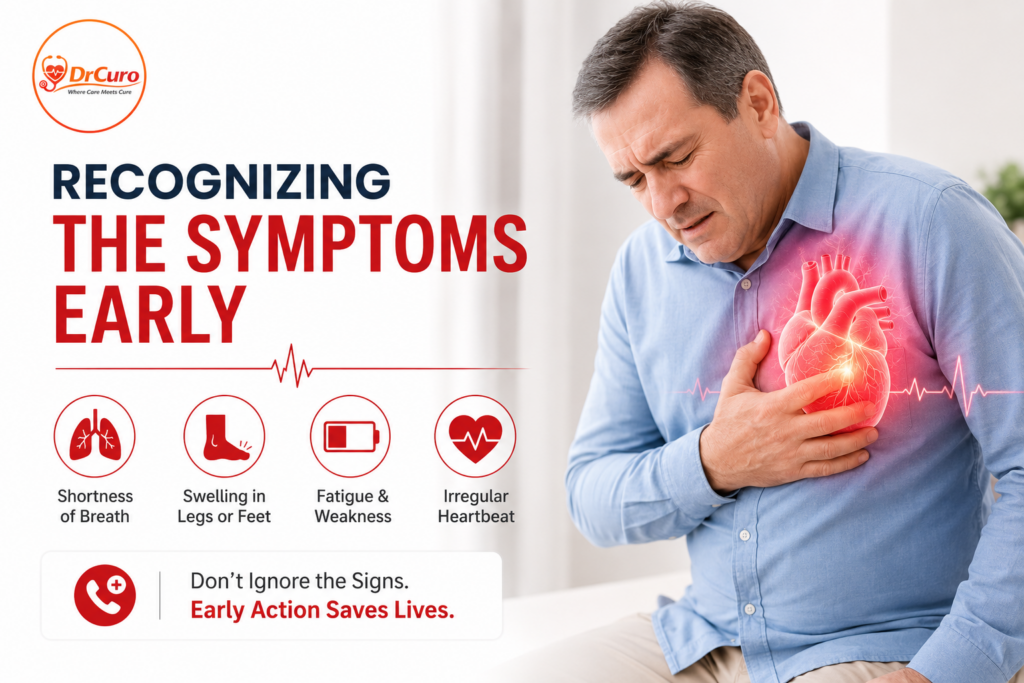
- Shortness of breath, especially during activity or when lying flat
- Persistent fatigue and weakness
- Swelling in the feet, ankles, legs, or abdomen
- A rapid or irregular heartbeat
- A cough that is worse at night
- Sudden weight gain from fluid retention
- Reduced appetite or feeling full quickly
- Frequent nighttime urination
- Dizziness or fainting spells
Some symptoms need emergency attention immediately rather than a routine doctor’s visit severe chest pain, sudden difficulty breathing, coughing up pink or frothy mucus, blue-tinted lips or fingertips, or confusion. These can indicate the condition has become acutely unstable.
How Doctors Diagnose Heart Failure
Diagnosis usually starts with a conversation your symptoms, your medical history, any family history of heart disease followed by a physical exam checking for swelling, abnormal heart sounds, or fluid buildup in the lungs.
| Test | What It Shows |
| Blood tests | Kidney function, thyroid levels, anemia, heart-specific markers |
| ECG | Abnormal rhythms and evidence of prior heart damage |
| Echocardiogram | How well the heart is pumping and whether valves are working properly |
| Chest X-ray | An enlarged heart or fluid collecting in the lungs |
| Stress test | How the heart performs under physical exertion |
| CT scan or MRI | Detailed structural images of the heart |
| Coronary angiography | Whether the arteries feeding the heart are blocked |
The echocardiogram in particular is central to diagnosis, since it tells doctors the ejection fraction — essentially, what percentage of blood the heart pumps out with each beat — which determines whether someone has HFrEF or HFpEF and shapes the entire treatment plan that follows.
Latest Medicines Used in Heart Failure Treatment
Medication remains the backbone of most heart failure treatment plans, but the medicines used today are considerably more advanced than what was available even ten years ago.
| Medicine Type | How It Helps |
| ACE Inhibitors | Relax blood vessels, lowering the pressure the heart pumps against |
| ARBs | An alternative when ACE inhibitors are not tolerated |
| ARNIs | A newer combination drug shown to reduce hospitalizations more than older options |
| Beta-Blockers | Slow the heart rate and reduce its workload |
| Diuretics | Remove excess fluid, easing swelling and breathlessness |
| Mineralocorticoid Receptor Antagonists | Reduce fluid buildup and offer some protection to heart tissue |
| SGLT2 Inhibitors | Originally a diabetes drug, now proven to improve heart failure outcomes even in non-diabetics |
| Digoxin | Strengthens heart contractions and helps control certain rhythm problems |
The SGLT2 inhibitor story is worth pausing on, because it is genuinely one of the more surprising developments in recent heart care treatment. These drugs were designed to lower blood sugar, but large clinical trials found they also reduced hospitalizations and improved survival in heart failure patients — including those who do not have diabetes at all. That kind of cross-over benefit is unusual in cardiology and has changed prescribing guidelines significantly.
Patients should never stop or adjust these medicines without talking to their doctor first. Heart failure medications often work together, and removing one can destabilize the whole balance.
Medical Devices for Heart Failure
When medicines alone are not enough to control symptoms, doctors sometimes turn to implantable devices.
- Pacemaker — maintains a steady, normal heart rhythm
- Implantable Cardioverter Defibrillator (ICD) — detects and corrects dangerous, potentially fatal heart rhythms
- Cardiac Resynchronization Therapy (CRT) — helps the chambers of the heart beat in better coordination, improving pumping efficiency
- Left Ventricular Assist Device (LVAD) — a mechanical pump that helps circulate blood in advanced heart failure, sometimes used as a bridge to transplant and sometimes as a long-term solution on its own
These devices are not first-line options. They are considered after a cardiologist has evaluated whether medication alone is managing the condition well enough, and they come with their own risks and monitoring requirements.
Surgical Options for Advanced Cases
For patients whose heart failure has progressed despite medicines and devices, surgery becomes part of the conversation. This can include coronary artery bypass surgery to restore blood flow through blocked arteries, valve repair or replacement if a damaged valve is contributing to the problem, LVAD implantation, or in the most severe cases, a heart transplant.
A heart transplant is generally reserved for patients who meet strict eligibility criteria and have exhausted other treatment avenues. It is a major undertaking, both medically and logistically, but for the right patient it can be genuinely life-extending.
Lifestyle Changes That Support Treatment
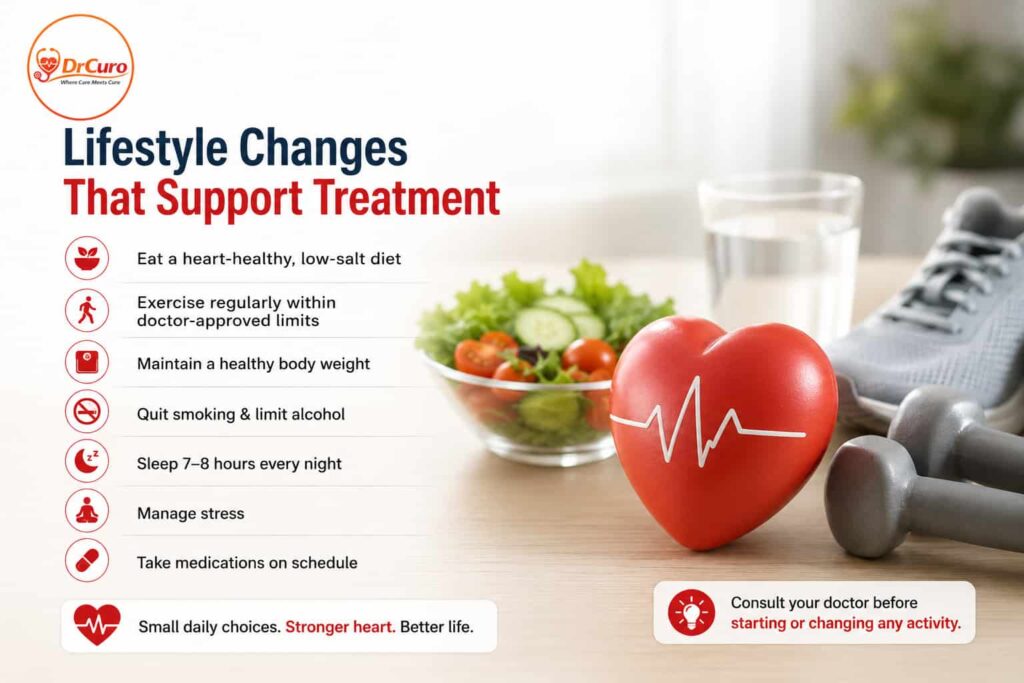
No amount of medication fully compensates for poor daily habits. Lifestyle changes are not an optional add-on to heart failure treatment they are part of it.
- Eat a diet low in salt, built around vegetables, whole grains, and lean protein
- Limit fluid intake if your doctor has specifically advised it
- Exercise regularly, but only within limits your doctor has approved
- Maintain a healthy body weight
- Quit smoking entirely
- Limit or avoid alcohol
- Sleep seven to eight hours a night
- Manage stress through relaxation techniques
- Take medications on schedule, every day, without skipping doses
Many patients assume exercise is dangerous once diagnosed with heart failure. In most cases the opposite is true appropriately supervised activity like walking, light cycling, or heart-specific yoga can improve strength and reduce symptoms over time. The exception is if you experience chest pain, severe breathlessness, or dizziness during activity, in which case you should stop and contact your doctor.
Living With Heart Failure Day to Day
A heart failure diagnosis does not have to mean the end of an active life. Many people continue working, traveling, and spending time with family for years after diagnosis, provided they stay consistent with their treatment plan.
Daily habits that help include weighing yourself each morning to catch sudden fluid retention early, monitoring blood pressure if your doctor recommends it, watching for new swelling in the legs or feet, and keeping a simple log of symptoms. Contact your doctor promptly if you notice rapid weight gain over a few days, increasing breathlessness, or a cough that will not go away these can be early signs that the condition is destabilizing before it becomes an emergency.
Frequently Asked Questions
Can heart failure be cured?
In most cases, no it is a long-term condition managed rather than cured. Some underlying causes, like a specific valve problem, can sometimes be corrected surgically, which may significantly improve or resolve symptoms.
Is heart failure the same thing as a heart attack?
No. A heart attack is caused by a sudden blockage of blood flow to part of the heart muscle. Heart failure is an ongoing inability of the heart to pump effectively, and a heart attack is one of several things that can cause it.
Can I still exercise?
Generally yes, with your doctor’s guidance on intensity and type. Supervised activity is usually encouraged, not avoided.
How often should I see my doctor?
This depends on severity. Stable patients might go every few months; those with more advanced heart failure may need much closer monitoring.
Does heart failure always get worse?
Not necessarily. With consistent medication, lifestyle changes, and follow-up care, many patients maintain stable symptoms for years.
Conclusion
Heart failure is a serious diagnosis, but it is no longer the limited-options condition it once was. Between newer drug classes like ARNIs and SGLT2 inhibitors, better implantable devices, and more advanced surgical options, patients today have far more tools available than a decade ago. None of it works in isolation, though medication, lifestyle change, and regular monitoring all have to work together for long-term results.
At drcuro, we work with patients to build heart failure treatment plans suited to their specific type and stage of the condition, rather than a one-size-fits-all approach. If you or someone you know is experiencing symptoms of heart failure, do not wait for them to become severe before seeking care early, informed heart care treatment consistently leads to better long-term outcomes.





No Comment! Be the first one.