






How to Lower Cholesterol Naturally: 10 Proven Ways
Introduction Most people only find out they have high cholesterol during a routine blood test not because they felt unwell, but because high cholesterol rarely announces itself. By the time...
Introduction
Most people only find out they have high cholesterol during a routine blood test not because they felt unwell, but because high cholesterol rarely announces itself. By the time symptoms surface, the damage to your arteries may already be underway. At drcuro, we work at the intersection of preventive medicine and heart care, and one of the questions we hear most often is: can I actually fix this without going straight to medication? For a large number of people, the honest answer is yes but only if the lifestyle changes are specific, consistent, and grounded in how your body actually processes fat.
Table Of Content
- Introduction
- What Cholesterol Is — and What It Is Not
- 10 Proven Ways to Lower Cholesterol Naturally
- 1. Eat More Soluble Fiber — With Attention to Quantity
- 2. Replace Saturated and Trans Fats With Unsaturated Fats
- 3. Eat Omega-3 Fatty Acids Regularly
- 4. Achieve and Maintain a Healthy Body Weight
- 5. Exercise — and Understand Which Type Does What
- 6. Cut Back on Added Sugar — Not Just Fat
- 7. Quit Smoking
- 8. Manage Alcohol Intake
- 9. Build a Predominantly Plant-Based Diet
- 10. Manage Stress — Because It Directly Affects Lipids
- How Long Does It Actually Take?
- When Natural Methods Are Not Enough
- Conclusion
This blog breaks down 10 proven ways to lower cholesterol naturally. Not a list of vague suggestions, but an explanation of why each strategy works, how much of a difference it actually makes, and what you need to do in practice to see results.
What Cholesterol Is — and What It Is Not
Cholesterol itself is not a poison. Your body manufactures it because it needs it for building cell membranes, producing bile acids that help digest food, and synthesizing hormones like testosterone and estrogen. The problem is not the presence of cholesterol; it is the imbalance between the types.
LDL (Low-Density Lipoprotein): Often called “bad cholesterol,” LDL carries cholesterol through your bloodstream. When LDL levels are elevated, particles can penetrate artery walls, oxidize, and trigger an inflammatory response that leads to plaque formation a condition called atherosclerosis. Over years, narrowing arteries raise your risk of heart attack and stroke significantly.
HDL (High-Density Lipoprotein): HDL acts as a reverse transport system, pulling excess cholesterol from artery walls and delivering it to the liver for elimination. Higher HDL levels are associated with lower cardiovascular risk.
Triglycerides: These are stored fats in your blood. Elevated triglycerides, particularly when combined with high LDL and low HDL, create a lipid profile that significantly increases cardiovascular risk more so than any single marker in isolation.
The goal of natural intervention is not just to reduce LDL in isolation. It is to shift the entire lipid profile lower LDL, raise HDL, and reduce triglycerides in a way that is sustainable over the long term.
10 Proven Ways to Lower Cholesterol Naturally
1. Eat More Soluble Fiber — With Attention to Quantity
Soluble fiber works by forming a gel-like substance in your digestive tract that binds to bile acids. Since bile acids are made from cholesterol, your liver is forced to pull more cholesterol from the blood to produce new ones effectively lowering LDL levels.
Research shows that consuming 5–10 grams of soluble fiber per day can reduce LDL cholesterol by approximately 5–11 mg/dL. A bowl of oatmeal (about 3 grams of soluble fiber) combined with an apple (about 1 gram) already gets you partway there.
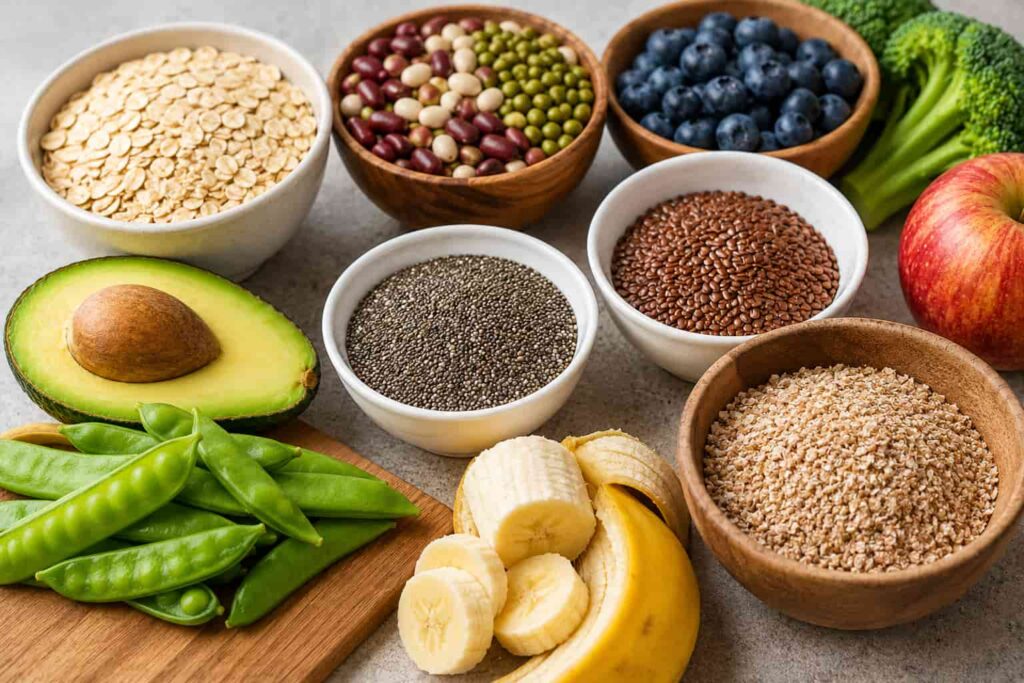
Best sources of soluble fiber:
- Oats and oat bran
- Barley
- Psyllium husk (one of the highest fiber-per-gram sources)
- Lentils, chickpeas, and kidney beans
- Apples, pears, and citrus fruits
- Brussels sprouts and carrots
The key word is soluble insoluble fiber from wheat bran does not bind bile acids the same way. If you are adding fiber supplements like psyllium, introduce them gradually. A sudden large increase causes bloating and gas, which leads most people to quit within a week.
2. Replace Saturated and Trans Fats With Unsaturated Fats
For decades, fat was treated as the enemy. The more accurate picture is that fat quality matters far more than fat quantity.
Saturated fats found in fatty red meat, full-fat dairy, butter, coconut oil, and palm oil stimulate the liver to produce more LDL cholesterol. Trans fats (partially hydrogenated oils, still found in some packaged biscuits, crackers, and fried foods) are worse: they raise LDL and lower HDL simultaneously.
Replacing these with monounsaturated and polyunsaturated fats produces a measurable improvement. Extra virgin olive oil is the cornerstone of the Mediterranean diet a dietary pattern with decades of evidence behind it. Swapping butter for olive oil in cooking, or replacing a bag of chips with a handful of walnuts, produces a meaningful shift over time.
The substitution principle matters more than elimination. When you remove saturated fat without replacing it with quality unsaturated fat, people tend to reach for refined carbohydrates instead which raises triglycerides and lowers HDL, making the lipid picture worse, not better.
3. Eat Omega-3 Fatty Acids Regularly
Omega-3 fatty acids specifically EPA and DHA do not dramatically reduce LDL cholesterol. Anyone who claims otherwise is overstating the evidence. What they do, and do well, is reduce triglycerides by 15–30% at therapeutic doses, lower systemic inflammation, reduce arterial stiffness, and stabilize heart rhythm.
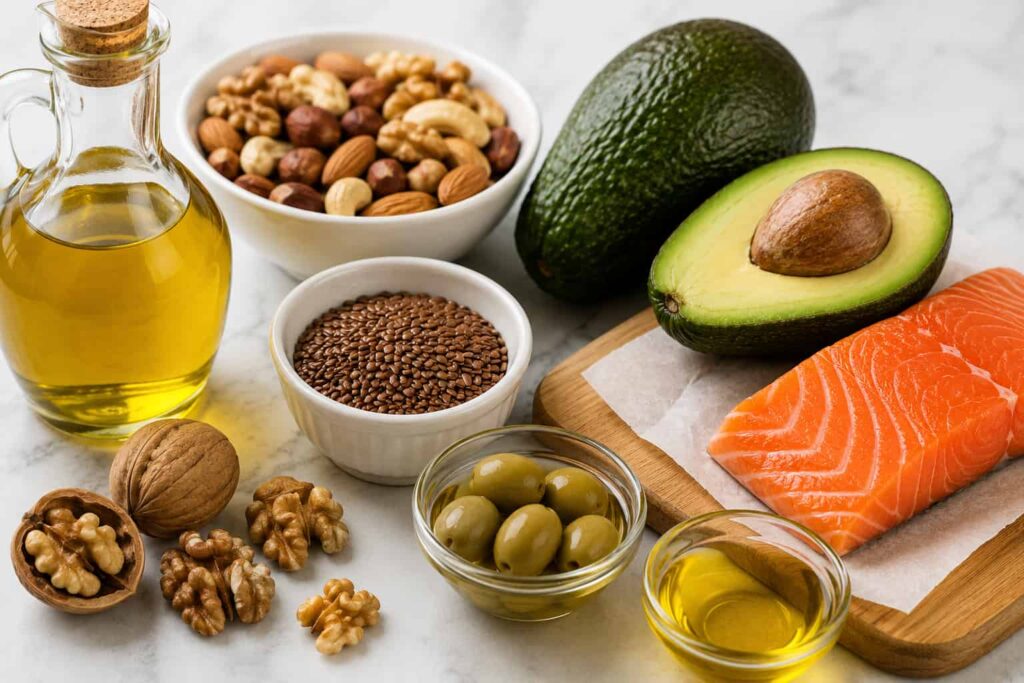
In terms of overall heart care, this matters. Cardiovascular risk is not a single-variable equation. Reducing triglycerides while lowering inflammation changes the entire risk profile.
Practical sources:
- Fatty fish (salmon, mackerel, sardines, herring) aim for 2 servings per week
- Walnuts the best plant-based source of ALA, a precursor to EPA and DHA
- Flaxseeds and chia seeds grind flaxseeds before eating; whole seeds pass through undigested
- Fish oil supplements useful if dietary intake is consistently low, but whole fish is preferable
Plant-based omega-3s (ALA) convert to EPA and DHA at under 10% in most people, which is why fatty fish remains the gold standard for those who eat it.
4. Achieve and Maintain a Healthy Body Weight
Excess body fat particularly visceral fat stored around the abdomen is metabolically active in ways that disrupt your lipid profile. It increases LDL production, elevates triglycerides, and suppresses HDL.
Losing even 5–10% of body weight produces significant lipid improvements. For someone weighing 80 kg, that is 4–8 kg achievable without extreme restriction.
The mechanism matters: it is not weight loss itself that improves cholesterol, but what drives the weight loss. Losing weight by cutting refined carbohydrates and sugar tends to produce better improvements in triglycerides and HDL. Losing the same amount through severe caloric restriction with poor dietary quality can produce mixed results.
At drcuro, we emphasize sustainable changes over crash approaches. A 500-calorie daily deficit through a combination of dietary adjustment and increased activity is more effective long-term than aggressive short-term restriction followed by rebound weight gain.
5. Exercise — and Understand Which Type Does What
The relationship between exercise and cholesterol is more nuanced than most generic advice suggests.
Aerobic exercise (brisk walking, cycling, swimming, jogging) is the most effective type for raising HDL cholesterol and reducing triglycerides. Consistent moderate-intensity aerobic exercise the WHO guideline of 150 minutes per week raises HDL by approximately 5–10% over several months.
Resistance training (weight training, bodyweight exercises) helps with LDL reduction and improves insulin sensitivity, which indirectly benefits the lipid profile by reducing triglyceride production.
A combined approach 3–4 sessions of aerobic exercise plus 2 sessions of resistance training per week produces broader benefits than either type alone.
One important clarification: the effect of exercise on HDL is cumulative and time-dependent. You will not see a meaningful change from two weeks of walking. Studies showing HDL improvement typically use 12-week-plus intervention periods. Consistency is the actual active ingredient.
6. Cut Back on Added Sugar — Not Just Fat
This is one of the most underappreciated drivers of poor cholesterol panels. The focus on dietary fat while relevant has overshadowed the independent effect of sugar, particularly fructose.
When you consume excess fructose (from sugar, high-fructose corn syrup, fruit juices, and sweetened beverages), the liver converts the surplus into triglycerides. Elevated triglycerides then trigger a cascade that reduces HDL and shifts LDL particles to a smaller, denser subtype that is more likely to penetrate artery walls.

Practical targets:
- The WHO recommends keeping added sugars below 10% of total daily calories ideally under 5%
- For a 2,000-calorie diet, that is under 50 grams (ideally under 25 grams) of added sugar per day
- A single 500ml bottle of cola contains approximately 53 grams of added sugar already over the upper limit
Eliminating sweetened beverages is typically the highest-impact single dietary change for triglycerides specifically.
7. Quit Smoking
Smoking damages HDL particles, making them dysfunctional even when levels appear normal on a blood test. It also oxidizes LDL particles and it is oxidized LDL, not LDL itself, that is most damaging to arterial walls.
The cardiovascular benefit of quitting begins almost immediately. Within 20 minutes of the last cigarette, blood pressure and heart rate begin to normalize. Within 3 months, circulation improves. Within 1–2 years, HDL cholesterol rises meaningfully and heart disease risk drops measurably.
If you currently smoke and have high cholesterol, you are compounding two major independent risk factors for cardiovascular disease. Addressing both together does not just add the benefits it multiplies them, because smoking amplifies the damage that high LDL causes to artery walls.
8. Manage Alcohol Intake
The relationship between alcohol and cholesterol is frequently misrepresented. Moderate alcohol consumption has been associated in observational studies with slightly higher HDL levels but this does not translate cleanly into reduced heart disease risk in clinical trials, and the harms of alcohol across other health dimensions are well-established.
What is clear is the harm side: excess alcohol intake raises triglycerides significantly, contributes to weight gain, increases blood pressure, and stresses the liver all of which worsen your overall cardiovascular risk profile.
If you drink:
- Limit to 1 drink per day for women and 2 for men (standard drink = 14 grams of pure alcohol)
- Avoid binge patterns even if weekly totals appear moderate
- Do not increase alcohol intake for any perceived cardiovascular benefit
If you do not drink, the evidence does not support starting for cholesterol reasons.
9. Build a Predominantly Plant-Based Diet
This does not mean eliminating all animal products. It means restructuring your plate so that plants are the foundation rather than the supplement.
Plant foods lower LDL cholesterol through multiple mechanisms simultaneously:
Dietary fiber reduces cholesterol absorption and bile acid reabsorption. Plant sterols and stanols found naturally in nuts, seeds, whole grains, and vegetable oils block cholesterol absorption in the intestines. At 2 grams per day, they reduce LDL by 8–10%. Antioxidants (particularly polyphenols in berries, leafy greens, and legumes) reduce LDL oxidation the step that makes LDL genuinely dangerous to arterial walls.
The practical shift: build meals around legumes, vegetables, whole grains, and nuts, with animal proteins as a smaller component rather than the centerpiece. This one structural change addresses fiber intake, plant sterol intake, saturated fat reduction, and weight management simultaneously.
10. Manage Stress — Because It Directly Affects Lipids
Chronic stress is not just a soft lifestyle factor. It has a direct biochemical pathway to cholesterol levels.
When you are under sustained stress, cortisol levels remain elevated. Cortisol triggers the release of free fatty acids into the bloodstream, which the liver converts into LDL and VLDL. Chronic stress also promotes visceral fat accumulation adding another route to worsening lipid profiles.
Beyond the hormonal mechanism, stress affects behavior: poor food choices, disrupted sleep (independently associated with higher LDL), reduced motivation to exercise, and increased alcohol consumption.

Evidence-based approaches that have shown measurable effects on cardiovascular biomarkers:
- Mindfulness-based stress reduction (MBSR) — studied specifically in cardiac patients
- 7–9 hours of quality sleep per night (sleep deprivation raises triglycerides and LDL)
- Regular moderate exercise — which also directly improves lipid panels, making it a two-for-one intervention
- Social connection — a consistently underestimated cardiovascular protective factor
Stress management is not optional maintenance. It is a legitimate physiological intervention.
How Long Does It Actually Take?
Results vary based on your starting point, how aggressively you implement changes, and your genetic predisposition. For most people making consistent dietary and lifestyle changes:
- Triglycerides respond fastest — often within 4–6 weeks, particularly after cutting sugar and alcohol
- LDL typically shows measurable reduction within 6–12 weeks of dietary changes
- HDL is slowest to move — meaningful increases from exercise usually take 3–6 months of consistent effort
Track progress with blood tests. A lipid panel every 3 months during an active intervention period gives you real data to work with rather than guesswork.
When Natural Methods Are Not Enough
Natural methods are not a substitute for medical evaluation. There are situations where lifestyle changes alone are insufficient and medication is the right clinical decision:
- LDL above 190 mg/dL often indicates familial hypercholesterolaemia
- Existing cardiovascular disease or a prior heart attack
- Diabetes with additional cardiovascular risk factors
- High blood pressure alongside high cholesterol
- No meaningful improvement after 6 months of consistent lifestyle change
At drcuro, we treat natural interventions as the first line but never at the cost of delaying necessary medical care. If you fall into any of the above categories, speak to a doctor before relying on lifestyle changes alone.
Conclusion
Lowering cholesterol naturally is achievable for most people but it requires specificity, not just good intentions. The strategies that work are: increasing soluble fiber with quantities in mind, replacing saturated and trans fats with unsaturated alternatives, including omega-3s for triglyceride control, reaching a healthy weight sustainably, combining aerobic and resistance exercise, reducing added sugar, quitting smoking, moderating alcohol, building a plant-forward diet, and managing chronic stress.
None of these work in isolation. The cumulative effect of implementing several of them consistently over months is where the real results come from. At drcuro, we believe preventive care is the most powerful form of medicine. The best time to address your cholesterol is before it becomes a crisis.





No Comment! Be the first one.