






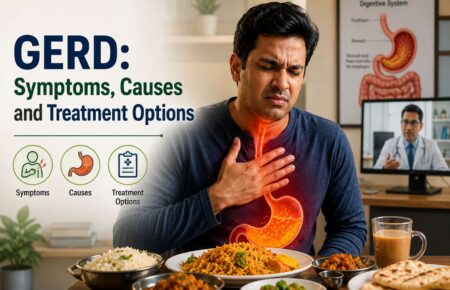
GERD: Symptoms, Causes and Treatment Options
Have you been feeling a burning sensation in your chest almost every day after eating? Or maybe you wake up in the middle of the night with a bitter taste in your mouth and an uncomfortable tightness...
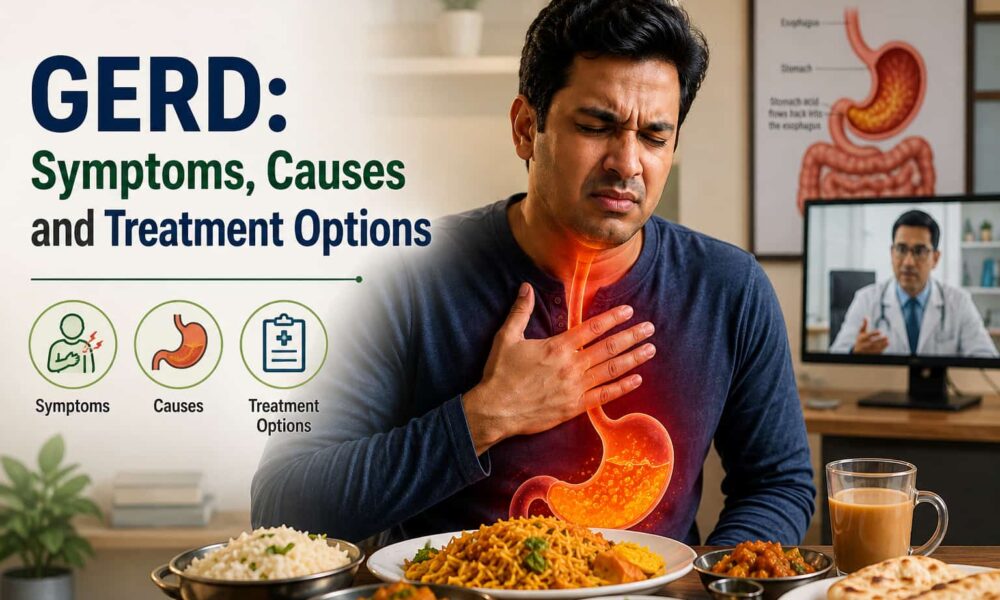
Have you been feeling a burning sensation in your chest almost every day after eating?
Or maybe you wake up in the middle of the night with a bitter taste in your mouth and an uncomfortable tightness in your throat?
Table Of Content
- Have you been feeling a burning sensation in your chest almost every day after eating?
- What is GERD?
- How Common is GERD in India?
- GERD Symptoms – What Does it Actually Feel Like?
- What Causes GERD?
- Acid Reflux vs GERD – What Is the Difference?
- GERD Symptoms and Treatment – Your Complete Options
- Treatment 1 – Lifestyle Changes (The Foundation of Everything)
- Treatment 2 – Over-the-Counter Medications
- Treatment 3 – Prescription Medications
- Treatment 4 – Advanced Endoscopic Procedures
- Treatment 5 – Surgery (Laparoscopic Fundoplication)
- GERD Treatment Success Rates in India
- Cost of GERD Treatment in India
- What Happens if GERD is Left Untreated?
- How Long Does GERD Treatment Take to Work?
- Tips to Support Your GERD Treatment Naturally
- Frequently Asked Questions
- Dr Curo Is With You Every Step
If this sounds familiar you are not alone. Millions of people across India deal with these exact symptoms every single day. And in most cases, the reason behind it is the same – GERD.
At Dr Curo, GERD is among the most frequently seen conditions under gastroenterology treatment India. Most patients reach us after months sometimes years of relying on antacids, getting temporary relief, and never truly getting answers about what is actually going on inside their body or how it can be properly treated.
What is GERD?
GERD stands for Gastroesophageal Reflux Disease.
Let us break that down simply.
Your stomach produces acid to digest food. Normally, a small muscular valve at the bottom of your food pipe called the Lower Oesophageal Sphincter, or LES keeps that acid locked inside the stomach where it belongs.
In GERD, this valve becomes weak or starts opening at the wrong times. When that happens, stomach acid travels back up into the food pipe the tube connecting your mouth and your stomach. The food pipe is not built to handle acid. So when acid touches it, you feel that familiar burning pain in your chest, your throat, or sometimes all the way up to your mouth.
When this happens occasionally after a heavy meal or a late night it is called acid reflux. But when it happens regularly more than twice a week it becomes GERD. A chronic, ongoing condition that needs proper medical attention, not just an antacid from the pharmacy.
At Dr Curo, we treat GERD not as something you simply have to live with, but as a condition with clear causes that can be properly treated and in many cases fully resolved.
How Common is GERD in India?
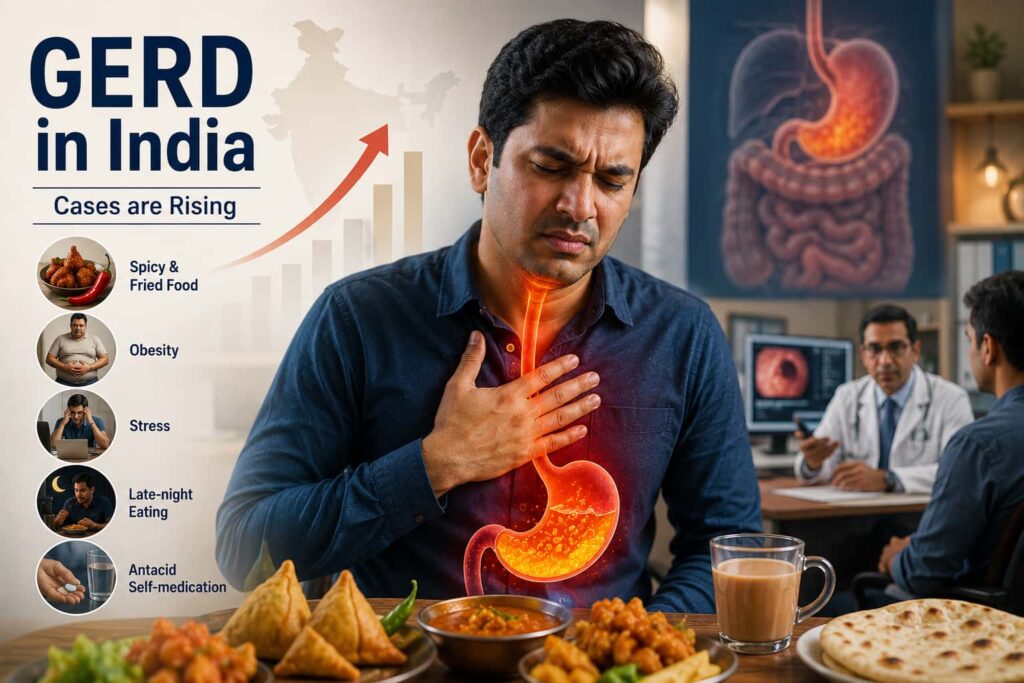
GERD is far more widespread in India than most people realise and it is growing rapidly.
Roughly 20 to 30 percent of urban Indians experience acid reflux symptoms at least once a week. Over the last two decades, GERD cases have increased by 30 to 40 percent across India driven by changing food habits, rising obesity, and increasing levels of stress.
The Indian diet rich in spicy food, fried snacks, and strong tea and coffee is one of the strongest dietary contributors to GERD in the world. Add late-night eating habits, long working hours, and high stress levels, and you have the perfect conditions for GERD to develop and worsen over time.
A very large number of people in India self-medicate with antacids for years without ever getting a proper diagnosis. This is a significant problem because untreated GERD does not stay mild. It progresses. It damages the food pipe. And in some cases, it leads to serious complications that could have been avoided with early, structured treatment.
At Dr Curo, early assessment and proper treatment are the most powerful tools we have. The sooner GERD is correctly diagnosed and managed, the better the long-term outcome.
GERD Symptoms – What Does it Actually Feel Like?
Understanding GERD symptoms and treatment begins with recognising what GERD actually feels like day to day. The symptoms of GERD go beyond simple heartburn and many people are surprised to learn that some of their long-standing complaints are connected to this one condition.
The most common GERD symptoms include:
Heartburn – A burning sensation in the chest, usually felt after eating or when lying down. This is the most recognised symptom of GERD and the one most people associate with acid reflux.
Regurgitation – Stomach acid or partially digested food coming back up into the throat or mouth. This often leaves a sour or bitter taste and is one of the most uncomfortable symptoms of GERD.
Difficulty swallowing – A feeling that food is getting stuck in the throat or chest when eating. This happens because the food pipe becomes inflamed or narrowed due to ongoing acid damage.
Chronic cough – Many GERD patients develop a persistent dry cough that has no obvious respiratory cause. This happens when acid irritates the throat and airway.
Hoarseness or change in voice – Acid reaching the throat and vocal cords can cause a chronically hoarse or rough voice, especially in the mornings.
Feeling of a lump in the throat – A persistent sensation that something is stuck in the throat, even when nothing is there. This is medically called globus sensation and is strongly linked to GERD.
Disturbed sleep – Acid reflux often worsens when lying flat, making nighttime symptoms extremely common. Many GERD patients report waking up coughing, choking, or with burning chest pain during the night.
Bloating and nausea – A feeling of fullness, heaviness, or mild nausea especially after meals is frequently reported by GERD patients, though these symptoms are often wrongly attributed to other causes.
One important thing to understand: not every GERD patient experiences heartburn. Some patients particularly those with what is called silent GERD have no chest burning at all, but suffer from chronic cough, throat irritation, or sleep disturbance caused by acid reflux that is happening without them realising it.
At Dr Curo, we look at the full picture not just the most obvious symptoms to ensure that GERD is correctly identified and not missed.
What Causes GERD?
GERD does not happen randomly. There are clear, identifiable causes and risk factors and understanding them is a crucial part of both treatment and prevention.
A weakened lower oesophageal sphincter is the central cause of GERD. When this valve does not close properly, acid escapes upward. Several factors contribute to this weakening including obesity, pregnancy, smoking, and certain medications.
Obesity and excess abdominal weight is one of the strongest risk factors for GERD in India. Excess weight around the abdomen pushes upward on the stomach and physically increases the pressure that forces acid up into the food pipe. Even modest weight gain can trigger GERD in someone who previously had no symptoms.
Dietary triggers are extremely significant in the Indian context. Spicy food, fried food, citrus fruits, tomatoes, chocolate, mint, strong tea and coffee, carbonated drinks, and alcohol are all well-established triggers for acid reflux. These foods either directly relax the lower oesophageal sphincter or increase acid production — or both.
Eating habits matter as much as what you eat. Eating large meals, eating too quickly, lying down immediately after eating, and eating very late at night are all major contributors to GERD and all extremely common in Indian lifestyles.
Hiatus hernia a condition where part of the stomach pushes up through the diaphragm into the chest is a structural cause of GERD that makes acid reflux significantly worse and harder to control with lifestyle changes alone.
Smoking directly weakens the lower oesophageal sphincter and increases acid production, making it one of the most consistently harmful habits for GERD patients.
Stress and anxiety increase stomach acid production and impair the normal function of the digestive system. The connection between stress and GERD is real, well-documented, and clinically significant which is why at Dr Curo, stress management is built into every GERD care plan.
Pregnancy causes GERD in many women due to the combination of hormonal changes that relax the LES and the physical pressure of the growing baby on the stomach.
Certain medications including aspirin, ibuprofen, certain blood pressure medications, and some antidepressants can worsen or trigger GERD as a side effect.
Acid Reflux vs GERD – What Is the Difference?
| Feature | Acid Reflux | GERD |
| Definition | Occasional backflow of stomach acid | Chronic, frequent acid reflux |
| How often | Once in a while | More than twice a week |
| Severity | Mild | Moderate to severe |
| Treatment needed | Lifestyle changes and occasional antacids | Prescription medications and structured care |
| Risk of complications | Low if managed early | Higher can damage food pipe |
| Reversible? | Yes – usually resolves with lifestyle changes | Yes – but needs sustained treatment |
Most patients who come to Dr Curo for GERD symptoms and treatment have been treating what they thought was occasional acid reflux but have actually been living with full GERD for months or years without realising it.
GERD Symptoms and Treatment – Your Complete Options
Treatment 1 – Lifestyle Changes (The Foundation of Everything)
Before any medication is started, lifestyle change is the single most powerful tool in managing GERD. At Dr Curo, it is the foundation of every GERD care plan not an optional add-on.
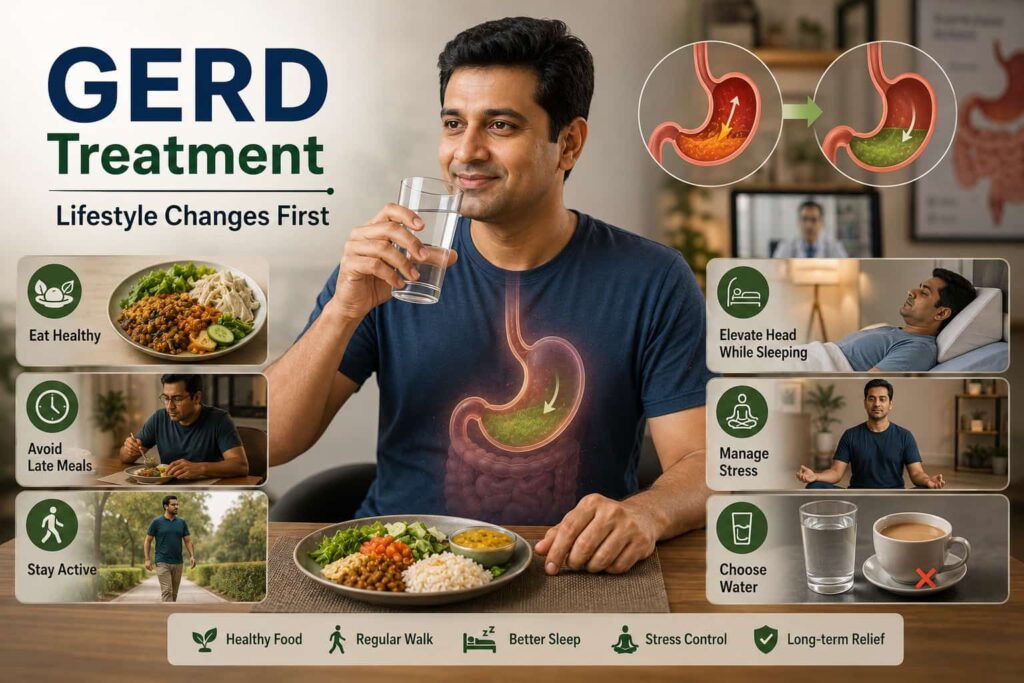
For many patients with mild to moderate GERD, structured lifestyle changes alone can dramatically reduce or completely eliminate symptoms without any medication at all.
Dietary changes that make a real difference:
Stop eating 2 to 3 hours before going to bed this single change makes a significant difference for nighttime and morning symptoms for the majority of patients.
Avoid your personal trigger foods spicy curries, fried snacks, citrus fruits, tomatoes, strong tea and coffee, carbonated drinks, and alcohol are the most common triggers in India. But triggers vary from person to person, which is why at Dr Curo, we use a structured food diary process to identify your specific triggers.
Eat smaller, more frequent meals instead of two or three large meals that place heavy pressure on the stomach.
Choose gentler cooking methods boiled, steamed, and low-fat preparations are much easier on a GERD-affected digestive system than fried or heavily spiced food.
Positional and daily habit changes:
Elevate the head of your bed by 15 to 20 centimetres this prevents acid from flowing upward during sleep and is one of the most effective non-medication interventions for GERD.
Stay upright for at least 2 to 3 hours after eating do not lie down on the sofa after a meal. A gentle 10 to 15 minute walk after eating actively helps digestion and reduces post-meal reflux.
Wear loose clothing around the abdomen tight waistbands directly increase stomach pressure and worsen GERD symptoms, particularly after meals.
Eat slowly and chew thoroughly rushing meals is one of the most overlooked contributors to GERD.
Weight management:
Excess abdominal weight is one of the most powerful drivers of GERD. Losing even 5 to 10 percent of body weight produces significant, measurable improvement in reflux symptoms for most overweight patients. At Dr Curo, weight management is actively built into the treatment plan for every patient where it is relevant.
Treatment 2 – Over-the-Counter Medications
When lifestyle changes are not enough on their own, over-the-counter medications are the next step.
Antacids – such as aluminium hydroxide, magnesium hydroxide, and calcium carbonate neutralise stomach acid quickly and provide fast symptom relief, usually within minutes. They are best used for occasional breakthrough symptoms rather than as a daily solution.
H2 blockers – such as Famotidine reduce the amount of acid the stomach produces. They work within 30 to 60 minutes and provide several hours of relief. Most useful when taken before a meal you know will trigger symptoms.
Alginates – these form a protective layer on top of stomach contents, physically preventing acid from travelling upward. Particularly helpful for patients whose symptoms are worst after meals or when lying down.
At Dr Curo, we guide patients on exactly which over-the-counter option suits their specific symptom pattern because using the wrong medication for your type of reflux is one of the most common reasons these treatments fail.
Treatment 3 – Prescription Medications
For patients with frequent symptoms, confirmed GERD, or evidence of damage to the food pipe, prescription medications are the main treatment.
Proton Pump Inhibitors (PPIs) – including Omeprazole, Pantoprazole, Rabeprazole, and Esomeprazole are the most effective and most widely prescribed medications for GERD in India. They work by blocking the enzyme in the stomach wall responsible for producing acid, reducing acid output by up to 90 percent.
PPIs are the treatment of choice for confirmed GERD with frequent symptoms, inflammation of the food pipe (oesophagitis), and patients who have not responded to H2 blockers or lifestyle changes.
At Dr Curo, PPIs are always prescribed at the right dose for the right duration with a clear plan for stepping down the dose when appropriate, because long-term PPI use without clinical justification carries its own health risks.
Prokinetic agents – such as Domperidone speed up the emptying of the stomach and strengthen the lower oesophageal sphincter. These are particularly useful for patients whose reflux is partly caused by the stomach being slow to empty.
Treatment 4 – Advanced Endoscopic Procedures
For patients whose GERD does not respond adequately to medications, or who want to reduce long-term dependence on PPIs, advanced endoscopic procedures offer a minimally invasive option between medication and surgery.
Upper GI Endoscopy (Diagnostic) – A camera is used to directly view the food pipe and stomach, identifying inflammation, ulcers, Barrett’s changes, or a hiatus hernia that may be driving symptoms. This is often the first step before any advanced treatment is recommended.
Transoral Incisionless Fundoplication (TIF) – An endoscopic procedure that reconstructs the anti-reflux barrier at the junction of the food pipe and stomach, without any external incisions. Performed through the mouth under general anaesthesia, with faster recovery than traditional surgery.
Radiofrequency Ablation (Stretta Procedure) – Radiofrequency energy is applied to the lower oesophageal sphincter to strengthen it and reduce acid backflow. A day-procedure option for selected patients with moderate GERD.
Treatment 5 – Surgery (Laparoscopic Fundoplication)
For patients with severe, chronic GERD that has not responded to medications or where a significant hiatus hernia is present surgery is a highly effective and long-lasting solution.
Laparoscopic Nissen Fundoplication is the gold standard surgical treatment for GERD. The surgeon wraps the upper part of the stomach around the lower food pipe, reinforcing the valve and preventing acid from travelling upward. It is performed through small keyhole incisions, with a typical hospital stay of 1 to 2 days and full recovery within 2 to 3 weeks.
The results are impressive over 85 to 90 percent of patients experience significant or complete resolution of GERD symptoms. Most patients are able to stop PPI medications entirely after the procedure. Long-term symptom control is maintained in the majority of patients for 10 years or more.
At Dr Curo, surgery is never the first recommendation. It is considered carefully for the right patients – those with confirmed severe GERD, failed medication, or structural causes that medication cannot address.
GERD Treatment Success Rates in India
| Treatment Approach | Expected Symptom Improvement | Long – Term Resolution Possible? |
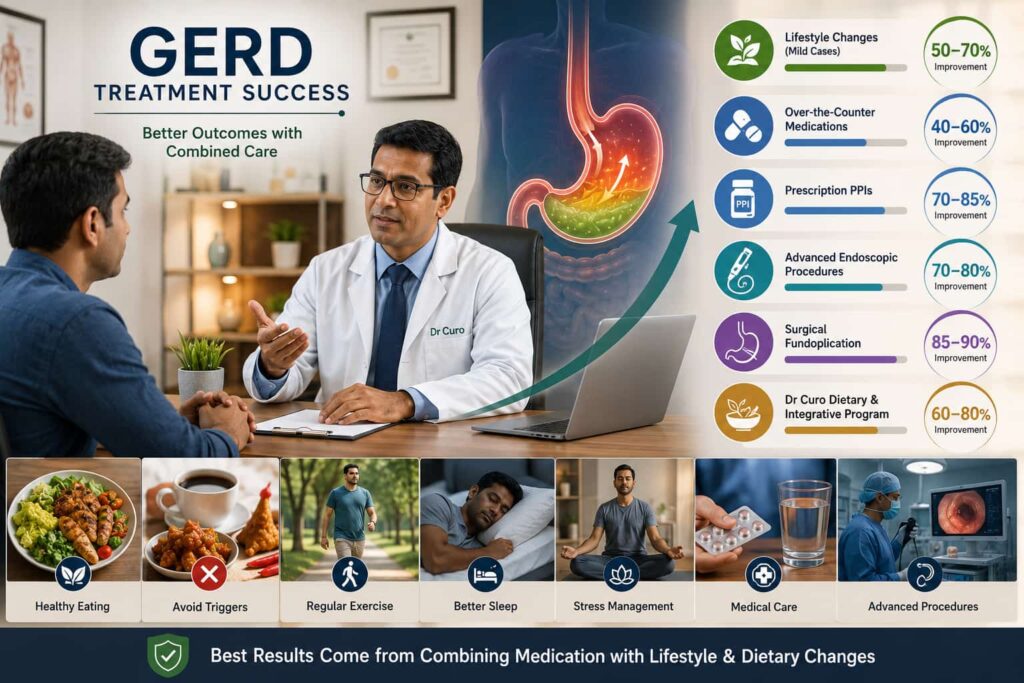
| Lifestyle changes alone (mild cases) | 50-70% symptom reduction | Yes – in mild, early-stage GERD |
| Over-the-counter medications | 40-60% symptom relief | No – management only |
| Prescription PPIs | 70-85% symptom control | Partial – symptoms often return when stopped |
| Advanced endoscopic procedures | 70-80% improvement | Yes – in selected patients |
| Surgical fundoplication | 85-90% long-term resolution | Yes – most patients stop medication entirely |
| Dr Curo dietary and integrative program | 60-80% improvement | Yes – in committed patients |
The best outcomes at Dr Curo consistently come from combining prescription medication with structured dietary and lifestyle change – not from medication alone.
Cost of GERD Treatment in India
| Type of Treatment | Approximate Cost (India) |
| Initial consultation and assessment | ₹1,000 – ₹3,000 |
| Over-the-counter antacids and H2 blockers (monthly) | ₹200 – ₹800 |
| Prescription PPIs (monthly) | ₹400 – ₹1,500 |
| Upper GI Endoscopy | ₹3,000 – ₹8,000 |
| Advanced endoscopic procedures (TIF, Stretta) | ₹40,000 – ₹1,20,000 |
| Laparoscopic fundoplication surgery | ₹80,000 – ₹2,00,000 |
| Follow-up consultations (per visit) | ₹800 – ₹2,000 |
Managing GERD well in India is genuinely affordable especially when compared to the far higher cost of treating the complications that arise from years of poorly managed GERD, including oesophageal strictures, chronic anaemia from food pipe bleeding, and in rare cases, oesophageal cancer.
At Dr Curo, pricing is always transparent. You will never receive a bill that surprises you.
What Happens if GERD is Left Untreated?
This is one of the most important questions and one that many patients never think to ask.
Untreated or chronically self-medicated GERD does not simply stay manageable. Over time, persistent acid damage to the food pipe leads to a progression of increasingly serious complications.
Oesophagitis – Ongoing acid exposure causes inflammation and ulceration of the food pipe lining. This is painful, worsens swallowing, and can cause bleeding.
Oesophageal stricture – Repeated damage and scarring over time causes the food pipe to narrow. This makes swallowing progressively more difficult and can eventually make eating a serious challenge.
Barrett’s oesophagus – In some patients, chronic acid exposure causes the normal lining of the food pipe to change into a different type of cell lining. This is called Barrett’s oesophagus a pre-cancerous condition that carries a small but real increased risk of oesophageal cancer and requires regular endoscopic monitoring.
Oesophageal cancer – The most serious complication of long-term untreated GERD. It is rare, but it is real and it is largely preventable with early, structured treatment and appropriate monitoring.
Chronic anaemia – Ongoing low-grade bleeding from an inflamed or ulcerated food pipe can cause persistent anaemia leaving patients fatigued, breathless, and unable to understand why.
Severely reduced quality of life – Disturbed sleep, restricted diet, persistent pain, and the anxiety of not understanding what is wrong take a significant toll on mental and emotional wellbeing over time.
At Dr Curo, early diagnosis and proper treatment are always the most powerful protection against all of these outcomes.
How Long Does GERD Treatment Take to Work?
This depends on the treatment approach and how advanced your GERD is at the starting point.
Lifestyle changes begin producing measurable symptom improvement within 1 to 2 weeks though full healing of the food pipe takes 4 to 8 weeks of consistent effort.
Antacids work within minutes but provide only temporary relief.
H2 blockers begin working within 30 to 60 minutes and provide several hours of acid control.
PPIs take 2 to 4 days to reach their full acid-suppressing effect and 4 to 8 weeks to produce maximum healing of the food pipe lining.
Advanced endoscopic procedures show results over 4 to 12 weeks as tissue healing and sphincter strengthening take effect.
Laparoscopic fundoplication produces immediate structural correction most patients notice dramatic improvement within days of recovery.
At Dr Curo, every patient’s symptoms and treatment response are reviewed at regular intervals so that the plan is adjusted based on real progress, not simply continued unchanged when it is not working as expected.
Tips to Support Your GERD Treatment Naturally
Alongside your medical treatment at Dr Curo, these daily habits make a genuine, measurable difference:
Stop eating 2 to 3 hours before bed this single change produces significant improvement in nighttime and morning GERD symptoms for most patients, and costs nothing.
Elevate your head when sleeping a wedge pillow or raised headboard reduces acid backflow during sleep without any medication.
Chew food slowly and thoroughly rushing meals increases the digestive burden on the stomach and worsens GERD.
Reduce tea and coffee these are among the strongest dietary triggers for GERD in India. Even switching to lighter tea and cutting down on quantity makes a measurable difference.
Manage your weight actively even modest weight loss of 5 percent produces significant relief for overweight patients with GERD.
Take a gentle walk after meals 10 to 15 minutes of gentle movement after eating aids gastric emptying and reduces post-meal reflux.
Manage stress consistently chronic stress directly increases stomach acid production and worsens LES function. Yoga, pranayama, and consistent sleep are not optional lifestyle extras they are part of your treatment.
Wear loose clothing tight waistbands increase abdominal pressure and worsen GERD symptoms, particularly after meals.
Frequently Asked Questions
Q1. Can GERD be permanently cured in India? For many patients, yes particularly those whose GERD is driven by lifestyle factors that can be changed, or who are suitable for surgical correction. At Dr Curo, a significant number of patients achieve complete and lasting symptom resolution through a combination of structured lifestyle change, appropriate medication, and where needed, procedural treatment. For others, long-term management with medication keeps symptoms fully controlled and prevents complications.
Q2. What foods should I avoid with GERD in India? The most consistently problematic foods in the Indian context include spicy curries and chutneys, fried snacks like samosas and pakoras, citrus fruits, tomato-based preparations, strong tea and coffee, carbonated drinks, and alcohol. However, triggers vary between individuals — at Dr Curo, we use a structured food diary process to identify your specific triggers rather than applying a generic list that may cut out foods you do not actually need to avoid.
Q3. Is it safe to take antacids every day? Using antacids daily for more than 2 weeks without medical assessment is not recommended. Symptoms that need daily antacids indicate a condition that needs proper diagnosis and treatment not ongoing self-medication. At Dr Curo, patients who come to us after months or years of daily antacid use frequently find that a proper structured treatment plan removes the need for them entirely.
Dr Curo Is With You Every Step
Understanding GERD symptoms and treatment is the first step toward taking back control of your health and your quality of life.
GERD is not something you simply have to live with. It is not something that only gets better with a lifetime of antacids. It is a condition with clear causes, effective treatments, and for many patients the real possibility of complete, lasting resolution.
At Dr Curo, we do not just write a prescription and send you home. We build a complete, personalised care plan covering your medication, your nutrition, your monitoring, your stress levels, and your long-term goals. Every patient who comes to us deserves that level of attention. And every patient at Dr Curo gets exactly that.




No Comment! Be the first one.