India is facing a silent cardiac crisis. Heart disease is now the leading cause of death in the country, accounting for nearly 28% of all deaths annually. What makes this particularly alarming is that cardiovascular disease is increasingly striking younger Indians – people in their 30s and 40s – who believe they are too young to worry about their heart.
The truth is that heart disease does not announce itself. It builds quietly over years through unmanaged blood pressure, elevated cholesterol, uncontrolled diabetes, chronic stress, and sedentary living – until one day it becomes impossible to ignore.
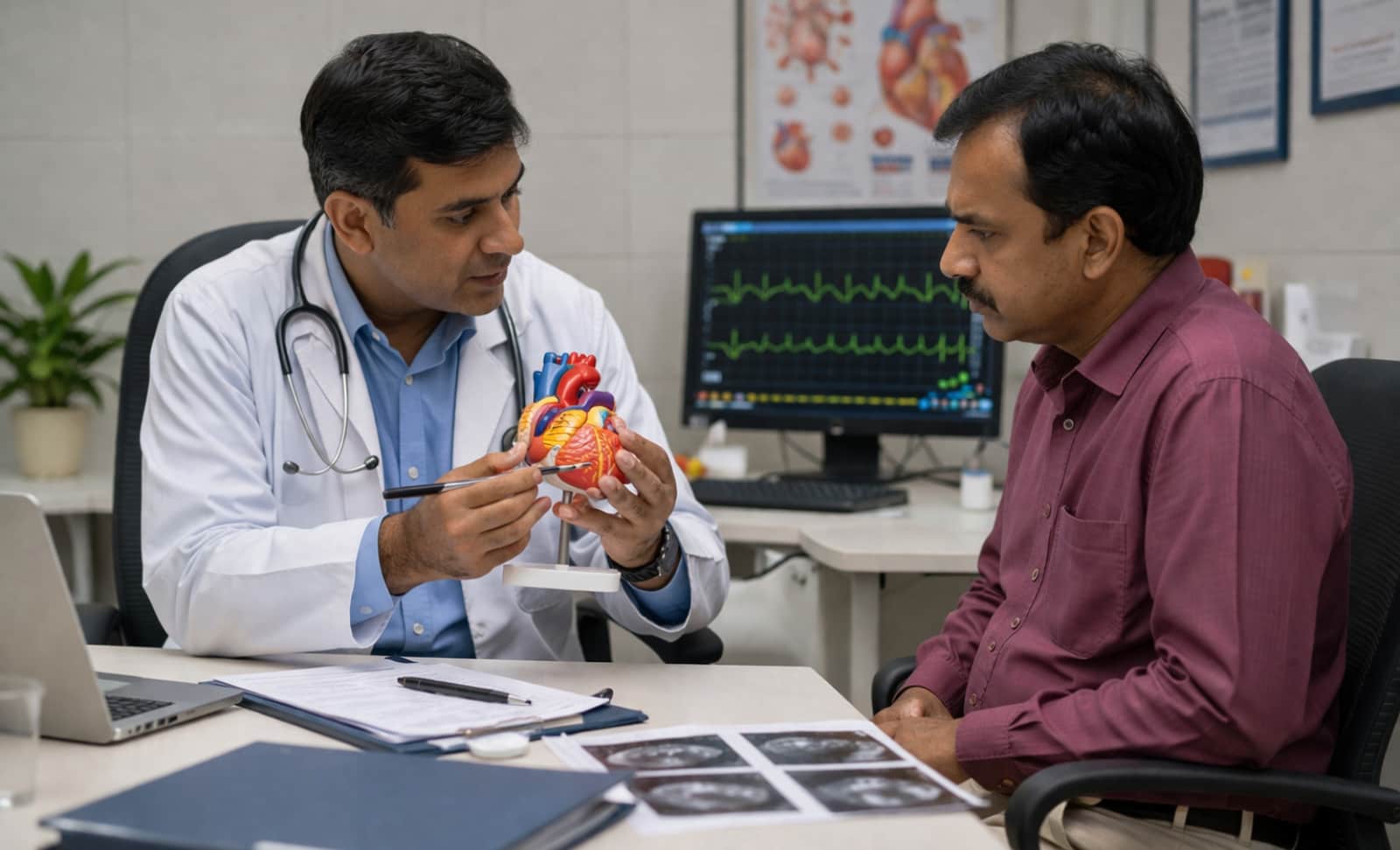
At Dr Curo, we are committed to changing this trajectory. As a trusted heart care hospital in India, we provide comprehensive cardiac services – from early risk detection and preventive counselling to advanced interventional procedures and long-term cardiac rehabilitation – all under one roof, delivered by cardiologists who treat every patient as an individual, not a case number.
The heart is a muscle that beats approximately 100,000 times a day. When the arteries supplying blood to this muscle become narrowed or blocked, when the heart’s electrical system malfunctions, or when the heart valves fail to open and close properly, the consequences range from chest pain and breathlessness to life-threatening cardiac events.
Heart disease is not a single condition. It is an umbrella term covering coronary artery disease, heart failure, arrhythmias, valvular heart disease, congenital defects, and several other conditions – each requiring a different diagnostic and treatment approach.
Read: Heart Disease Symptoms India – Warning Signs That Should Never Be Ignored
Several factors significantly increase cardiac risk. Understanding your personal risk profile is the foundation of effective prevention.
Key risk factors include:
Read: Heart Disease Prevention Tips – Building a Heart-Healthy Life in India
Read: Heart Disease Genetic Testing India – Should You Get Tested?
Read: Heart Disease in Young Adults India – Why It Is Rising and What to Do
Read: Diabetes Related Heart Disease – How Blood Sugar Damages the Heart
Read: Smoking and Heart Disease Risk – The Cardiovascular Cost of Tobacco
Read: Air Pollution Heart Disease India – A Growing Public Health Emergency
Read: Sleep Apnea Heart Problems – The Overlooked Connection
Read: Heart Disease in Women India – Why Symptoms Are Different and Often Missed
Read: Winter and Heart Attack Risk India – Why Cold Weather Strains the Heart
Accurate diagnosis is the cornerstone of effective cardiac care. At Dr Curo, we offer a comprehensive range of investigations to evaluate heart function, identify blockages, and assess overall cardiovascular risk.
1. ECG: The electrocardiogram is the first investigation in any cardiac workup. It records the heart’s electrical activity and can detect arrhythmias, evidence of previous heart attacks, and conduction abnormalities.
Read: ECG Test Normal vs Abnormal – How to Understand Your Report
2. Echocardiography: An echo uses ultrasound to create real-time images of the heart’s structure and function – assessing chambers, valves, and pumping efficiency.
Read: Echocardiography Test Cost India – What the Test Shows and What to Expect
3. Stress Test: A cardiac stress test evaluates how the heart performs under physical exertion – revealing blockages that may not be apparent at rest.
Read: Stress Test for Heart India – Who Needs It and What the Results Mean
4. Cardiac Enzymes: Blood tests measuring troponin and other cardiac markers help confirm or rule out a heart attack.
Read: Cardiac Enzymes Test Meaning – What Troponin and Other Markers Tell Us
5. Cardiac MRI: Advanced imaging that provides detailed structural and functional assessment of the heart muscle.
Read: Cardiac MRI Scan India Cost – When It Is Needed and What It Reveals
6. Blood Pressure and Cholesterol Monitoring:
Read: Blood Pressure Normal Range India – What Your Numbers Mean
Read: Cholesterol Levels Normal Range – Understanding LDL, HDL and Total Cholesterol
Read: High Triglycerides Treatment India – Causes, Risks and How to Manage Them
1. Coronary Artery Disease The most common form of heart disease, caused by plaque buildup in the arteries that supply blood to the heart muscle.
Read: Coronary Artery Disease Treatment – From Medication to Intervention
2. Heart Attack A heart attack occurs when a coronary artery is completely blocked, cutting off blood supply to part of the heart muscle. Every minute matters.
Read: Heart Attack First Aid Steps – What to Do in the First 10 Minutes
Read: Heart Attack Recovery Tips India – Returning to Life After a Cardiac Event
3. Heart Failure Heart failure does not mean the heart has stopped. It means the heart is not pumping efficiently enough to meet the body’s demands.
Read: Heart Failure Treatment Options – Medications, Devices and Lifestyle
Read: Heart Failure vs Heart Attack Difference – Two Very Different Emergencies
4. Atrial Fibrillation An irregular and often rapid heart rate that increases the risk of stroke and heart failure significantly.
Read: Atrial Fibrillation Treatment India – Rate Control, Rhythm Control and Anticoagulation
5. Arrhythmia Any abnormality in the heart’s rhythm – too fast, too slow, or irregular – falls under this category.
Read: Arrhythmia Treatment India – Types, Diagnosis and Management Options
6. Heart Valve Disease Damaged or diseased heart valves disrupt normal blood flow through the heart and may require repair or replacement.
Read: Heart Valve Replacement Surgery India – When Surgery Is the Answer
Read: Aortic Valve Stenosis India – Symptoms, Diagnosis and Treatment
7. Pericarditis Inflammation of the sac surrounding the heart that causes sharp chest pain and requires prompt diagnosis.
Read: Pericarditis Treatment India – Causes, Symptoms and Recovery
8. Congenital Heart Disease in Adults Many adults live with congenital heart defects that were not detected or fully corrected in childhood.
Read: Congenital Heart Disease Adults – Management and Long-Term Care
9. Sudden Cardiac Arrest Distinct from a heart attack, sudden cardiac arrest involves an abrupt loss of heart function and requires immediate defibrillation.
Read: Sudden Cardiac Arrest Survival India – What Determines Who Survives
10. Chest Pain – Non-Cardiac Causes Not all chest pain is cardiac. Correctly identifying non-cardiac causes prevents unnecessary treatment while ensuring serious causes are not missed.
Read: Chest Pain Causes Non-Cardiac – What Else Could Be Causing Your Symptoms
1. Angioplasty: A minimally invasive procedure to open blocked coronary arteries using a balloon and stent.
Read: Angioplasty Procedure India Cost – What Happens and What It Costs
2. Bypass Surgery: Coronary artery bypass grafting (CABG) is performed when multiple arteries are severely blocked and angioplasty is not sufficient.
Read: Heart Bypass Surgery Cost India – Full Breakdown of What to Expect
3. Pacemaker Implantation: For patients with dangerously slow heart rates or heart block, a pacemaker maintains a regular rhythm.
Read: Pacemaker Implant Procedure India – Types, Process and Recovery
4. TAVI: Transcatheter Aortic Valve Implantation is a minimally invasive alternative to open-heart surgery for high-risk patients with severe aortic stenosis.
Read: TAVI Procedure India Cost – Who Is a Candidate and What It Involves
1. Statins: Statins are among the most widely prescribed medications in cardiology, used to lower LDL cholesterol and reduce cardiovascular risk.
Read: Statin Medication Side Effects India – What Patients Commonly Experience
2. Blood Thinners: Anticoagulant and antiplatelet medications are essential in preventing clots in patients with atrial fibrillation, stents, or valve replacements.
Read: Blood Thinners Medication India – Types, Uses and What to Watch For
1. Diet Indian food can absolutely be heart-healthy – it is about making the right choices within our food culture.
Read: Heart Healthy Diet Indian Foods – A Practical Nutrition Guide for Cardiac Patients
Read: How to Lower Cholesterol Naturally – Food and Lifestyle Changes That Work
Read: Low Sodium Diet Heart Patients India – How to Reduce Salt Without Losing Flavour
Read: Omega 3 Heart Benefits India – Which Sources Work Best for Indians
2. Exercise Regular physical activity is one of the most powerful tools for cardiac protection and recovery.
Read: Heart Health Yoga Exercises – Practices That Support Cardiovascular Fitness
Read: Swimming Benefits Heart Health – Why It Is One of the Best Cardiac Exercises
3. Alcohol Moderate alcohol consumption has a nuanced relationship with heart health – but heavy drinking is unambiguously harmful.
Read: Alcohol and Heart Health India – What the Evidence Says
Recovery from a heart attack, bypass surgery, or heart failure is not complete without structured rehabilitation. Cardiac rehab reduces the risk of a second event and significantly improves quality of life.
Read: Cardiac Rehabilitation Program India – What It Includes and Why It Matters
Service | Approximate Cost (INR) |
Cardiology consultation | ₹600 – ₹2,000 |
ECG | ₹200 – ₹500 |
Echocardiography | ₹2,000 – ₹5,000 |
Cardiac stress test | ₹2,500 – ₹6,000 |
Angioplasty with stent | ₹1,50,000 – ₹3,50,000 |
Bypass surgery (CABG) | ₹2,50,000 – ₹5,00,000 |
Pacemaker implantation | ₹1,50,000 – ₹3,00,000 |
TAVI procedure | ₹8,00,000 – ₹15,00,000 |
Read: Heart Care Package Cost India – What Comprehensive Cardiac Care Includes
Cardiac care demands more than good technology. It demands experience, precision, speed, and genuine commitment to the patient’s long-term wellbeing. At Dr Curo, we have built a cardiac programme around all four.
Read: Best Cardiologist Near Me – What Qualifications and Experience to Look For
Read: Best Heart Hospital India Ranking – How to Evaluate Cardiac Centres Objectively
Read: Heart Disease Second Opinion India – When and Why to Seek One
Read: Online Cardiology Consultation India – How to See a Cardiologist from Home
Q: What are the early warning signs of heart disease in India?
A: Chest discomfort, unexplained breathlessness, palpitations, excessive fatigue, and swollen ankles are among the most common early signs. Many patients also report jaw pain and left arm discomfort during a cardiac event.
Q: At what age should I start cardiac screening in India?
A: Men above 40 and women above 45 should have a baseline cardiac evaluation. Those with diabetes, hypertension, family history, or obesity should start earlier – from age 30 onwards.
Q: Is bypass surgery the only option for blocked arteries?
A: No. Depending on the number and location of blockages, angioplasty with stenting is often sufficient. Your cardiologist will recommend the most appropriate approach based on your angiography findings.
Q: Can heart disease be reversed?
A: Coronary artery disease cannot be fully reversed, but its progression can be significantly slowed and symptoms greatly improved through medication, lifestyle changes, and intervention. Some studies show partial regression of plaque with aggressive risk factor control.
Q: How long does recovery from bypass surgery take?
A: Most patients return to light activity within 4–6 weeks. Full recovery and return to normal life typically takes 2–3 months with proper cardiac rehabilitation.
Q: Is heart disease hereditary?
A: Yes, family history is a significant risk factor. If a first-degree relative had a heart attack before age 55 (men) or 65 (women), your risk is considerably higher and screening should begin earlier.
Q: Can stress cause a heart attack?
A: Chronic psychological stress elevates cortisol and adrenaline, raises blood pressure, promotes inflammation, and contributes to plaque instability. While stress alone rarely directly causes a heart attack, it is a well-established contributing factor.
Cardiovascular disease is the leading cause of death in India, but it is also one of the most preventable and manageable conditions when caught early and treated correctly. Whether you are looking for a routine cardiac check-up, management of a diagnosed condition, or a second opinion before a procedure, Dr Curo is equipped to help you at every stage.
Book your cardiac consultation at Dr Curo today.
Call us | Chat with us online | Book at drcuro.com/heart-care
Our site uses cookies. By using this site, you agree to the Privacy Policy and Terms of Use.