







Male Infertility Warning Signs You Shouldn’t Ignore
Infertility is often seen as a “woman’s issue,” but medical research tells a very different story. Male factors are responsible for nearly 50% of infertility cases worldwide. Even so, many men delay...
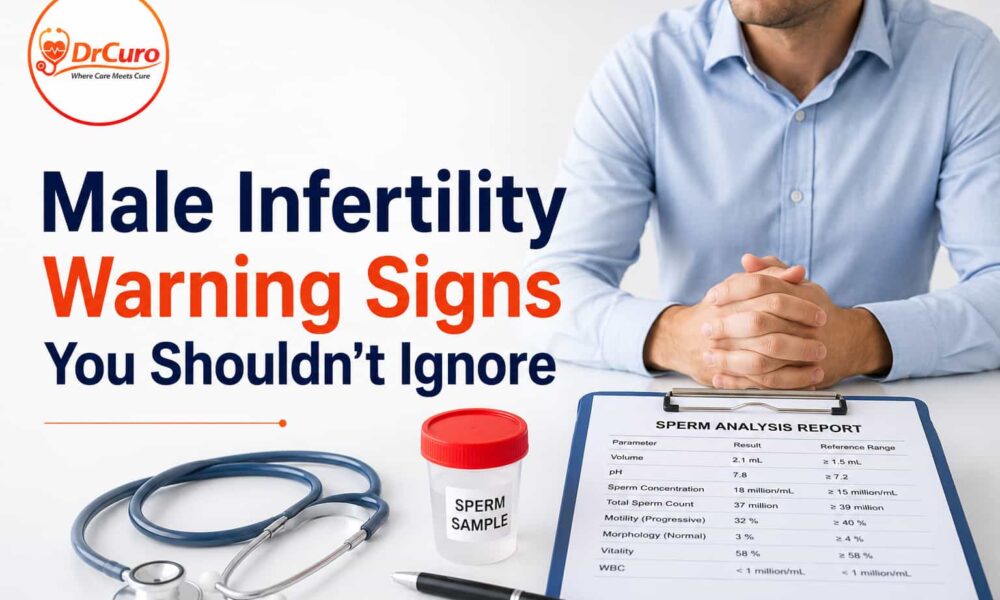
Infertility is often seen as a “woman’s issue,” but medical research tells a very different story. Male factors are responsible for nearly 50% of infertility cases worldwide. Even so, many men delay seeking help until years of unsuccessful attempts to conceive have already passed.
Table Of Content
- Why Male Infertility Is Underdiagnosed
- The Most Important Signs of Infertility in Men
- 1. You’ve Been Trying to Conceive for Over 12 Months Without Success
- 2. Changes in Sexual Desire or Low Libido
- 3. Erectile Dysfunction (ED) That Persists
- 4. Pain, Swelling, or Lumps in the Testicles
- 5. Abnormal Ejaculation — Volume, Color, or Consistency
- 6. History of Undescended Testicles (Cryptorchidism)
- 7. Hormonal Imbalance Symptoms
- 8. Previous Infections — STIs or Mumps
- 9. Genetic Conditions and Family History
- 10. Lifestyle Red Flags That Signal Sperm Damage
- 11. Difficulty with Ejaculation or Absence of Ejaculation
- When Should You See a Specialist?
- The Dr Curo Approach to Male Fertility
- Frequently Asked Questions About Signs of Infertility in Men
- Final Word: Don’t Wait for a Crisis
What many people do not realise is that the body often shows warning signs long before a diagnosis is confirmed. Recognising the signs of infertility in men early can make a major difference sometimes turning a complicated fertility struggle into a far more manageable situation with the right infertility treatment India options and timely medical support.
At Dr Curo, we believe that awareness is the first step toward better health. This guide breaks down every major warning sign you need to know explained clearly, honestly, and in depth.
Why Male Infertility Is Underdiagnosed
Men rarely talk about reproductive health. Cultural pressure, embarrassment, and the assumption that “it must be her problem” cause most men to delay or completely avoid getting checked. This silence is dangerous.
Male infertility can stem from:
- Low sperm count (oligospermia)
- Poor sperm motility (sperm that don’t swim well)
- Abnormal sperm shape (morphology issues)
- Hormonal imbalances
- Structural or anatomical problems
- Genetic conditions
- Lifestyle and environmental factors
Many of these conditions have no obvious symptoms on the surface but some do. And those symptoms, if caught early, can lead to effective treatment.
The Most Important Signs of Infertility in Men
1. You’ve Been Trying to Conceive for Over 12 Months Without Success
This is the most straightforward sign. If you and your partner have been having regular, unprotected intercourse for 12 months (or 6 months if your partner is over 35) and pregnancy hasn’t occurred, both partners should be evaluated including the man.
Many couples waste years assuming the issue lies solely with the woman. A simple semen analysis can provide critical answers within days.
What Dr Curo recommends: Don’t wait. Get a baseline semen analysis done at the 6-month mark, especially if you’re over 30.
2. Changes in Sexual Desire or Low Libido
Sexual drive is closely tied to testosterone and other male hormones. A noticeable, persistent drop in libido not just an occasional off day can be a red flag for hormonal imbalance that directly impacts fertility.
Watch for:
- Significantly reduced interest in sex over several weeks or months
- Feeling emotionally flat or disconnected from sexual activity
- Changes in spontaneous erections (including morning erections becoming rare)
Testosterone deficiency doesn’t just affect your sex life it affects sperm production at the core level.
3. Erectile Dysfunction (ED) That Persists
Occasional difficulty with erections is normal and can be linked to stress, alcohol, or fatigue. But persistent erectile dysfunction is a different matter entirely.
Chronic ED can be caused by:
- Vascular issues that also impair blood flow to the testes
- Hormonal problems like low testosterone or elevated prolactin
- Neurological conditions
- Psychological factors including chronic anxiety and depression
The same underlying conditions that cause ED often compromise sperm production and quality. If you’re regularly unable to achieve or maintain an erection, don’t dismiss it as just a “performance issue” it may be a sign of infertility in men that needs medical attention.
4. Pain, Swelling, or Lumps in the Testicles
Any unusual sensation in the testicular area should be taken seriously. Common conditions that cause pain or swelling and also affect fertility include:
- Varicocele — Enlarged veins in the scrotum (like varicose veins) that increase testicular temperature and damage sperm. This is the most common correctable cause of male infertility, found in about 15% of all men and up to 40% of infertile men.
- Epididymitis — Inflammation of the epididymis (the tube that carries sperm), often caused by infection
- Orchitis — Inflammation of the testicle, sometimes caused by mumps
- Testicular torsion — A medical emergency where the spermatic cord twists, cutting off blood supply
Signs to watch for:
- Dull ache or heaviness in one or both testicles
- Swelling that comes and goes or persists
- A lump or hardness that wasn’t there before
- Sharp or shooting pain
Never ignore testicular discomfort. It’s not normal, and it’s not something to be embarrassed about.
5. Abnormal Ejaculation — Volume, Color, or Consistency
Your ejaculate can tell you a lot about your reproductive health. Changes in semen can indicate infections, blockages, or hormonal issues.
Warning signs include:
- Very low volume of ejaculate — could signal retrograde ejaculation (where semen goes backward into the bladder) or ejaculatory duct obstruction
- Blood in semen (hematospermia) — can indicate infection, inflammation, or a blockage
- Yellowish or greenish color — suggests possible infection
- Watery or unusually thick consistency — may indicate poor sperm concentration or prostate issues
- Pain during ejaculation — can suggest infection or structural problems
These are not signs to dismiss as “weird but harmless.” They are your body’s way of communicating that something is off internally.
6. History of Undescended Testicles (Cryptorchidism)
If one or both of your testicles didn’t descend into the scrotum normally before birth or in early childhood, this significantly increases your risk of fertility problems in adulthood even if the issue was surgically corrected.
Undescended testicles are associated with:
- Reduced sperm production
- Higher rates of testicular cancer
- Impaired sperm quality
If you had this condition as a child, it’s essential to proactively monitor your fertility and discuss it with a specialist at Dr Curo before you begin trying to conceive.
7. Hormonal Imbalance Symptoms
Hormones govern everything in male reproduction from sperm production to sexual function. When hormones are out of balance, your body sends visible signals:
Signs of low testosterone or hormonal disruption:
- Unexplained weight gain, especially around the chest or belly
- Gynecomastia — development of breast tissue in men (a key red flag)
- Decreased facial or body hair
- Fatigue that doesn’t improve with rest
- Mood swings, irritability, or depression
- Muscle loss despite regular exercise
- Brain fog or poor concentration
Hormonal issues like hypogonadism, elevated prolactin, or thyroid disorders can all suppress sperm production dramatically sometimes to zero.
8. Previous Infections — STIs or Mumps
Certain infections, if left untreated or if they were severe, can permanently damage the male reproductive system:
- Chlamydia and Gonorrhea — Can cause scarring of the vas deferens or epididymis, blocking sperm transport
- Mumps after puberty — Can cause orchitis (testicular inflammation) leading to permanent damage in up to 30% of cases
- Urinary tract infections that spread to the prostate or epididymis
If you’ve had any of these infections in the past, it’s important to get a semen analysis done regardless of whether you currently feel symptoms. Damage from past infections can be silent for years.
9. Genetic Conditions and Family History
Some causes of male infertility are written in your DNA:
- Klinefelter syndrome (XXY chromosomes) — leads to abnormal testicular development and near-zero sperm production
- Y chromosome microdeletions — missing genetic material responsible for sperm production
- Cystic fibrosis — often causes absence of the vas deferens, blocking sperm delivery
- Kallmann syndrome — affects hormone production from the brain
Family history factors to consider:
- Other male relatives with known fertility issues
- History of genetic disorders on either side of the family
- History of early miscarriages in the family (may suggest genetic carrier status)
Genetic testing is now widely available and can provide critical insight before you begin fertility treatments.
10. Lifestyle Red Flags That Signal Sperm Damage
Many men don’t realize that their daily habits are actively harming their fertility. These aren’t technically “symptoms,” but they are warning signs that your sperm are likely suffering:
Habits that damage sperm quality:
- Heavy smoking — reduces sperm count and motility, increases DNA fragmentation
- Excessive alcohol — suppresses testosterone and impairs sperm production
- Anabolic steroids or testosterone supplements — paradoxically shuts down natural sperm production (the brain stops signaling the testes to produce sperm)
- Recreational drugs — marijuana, cocaine, and opioids all negatively impact sperm
- Prolonged heat exposure — hot baths, saunas, working with laptops on the lap, or wearing tight underwear regularly raises scrotal temperature, impairing sperm production
- Obesity — excess fat tissue converts testosterone to estrogen, lowering sperm count
- Chronic stress — elevates cortisol, which suppresses testosterone
- Exposure to chemicals — pesticides, heavy metals, industrial solvents
If you recognize multiple items on this list in your life, your fertility is very likely being compromised right now even if you feel fine.
11. Difficulty with Ejaculation or Absence of Ejaculation
Some men experience anejaculation (inability to ejaculate) or retrograde ejaculation (semen goes into the bladder instead of out). These are serious conditions with direct fertility implications.
Causes include:
- Spinal cord injury
- Diabetes-related nerve damage
- Prostate surgery side effects
- Certain medications (especially antidepressants and antipsychotics)
- Psychological factors
If you notice that ejaculation is absent or significantly reduced, or that your urine appears cloudy after orgasm (a sign of retrograde ejaculation), seek medical evaluation promptly.
When Should You See a Specialist?
See a fertility specialist or urologist if you experience any combination of the following:
- Trying to conceive for 12 months (or 6 months if partner is over 35) without success
- Any testicular pain, swelling, or lumps
- History of undescended testicles, surgeries, or STIs
- Hormonal symptoms like gynecomastia, low libido, or hair loss
- Abnormal ejaculation (volume, color, pain)
- Diagnosis of any chronic condition (diabetes, thyroid disorder, etc.)
A fertility evaluation for men typically includes:
- Semen Analysis — the gold standard first test
- Hormone Blood Tests — FSH, LH, testosterone, prolactin
- Scrotal Ultrasound — to detect varicocele, blockages, or structural issues
- Genetic Testing — if indicated
- Post-ejaculate Urinalysis — to rule out retrograde ejaculation
The Dr Curo Approach to Male Fertility
At Dr Curo, we understand that talking about male fertility isn’t easy but we believe no man should suffer in silence or delay care out of embarrassment.
Our approach is built on:
- Comprehensive, non-judgmental evaluation — We look at the whole man, not just the lab results
- Personalized treatment plans — From lifestyle modification to medical and surgical intervention
- Evidence-based medicine — Every recommendation we make is backed by the latest research
- Compassionate support — Because fertility challenges affect emotional health just as much as physical health
Whether you’re just beginning to think about starting a family, or you’ve been trying for years, the right time to get checked is now.
Frequently Asked Questions About Signs of Infertility in Men
Q: Can a man look and feel completely healthy and still be infertile? Yes, absolutely. Many men with low sperm count or poor sperm motility have no outward symptoms at all. This is why testing is so important symptoms alone are not a reliable indicator.
Q: Is male infertility permanent? Not always. Many causes are treatable. Varicocele can be surgically corrected. Hormonal imbalances can be managed with medication. Lifestyle changes can significantly improve sperm quality within 3 months (one full sperm production cycle).
Q: Does age affect male fertility? Yes. While men can father children later in life than women, sperm quality including DNA integrity does decline with age, particularly after 40. Older paternal age is also linked to higher rates of genetic mutations in offspring.
Q: Can stress really cause infertility? Chronic stress raises cortisol levels, which suppresses testosterone and disrupts the hormonal signals that trigger sperm production. It can be a contributing factor, though rarely the sole cause.
Final Word: Don’t Wait for a Crisis
The signs of infertility in men are often quiet, easy to rationalize, or culturally dismissed. A slight drop in libido becomes “I’m just tired.” Testicular discomfort becomes “it’ll go away.” Months of trying without success becomes “maybe next month.”
But fertility has a window and every month of delay is a month of opportunity lost.
Dr Curo is here to help you read the signs, understand your body, and take the right steps toward the family you want. Because your fertility matters, and so does your health.
Disclaimer: This blog is for informational purposes only and does not constitute medical advice. Please consult a qualified healthcare professional for diagnosis and treatment.






No Comment! Be the first one.